Timeline
440 dates, 195 of them from women’s history.
1894–1926The First Republic
From the first feminist groups, still under the monarchy, to the proclamation of the Republic and the military coup: the family laws, divorce, the vote denied to women.41 dates36 women
1894
1894 · women: Founding of the Women’s Mutual Aid Association of Tobacco Day Workers
1894
At the Xabregas tobacco factory, in Beato, the workforce was mostly female: an 1887 survey counted 74.9% women among the workers.1 The women workers turned to women’s mutual aid associations, and in 1894 the Women’s Mutual Aid Association of Tobacco Day Workers was founded.1 Only in 1927 would the company open a maternity clinic for the women tobacco workers next to the factory.1
1905
1905 · women: Ana de Castro Osório publishes the first Portuguese feminist manifesto
1905
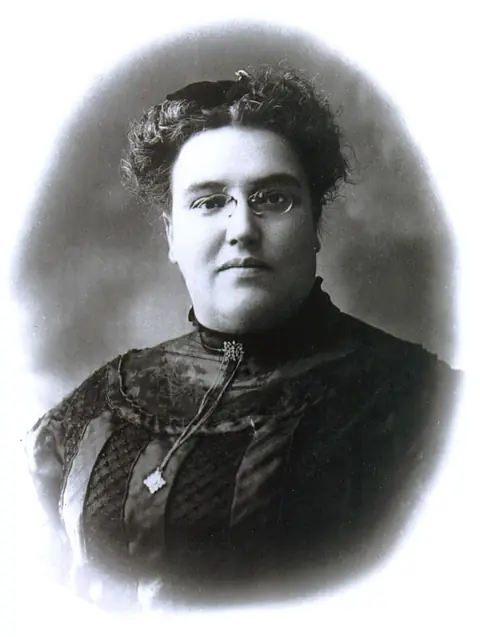
Ana de Castro Osório, a pioneer of the struggle for equal rights between men and women, publishes Às Mulheres Portuguesas (To Portuguese Women), considered the first Portuguese feminist manifesto.21
1906
1906 · women: Five women doctors join the pacifist movement “La Paix et le Désarmement par les Femmes”
1906
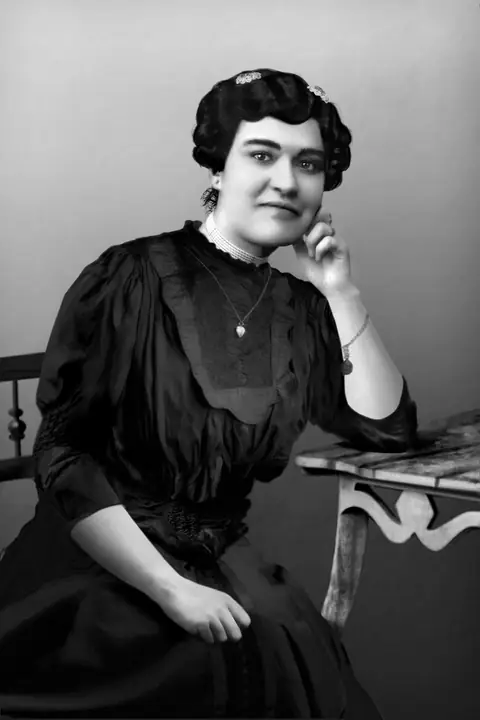
Carolina Beatriz Ângelo and four other women doctors — Adelaide Cabete, Domitila de Carvalho, Emília Patacho and Maria do Carmo Lopes — join the Portuguese committee of the French association La Paix et le Désarmement par les Femmes (Peace and Disarmament through Women); Carolina joins its board.12
Carolina Beatriz Ângelo · Adelaide Cabete · Domitila de Carvalho
1906 · women: Creation of the Liceu Maria Pia, the first girls’ secondary school
1906
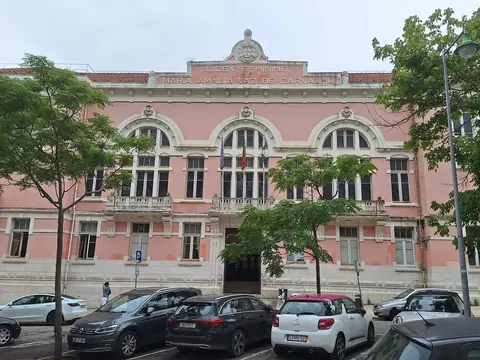
By royal decree of 1906, the Liceu Maria Pia, the country’s first girls’ secondary school (liceu), is established in Lisbon.1 The decree approving its organisation is dated 31 January and appears in the Diário do Governo (Government Gazette) of 23 February.3 Domitila de Carvalho was its first headmistress and taught Mathematics there.4 It is the forerunner of the Liceu Maria Amália Vaz de Carvalho, which only had a building of its own in 1933.1
Liceu Maria Amália Vaz de Carvalho (successor to the Liceu Maria Pia, the first girls’ secondary school) · Domitila de Carvalho
- 1Visão / Lusa
- 2FCSH+Lisboa (NOVA FCSH)
- 3Faculdade de Psicologia e de Ciências da Educação da Universidade de Lisboa (Repositório da Universidade de Lisboa)
- 4Wikipédia (pt)
- 5Turres Veteras III, Actas de História Contemporânea (Câmara Municipal de Torres Vedras / IERMAH); Estudo Geral, Universidade de Coimbra
1907
1907 · women: Founding of the Portuguese Group for Feminist Studies
1907
A group of educated women — intellectuals, doctors, writers and above all teachers — founds the Portuguese Group for Feminist Studies, to spread women’s emancipation, set up a library and publish studies.1 It was led by Ana de Castro Osório; Carolina Beatriz Ângelo took part in its founding, and its members also included Maria Veleda and the doctors Sofia Quintino and Adelaide Cabete.34 The Group gave evening classes for illiterate women at the Dr Afonso Costa Republican School Centre.2 It was short-lived, but it was around it that the Republican League of Portuguese Women was born.1
Dr Afonso Costa Republican School Centre — evening classes for women (Calçada de Arroios) · Ana de Castro Osório · Maria Veleda · Carolina Beatriz Ângelo · Adelaide Cabete · Sofia Quintino
- 1Almanaque Republicano (blogue)
- 2Toponímia de Lisboa (Câmara Municipal de Lisboa)
- 3Unidade de História da Medicina, Faculdade de Ciências Médicas da UNL (projeto de estudantes)
- 4CIG – Comissão para a Cidadania e a Igualdade de Género
- 5Silêncios e Memórias (blogue)
- 6Comissão para a Cidadania e a Igualdade de Género (coleção Fio de Ariana)
1907 · women: The magazine “Alma Feminina” (1907–1908), with Virgínia Quaresma
1907
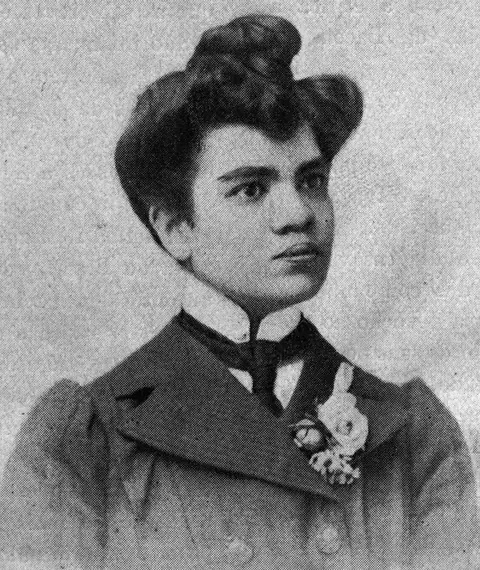
The illustrated magazine Alma Feminina (Feminine Soul) comes out, edited by the poet Albertina Paraíso, with Virgínia Quaresma as chief writer and editorial secretary.2 It was in its pages that Virgínia Quaresma, for the first time in Portugal, put a woman factory worker in the spotlight.1 The issue of 31 October 1907 put Carolina Beatriz Ângelo on its cover: “exceptionally intelligent”, said the caption.3
Virgínia Quaresma · Carolina Beatriz Ângelo
- 1Toponímia de Lisboa (Câmara Municipal de Lisboa)
- 2Wikipédia (pt)
- 3Isabel Lousada / Universidade Católica Portuguesa
- 4Silêncios e Memórias (blogue): «Alma Feminina», n.º 1 (1907) — capa reproduzida em Silêncios e Memórias, n.º 2312
- 5Silêncios e Memórias (blogue): «Jornal da Mulher» || Alma Feminina — 05/05/1907 (Silêncios e Memórias, n.º 2987)
1908
1908 · women: Suffragists in the Republican League of Portuguese Women
1908
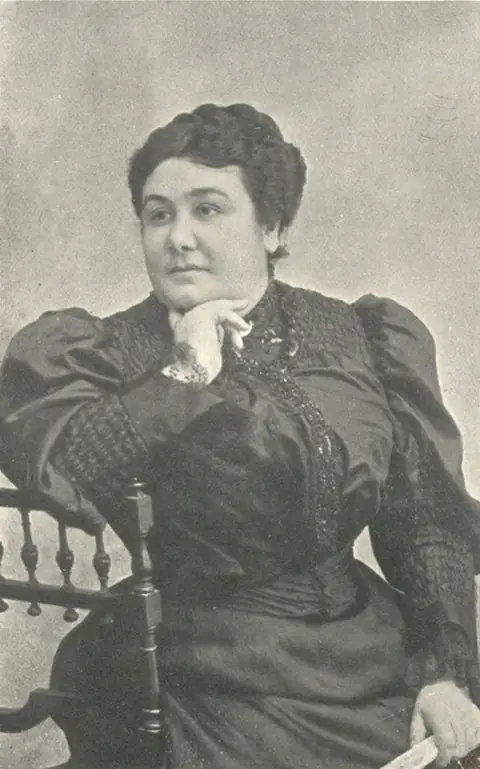
In 1908 the doctor Carolina Beatriz Ângelo joins the Republican League of Portuguese Women, where Ana de Castro Osório and Adelaide Cabete were also active.12 The League championed women’s suffrage, but gave even more weight to reform of the Civil Code: divorce, the protection of children and the administration of the couple’s property.2 Launched in August that year, it was only legally constituted in February 1909.3
Adelaide Cabete · Carolina Beatriz Ângelo · Ana de Castro Osório
1909
February 1909 · women: Founding of the Republican League of Portuguese Women
February 1909
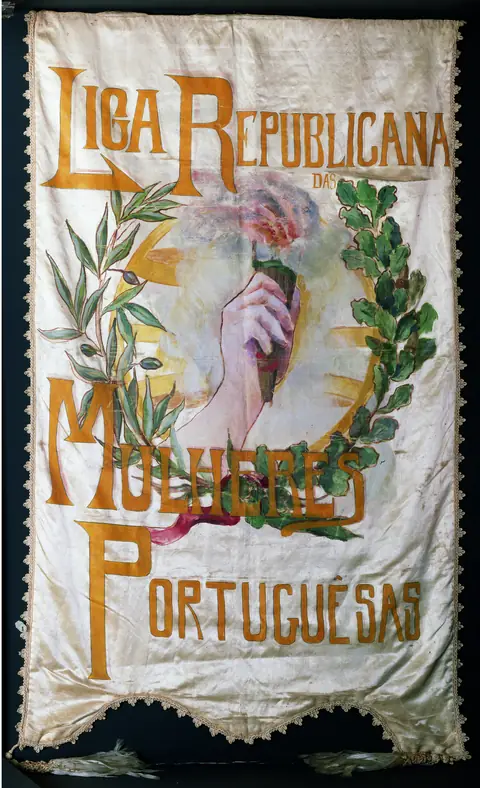
Launched in August 1908 by Ana de Castro Osório and António José de Almeida, the Republican League of Portuguese Women is legally constituted in February 1909, as an association that was at once political and feminist, to educate women in democratic principles and to revise the laws that concerned them.14 Its headquarters were on the second floor of No. 6 Rua dos Castelinhos.3 Its governing bodies also included the doctors Carolina Beatriz Ângelo and Adelaide Cabete; Maria Veleda, a founding member, would preside over the League from 1911.45 In April the first issue of its official organ, A Mulher e a Criança (Woman and Child), comes out.2
Headquarters of the Republican League of Portuguese Women (Rua dos Castelinhos, 6) · Ana de Castro Osório · Adelaide Cabete · Maria Veleda · Carolina Beatriz Ângelo
RTP Arquivos: Ana de Castro Osório
- 1Almanaque Republicano (blogue): Liga Republicana das Mulheres Portuguesas
- 2Almanaque Republicano (blogue): A Mulher e a Criança. Órgão da Liga Republicana das Mulheres (ficha descritiva)
- 3Toponímia de Lisboa (Câmara Municipal de Lisboa): A feminista e republicana Ana de Castro Osório
- 4Wikipédia (pt)
- 5Toponímia de Lisboa (Câmara Municipal de Lisboa): Maria Veleda na urbanização das mulheres
1910
5 October 1910 · women: Proclamation of the Republic in Lisbon
5 October 1910
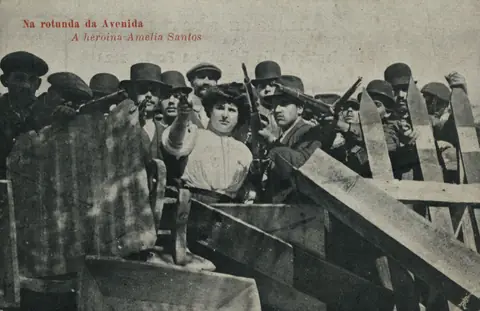
The revolution of 5 October 1910 puts an end to the Monarchy, and the Republic is proclaimed from the balcony of Lisbon City Hall.284 The doctors Carolina Beatriz Ângelo and Adelaide Cabete had made the green-and-red flags raised that day.365 A postcard of the time celebrates Amélia Santos as the “heroine of the Rotunda”.4
Carolina Beatriz Ângelo · Adelaide Cabete
- 1Assembleia da República: O sufrágio feminino no parlamento na 1.ª República
- 2Instituto de Ciências Sociais da Universidade de Lisboa – Análise Social
- 3Assembleia da República: Exposição «Mulheres que mudaram a vida política em Portugal»
- 4Centro de Documentação 25 de Abril, Universidade de Coimbra
- 5Isabel Lousada / Universidade Católica Portuguesa
- 6Toponímia de Lisboa (Câmara Municipal de Lisboa)
- 7FCSH+Lisboa (NOVA FCSH)
- 8Sinal Aberto
26 October 1910 · women: League assembly approves the feminist list of demands
26 October 1910
Three weeks after the revolution, the general assembly of the Republican League of Portuguese Women, led by Ana de Castro Osório, considers the petition of feminist demands to be delivered to the Provisional Government; Virgínia Quaresma is one of the speakers.124 On a motion by Maria Veleda, the assembly thanks the newspaper A Capital for opening its columns to the League’s propaganda.2 The next day, at 13:00, a committee of members delivers the petition to the President of the Provisional Government.2
27 October 1910 · women: The League presents its demands to the Provisional Government, among them the vote
27 October 1910
A committee of members of the Republican League of Portuguese Women delivers to the President of the Provisional Government a “wide-ranging petition of feminist demands”.45 Among them was the vote: the League considered universal suffrage just but, “so as in no way to hinder the government of the Republic”, for now it asked for the vote only for women who were traders, industrialists, civil servants, graduates, writers or administrators of fortunes.3 The League was then led by Ana de Castro Osório and, as vice-president, Carolina Beatriz Ângelo.135
3 November 1910 · women: Provisional Government decrees the Divorce Law
3 November 1910
Less than a month after the revolution, the Provisional Government publishes the decree with the force of law of 3 November 1910, which introduces divorce, both contested and by mutual consent, and creates a new civil status, that of “divorced”.12 According to the Assembly of the Republic, Portugal becomes the second European country, after Norway, to allow divorce by mutual consent; the law treats the husband’s adultery and the wife’s in the same terms.13 The feminist Ana de Castro Osório worked with the Minister of Justice, Afonso Costa, on preparing the law, for which the journalist Virgínia Quaresma had campaigned in 1909.68
Ana de Castro Osório · Virgínia Quaresma
- 1Assembleia da República
- 2Assembleia da República – Biblioteca Passos Manuel
- 3Instituto de Ciências Sociais da Universidade de Lisboa – Análise Social
- 4Commission on European Family Law
- 5Wikipédia (pt): Primeira República Portuguesa
- 6Toponímia de Lisboa (Câmara Municipal de Lisboa): A feminista e republicana Ana de Castro Osório
- 7Wikipédia (pt): Ana de Castro Osório
- 8Toponímia de Lisboa (Câmara Municipal de Lisboa): A primeira jornalista de reportagem portuguesa numa rua de Caselas
25 December 1910 · women: Family Laws: civil marriage and equality in the marital partnership
25 December 1910
Shortly after the divorce law, the Ministry of Justice promulgates the so-called Family Laws: Decree No. 1, on marriage as a civil contract, and No. 2, on the protection of children.12 “The marital partnership is based on freedom and equality”, says Article 39 of the first.1 The wife’s duty of obedience to her husband comes to an end, a woman author can now publish freely, and the unmarried mother gains the means to establish paternity.1
1911
3 February 1911 · women: Women’s delegation takes the proposal for women’s suffrage to Teófilo Braga
3 February 1911
The Republican League of Portuguese Women takes to Teófilo Braga, President of the Provisional Government, a new petition asking for the vote for women “who, by their special position, should be able to exercise it”: taxpayers, those with a scientific or literary profession, and those who were morally and economically independent.3 Heading the signatures was the doctor Carolina Beatriz Ângelo, followed by Ana de Castro Osório, Adelaide da Cunha Barradas, Constança Dias, Joana de Almeida Nogueira, Maria Laura Monteiro Torres, Rita Dantas Machado and Virgínia da Fonseca.32 Teófilo Braga undertook to present it at the first meeting of ministers.3
14 March 1911 · women: The Republic’s first electoral law does not exclude women
14 March 1911
Published on 14 March 1911 and drafted by the Minister of the Interior, António José de Almeida, the “Electoral law for the election of deputies to the Constituent Assembly” (Lei eleitoral para servir na eleição de deputados à Assembleia Constituinte) gives the vote to Portuguese citizens over 21 who can read and write or are heads of household — without saying they had to be men.14 The feminists at first saw it as a disappointment, because it did not enshrine women’s right to vote; then they realised that it did not deny it either, and Carolina Beatriz Ângelo asked to be registered as a voter.4 The law was amended by a decree of 5 April and supplemented by decrees of 20 April and of 11, 12 and 13 May 1911.13
1 April 1911 · women: Carolina Beatriz Ângelo asks to be registered as a voter
1 April 1911
A widow and head of household, with a minor daughter in her care, Carolina Beatriz Ângelo applies to the registration committee of Lisbon’s 2nd District to be entered on the electoral rolls, in an application dated 1 April 1911.41 The committee declares itself not competent and refers the request to the Minister of the Interior, António José de Almeida, who turns it down.43 Carolina then appeals to the courts.3
28 April 1911 · women: Court ruling orders Carolina Beatriz Ângelo to be registered as a voter
28 April 1911
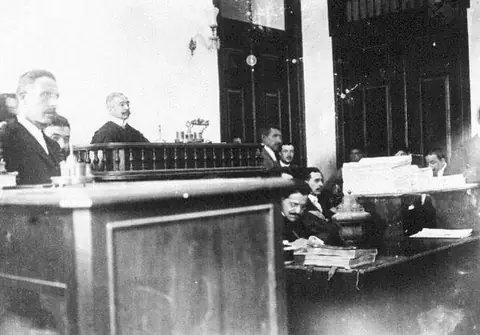
On 24 April, Carolina Beatriz Ângelo lodges her appeal against exclusion from the electoral register at the Boa-Hora Court; the case falls to the judge of the 1st Civil Court, João Baptista de Castro, father of Ana de Castro Osório.62 In his ruling of 28 April, he decides that the law, in speaking of “portugueses” (the Portuguese), includes women, and orders Carolina to be entered on the register: “where the law does not distinguish, the judge may not distinguish” (onde a lei não distingue não pode o julgador distinguir).6 A Capital of 29 April publishes the ruling and calls it “a victory for national feminism”.1
Boa-Hora Court · Carolina Beatriz Ângelo · Ana de Castro Osório
12 May 1911 · women: Feminist Propaganda Association founded
12 May 1911
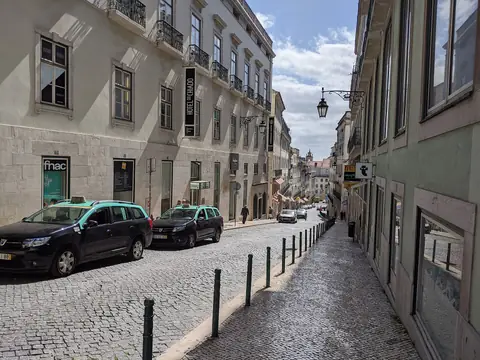
Disagreements within the Republican League of Portuguese Women over who should vote — only educated women with a profession, or all women, without restrictions — lead to the founding of the Feminist Propaganda Association on 12 May 1911.12 Ana de Castro Osório and Carolina Beatriz Ângelo were among the supporters of a restricted vote; Maria Veleda, who became president of the League that year, argued for the vote without restrictions.16 The new association was born in Carolina Beatriz Ângelo’s consulting rooms, and she was its president, according to Toponímia de Lisboa.74
Carolina Beatriz Ângelo’s surgery (Rua Nova do Almada, 84) · Ana de Castro Osório · Carolina Beatriz Ângelo · Maria Veleda
- 1Assembleia da República: O sufrágio feminino no parlamento na 1.ª República
- 2Assembleia da República: O sufrágio feminino no Parlamento na 1.ª República (ComunicAR n.º 71, março de 2021)
- 3Wikipédia (pt)
- 4Toponímia de Lisboa (Câmara Municipal de Lisboa): A rua lisboeta da primeira mulher que votou em Portugal
- 5Toponímia de Lisboa (Câmara Municipal de Lisboa): A feminista e republicana Ana de Castro Osório
- 6Toponímia de Lisboa (Câmara Municipal de Lisboa): Maria Veleda na urbanização das mulheres
- 7Historia Constitucional (revista eletrónica)
28 May 1911 · women: Carolina Beatriz Ângelo, the first woman to vote in Portugal
28 May 1911
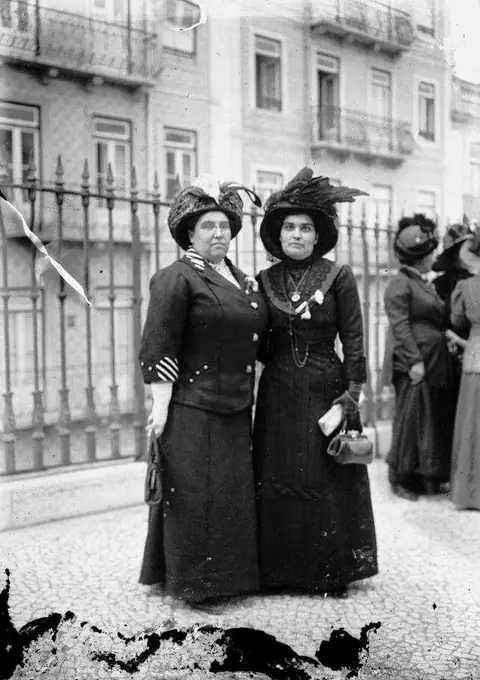
On Sunday morning, the doctor Carolina Beatriz Ângelo votes in the elections to the National Constituent Assembly, at the São Jorge de Arroios polling station, set up in the Clube Estefânia: she is the first woman to vote in Portugal.87 A widow and head of household, she had been registered as voter No. 2513 by order of a judge, because the electoral law did not expressly exclude women.4 The presiding officer still consulted the other members of the polling board before accepting her ballot; she voted to applause, accompanied by Ana de Castro Osório.418 In 1911 there were few European countries where women voted — Finland, which the Assembly of the Republic gives as the only one, and Norway, since 1907, only for women with a certain income — and the news spread across the continent.19
Clube Estefânia — São Jorge de Arroios polling station (1911) · Carolina Beatriz Ângelo · Ana de Castro Osório
- 1Assembleia da República: O sufrágio feminino no parlamento na 1.ª República
- 2Assembleia da República: Exposição «Mulheres que mudaram a vida política em Portugal»
- 3Ordem dos Advogados
- 4Assembleia da República: Carolina Beatriz Ângelo
- 5Isabel Lousada / Universidade Católica Portuguesa
- 6Assembleia da República: O sufrágio feminino no Parlamento na 1.ª República (ComunicAR n.º 71, março de 2021)
- 7Mensagem de Lisboa
- 8Historia Constitucional (revista eletrónica)
- 9Stortinget (Parlamento da Noruega)
24–27 July 1911 · women: Feminist Propaganda Association petitions the Constituent Assembly
24–27 July 1911
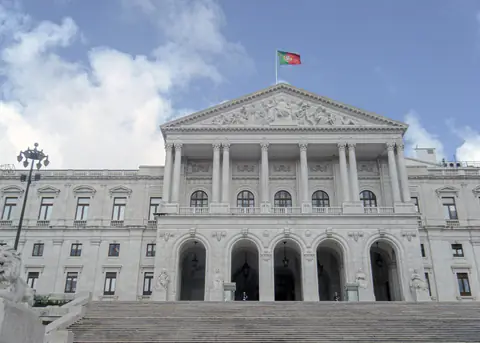
A petition from the Feminist Propaganda Association asking for women’s suffrage is submitted to the National Constituent Assembly.1 Approved at a general assembly on 10 July and headed by Carolina Beatriz Ângelo, who had led the association since Ana de Castro Osório left for Brazil, it asked for the vote for women graduates, women heads of household and women traders who could read and write.3 On 26 July the article on women’s civil and political rights is removed from the draft Constitution; on the 27th, Bernardino Machado says the question “is not constitutional”.12
Palácio de São Bento · Ana de Castro Osório · Carolina Beatriz Ângelo
26 July 1911 · women: Constituent Assembly removes the article on women’s civil and political rights
26 July 1911
At the session of 26 July 1911, two days after a petition from the Feminist Propaganda Association was submitted, the National Constituent Assembly removes from the draft Constitution the article on women’s civil and political rights.12 The deputy António Macieira opposed promising women a “progressive education” for the exercise of political and civil capacity — the Republic, he recalled, had already given them divorce and the freedom to publish their writings — and Faustino da Fonseca argued that the Republic “must not deny women the right to vote”.23 The next day, Bernardino Machado declared that the matter was not a constitutional one and should be left to ordinary law.1
August 1911: First republican Constitution approved
August 1911
The National Constituent Assembly, which sat from 15 June to 25 August 1911, approves the Constitution of 21 August, the Republic’s first.12 The text did not enshrine women’s right to vote — the article on their rights had been removed from the draft — and left the organisation of elections to a special law.3 The Congress of the Republic, made up of the Chamber of Deputies and the Senate, begins sitting on 26 August.1
3 October 1911 · women: Death of Carolina Beatriz Ângelo
3 October 1911
Aged 33, Carolina Beatriz Ângelo is taken ill on the tram, returning from a meeting of feminists she had chaired, and dies on the stairs of her home.1 A freethinker, she had left written instructions that she wanted a civil burial and that her family, above all her daughter, should not wear mourning.41 Adelaide Cabete calls on women to attend the funeral.1
1912
June 1912 · women: The Feminist Propaganda Association’s magazine “A Mulher Portuguesa” comes out
June 1912
The Feminist Propaganda Association launches the magazine A Mulher Portuguesa (The Portuguese Woman), of which five issues would come out, from June 1912 to February 1913.1 Issue No. 1 publishes the letter from Ana de Castro Osório, written in São Paulo and read at the session of 12 May 1912, on the association’s first anniversary: “Our Association was formed in struggle”.2 In it she accused the Constituent Assembly of having set aside the question of women’s right to vote, “considering it untimely”.4
- 1Revistas de Ideias e Cultura (RIC): A Mulher Portuguesa (índice dos números, 1912-1913)
- 2Revistas de Ideias e Cultura (RIC): A Mulher Portuguesa, n.º 1 (junho de 1912) — discurso de Ana de Castro Osório
- 3Wikipédia (pt)
- 4Historia Constitucional (revista eletrónica)
- 5Revistas de Ideias e Cultura (digitalização)
3–9 July 1912 · women: Socialist and republican women ask the Senate for the vote
3–9 July 1912
On 3 July 1912, in the midst of the debate on the Electoral Code, the Senate receives a petition from the Union of Socialist Women against the refusal of the vote to women, recalling the promises the republicans had made in opposition.1 On the 9th comes the petition from the Republican League of Portuguese Women, then presided over by Maria Veleda.12 Senator João de Freitas replies that the League brings together “only a few hundred women” and that the great mass of Portuguese women is indifferent to the vote.1
9 July 1912 · women: League delivers a petition for women’s right to vote to the Senate
9 July 1912
In the midst of the debate on the Electoral Code, the Republican League of Portuguese Women delivers a petition for the law to enshrine women’s right to vote, days after the Senate had received a petition from the Union of Socialist Women.1 In the debate, several senators were opposed, citing the Church’s influence over women; others would accept only the vote of women graduates.1 On 2 July the Senate had actually approved an amendment giving the vote to women over 25 with a higher, secondary or special education — but the Chamber of Deputies did not follow suit, and the 1913 Electoral Code reserved the vote for men.2
1913
3 July 1913 · women: Electoral Code reserves the vote for men
3 July 1913
Law No. 3 of 3 July 1913 defines as voters only citizens “of the male sex” over 21 who could read and write, closing the legal loophole through which Carolina Beatriz Ângelo had voted in 1911.17 The Senate had approved the vote for women graduates, but the Chamber of Deputies rejected it.8 Women would wait almost twenty years for a vote — and even then a restricted one.1
Palácio de São Bento · Carolina Beatriz Ângelo
- 1Assembleia da República: O sufrágio feminino no parlamento na 1.ª República
- 2Ordem dos Advogados
- 3Assembleia da República: O sufrágio feminino no Parlamento na 1.ª República (ComunicAR n.º 71, março de 2021)
- 4Assembleia da República: Carolina Beatriz Ângelo
- 5Biblioteca Nacional de Portugal: Primeira República — Sinopse da Legislação Eleitoral (Materiais para a História Eleitoral e Parlamentar Portuguesa, 1820-1926)
- 6Toponímia de Lisboa (Câmara Municipal de Lisboa)
- 7Biblioteca Nacional de Portugal: Materiais para a História Eleitoral e Parlamentar Portuguesa, 1820-1926 — Primeira República: roteiro de fontes
- 8Historia Constitucional (revista eletrónica)
14 November 1913 · women: Regina Quintanilha, the first woman to practise law in Portugal
14 November 1913
With special authorisation from the Supreme Court of Justice, Regina Quintanilha makes her debut as a lawyer at the Boa-Hora Court, defending women defendants — the first woman to practise law in Portugal.31 The newspaper A Luta wrote that she spoke “with great brilliance”.1 The legal profession would only be opened to women by law in 1918, with Decree No. 4676.3
1914
24 April 1914 · women: Founding of the National Council of Portuguese Women
24 April 1914
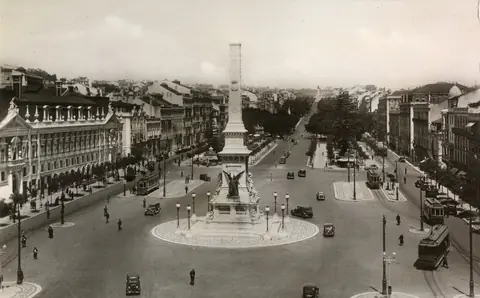
On the initiative of the doctor Adelaide Cabete, who would preside over it for more than twenty years, the National Council of Portuguese Women is born.12 For 32 years its headquarters were her consulting rooms, on the first floor of No. 13 Praça dos Restauradores.1 In November the first issue of its Boletim Oficial (Official Bulletin) comes out, edited by Maria Clara Correia Alves.3 It would be the most important and longest-lasting Portuguese feminist association of the first half of the 20th century.15
National Council of Portuguese Women · Adelaide Cabete · Maria Clara Correia Alves
- 1FCSH+Lisboa – NOVA FCSH
- 2Toponímia de Lisboa (Câmara Municipal de Lisboa)
- 3Biblioteca Nacional Digital
- 4Wikipédia (pt)
- 5Museu do Aljube Resistência e Liberdade (EGEAC)
- 6CIG – Comissão para a Cidadania e a Igualdade de Género
- 7Silêncios e Memórias (blogue)
- 8Arquivo de História Social (Instituto de Ciências Sociais da Universidade de Lisboa)
- 9Conselho Nacional das Mulheres Portuguesas — Arquivo de História Social (ICS-ULisboa), Espólio Pinto Quartin: Primeiro Congresso Feminista e de Educação (brochura de divulgação, com a comissão organizadora, as teses e o regulamento)
- 10Conselho Nacional das Mulheres Portuguesas — Arquivo de História Social (ICS-ULisboa), Espólio Pinto Quartin: Segundo Congresso Feminista e de Educação: regulamento (Lisboa, C.N.M.P., 1928)
- 11Secretaria-Geral do Ministério da Administração Interna, arquivo do Governo Civil de Lisboa (Archeevo)
1915
August 1915 · women: Strike by the Ramiro Leão & C.ª seamstresses
August 1915
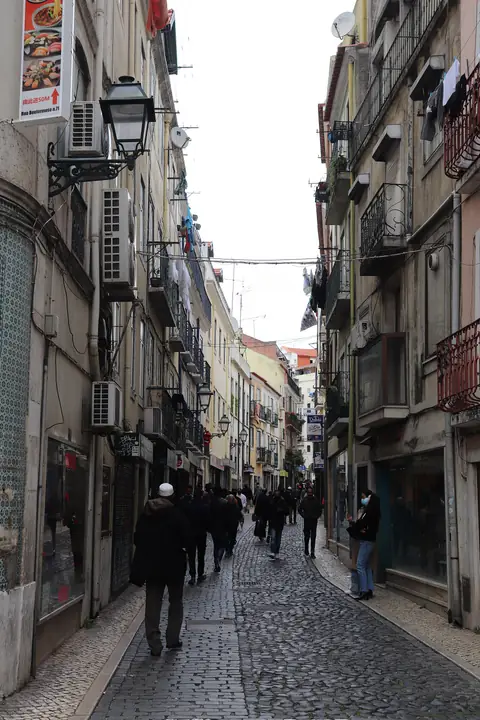
Called by the Seamstresses and Stitchers’ trade association, based on Rua do Benformoso, more than a hundred women workers from the Ramiro Leão & C.ª factory, on the Santana hill, go to a union meeting.1 Three of them — Miquelina Furtado, Laurinda Pinheiro and Lúcia Martins — are dismissed for sitting on a committee for the 8-hour working day, and their colleagues strike at the factory gate until they are dispersed by GNR cavalry and infantry.1 Twelve women workers resign in solidarity with those dismissed.1
Headquarters of the Seamstresses and Stitchers’ trade association (Rua do Benformoso)
1916
27 March 1916 · women: Creation of the Crusade of Portuguese Women
27 March 1916
A group of women presided over by Elzira Dantas Machado, wife of President Bernardino Machado, creates the Crusade of Portuguese Women, to provide moral and material assistance to whoever needed it because of the war with Germany.12 It grew out of the Women’s Committee “Pela Pátria” (For the Homeland), of which Ana de Castro Osório had been a founder.32 In 1917 it organised nursing courses for the military hospitals at home and on the European front, run at first by the doctor Sofia Quintino.12 The journalist Virgínia Quaresma placed the news agency she ran in Lisbon at the Crusade’s service.4
Ana de Castro Osório · Virgínia Quaresma · Sofia Quintino
- 1Portugal 1914-1918 (Instituto de História Contemporânea, NOVA FCSH)
- 2Wikipédia (pt)
- 3Toponímia de Lisboa (Câmara Municipal de Lisboa): A feminista e republicana Ana de Castro Osório
- 4Toponímia de Lisboa (Câmara Municipal de Lisboa): A primeira jornalista de reportagem portuguesa numa rua de Caselas
- 5Silêncios e Memórias (blogue)
1917
January 1917 · women: The National Council of Portuguese Women’s magazine “Alma Feminina” comes out
January 1917
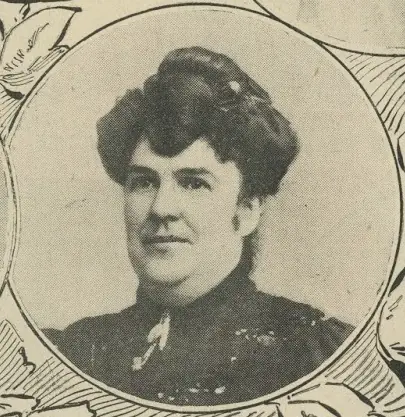
The National Council of Portuguese Women launches the bulletin Alma Feminina (Feminine Soul), which would be published until May 1946.1 The first issue, of January 1917, is edited by Maria Clara Correia Alves, who had already edited the Council’s Boletim Oficial (Official Bulletin).12 Later editors included Adelaide Cabete and, in 1929–1930, the jurist Elina Guimarães.32
Maria Clara Correia Alves · Adelaide Cabete · Elina Guimarães
1 August 1917 · women: Death of Angelina Vidal
1 August 1917
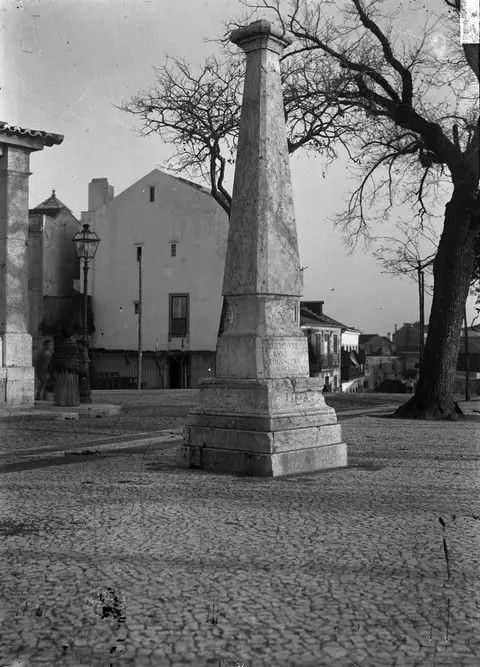
The republican and socialist propagandist Angelina Vidal dies in near-destitution at No. 41 Rua de São Gens, in Graça.1 The day before, she had been granted the survivor’s pension for the death of her husband, a Navy doctor, which the monarchy had refused her for being an “enemy of the institutions”.1 In 1924 Lisbon would name a street after her.1
House where Angelina Vidal died (Rua de São Gens, 41) · Angelina Vidal
1918
19 July 1918 · women: Decree opens the legal profession and other public posts to women
19 July 1918
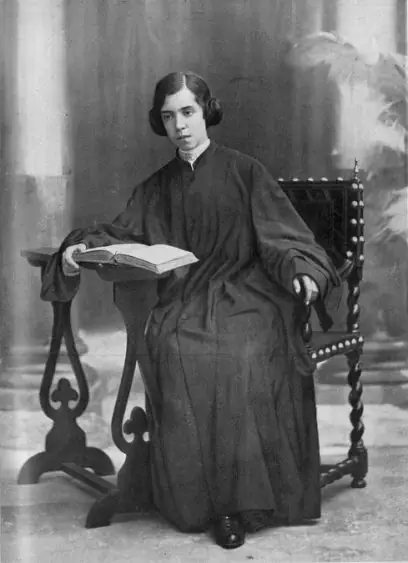
Decree No. 4676 of 19 July 1918, issued by Sidónio Pais’s government, allows women law graduates to practise as lawyers and to work as assistants to notaries and registrars, and opens posts in public offices to them.21 It stipulates, however, that there are “functions of direction and initiative” reserved for men, and it does not give women the vote.23 Regina Quintanilha had been practising law since 1913, with special authorisation; Aurora de Castro e Gouveia took advantage of the decree to practise law and become the country’s first woman notary.23
1919
23 February 1919: First issue of the workers’ newspaper “A Batalha” comes out
23 February 1919
The first issue of A Batalha (The Battle) comes out, “mouthpiece of the Portuguese workers’ organisation”, owned by the National Workers’ Union; from September 1919 it would be the organ of the General Confederation of Labour.1 Under the Military Dictatorship, its offices are destroyed and looted and publication is interrupted; it would come out again after 25 April, in the hands of Emídio Santana.1
10 May 1919 · women: Law abolishes civil restrictions on grounds of sex
10 May 1919
According to the feminist jurist Elina Guimarães, the restrictions in the Civil Code that prevented women from standing surety, acting as witnesses to deeds, being guardians or sitting on family councils were abolished by a law of 1917, ratified in 1918, and removed from the text of the Code in 1930.1 The 1910 Family Laws had left them standing.1
September 1919: General Confederation of Labour founded
September 1919
In a period of great social unrest, under the impact of the Russian Revolution and the end of the First World War, the General Confederation of Labour (CGT), an anarcho-syndicalist workers’ confederation, is founded; the newspaper A Batalha becomes its organ.1 Under the Republic and the Military Dictatorship, the CGT would lead many workers’ struggles and see many of its activists imprisoned and deported.1
1921
6 March 1921: Founding of the Portuguese Communist Party
6 March 1921
At a meeting at the headquarters of the Office Workers’ Association, in Lisbon, the Portuguese Communist Party is founded, under the impact of the Russian Revolution of 1917.1 Outlawed after the coup of 28 May 1926, it would live underground until 25 April 1974.1
15 October 1921: First issue of “Seara Nova” published
15 October 1921
The first issue of Seara Nova (New Harvest) comes out, a magazine of intellectuals “detached from political parties but not from political life”, who set out to impose the reforms the nation needed, above patronage and oligarchies.12 Among the “seareiros” (harvesters) were Jaime Cortesão, Raul Proença, António Sérgio and Aquilino Ribeiro.1 Hit by censorship, it stopped circulating between August 1926 and April 1927; when it returned, much of its editorial board and many of its contributors were in prison or in exile.2
1924
4–9 May 1924 · women: First Feminist and Education Congress
4–9 May 1924
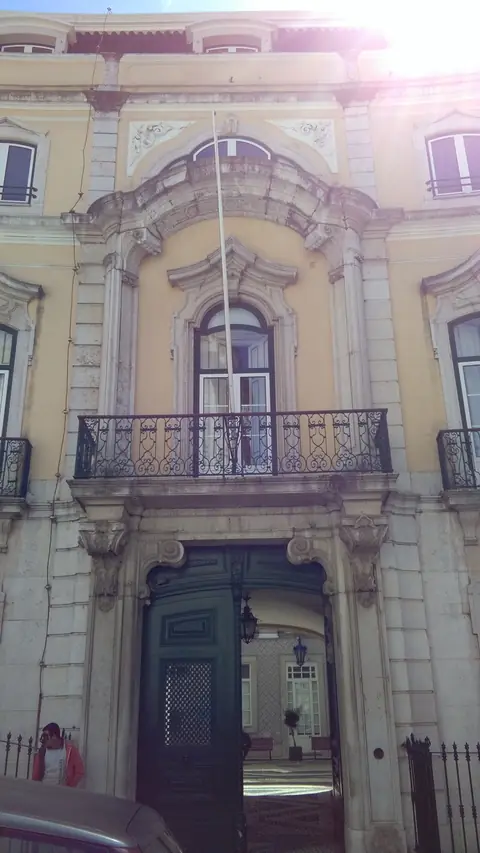
To mark its tenth anniversary, the National Council of Portuguese Women, presided over by Adelaide Cabete, organises the country’s first feminist congress, in the great hall of the Mutual Aid Association of Commercial Employees of Lisbon; it is opened by the President of the Republic, Manuel Teixeira Gomes.124 The notary Aurora de Castro e Gouveia calls for full political equality and the vote; the speakers also include Deolinda Lopes Vieira, Maria O'Neill, Angélica Viana Porto and Regina Quintanilha.34 It produced proposals that were very advanced for the time: a month’s rest before childbirth for working women, sex education in schools, equal pay for equal work, legal equality between spouses and votes for women.4
Paço de São Cristóvão / Palácio Vagos — Mutual Aid Association of Commercial Employees of Lisbon · Adelaide Cabete · Aurora de Castro e Gouveia · Maria O'Neill · Angélica Viana Porto · Deolinda Lopes Vieira · Regina Quintanilha
17 October 1924 · women: Lisbon names a street after Angelina Vidal
17 October 1924
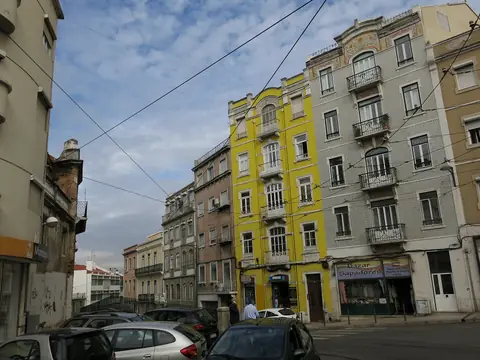
By edict of 17 October 1924, the old Caminho do Forno do Tijolo is renamed Rua Angelina Vidal, with the caption “Distinguished Lecturer and Propagandist of Social Emancipation” (Ilustre Conferencista e Propagandista da Emancipação Social).1 It was one of 14 women’s names given to streets by republican Lisbon between 1910 and 1926.2 Angelina Vidal had died in 1917, in near-destitution, in Graça.1
1926–1933The Military Dictatorship
The coup of 28 May 1926 ends parliament. Salazar becomes Minister of Finance in 1928 and from there builds the regime that would last 48 years.23 dates8 women
1926
28 May 1926: Military coup of 28 May ends the First Republic
28 May 1926
The military coup that began in Braga on 28 May 1926 overthrows the parliamentary Republic and opens the Military Dictatorship (1926–1933), from within which Salazar and the Estado Novo (“New State”) would emerge.12 In Lisbon, a military force closes Parliament.2 Years of revolts and repression follow, with hundreds dead and thousands of political prisoners and deportees.1
22 June 1926: Press censorship moves into the Carmo Barracks
22 June 1926
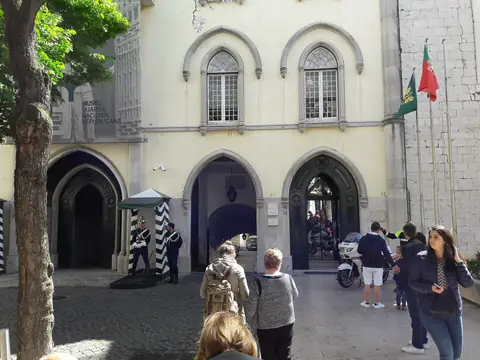
Less than a month after the coup of 28 May, the press censorship services start operating in the GNR barracks at Carmo, where they remain until 1934.1 Six other addresses would follow, in the Chiado, the Bairro Alto and Restauradores — between 1947 and 1961, in the Palácio Foz — until Rua da Misericórdia, where the censorship office was on 25 April 1974.1
Largo do Carmo and the Carmo Barracks · Headquarters of the Censorship Services / “Prior Examination” (1969-1974) · Palácio Foz – National Propaganda Secretariat / National Information Secretariat (SPN/SNI)
1927
1927 · women: The National Tobacco Company’s maternity clinic, in Xabregas
1927
After decades of complaints — Adelaide Cabete had called for crèches in factories in her medical thesis — the National Tobacco Company opens a maternity clinic next to the Xabregas factory, for the women tobacco workers and the wives of the male workers.1 There were consultations for mothers and children, milk for babies, free admission for a month before and a month after childbirth, and a crèche.1 The women workers of this factory had founded a women’s mutual aid association in 1894.1
3–9 February 1927: The February 1927 Revolt against the Military Dictatorship
3–9 February 1927
The first great revolt of the “reviralho” (turnaround) against the Military Dictatorship begins in Porto on 3 February, led by soldiers and civilians such as Sousa Dias, Jaime de Morais and Jaime Cortesão, and only reaches Lisbon on the 7th.1 The rebels surrender in Porto and, late in the afternoon of the 9th, in Lisbon.1 There follow dismissals of civil servants, the dissolution of Army and GNR units, hundreds of prisoners and deportees, executions by firing squad and the exile of many republicans, who in France would form the League for the Defence of the Republic.1
7–9 February 1927: The February 1927 Revolt in Lisbon
7–9 February 1927
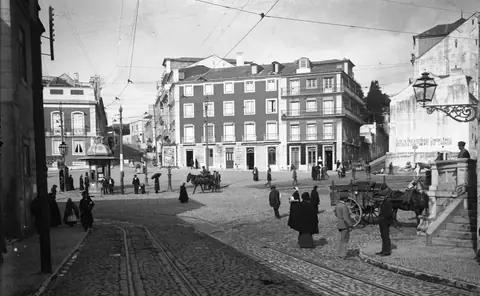
Begun in Porto on 3 February, the revolt only spreads to Lisbon on the 7th: sailors, GNR companies and armed civilians, commanded by men such as Mendes dos Reis and Agatão Lança, put up barricades on Rua Alexandre Herculano, in Largo do Rato and on Rua de São Filipe Néri.1 They surrender late in the afternoon of 9 February; that day, by the fountain in Largo do Rato, several civilians and sailors were executed by firing squad.12 The repression that followed created, in March, a Special Information Police, the embryo of the political police of the Estado Novo (“New State”).2
March 1927: Exiles create the League for the Defence of the Republic (the “Paris League”)
March 1927
After the defeat of the February revolt, exiled republicans — among them António Sérgio, Afonso Costa, José Domingues dos Santos, Álvaro de Castro and Jaime Cortesão — organise, first in Galicia and then in Paris, the League for the Defence of the Republic, known as the Paris League.1 Its founding document, Ao País (To the Country), drafted by António Sérgio, is made public in July 1927: it called for the reform of parliamentary institutions, public life, the economy and education.1
1928
1928: The Aljube becomes a political prison
1928
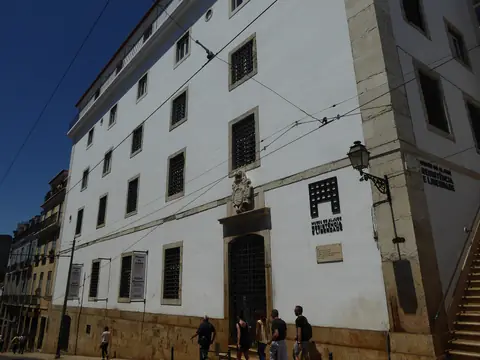
Two years after the coup, Aljube Prison becomes a political prison for male prisoners and serves as a “turntable” for those on their way to deportation.21 In 1934 it comes under the direct administration of the PVDE, as the prison for those held on remand; in 1935 the communal cells are partitioned and the visiting room gets a mesh screen between prisoners and visitors.23 From 1943 it has thirteen isolation cells, the “curros”.2
1928 · women: Maria Lamas takes over “Modas e Bordados”
1928
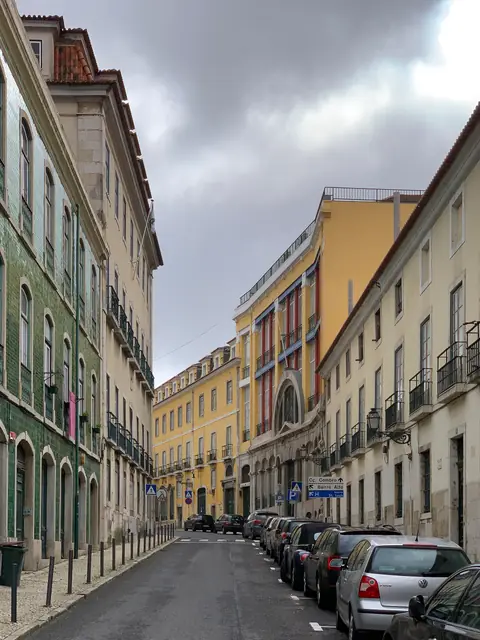
At the invitation of the writer Ferreira de Castro, Maria Lamas becomes editor of Modas e Bordados (Fashions and Embroidery), a supplement of O Século, and makes the magazine profitable by speaking “from woman to woman”.14 She would edit it until 1947, when she had to choose between the magazine and the National Council of Portuguese Women.31
March 1928: Óscar Carmona elected President, unopposed
27 April 1928: Salazar takes office as Minister of Finance
27 April 1928
To resolve the crisis in the public accounts, the Military Dictatorship brings into the Government António de Oliveira Salazar, professor of Economics and Finance at Coimbra, a leading figure in the Catholic Centre, with a reputation as a “financial wizard”.2 He takes office on 27 April 1928 and, in his inaugural speech, declares that he knows very well what he wants and where he is going.12 It was the beginning of the long march to power that would take him, in 1932, to the presidency of the Council (head of government).2
24 June 1928 · women: Second Feminist and Education Congress
24 June 1928
Now under the dictatorship, the National Council of Portuguese Women holds the Second Feminist and Education Congress; the opening session, with Adelaide Cabete and Angélica Viana Porto on the platform, is chaired by the Spanish doctor Elisa Soriano, with no government representative present.1 There were twelve papers, by ten women, and those on political and civil rights outnumbered those on education.1 Maria O'Neill presented the paper “Votes for women” (O voto às mulheres), and Elina Guimarães argued for the protection of working women.471 Deolinda Lopes Vieira, of the organising committee, argued for the “Single School” (Escola Única) and co-education, which the dictatorship had abolished in primary schools the year before.6
Adelaide Cabete · Maria O'Neill · Elina Guimarães · Angélica Viana Porto · Deolinda Lopes Vieira
- 1Wikipédia (pt): Conselho Nacional das Mulheres Portuguesas
- 2Silêncios e Memórias (blogue)
- 3Conselho Nacional das Mulheres Portuguesas — Arquivo de História Social (ICS-ULisboa), Espólio Pinto Quartin
- 4Wikipédia (pt): Maria O'Neill
- 5Museu do Aljube Resistência e Liberdade (EGEAC)
- 6Wikipédia (pt): Deolinda Lopes Vieira
- 7Historia Constitucional (revista eletrónica)
- 8Casa Comum – Fundação Mário Soares e Maria Barroso (arquivo Ruella Ramos)
1930
17 May 1930 · women: Maria Lamas organises the exhibition “Mulheres Portuguesas” (Portuguese Women)
17 May 1930
On the initiative of Maria Lamas, the exhibition “Mulheres Portuguesas — Exposição da Obra Feminina, Antiga e Moderna” (Portuguese Women — Exhibition of Women’s Work, Old and Modern) opens on 17 May in eleven rooms of the newspaper O Século, under the motto “Let us be women, intelligently” (Sejamos inteligentemente mulheres).51 It showed the work of women from all over the country, from craftswomen to intellectuals, and recreated the salons of Maria Amália Vaz de Carvalho and Carolina Michaëlis de Vasconcelos.54 It was organised with the National Council of Portuguese Women.4
8 July 1930: Salazar has the Colonial Act enacted
8 July 1930
Minister of Finance of the Military Dictatorship and, on an interim basis, Minister of the Colonies, Salazar has the Colonial Act enacted, which centralises the administration of the empire in Lisbon and subordinates the interests of the colonies to those of the metropole.1 “It is of the organic essence of the Portuguese Nation to fulfil the historic function of possessing and colonising overseas domains”, said Article 2.1 The act would be incorporated into the 1933 Constitution.1
1931
1931 · women: First vote for women, restricted to women heads of household and women with an education
1931
The Military Dictatorship recognises the vote for some women for the first time: Decree No. 19 694 of 5 May gives it to women heads of household, for parish councils, and Decree No. 20 073 of 15 July to those with secondary or higher education, for municipal councils.127 In this first phase, women’s vote applied only to parish councils and municipal councils.5 This closed a gap of almost twenty years since the 1913 Electoral Code.3
- 1Diário do Governo (Imprensa Nacional), no Diário da República Eletrónico: Decreto n.º 19 694, de 5 de maio de 1931 (Diário do Governo, I série, n.º 104): organiza o recenseamento eleitoral
- 2Diário do Governo (Imprensa Nacional), no Diário da República Eletrónico: Decreto n.º 20 073, de 15 de julho de 1931 (Diário do Governo, I série, n.º 162): altera a lei do recenseamento eleitoral
- 3Assembleia da República: O sufrágio feminino no parlamento na 1.ª República
- 4Assembleia da República: O Parlamento na história constitucional – O Estado Novo (1926-1974)
- 5Ordem dos Advogados
- 6Instituto de Ciências Sociais da Universidade de Lisboa – Análise Social
- 7jugular (blogue, SAPO)
15 February 1931: First issue of “Avante!”, the PCP’s clandestine newspaper
15 February 1931
The first issue of Avante! (Forward!) comes out, the central organ of the Portuguese Communist Party, addressed to the “proletariat of Portugal” and printed on clandestine presses.1 Publication was irregular and at one point stopped for two years; resumed in August 1941, it was not interrupted again until 25 April.1 The first legal Avante! came out on 17 May 1974.1
4 April 1931: First issue of “Diário da Manhã”, the National Union’s newspaper
4 April 1931
Diário da Manhã (Morning Daily) comes out in Lisbon, edited by Domingos Garcia Pulido, in the former offices of the republican newspaper O Mundo, on Rua da Misericórdia. Its first editorial calls it a “republican newspaper”, but it would be the semi-official organ and indoctrination vehicle of the National Union, increasingly devoted to the cult of Salazar.1 The last issue comes out on 30 January 1971, with Marcelo Caetano already in government; it is succeeded by Época.1
Headquarters of the “Diário da Manhã” (Rua da Misericórdia, 95)
1 May 1931: Deaths in the repression of May Day 1931 in Lisbon
1 May 1931
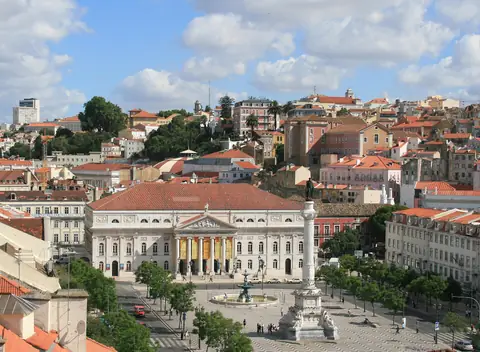
The PSP and the GNR open fire to put down the May Day (1 May) demonstrations in Lisbon: dozens wounded and at least four dead — a bricklayer’s labourer employed by the City Council, a Shell employee, a hardware shop assistant hit behind his counter and the owner of a hotel on Rua do Comércio, hit at his window.1 It was the high point of a year of strikes and revolts against the Military Dictatorship.2
5 May 1931 · women: Decree No. 19 694: women heads of household in parish council elections
5 May 1931
Under the dictatorship, Decree No. 19 694, which organises electoral registration, has the members of parish councils elected by heads of household “of either sex”.1 Women count as heads of household if they are widowed, divorced or judicially separated, with a family of their own, or married with the husband absent in the colonies or abroad.13 It is women’s first vote, still only for parish councils.3 In July, Decree No. 20 073 would give women with secondary or higher education the vote for municipal councils.2
- 1Diário do Governo (Imprensa Nacional), no Diário da República Eletrónico: Decreto n.º 19 694, de 5 de maio de 1931 (Diário do Governo, I série, n.º 104): organiza o recenseamento eleitoral
- 2Diário do Governo (Imprensa Nacional), no Diário da República Eletrónico: Decreto n.º 20 073, de 15 de julho de 1931 (Diário do Governo, I série, n.º 162): altera a lei do recenseamento eleitoral
- 3jugular (blogue, SAPO)
- 4Assembleia da República: O sufrágio feminino no Parlamento na 1.ª República (ComunicAR n.º 71, março de 2021)
- 5Assembleia da República: O Parlamento na história constitucional – O Estado Novo (1926-1974)
15 July 1931 · women: Decree No. 20 073: the vote for women with secondary or higher education
15 July 1931
Decree No. 20 073 extends the vote for parish councils to single women who are of age or emancipated, “with a family of their own and recognised moral probity”, and gives the vote for municipal councils to Portuguese women who are of age or emancipated and have secondary or higher education.1 It came almost twenty years after the 1913 Electoral Code had reserved the vote for men.23 It was a very restricted vote, and it did not reach parliament: it applied to parish councils and municipal councils.4
- 1Diário do Governo (Imprensa Nacional), no Diário da República Eletrónico
- 2Assembleia da República: O sufrágio feminino no Parlamento na 1.ª República (ComunicAR n.º 71, março de 2021)
- 3Assembleia da República: O sufrágio feminino no parlamento na 1.ª República
- 4Ordem dos Advogados
- 5jugular (blogue, SAPO)
26 August 1931: The “reviralho” revolt of 26 August 1931 in Lisbon
26 August 1931
Soldiers and civilians rise up in Lisbon against the Military Dictatorship, with airmen from the Alverca Air Base; they take up positions from the top of Parque Eduardo VII to Largo do Rato and attack the barracks of Caçadores 5 (Light Infantry), in Campolide, which remains loyal to the government.15 The fighting leaves some 40 dead, and the rebels taken prisoner are taken to the Civil Government, on Rua Capelo.1 On 2 September, 358 deportees, among them the military leaders of the revolt, embark on the ship Pedro Gomes for Timor.2
Largo do Rato (formerly Praça do Brasil) · Parque Eduardo VII · Lisbon Civil Government and the PSP’s 1st Station
- 1Museu do Aljube Resistência e Liberdade (EGEAC): Golpe de 26 de agosto de 1931
- 2Museu do Aljube Resistência e Liberdade (EGEAC): Alberto de Almeida
- 3Comissão Comemorativa 50 Anos 25 de Abril
- 4Wikipédia
- 5Secretaria-Geral do Ministério das Finanças – Arquivo
- 6Casa Comum – Fundação Mário Soares e Maria Barroso (arquivo Ruella Ramos)
1932
5 July 1932: Salazar becomes President of the Council of Ministers
5 July 1932
Minister of Finance since 1928, and with a predominant influence in General Domingos de Oliveira’s government since January 1930, Oliveira Salazar becomes head of government on 5 July 1932, and paves the way for the institutionalisation of the Estado Novo (“New State”), which the 1933 Constitution would enshrine.1
5 December 1932: Creation of the Special Military Courts
5 December 1932
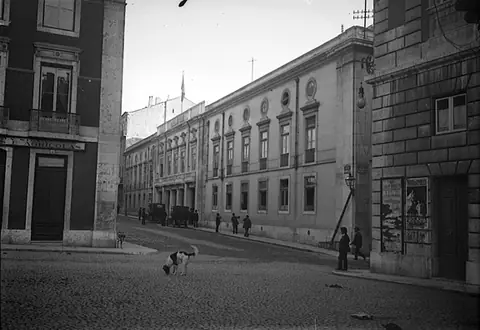
Decree No. 21 942 creates the Special Military Courts, in Lisbon and Porto, to try political crimes, with sentences of banishment to be served “in a penal colony established on an island in the colonies”.1 In Lisbon, prisoners often awaited trial in the cells of the 1st Police Station, at the Civil Government, where trials were also held.2 In 1945 they would give way to the Plenary Courts.1
1933
1933 · women: The first girls’ secondary school moves into a building of its own
1933
Heir to the Liceu Maria Pia, the Liceu Maria Amália Vaz de Carvalho moves into the building on Rua Rodrigo da Fonseca designed by Miguel Ventura Terra — the first to be purpose-built for a girls’ secondary school.13 Maria Guardiola had been headmistress since 1928, and Domitila de Carvalho, the Maria Pia’s first headmistress, was still teaching Mathematics there.24 The following year, both would be elected among the first three women deputies.2
Liceu Maria Amália Vaz de Carvalho (successor to the Liceu Maria Pia, the first girls’ secondary school) · Maria Guardiola · Domitila de Carvalho
1933–1958The Estado Novo
The 1933 Constitution, the political police, censorship, Tarrafal. And an opposition that would not be silenced: the strikes, the MUD, the presidential candidacies.81 dates39 women
1933
11 April 1933 · women: The Estado Novo Constitution comes into force
11 April 1933
Approved by plebiscite on 19 March — with abstentions counted as votes in favour — the 1933 Constitution comes into force on 11 April and establishes the Estado Novo (“New State”).12 Article 5 declares everyone equal before the law, “save, as regards women, the differences resulting from their nature and from the good of the family”, a formula that justified the legal inequality of women.34 On the same day the decree on prior censorship is published.5
- 1RTP Ensina
- 2Assembleia da República: O Parlamento na história constitucional – O Estado Novo (1926-1974)
- 3Assembleia da República: A revisão do Código Civil e os Direitos das Mulheres (1977)
- 4Instituto de Ciências Sociais da Universidade de Lisboa – Análise Social
- 5Comissão Comemorativa 50 Anos 25 de Abril
11 April 1933: Decree-Law No. 22 469 introduces prior censorship
11 April 1933
On the day the new Constitution comes into force, Decree-Law No. 22 469 regulates the prior censorship of periodicals, to prevent the “perversion of public opinion”.1 In June the Directorate-General of Censorship Services is created, which at the time worked in the GNR barracks at Carmo.13 Censorship would extend to books, shows, radio and cinema, and would only be abolished after 25 April.12
29 August 1933: The State Surveillance and Defence Police (PVDE) is created
29 August 1933
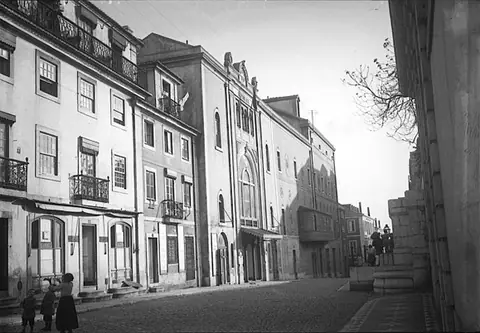
Decree-Law No. 22 992 of 29 August creates the State Surveillance and Defence Police (PVDE), the political police that bore that name until 1945, when it gave way to the PIDE.13 The regime opts for harsher repression to break the resistance.2 The headquarters on Rua António Maria Cardoso only became fully operational from 1938; until then, much of the violence and torture took place in PSP police stations, almost always in coordination with the Aljube.5
PVDE / PIDE / DGS headquarters · Aljube Prison
- 1Diário do Governo (Imprensa Nacional), no Diário da República Eletrónico
- 2Museu do Aljube Resistência e Liberdade (EGEAC)
- 3Comissão Comemorativa 50 Anos 25 de Abril: Prisões da Ditadura
- 4Comissão Comemorativa 50 Anos 25 de Abril: Ditadura militar e ascensão do salazarismo
- 5Memória Comum – Memorial aos Presos e Perseguidos Políticos
23 September 1933: National Labour Statute bans strikes
23 September 1933
Inspired by Mussolini’s Carta del Lavoro (Labour Charter), the National Labour Statute imposes the corporative model and the “fascisation” of the trade unions; together with the Constitution, it bans strikes and lockouts.21 The workers’ response was the general strike of 18 January 1934.2 Strikes would only become legal again with Decree-Law No. 392/74.1
25 September 1933: Creation of the National Propaganda Secretariat
25 September 1933
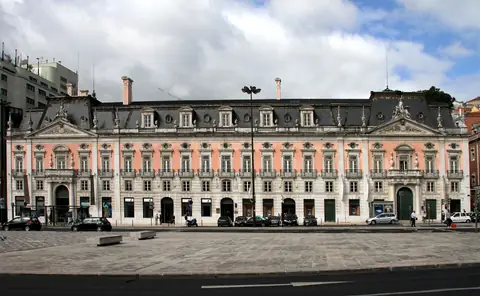
Decree-Law No. 23 054 creates, attached to the Presidency of the Council, the National Propaganda Secretariat, whose mission included “combating by every means” the penetration into the country of “any ideas that disturb and dissolve national unity and interest” and using radio, cinema and theatre as “indispensable means for its action”.1 Run by António Ferro, it was a central part of the regime’s propaganda machine.24 In 1940 the State buys the Palácio Foz, in Restauradores, for its headquarters.3 In 1944 a decree-law concentrates the propaganda, tourism, press and censorship services in the National Information Secretariat, which succeeded it.5
Palácio Foz – National Propaganda Secretariat / National Information Secretariat (SPN/SNI)
- 1Diário do Governo (Imprensa Nacional), no Diário da República Eletrónico
- 2Wikipédia (ponto de partida): Secretariado de Propaganda Nacional
- 3Wikipédia (ponto de partida): Palácio Foz
- 4Comissão Comemorativa 50 Anos 25 de Abril: Ditadura militar e ascensão do salazarismo
- 5Comissão Comemorativa 50 Anos 25 de Abril: A Censura no Salazarismo
19 November 1933: 150 political prisoners deported to Angra do Heroísmo
19 November 1933
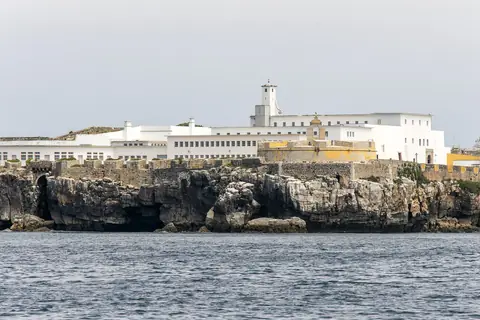
Brought from Peniche Fort, 150 prisoners — soldiers and civilians, republican rebels of the “reviralho”, trade unionists, anarchists and communists, tried and convicted by a military court — are deported to the fortress of São João Baptista, in Angra do Heroísmo.1 It was the first batch since the fortress had become a political police prison, three months after the creation of the PVDE.1
1934
18 January 1934: The revolutionary general strike of 18 January 1934
18 January 1934
Anarcho-syndicalists, communists and socialists call a general strike against the “fascisation” of the trade unions imposed by the National Labour Statute.1 In Lisbon a bomb goes off at Poço do Bispo and the railway line is cut at Xabregas; in Marinha Grande, the glassworkers occupy the GNR post and the town hall.1 Prisoners such as António Gato Pinto pass through the cells of the Civil Government and the Aljube; several participants would die in Tarrafal, among them Bento Gonçalves and Mário Castelhano.31 That year, the PVDE takes over the direct administration of the political prisons — the Aljube, Peniche and Angra — and in January 1935 also the South Redoubt of Caxias.4
Lisbon Civil Government and the PSP’s 1st Station · Aljube Prison · Tarrafal Concentration Camp (Cape Verde) · Caxias Fort — the political prison · Peniche Fortress — the political prison
16 June 1934: The First Portuguese Colonial Exhibition opens in Porto
16 June 1934
The First Portuguese Colonial Exhibition opens in Porto, curated by Henrique Galvão, an army officer who would become a prominent opponent of Salazarism.1 A moment of imperial exaltation, the exhibition included “human zoos”, in which men, women and children from the colonies were displayed to the public in their supposed “habitats”.1
6 November 1934 · women: Decree-Law No. 24 631: some women can vote and be elected to the National Assembly
6 November 1934
The new electoral law of the Estado Novo (“New State”) defines who can be elected to the National Assembly — Portuguese citizens with electoral capacity who can read and write — considers as a voter anyone on the electoral register, and sets the first election for 16 December 1934.1 Those who could not be elected included anyone imprisoned for political or social offences.1 According to the historian Irene Flunser Pimentel, the women who could vote and be elected were single women over 21 who had their own income or who worked, women heads of household, and married women with a secondary school diploma or who paid a certain amount of property tax.2 In the December elections the first three women deputies would be elected.2
- 1Diário do Governo (Imprensa Nacional), no Diário da República Eletrónico: Decreto-Lei n.º 24 631, de 6 de novembro de 1934 (Diário do Governo, I série, n.º 261): requisitos de elegibilidade para a Assembleia Nacional e exercício do direito eleitoral
- 2jugular (blogue, SAPO)
- 3Assembleia da República
- 4Diário do Governo (Imprensa Nacional), no Diário da República Eletrónico: Decreto-Lei n.º 23 406, de 27 de dezembro de 1933 (Diário do Governo, I série, n.º 295): recenseamento eleitoral
16 December 1934 · women: The first three Portuguese women deputies are elected
16 December 1934
In the elections of 16 December 1934, the National Union list takes the first three Portuguese women deputies to the National Assembly: the teacher and doctor Domitila de Carvalho, the lawyer Maria Cândida Parreira and the teacher Maria Guardiola.12 They sat mainly on the labour and welfare committee and the education committee, as these were considered matters “more connected with women’s interests”.1 It was not the First Republic that opened the doors of parliament to women, but Salazar’s regime, which saw in them a means of spreading the ideology of the Estado Novo (“New State”).1 The Assembly opened on 11 January 1935.3
Palácio de São Bento · Domitila de Carvalho · Maria Cândida Parreira · Maria Guardiola
1935
January 1935: Caxias’s South Redoubt passes to the political police
January 1935
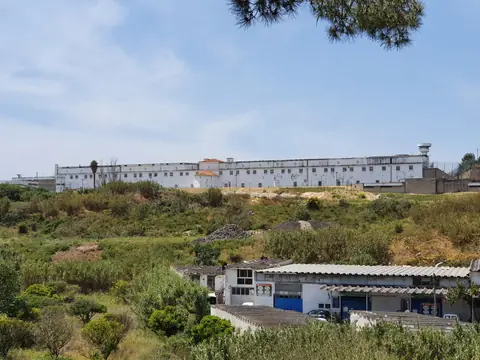
The South Redoubt of Caxias Fort, a prison since 1916, comes under the PVDE’s control, for male prisoners.1 Caxias thus joins the Aljube as a political prison in the Lisbon area; in 1938, the North Redoubt would become the women’s prison.1
11 January 1935 · women: The National Assembly opens, with the first three women deputies
11 January 1935
Elected in December 1934, the National Assembly of the Estado Novo (“New State”) meets for the first time at the Palácio de São Bento, with the arrival of the President of the Republic, Óscar Carmona, and of Salazar.12 Among the deputies are the first three women elected to a parliament in Portugal: Domitila de Carvalho, Maria Cândida Parreira and Maria Guardiola.36 According to the Assembly of the Republic, only women with a special, secondary or higher education had been able to vote.4
Palácio de São Bento · Domitila de Carvalho · Maria Guardiola · Maria Cândida Parreira · António de Oliveira Salazar
- 1Assembleia da República: Chegada de Óscar Carmona e Oliveira Salazar à abertura da Assembleia Nacional, 11 de janeiro de 1935 (legenda)
- 2Assembleia da República: Exterior do Palácio de S. Bento no dia da abertura da Assembleia Nacional, 11 de janeiro de 1935 (legenda)
- 3Assembleia da República: As três primeiras mulheres eleitas Deputadas (legenda)
- 4Assembleia da República: O Parlamento na história constitucional – O Estado Novo (1926-1974)
- 5Ordem dos Advogados
- 6Susana Fontes e Sónia Coelho / Faces de Eva (SciELO Portugal)
- 7Assembleia da República (Comunicar, n.º 87)
- 8Diário do Governo (Imprensa Nacional), no Diário da República Eletrónico
13 June 1935: The FNAT, the National Foundation for Joy at Work, is created
13 June 1935
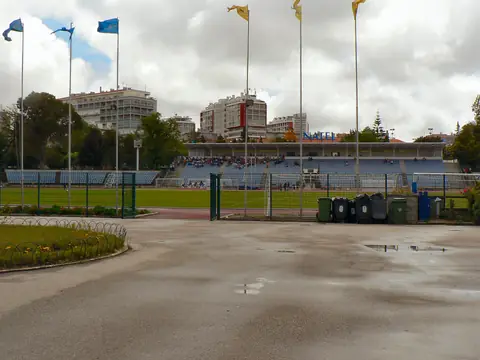
Decree-Law No. 25 495 creates the National Foundation for Joy at Work, to promote “the use of the free time of Portuguese workers”: everything that might “strengthen, educate and entertain the body and spirit of those who work” was to be treated with “special care”.1 It followed the model of Mussolini’s Dopolavoro and Hitler’s “Strength through Joy”, and served the members of the national syndicates, the Casas do Povo (People’s Houses) and the Casas de Pescadores (Fishermen’s Houses).2 In 1946 it set up its headquarters in the Palácio Camarido, on Calçada de Santana, and in 1959 it opened its stadium in Alvalade, today the Estádio 1.º de Maio (May Day Stadium); in 1975 it was renamed INATEL.32
Palácio Camarido – FNAT headquarters · FNAT Stadium (renamed Estádio 1.º de Maio)
10 November 1935 · women: Establishment of the Portuguese Women’s Association for Peace
10 November 1935
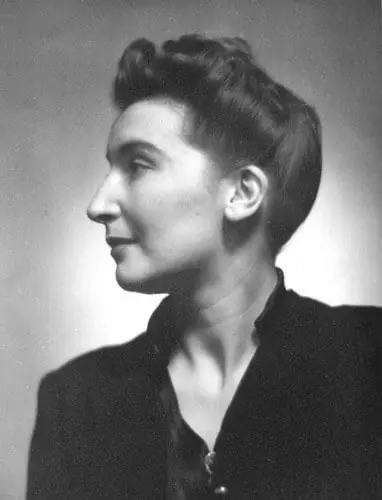
The Portuguese Women’s Association for Peace is established, with its headquarters in Lisbon, first on Rua do Loreto and then on Rua Latino Coelho.1 It presented itself as non-political and non-religious, but it brought together anti-fascist and anti-war women, from Stella Piteira Santos and Maria Alda Nogueira to Isabel Aboim Inglez and Manuela Porto.43 Maria Lamas was its president from 1938.2 It was dissolved in 1952, by order of the Minister of the Interior.1
Headquarters of the Portuguese Women’s Association for Peace · Maria Lamas · Stella Piteira Santos · Isabel Aboim Inglez · Manuela Porto · Maria Alda Nogueira
1936
11 April 1936 · women: Law No. 1941 creates the Portuguese Youth (Mocidade Portuguesa)
11 April 1936
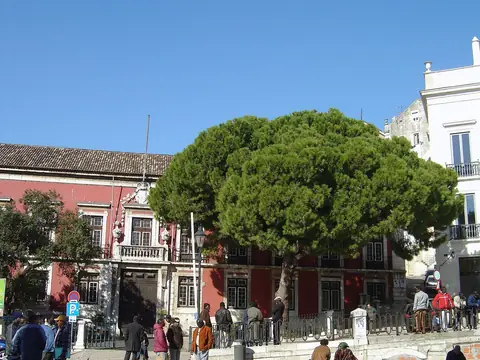
Law No. 1941 of 11 April 1936 creates the Portuguese Youth (Mocidade Portuguesa), the organisation through which the regime regimented young people.1 The Women’s Portuguese Youth (Mocidade Portuguesa Feminina) would be created by Decree-Law No. 28 262 of 8 December 1937, according to the historian Irene Pimentel.3 The Mocidade would have its headquarters in the Palácio da Independência, on Largo de São Domingos, until 1974.2 Both were abolished by Decree-Law No. 171/74, on 25 April 1974 itself.1
Palácio da Independência – headquarters of the Portuguese Youth (Mocidade Portuguesa)
- 1Centro de Documentação 25 de Abril, Universidade de Coimbra
- 2Wikipédia (ponto de partida)
- 3Hemeroteca Municipal de Lisboa
- 4Diário do Governo (Imprensa Nacional), no Diário da República Eletrónico: Lei n.º 1941, de 11 de abril de 1936 (Diário do Governo, I série, n.º 84): bases da organização do Ministério da Instrução Pública, que passa a Ministério da Educação Nacional
- 5Diário do Governo (Imprensa Nacional), no Diário da República Eletrónico: Decreto n.º 28 262, de 8 de dezembro de 1937 (Diário do Governo, I série, n.º 285): aprova o regulamento da Mocidade Portuguesa Feminina
23 April 1936: Decree creates the Tarrafal concentration camp
23 April 1936
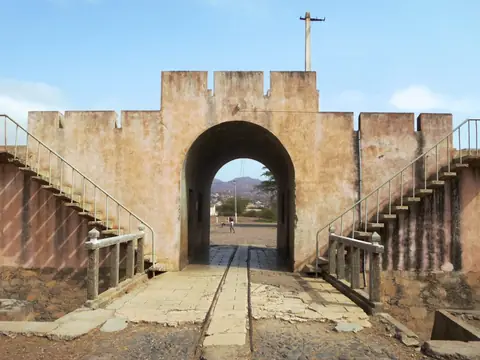
Decree-Law No. 26 539 creates the “penal colony for political and social prisoners” of Tarrafal, on the island of Santiago, in Cape Verde — the “Camp of Slow Death” (Campo da Morte Lenta).1 The camp doctor, Esmeraldo Pais, used to say: “I am not here to cure, but to sign death certificates”.1 The camp received its first prisoners on 29 October 1936; until it closed, in 1954, 340 passed through it, and 34 died there.1
18 July 1936: Franco’s uprising: the Spanish Civil War begins
18 July 1936
Franco’s military uprising against the Spanish Republic starts the Spanish Civil War.1 Salazar supports Franco, and between 1936 and 1939 the Portuguese dictatorship goes through one of its most violent periods: 9,575 arrests made by the political police and 38 known deaths, most of them in the prisons and in Tarrafal.1
6 August 1936 · women: The “Milk Revolt” in Madeira; ten women prisoners sent to Lisbon
6 August 1936
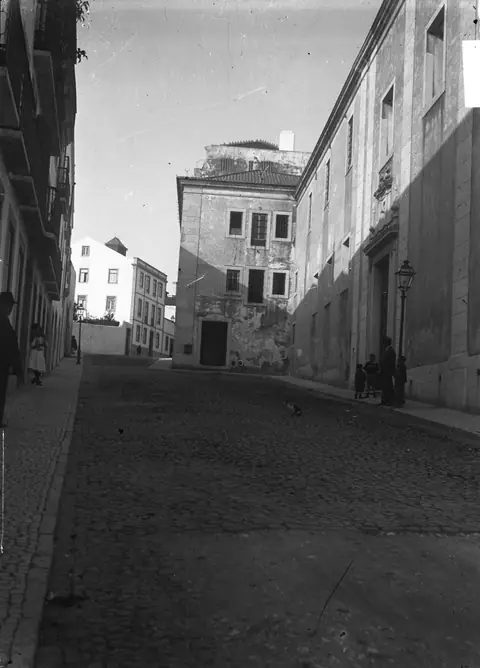
A popular protest against the dairy monopoly, the revolt goes on for more than a month and results in 557 arrests and 7 deaths.1 In June 1937, ten women from Ribeira Brava — Ludovina de Jesus da Corte, Agostinha da Câmara, Francisca Andrade, Maria de Jesus Silva, Maria Rosa de Abreu, Maria de Jesus Andrade, Conceição da Câmara Rodrigues, Tereza da Corte, Virgínia de Jesus and Maria de Souza — are sent to the Mónicas Prison, in Lisbon.1 The prisoners taken to the mainland were held for between two and three years.1
15 August 1936 · women: Statutes of the Mothers’ Work for National Education approved
15 August 1936
Decree No. 26 893 approves the statutes of the Mothers’ Work for National Education (OMEN), set up under the patronage of the Ministry of National Education to “stimulate the educational action of the family”. Its aims included “guiding Portuguese mothers” in bringing up their children, promoting “the comfort of the home”, “defending good morals, namely as regards dress, reading and entertainment” and organising the women’s section of the Portuguese Youth.1 It spread the role the regime assigned to women: mothers devoted to the family and to housework, wives obedient to their husbands, the “head” of the family.2 Maria Guardiola was its vice-president from 1937 until it was abolished, in 1975.3
8 September 1936: The Sailors’ Revolt on the Tagus
8 September 1936
Sailors from the ships Afonso de Albuquerque, Dão and Bartolomeu Dias, organised by the Revolutionary Organisation of the Navy, linked to the PCP, rise up on the Tagus against the dictatorship.1 Salazar has the ships shelled: there are 12 dead and 208 arrested, and 34 sailors go with the first contingent to Tarrafal.1 Most only got out when the camp closed, in 1954; five died there.1
- 1Museu do Aljube Resistência e Liberdade (EGEAC)
- 2Wikipédia
- 3Casa Comum – Fundação Mário Soares e Maria Barroso (arquivo Ruella Ramos): «Esta madrugada no Tejo: como se revoltaram marinheiros de duas unidades navais» (Diário de Lisboa, n.º 4961, 8 de setembro de 1936)
- 4Casa Comum – Fundação Mário Soares e Maria Barroso (arquivo Ruella Ramos): «Os mortos e os feridos» e nota oficiosa do Conselho de Ministros (Diário de Lisboa, n.º 4962, 9 de setembro de 1936)
30 September 1936: The Portuguese Legion is created
30 September 1936
Decree-Law No. 27 058 of 30 September 1936 creates the Portuguese Legion, the regime’s militia.1 On 25 April 1974 it was the first paramilitary force to surrender, and Decree-Law No. 171/74 abolished it.21
17 October 1936: The rebel sailors embark for Tarrafal
17 October 1936
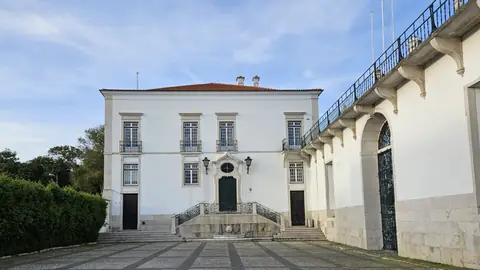
Handed over to the PVDE after the revolt of 8 September, the imprisoned sailors were held at the police post of the “Mitra”, in eastern Lisbon, and from 18 September in the Penitentiary.12 Sentenced by the Special Military Court, on 17 October they boarded the ship that left the next day for the newly created camp at Tarrafal.23 Among them were the gunner Francisco José Pereira, who in September 1937 was the first deportee to die in the camp, and the sailor Jacinto de Melo Faria Vilaça, who died there in 1941, aged 26.12
“Mitra” – the Mitra Asylum and the 3rd Post of the PSP’s 14th Station · Lisbon Penitentiary · Tarrafal Concentration Camp (Cape Verde)
29 October 1936: The first 152 prisoners arrive at Tarrafal
29 October 1936
Having left Lisbon on 18 October in the holds of the ship Luanda, the first 152 deportees — among them participants in the general strike of 18 January 1934 and the Sailors’ Revolt — arrive at the Tarrafal camp after a twelve-day voyage.1 The camp was designed to isolate them from the world, in subhuman conditions of captivity, ill-treatment, forced labour and torture.1
24 November 1936 · women: Women primary teachers may only marry with the minister’s authorisation
24 November 1936
Decree-Law No. 27 279, which lays down the foundations of primary education, provides in Article 9 that “women teachers may not marry without the authorisation of the Minister of National Education”, who will only give it if the bridegroom has “good moral and civil conduct” and “salary or income, documented, in keeping with the teacher’s salary”.1 The same law demands “irreproachable moral conduct” from those who teach and makes it compulsory for primary school pupils to be enrolled in the Portuguese Youth.1 The authorisation only ceased to be required in December 1969.2
- 1Diário do Governo (Imprensa Nacional), no Diário da República Eletrónico: Decreto-Lei n.º 27 279, de 24 de novembro de 1936 (Diário do Governo, I série, n.º 276): bases do ensino primário
- 2Diário do Governo (Imprensa Nacional), no Diário da República Eletrónico: Decreto-Lei n.º 49 473, de 27 de dezembro de 1969 (Diário do Governo, I série, n.º 301): revoga a autorização para o casamento das professoras primárias
1937
20 January 1937: The “Ministry Bombs”: anarchists attack Franco’s supporters in Lisbon
20 January 1937
In solidarity with republican Spain, anarchists set off bombs at the Ministry of National Education, the Emissora Nacional, the Rádio Clube Português and the Casa de Espanha, among other targets; the next day devices go off at the Ministry of War.1 The targets were chosen through contacts of the anarchist Emídio Santana.1 Their enthusiasm would lead the anarchists to the attempt on Salazar’s life, in July.1
4 July 1937: Bomb attack on Salazar on Avenida Barbosa du Bocage
4 July 1937
On Sunday morning, a bomb hidden in a sewer on Avenida Barbosa du Bocage explodes as the car arrives carrying Salazar, who was on his way to Mass at Josué Trocado’s private chapel; through an error of a few centimetres, it blows in the wrong direction, and the dictator escapes unhurt.12 The attack is attributed to anarchists such as Emídio Santana, linked to other members of the Popular Front.14 The PVDE arrests and tortures innocent people; two of them, José Lopes da Silva and Jacinto Estêvão de Carvalho, die.1
Avenida Barbosa du Bocage, no. 96 (Josué Trocado’s private chapel) · Emídio Santana · António de Oliveira Salazar
1938
May 1938: Francisco de Paula Oliveira Júnior (“Pavel”) escapes from the Aljube
May 1938
Francisco de Paula Oliveira Júnior, “Pavel”, general secretary of the PCP, arrested on 10 January 1938 in his clandestine house, escapes from the Aljube with the help of the nurse Augusto Rodrigues, who joins the escape along with another, very sick prisoner, “Casanova”.1 Hidden on a Norwegian boat, they head for Paris; Pavel would end up in exile in Mexico, where he was a journalist, writer and art critic, and a friend of Frida Kahlo and Diego Rivera.1
May 1938 · women: Caxias’s North Redoubt becomes the political prison for women
May 1938
The North Redoubt of Caxias Fort comes under the control of the political police, for women.1 The women prisoners served their entire remand and their sentences there, two by two in rooms, with exercise time only with the same companion.2 Some had their young children with them, or children born in prison; at visits, through a pane of glass, they could not hug them.2
1 July 1938 · women: Decree requires nurses to be single or widowed
1 July 1938
Decree No. 28 794 provides that nursing and domestic service posts filled by women may only be taken by single women or childless widows, “who shall be replaced as soon as these conditions cease to be met”.12 So begins the nurses’ 25-year struggle, which only ended with Decree-Law No. 44 923 of March 1963.1
1939
17 March 1939: Salazar and Franco sign the Iberian Pact
17 March 1939
A few days before Madrid falls to Franco’s forces, Salazar and Franco sign the Iberian Pact, which seals the alliance between the two dictatorships.1 During the Civil War, the “Viriatos”, Portuguese militias organised by Jorge Botelho Moniz, fought on Franco’s side, the Portuguese political police handed over republican refugees, and the Rádio Clube Português, founded by Botelho Moniz, broadcast to encourage Franco’s forces.1
December 1939: Miguel Torga imprisoned in the Aljube
December 1939
Arrested in Leiria because of O Quarto Dia (The Fourth Day), one of the volumes of A Criação do Mundo (The Creation of the World), seized that year, the writer Miguel Torga spends three months in the cells of the Aljube.12 There he writes the poem “Canção” (Song), dated 30 December 1939: “It lacks freedom. Only that pain hurts it.” (Falta-lhe a liberdade. Só essa dor lhe dói.)1
1940
7 May 1940 · women: Concordat with the Holy See bans divorce for Catholic marriages
7 May 1940
The Concordat signed on 7 May 1940 between Portugal and the Holy See restores civil effects to Catholic marriage and bans divorce for those who marry in church from then on; those who had married before, even in church, and those who married only in a civil ceremony could still divorce.134 Thirty years after the 1910 Divorce Law, which had allowed both contested divorce and divorce by mutual consent, Catholic marriages became indissoluble once more.3 The ban applied to both spouses, but weighed far more heavily on the wife, the socially, economically and legally weaker party.2 Only the 1975 Additional Protocol gave divorce back to those married in church.14
23 June to 2 December 1940: The Exhibition of the Portuguese World opens in Belém
23 June to 2 December 1940
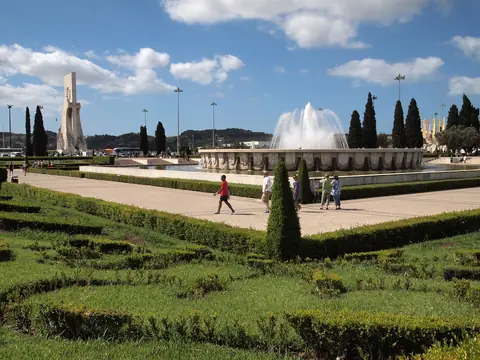
To celebrate the “double centenary” — of the founding of the kingdom, in 1140, and of the Restoration, in 1640 — the Estado Novo (“New State”) opens in Belém, the day after the armistice between France and Germany, the regime’s great propaganda event, around the new Praça do Império and the first Padrão dos Descobrimentos (Monument to the Discoveries).12 It has a historical section, a section of metropolitan ethnography, with replicas of Portuguese villages, and a Colonial Section, in the Colonial Garden; visits up to its closure, on 2 December, are estimated at three million.1
Praça do Império · Padrão dos Descobrimentos (Monument to the Discoveries) · Tropical Botanical Garden (formerly the Colonial Garden)
27 June 1940 · women: The Colonial Section opens, with 138 people from the colonies put on display to the public
27 June 1940
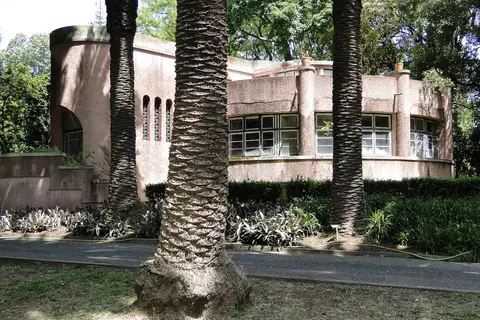
In the Colonial Garden the Colonial Section of the Exhibition of the Portuguese World opens, directed by Henrique Galvão: among pavilions and replica villages, 138 men, women and children recruited in the colonies live in full view of visitors, in a “human zoo”, as the historian Cláudia Castelo calls it.1 Among them are the King of Kongo, Dom Pedro VII, with the queen and the princess; Verónica, the wife of a Timorese chief; and Chopi women from Mozambique, photographed at a sewing class given by a missionary nun.1 The Bijagós people from Guinea are placed on the island in one of the lakes.2 In October, the executive committee decides to send them home before the winter, citing health reasons.1
1941
5 November 1941: Strike by the Covilhã woollen mill workers
5 November 1941
In a time of hunger and rationing, with the Second World War opening the first great crisis of the Estado Novo (“New State”), the woollen mill workers of Covilhã go on strike — one of the first signs of the workers’ struggles to come.1 Felisberto Fernandes Berto, who stood out in the struggle, was arrested and taken to the Aljube and Caxias prisons, and died in the Hospital do Desterro, in Lisbon, on 20 December 1941.1 Ferreira de Castro evoked the strike in the novel A Lã e a Neve (Wool and Snow), published in 1947.1
1943
1943: Construction of the Aljube “curros” (isolation cells)
1943
On the second floor of the Aljube, thirteen isolation cells are built, the “curros” or “gavetas” (drawers): about one metre wide by two long, closed by two doors and almost all in half-darkness 24 hours a day.12 In the first period of incommunicado detention, which could last up to six months, the prisoner had no pen, pencil, paper, newspapers, books or watch.1 Next to the toilets was the punishment cell, No. 14, where the prisoner stayed in the dark, without a straw mattress and often on bread and water.1 The Aljube political prison closed in the summer of 1965.2
26 July 1943: The 1943 wave of strikes begins in the Lisbon region
26 July 1943
On 26 July the strike movement begins that, in Lisbon, Almada, Barreiro, Seixal, Amora and other parts of the country, would involve some 50,000 workers, according to the PCP, which organised it.1 They demanded higher wages, more basic foodstuffs and “Peace, bread, freedom and work” (Paz, pão, liberdade e trabalho).1 The Government threatened to dismiss anyone who did not return to work; there were violent clashes with the police, factories shut down and many arrests.1
10–13 November 1943: The PCP’s Third Congress (the first illegal one) in Monte Estoril
10–13 November 1943
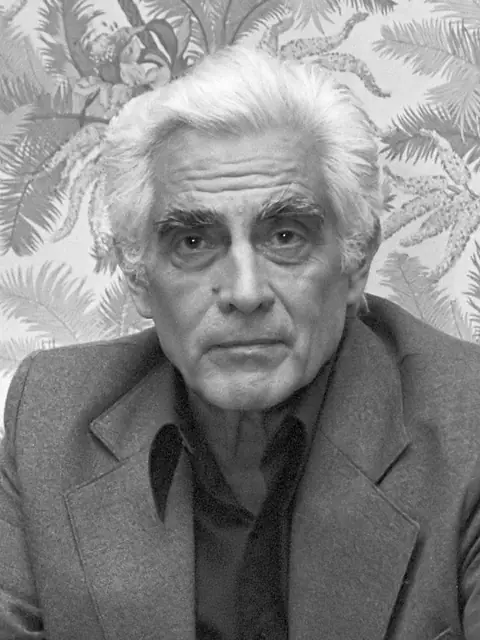
At the Vila Arriaga, a small mansion on Rua do Pinheiro, in Monte Estoril, the PCP holds its Third Congress, the first underground.1 It elects to the Central Committee, among others, Álvaro Cunhal, José Gregório, Manuel Guedes, Pires Jorge, Sérgio Vilarigues, Alfredo Dinis and Dias Lourenço, and proposes a common front of the various democratic sectors against the regime — the “frontist line of anti-fascist unity”, within which the MUNAF would be born in December.12 The house was occupied by 17 clandestine full-time party workers who, when summoned, did not know what they were going to; security was stepped up and an escape route was planned in case the political police raided it.1
December 1943: The Movement of National Anti-Fascist Unity (MUNAF) is founded
December 1943
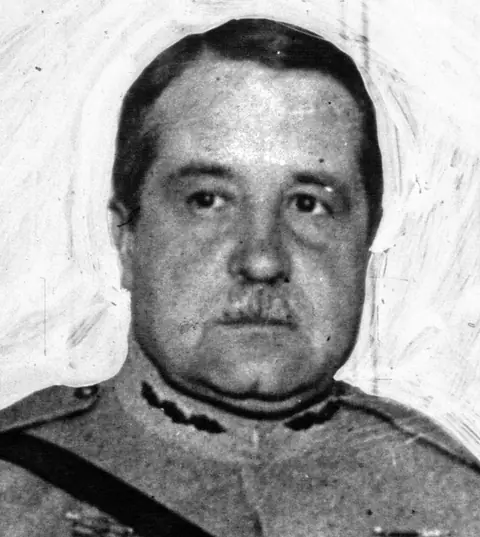
In December 1943 the Movement of National Anti-Fascist Unity (MUNAF) is founded, presided over by General Norton de Matos.1 With the war turning in the Allies’ favour, hunger, shortages and the strikes, the opposition was staking on a front of anti-fascist unity; the PCP had approved the “frontist line” at its congress.1 The MUNAF brought together the Portuguese Republican Party, the Socialist Party (SPIO), the Socialist Union and the PCP, and with them republicans, socialists, communists, Catholics, liberals, monarchists, “seareiros” (the Seara Nova group), freemasons, anarcho-syndicalists and independents.1
1944
3 July 1944: The House of the Students of the Empire is made official
3 July 1944
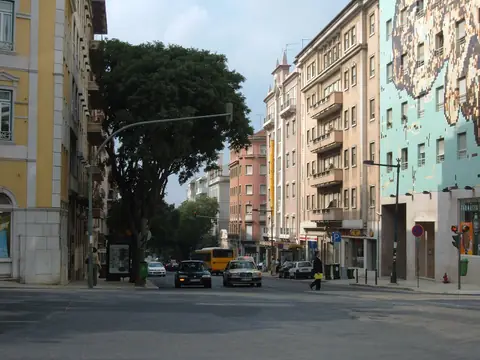
On a visit to the House of the Students of Angola, the Minister of the Colonies, Francisco Vieira Machado, formalises the merger of the colonies’ student “houses” into one, the House of the Students of the Empire.2 The regime feared the “houses” would become a seedbed of nationalisms and placed the new House under the supervision of the Ministry of the Colonies and the patronage of the Portuguese Youth, to cultivate “imperial unity”; the following year the Coimbra branch opened.31 The House soon became a centre of political education and of anti-fascist and anti-colonial agitation, and many of its members joined the MUD Juvenil (Youth Movement of Democratic Unity) as early as 1946.31
1945
1945 · women: Women in the Movement of Democratic Unity
1945
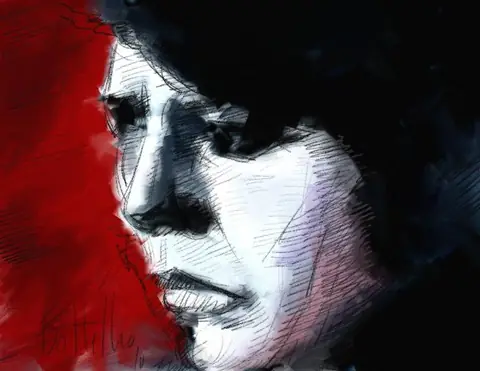
In 1945, several women sign the lists of the Movement of Democratic Unity: the doctor Cesina Bermudes argues for a Women’s Committee to be formed within it, and Isabel Aboim Inglez becomes the first woman on the Central Committee and joins the Women’s Committee.143 That year, the Diário de Lisboa publishes “As mulheres e o movimento de oposição” (Women and the opposition movement), a document signed by Beatriz Cal Brandão, Maria Lamas, Clementina Carneiro de Moura, Cesina Bermudes, Maria Alda Nogueira, Natália Correia, Francine Benoît and Maria Estanco Louro.1 Maria Lamas would say that signing the lists for the founding of the MUD was her first political act: “In doing so, I came out of anonymity”.52 Manuela Porto also joined the MUD and, in Porto, Virgínia Moura joined the District Committee at the end of the year.1
Isabel Aboim Inglez · Cesina Bermudes · Maria Lamas · Elina Guimarães · Maria Alda Nogueira · Natália Correia · Manuela Porto · Virgínia Moura
- 1CIG – Comissão para a Cidadania e a Igualdade de Género
- 2RUN – Repositório da Universidade Nova de Lisboa
- 3Wikipédia (português): Maria Isabel Aboim Inglês
- 4Wikipédia (português): Cesina Bermudes
- 5A Voz do Operário
- 6MDM – Movimento Democrático de Mulheres
- 7Gerador
- 8Museu do Aljube Resistência e Liberdade (EGEAC)
- 9Silêncios e Memórias (blogue)
- 10Casa Comum – Fundação Mário Soares e Maria Barroso (arquivo Ruella Ramos)
July 1945 · women: Maria Lamas becomes president of the CNMP
July 1945
In July 1945, Maria Lamas becomes president of the board of the National Council of Portuguese Women, then based on Praça dos Restauradores.14 She relaunches the Council nationally, bringing in women and young people from various social backgrounds, and branches are formed around the country.34 That year Maria Alda Nogueira joins the Council.2 Under Maria Lamas’s presidency, the Council forms the Organising Committee of the Portuguese Abolitionist Movement (COMAP), to fight prostitution and the system that regulated it.5
National Council of Portuguese Women · Maria Lamas · Maria Alda Nogueira
- 1RUN – Repositório da Universidade Nova de Lisboa
- 2CIG – Comissão para a Cidadania e a Igualdade de Género
- 3MDM – Movimento Democrático de Mulheres
- 4FCSH+Lisboa – NOVA FCSH
- 5Plataforma Portuguesa para os Direitos das Mulheres
- 6Gerador
- 7Silêncios e Memórias (blogue)
- 8Casa Comum – Fundação Mário Soares e Maria Barroso (arquivo Ruella Ramos)
8 October 1945 · women: Founding of the Movement of Democratic Unity (MUD)
8 October 1945
After the Allied victory, the opposition organises legally in the Movement of Democratic Unity (MUD), heir to the MUNAF, set up at a meeting at the Almirante Reis Republican School Centre, in Lisbon.412 Bringing together figures from across the spectrum, it was the most important and broadest legal organisation of anti-fascist unity.2 Present at the meeting, among others, were Maria Palmira Tito de Morais and Isabel Aboim Inglez, who would be the first woman on the movement’s Central Committee.13 Persecution began as early as 1946 and ended with the banning of the MUD.2
20 October 1945: The Plenary Courts replace the Special Military Courts
20 October 1945
With the Allied victory, Decree-Law No. 35 044 of 20 October 1945 abolishes the Special Military Court, heir to the courts of 1932, and hands the trial of crimes against State security — and also of press offences — to the plenary of the criminal courts of Lisbon and Porto.12 Each plenary was presided over by an appeal court judge appointed by the Minister of Justice, with the two most senior criminal court judges as its other members: a change that the 50 Years Commemorative Commission describes as a “mere cosmetic manoeuvre”.13 The Lisbon Plenary sat at the Boa-Hora court, where, among many others, Mário Soares and Álvaro Cunhal were tried.4 The judges let PIDE agents fill the courtroom and prevented the defendants from denouncing the conditions in which the cases had been prepared.2
22 October 1945: The political police becomes the PIDE
22 October 1945
Decree-Law No. 35 046 of 22 October 1945 creates the International and State Defence Police (PIDE), a “criminal investigation police body answerable to the Ministry of the Interior”, and revokes the 1933 law that had created the PVDE.12 Under this name, the political police lasted until it was turned into the Directorate-General of Security.3 At the headquarters on Rua António Maria Cardoso, the investigation services occupied the third floor, where prisoners were interrogated and subjected to great violence and various forms of torture.4 In a room on that floor, in 1949, the political prisoner António Almeida, from Marinha Grande, died after being violently beaten and tortured.4
PVDE / PIDE / DGS headquarters
- 1Diário do Governo (Imprensa Nacional), no Diário da República Eletrónico: Decreto-Lei n.º 35 046, de 22 de outubro de 1945 (Diário do Governo, I série, n.º 234): cria a Polícia Internacional e de Defesa do Estado
- 2Diário do Governo (Imprensa Nacional), no Diário da República Eletrónico: Decreto-Lei n.º 22 992, de 29 de agosto de 1933 (Diário do Governo, I série, n.º 195): cria a Polícia de Vigilância e Defesa do Estado
- 3Comissão Comemorativa 50 Anos 25 de Abril: Prisões da Ditadura
- 4Comissão Comemorativa 50 Anos 25 de Abril: A sede e as delegações da PIDE
31 December 1945 · women: Electoral law excludes married women from the vote
31 December 1945
Decree-Law No. 35 426, on electoral registration for the elections of the President of the Republic and the National Assembly, lets women vote who are of age or emancipated and have educational qualifications, as well as “heads of household” — widows, divorcees, separated women or single women “of recognised moral probity” — who paid at least 100 escudos in taxes.1 It expressly excludes “the married woman who is not judicially separated as to persons and property, and whose husband has electoral capacity”.1 The National Council of Portuguese Women protested against the decree for taking the vote away from married women.2 In 1946, Law No. 2015 extended the vote to some married women.1
1946
28 May 1946 · women: Law No. 2015 extends the vote to some married women
28 May 1946
Law No. 2015 gives the vote to married women who can read and write and whose property tax, their own or the couple’s, exceeds 200 escudos.1 It arose from a request by the deputy Pinto Coelho for the National Assembly to review the December decree-law, which had left married women without the vote; the committees rejected the opinion of the Corporative Chamber, which wanted to deny them the vote to “avoid disunity in the family”.1 The deputy Maria Luísa van Zeller supported the extension, but without wanting “absolute equality” with men for women, which would go against, she said, “the spirit of the policy of women’s return to the home”.1
28 July 1946: The MUD Juvenil is formally constituted
28 July 1946
At the José Estêvão Republican Centre the MUD Juvenil (Youth Movement of Democratic Unity) is formally constituted, born in April out of the Academic Movement of Democratic Unity (MAUD) and linked to the MUD, created in October 1945.1 According to Octávio Pato, who was there, the meeting took place in Lumiar, and the Central Committee was formed at it: Salgado Zenha, João Sá da Costa, José Borrego, Júlio Pomar, Maria Fernanda Silva, Mário Sacramento, Mário Soares, Nuno Fidelino Figueiredo, Octávio Pato himself, Rui Grácio and Óscar dos Reis.2 In the following years, the MUD Juvenil drives student strikes and protests, organises Youth Week and the Bela Mandil rally and supports the candidacy of Norton de Matos; many of its members went through the regime’s prisons, notably the Aljube.1 Many members of the House of the Students of the Empire joined as early as 1946.3
Aljube Prison · House of the Students of the Empire (CEI) · Mário Soares · Norton de Matos
13 December 1946 · women: Isabel Aboim Inglez arrested by the PIDE for the first time
13 December 1946
Isabel Aboim Inglez, a leader of the National Council of Portuguese Women and of the Portuguese Women’s Association for Peace and the first woman on the Central Committee of the MUD, is arrested by the PIDE for the first time, accused of being “a communist element”, and released on bail the next day.12 The year before she had been dismissed from the Faculty of Letters for political reasons.2 She would be arrested again in January 1948, for distributing 1,500 copies of MUD propaganda, and would be held for two months; in February 1949 the school she ran, the Colégio Fernão de Magalhães, was closed down.1
1947
4–12 January 1947 · women: Exhibition of Books Written by Women
4–12 January 1947
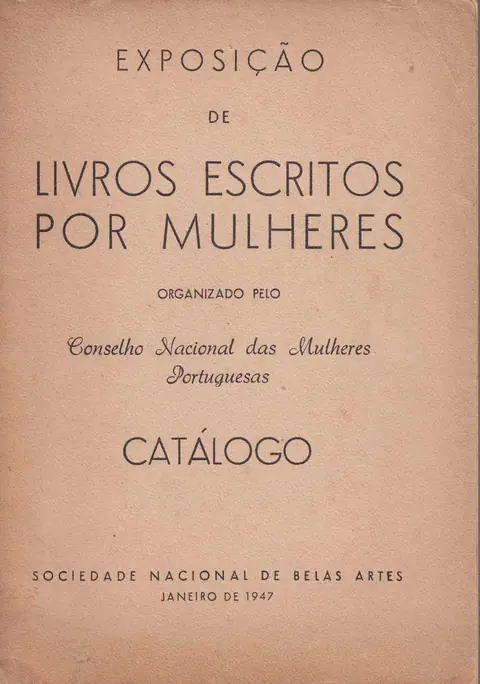
The National Council of Portuguese Women, presided over by Maria Lamas, shows at the National Society of Fine Arts some three thousand books by four hundred women authors from thirty countries, with photographs of women who had stood out as intellectuals and as resisters against Nazism and fascism.13 Manuela Porto gives a talk on “Virginia Woolf: o problema das mulheres das letras” (Virginia Woolf: the problem of women of letters).3 Newspapers linked to the regime, such as A Defesa and Novidades, accuse the Council of being against the Estado Novo (“New State”) and of linking feminism with communism.4 The exhibition hastened the end of the Council, closed by the police in June.24
National Society of Fine Arts · Maria Lamas · Manuela Porto
- 1RUN – Repositório da Universidade Nova de Lisboa
- 2Repositório Aberto da Universidade Aberta
- 3CIG – Comissão para a Cidadania e a Igualdade de Género
- 4FCSH+Lisboa – NOVA FCSH
- 5Museu do Aljube Resistência e Liberdade (EGEAC): Maria Lamas
- 6Museu do Aljube Resistência e Liberdade (EGEAC): Dia Internacional da Mulher
- 7Wikipédia (pt)
- 8Wikipédia
- 9Arquivo de História Social (Instituto de Ciências Sociais da Universidade de Lisboa)
- 10Casa Comum – Fundação Mário Soares e Maria Barroso (arquivo Ruella Ramos)
21–28 March 1947: The MUD Juvenil’s Youth Week and the siege of Bela Mandil
21–28 March 1947
From 21 to 28 March, the MUD Juvenil (Youth Movement of Democratic Unity) holds Youth Week around the country: festivals, cultural and sporting events, outings and camps where young people’s problems and ways of resisting the dictatorship were discussed.1 At Bela Mandil, in the municipality of Olhão, the Youth Festival brought hundreds of young people together in a camp; although legal, it was surrounded by armed PIDE, PSP and GNR forces, who forced the activities to be suspended and the site to be abandoned.1 Many young people resisted and ended up beaten or arrested, and in protest the national anthem rang out through the woods; 28 March became National Youth Day.1
28 June 1947 · women: The police close down the National Council of Portuguese Women
28 June 1947
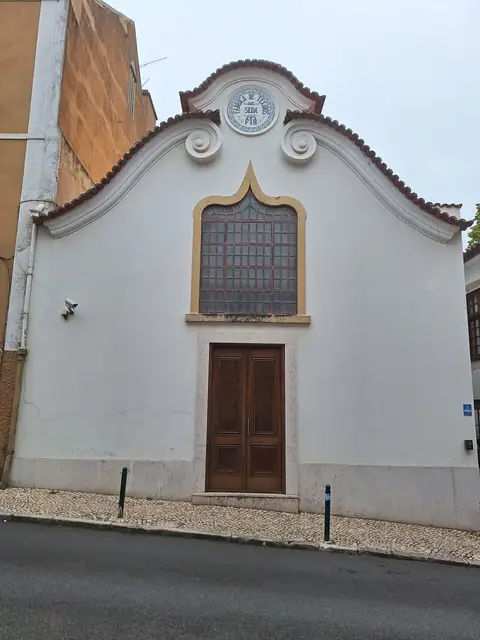
The police close “without prior notice” the headquarters of the National Council of Portuguese Women, on Travessa da Fábrica das Sedas, in Amoreiras, where it had moved in 1946, putting an end to 33 years of the association.1 It was the Exhibition of Books Written by Women, in January, that hastened the closure: newspapers linked to the regime had accused the Council of being against the Estado Novo (“New State”) and of linking feminism with communism.21 After the exhibition, its president, Maria Lamas, had been forced to choose between editing Modas e Bordados, at O Século, and the Council, and she had chosen the Council.4 The leaders also included Manuela Porto, vice-president since 1946, Elina Guimarães, who chaired the Legal Committee, and Isabel Aboim Inglez.468
Last headquarters of the CNMP, closed by the police in 1947 · O Século — the newsroom of “Modas e Bordados” · Maria Lamas · Elina Guimarães · Manuela Porto · Isabel Aboim Inglez
- 1FCSH+Lisboa – NOVA FCSH
- 2Repositório Aberto da Universidade Aberta
- 3RUN – Repositório da Universidade Nova de Lisboa
- 4CIG – Comissão para a Cidadania e a Igualdade de Género
- 5Museu do Aljube Resistência e Liberdade (EGEAC): Dia Internacional da Mulher
- 6Wikipédia (pt)
- 7Wikipédia
- 8Museu do Aljube Resistência e Liberdade (EGEAC): Isabel Aboim Inglez
- 9Gerador
- 10Silêncios e Memórias (blogue)
1948
1948 · women: Maria Barroso removed from the Teatro Nacional D. Maria II
1948
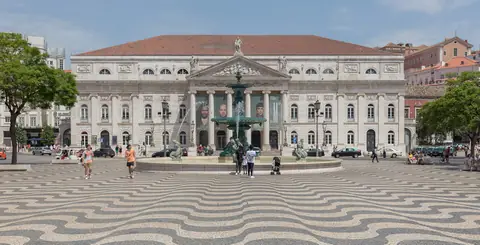
An actress in the company of Amélia Rey Colaço and Robles Monteiro, lead in José Régio’s Benilde and Adela in The House of Bernarda Alba, Maria Barroso is no longer allowed to work at the Teatro Nacional D. Maria II, by an order “that came from the police and the Ministry of Education”; the decision comes at the time of the third arrest of Mário Soares.12 She gave recitals with the opposition poets, and the political police had already called her in for questioning.3 “It was heartbreaking. I felt it was an injustice”, she told her biographer Leonor Xavier.1
1 March 1948: The MUD is declared illegal
1 March 1948
On 1 March 1948, the MUD responds to the notification, served at the PIDE, of an order of April 1947 that deemed it illegal because “the so-called Communist Party” collaborated in it.1 In the petition it sent to the Government, signed by António Sérgio, Isabel Aboim Inglez, Manuel Mendes, Gustavo Soromenho and others, it demanded the release of its imprisoned members, among them Tito de Morais, held in the Aljube.1 The banning brought to a close the persecution begun in 1946, which had led to the arrest of several members and the dismissal of figures such as Bento de Jesus Caraça, but it did not prevent support for the candidacy of Norton de Matos in 1949.1
May 1948 to April 1950 · women: Publication of Maria Lamas’s “As Mulheres do Meu País” (The Women of My Country)
May 1948 to April 1950
After the closure of the National Council of Portuguese Women, over which she presided, Maria Lamas travels the country for two years, goes to Madeira and the Azores, and publishes As Mulheres do Meu País (The Women of My Country), a major piece of reportage on the life and work of Portuguese women.136 The work came out in instalments, from May 1948 to April 1950, to get round the censorship.13 She organised it into five large groups — the peasant woman, the woman of the sea, the factory worker, the doméstica and the employee, which included the liberal professions, intellectuals and artists — and many of the photographs are hers, supplemented by images by other authors.1
- 1Comissão Comemorativa 50 Anos 25 de Abril
- 2Repositório Aberto da Universidade Aberta
- 3RUN – Repositório da Universidade Nova de Lisboa
- 4CIG – Comissão para a Cidadania e a Igualdade de Género
- 5Museu do Aljube Resistência e Liberdade (EGEAC): Maria Lamas
- 6Museu do Aljube Resistência e Liberdade (EGEAC): Maria Lamas
- 7MDM – Movimento Democrático de Mulheres
- 8Casa Comum – Fundação Mário Soares e Maria Barroso (arquivo Ruella Ramos): Anúncio de «As Mulheres do Meu País», de Maria Lamas (Diário de Lisboa, n.º 9129, 28 de abril de 1948)
- 9Casa Comum – Fundação Mário Soares e Maria Barroso (arquivo Ruella Ramos): «“As Mulheres do Meu País”: terminou esta obra de Maria Lamas» (Diário de Lisboa, n.º 9891, 14 de junho de 1950)
27 June 1948: Bento de Jesus Caraça’s funeral becomes a protest against the regime
27 June 1948
The mathematician and educator Bento de Jesus Caraça, an anti-fascist resister and PCP activist, dies in Lisbon on 25 June of heart disease.1 Arrested by the PIDE in 1946, he had been dismissed as full professor at the Higher Institute of Economic and Financial Sciences, one of the cases of the persecution that fell upon the MUD.12 The funeral, on 27 June, is a symbolic moment of protest against the regime.1
1949
28 January 1949 · women: Meeting of the Women’s Committee of Norton de Matos’s campaign
28 January 1949
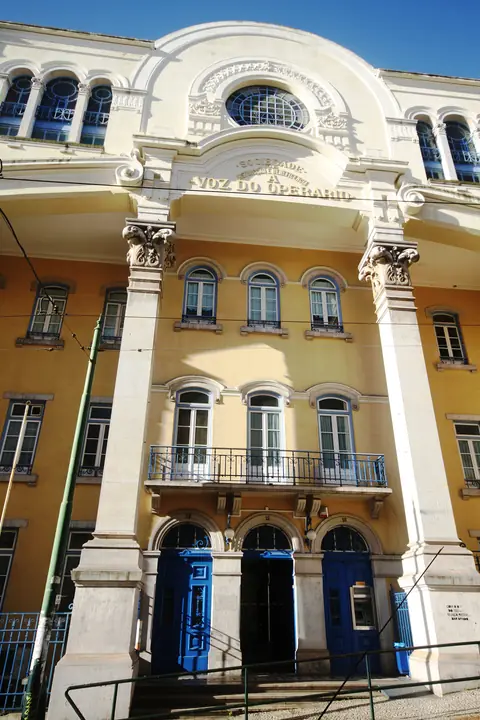
In the presidential campaign of Norton de Matos, Maria Lamas speaks on behalf of democratic women at a support meeting organised by the campaign’s Women’s Committee.1 She denounces the electoral law, which “excludes from the suffrage the great mass of working women and domésticas, especially married women”, and asks: “Could it be that the Estado Novo is afraid of women’s enlightened consciousness?”1 The Central Committee of the National Democratic Women’s Movement, which supported the candidacy, brought together Maria Lamas, Cesina Bermudes, Isabel Aboim Inglez, Ema Quintas Alves and Manuela Porto.34 In a speech in Santarém, Cesina Bermudes set out the demands of a “Feminist Committee”, as the CIG calls it: “abolition of the regulation of prostitution, equal pay for equal work, legal equality for both sexes […] and universal suffrage”.2
A Voz do Operário (The Worker’s Voice) · Maria Lamas · Norton de Matos · Cesina Bermudes · Isabel Aboim Inglez · Manuela Porto
28 January 1949 · women: Norton de Matos rally at the Voz do Operário
28 January 1949
Rally for the presidential candidacy of Norton de Matos at the headquarters of A Voz do Operário, in Lisbon.1 A photograph from Manuel Mendes’s collection shows Isabel Aboim Inglez, Norton de Matos, Carvalhão Duarte, Câmara Reys and Mário de Azevedo Gomes, among others.12 Because of the role she had been playing in the opposition, Isabel Aboim Inglez saw the school she ran, the Colégio Fernão de Magalhães, closed down in February.23
A Voz do Operário (The Worker’s Voice) · Norton de Matos · Isabel Aboim Inglez
10 February 1949 · women: Norton de Matos campaign rally at the Voz do Operário, with Maria Lamas and Cesina Bermudes
10 February 1949
Present at a rally for the candidacy of Norton de Matos at the Voz do Operário, in Lisbon, are Maria Lamas, Manuel João da Palma Carlos and the doctor Cesina Bermudes, among others.123 Maria Lamas and Cesina Bermudes were on the Central Committee of the National Democratic Women’s Movement, which supported the candidacy; Cesina was one of the leaders of the Women’s Electoral Committee in Lisbon and spoke at several rallies.4
A Voz do Operário (The Worker’s Voice) · Maria Lamas · Cesina Bermudes · Norton de Matos
- 1Casa Comum – Fundação Mário Soares e Maria Barroso: Candidatura de Norton de Matos [...] comício de Lisboa (Voz do Operário). Maria Lamas, Manuel João da Palma Carlos e Cesina Bermudes – fotografia (cota 04654.000.026)
- 2Casa Comum – Fundação Mário Soares e Maria Barroso: Candidatura de Norton de Matos [...] comício de Lisboa (Voz do Operário) (cota 04959.014.004)
- 3Museu do Aljube Resistência e Liberdade (EGEAC)
- 4Wikipédia (português)
- 5Casa Comum – Fundação Mário Soares e Maria Barroso (arquivo Ruella Ramos)
- 6Casa Comum – Fundação Mário Soares e Maria Barroso (Fundo Alberto Pedroso, pasta 09768.024)
12 February 1949: Norton de Matos withdraws from the presidential election
12 February 1949
In July 1948, General Norton de Matos put himself forward as a candidate for the Presidency of the Republic, a candidacy that brought together republicans, freemasons, socialists, liberals, communists, anarcho-syndicalists, Catholics and even some monarchists.1 The campaign, launched in January under surveillance and censorship, drew strong support in Beja, Évora and above all Porto, and women such as Maria Lamas and Cesina Bermudes were at the Lisbon rallies.1 On 7 February, a delegates’ assembly at the António José de Almeida Republican Centre, attended by Cesina Bermudes, decided that the candidate would not go to the polls. Norton de Matos withdrew because he had no guarantee of a fair election, and Óscar Carmona was re-elected unopposed on 13 February.21
22 February 1949 · women: Mário Soares and Maria Barroso marry by proxy in the Aljube prison
22 February 1949
Arrested on 15 February on his way to the Boa-Hora Court, where the central committee of the MUD Juvenil (Youth Movement of Democratic Unity) was to be tried, Mário Soares marries Maria Barroso by proxy a week later, in the Aljube prison. One of the witnesses, Manuel Mendes, was also in prison.12
Aljube Prison · Boa-Hora Court · Mário Soares · Maria Barroso
25 March 1949 · women: The PIDE arrests Álvaro Cunhal, Militão Ribeiro and Sofia Ferreira
25 March 1949, 05:00
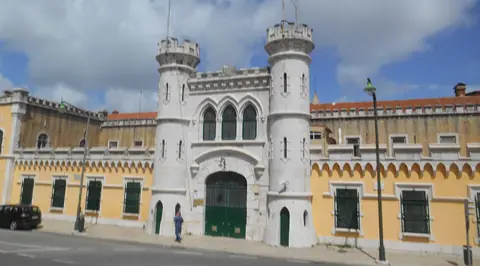
At 05:00, six PIDE agents and several armed GNR men raid a clandestine house at Casal de Santo António, in Luso, and arrest three full-time PCP workers: Álvaro Cunhal, Militão Ribeiro and Sofia Ferreira.1 Sofia Ferreira, “Elvira”, and Cunhal, “Manuel”, had rented the house in November 1948 posing as a couple; Militão had joined them months later, on the run from the PIDE.1 In May Militão was transferred to Lisbon Penitentiary, where he died in January 1950, on hunger strike; Cunhal remained in prison for eleven years, until he escaped from Peniche.21 Sofia Ferreira was held for three years, was arrested again in 1959 and spent, in all, more than thirteen years in the regime’s prisons.13
Lisbon Penitentiary · Sofia Ferreira · Militão Ribeiro · Álvaro Cunhal
14 October 1949 to 14 January 1950 · women: Arrest of Cesina Bermudes, a leader of the National Democratic Women’s Movement
14 October 1949 to 14 January 1950
The doctor Cesina Bermudes, who had stood alongside Maria Lamas and Isabel Aboim Inglez in the campaign of Norton de Matos, is arrested for belonging to the Central Committee of the National Democratic Women’s Movement and taken to the fort of Caxias.12 Released three months later, on 14 January 1950, she was barred from teaching at the Lisbon Faculty of Medicine and went on to teach Childcare in industrial schools.12
Caxias Fort — the political prison · Cesina Bermudes · Maria Lamas · Isabel Aboim Inglez · Norton de Matos
7–24 December 1949 · women: Arrest of Maria Lamas and members of the National Democratic Movement
7–24 December 1949
Maria Lamas, of the Central Committee of the National Democratic Movement — who in October had signed, with Ruy Luís Gomes, Virgínia Moura, José Morgado and others, a communiqué on the elections for deputies — is arrested with other members of the movement and taken to Caxias.41 According to the MDM, Virgínia Moura and Ruy Luís Gomes, among others, were imprisoned with her.5 They were released on bail on 24 December.1 It was the first of several arrests of Maria Lamas, who was always held at Caxias: she would be arrested again on 18 July 1950 and in December 1953, at the airport.235
Caxias Fort — the political prison · Maria Lamas · Virgínia Moura
- 1Wikipédia
- 2Museu do Aljube Resistência e Liberdade (EGEAC): Maria Lamas
- 3Museu do Aljube Resistência e Liberdade (EGEAC): Maria Lamas
- 4Casa Comum – Fundação Mário Soares e Maria Barroso
- 5MDM – Movimento Democrático de Mulheres
- 6Wikipédia (inglês)
- 7RUN – Repositório da Universidade Nova de Lisboa
- 8Silêncios e Memórias (blogue)
1950
2 January 1950: Death of Militão Ribeiro in the Lisbon Penitentiary
2 January 1950
Ill, in strict isolation and on hunger strike in protest against the prison regime, the communist leader Militão Ribeiro dies in the Lisbon Penitentiary, aged 53.12 In letters written two months earlier he had accused the PIDE of “poisoning”.1
2–9 May 1950 · women: Álvaro Cunhal and Sofia Ferreira tried by the Plenary Court
2–9 May 1950
Thirteen months after their arrest together in Luso, Álvaro Cunhal and Sofia Ferreira are tried by the Plenary Court, at the Boa-Hora; the third prisoner, Militão Ribeiro, had died in January.1 Cunhal, who had been held incommunicado since his arrest and had prepared his defence in that isolation, calls it “a new form of torture” on 2 May and ends up accusing: “then let the fascists sit in the dock”.21 On 9 May, Sofia Ferreira is sentenced to three years in prison.3 Cunhal remains in prison for eleven consecutive years, eight of them in isolation, in the Lisbon Penitentiary and then in Peniche.24
Boa-Hora Court · Lisbon Penitentiary · Álvaro Cunhal · Sofia Ferreira · Militão Ribeiro
- 1Partido Comunista Português: Julgamento de Álvaro Cunhal (70 anos do julgamento e intervenção no tribunal a 2 de maio de 1950)
- 2Câmara Municipal de Lisboa — Comissão Municipal de Toponímia
- 3Partido Comunista Português: «Sofia foi uma combatente com uma enorme consciência de classe, generosa, inteligente e sagaz» (Centenário de Sofia Ferreira)
- 4Museu do Aljube Resistência e Liberdade (EGEAC)
19 June 1950 · women: Petition to Salazar against the ill-treatment of prisoners
19 June 1950
Maria Lamas signs, with José Morgado, Albertina Macedo and Areosa Feio, a petition to Salazar, President of the Council (head of government), about the ill-treatment of political prisoners: it recalls the deaths of Militão Bessa Ribeiro, José Moreira and Wenceslau Ramos and the madness into which José Augusto da Silva Martins had been driven.1 A month later, on 18 July, she is arrested for the second time.23
18 July 1950 · women: Maria Lamas arrested for the second time
18 July 1950
The writer and activist Maria Lamas is detained for the second time and is only released six months later, after a court judgment; in prison she writes her Cartas Políticas (Political Letters), which she intended to publish under the title Cartas Humanas (Human Letters).1 She was arrested by the PIDE three times between 1949 and 1962, and always taken to Caxias.12
1951
1951 · women: The Centre for African Studies sets up at Rua Actor Vale, 37
1951
African students linked to the House of the Students of the Empire — Amílcar Cabral, Mário Pinto de Andrade, Francisco José Tenreiro, Agostinho Neto, among others — began to meet at the Espírito Santo family home, at Rua Actor Vale, 37, where Alda do Espírito Santo lived: it was there that the Centre for African Studies was set up.14 They studied Africa and colonialism, in a closed structure because of the PIDE.23 Noémia de Sousa was one of the “elders” of the group, which broke up when the elders, fearing the PIDE, dispersed.1
Espírito Santo family home — seat of the Centre for African Studies · House of the Students of the Empire (CEI) · Alda do Espírito Santo · Amílcar Cabral · Agostinho Neto · Noémia de Sousa
1952
21 March 1952 · women: Dissolution of the Portuguese Women’s Association for Peace
21 March 1952
By order of the Minister of the Interior, the Portuguese Women’s Association for Peace is dissolved, five years after the regime closed the National Council of Portuguese Women.12 Maria Lamas had agreed to preside over it in 1938; in the view of the historian Virgínia Baptista, the association remained active despite being abolished.2
Headquarters of the Portuguese Women’s Association for Peace · Maria Lamas
1953
3 February 1953: The Batepá massacre in São Tomé
3 February 1953
In São Tomé, the protests of the “forros” (free-born Creole islanders) against the imposition of forced labour on the plantations are put down by the governor, Carlos Gorgulho, with raids, torture, killings and deportations, which cause the deaths of hundreds of São Toméans.1 The opposition lawyer Manuel João da Palma Carlos denounced the case and defended the prisoners.1
8 March 1953 · women: Clandestine meeting of women in Lisbon on International Women’s Day
8 March 1953
Six years after the regime abolished the National Council of Portuguese Women, and despite the ban, a few dozen women meet in Lisbon to discuss the struggle for peace and the amnesty, reports Avante! (Forward!); the communiqué of the Women’s International Democratic Federation for the International Congress of Women is read out.1
20 December 1953 · women: Maria Lamas arrested at the airport
20 December 1953
Returning from a meeting of the World Peace Council, Maria Lamas is arrested by the PIDE at the airport, and with her some fifty people who were waiting for her, among them the painter Maria Keil, Sofia Dias Coelho, Antónia Lapa and Maria Machado.1 She was coming back from three months of travel to peace congresses; when the plane landed, a PIDE agent was waiting for her with a new arrest warrant.2 Taken to Caxias, she is released on 8 January 1954.4
Lisbon Airport (Portela) · Caxias Fort — the political prison · Maria Lamas
1954
26 January 1954: The Tarrafal camp closes (for the first time)
26 January 1954
The Tarrafal concentration camp, in Cape Verde, opened in 1936, closes for the first time.12 Between 340 and 375 prisoners passed through it — republicans, socialists, anarchists, communists, fighters from the Spanish Civil War — and 32 to 34 died there; Francisco Miguel was the last to leave in this phase.12 The camp would reopen in 1961, for prisoners from the liberation movements.1
19 May 1954 · women: Catarina Eufémia killed by the GNR in Baleizão
19 May 1954
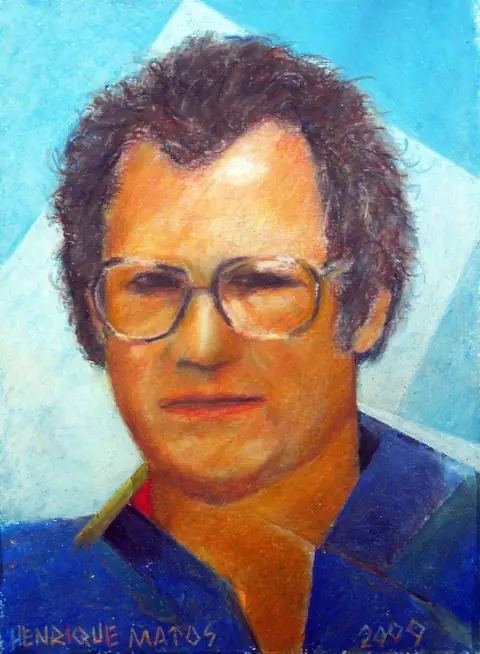
A rural wage labourer, Catarina Eufémia is shot dead by Lieutenant Carrajola, of the GNR, during a strike by Alentejo workers for better wages.1 Margarida Tengarrinha made an engraving of her death that year, and José Afonso immortalised her in “Cantar Alentejano” (Alentejo Song).1
Margarida Tengarrinha · José Afonso (Zeca Afonso)
17 December 1954: António Dias Lourenço escapes from Peniche Fortress by sea
17 December 1954
A PCP leader held in Peniche Fortress since 1953, António Dias Lourenço uses a knife to cut through the door of the “Segredo” (solitary), the punishment cell by the ramparts, climbs down a rope made of blankets, lets himself drop into the sea and swims ashore.1 Workers from a fish van hide him and take him to Bombarral.1
1956
4 July 1956: The statutes of the Portuguese Society of Writers are approved
4 July 1956
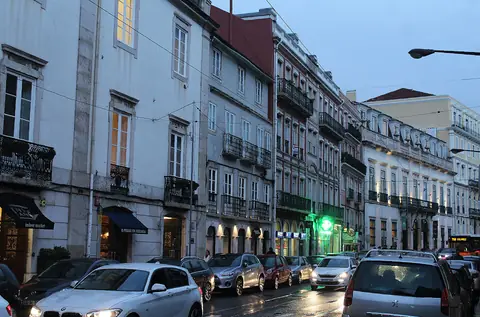
After meetings at the Casa do Alentejo from May 1954 onwards, called by Aquilino Ribeiro and Ferreira de Castro, the statutes of the Portuguese Society of Writers (SPE) were finally approved by ministerial order.1 In the elections held the following day, Aquilino Ribeiro became head of the board.1 First based on Rua das Taipas, the SPE later settled its headquarters on Rua da Escola Politécnica, where it operated until it was dissolved in 1965.1
1957
1957 · women: Arrest of Aida Magro, underground head of Lisbon’s Eastern Zone
1957
The chemical engineer Aida Magro, underground since 1945 and in charge of the Eastern Zone of the PCP’s Lisbon Local Committee, is arrested and given a custodial sentence of two and a half years, with security measures.1 She spends six years in Caxias, where she is one of the authors of the thirteen letters of the Caxias Manifesto.12
1957–1962: Meetings of the “Café Gelo Group”
1957–1962
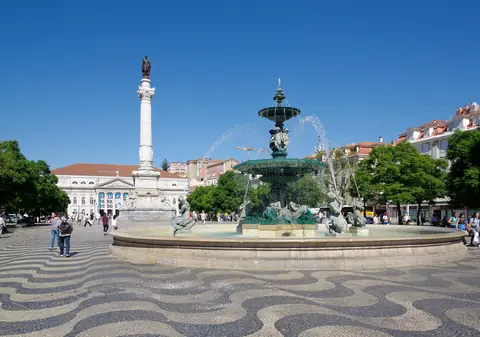
Between 1957 and 1962, nearly thirty dissident poets and painters — Herberto Helder, Mário Cesariny, Luiz Pacheco, António José Forte, Natália Correia, among others — met at the Café Gelo, on the Rossio.21 On May Day 1962, the police burst into the café and beat whoever was there; days later, the manager, summoned to the police station, told them they could no longer stay.2
October 1957: The First Republican Congress of Aveiro
October 1957
The First Republican Congress is held in Aveiro, driven by Mário Sacramento, and prepares the opposition for the following year’s presidential election; the Second Congress would not meet until 1969.1
December 1957: Nationalists from the colonies found the Anti-Colonialist Movement in Paris
December 1957
Meeting in Paris, nationalists from the Portuguese colonies who were studying in Europe, linked above all to the House of the Students of the Empire — such as Mário de Andrade, Marcelino dos Santos, Amílcar Cabral, Agostinho Neto and Lúcio Lara — found the Anti-Colonialist Movement (MAC).1 Its manifesto was, for Cabral, “the preface to our struggle”.1
House of the Students of the Empire (CEI) · Amílcar Cabral · Agostinho Neto
1958–1968From Delgado to the war
Humberto Delgado’s candidacy shakes the regime. Then come the revolts, the prison escapes, the colonial war and the 1962 student crisis.70 dates21 women
1958
10 May 1958: Humberto Delgado: “Obviously, I’ll sack him!” (Obviamente, demito-o!)
10 May 1958
At the press conference at the Café Chave d'Ouro, in Lisbon, General Humberto Delgado, the opposition candidate for the Presidency, gives this answer to the France Presse correspondent, who asks him what he will do with Salazar if he is elected.123 The phrase sets the country alight.54
16 May 1958: Humberto Delgado arrives at Santa Apolónia
16 May 1958
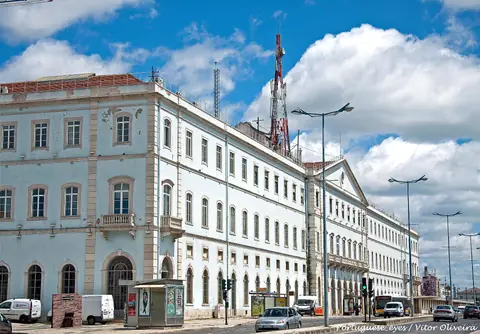
After a crowd welcomed him in Porto on 14 May — photographs of the rally were banned from the newspapers — Humberto Delgado returns to Lisbon.5 People wait for him all the way from Santa Apolónia to the Terreiro do Paço; the PIDE diverts the general’s motorcade towards the eastern part of the city and the GNR charges his supporters in the Terreiro do Paço, the Rossio, the Restauradores and the streets of the Baixa.14 In 2008, a plaque was placed in the station to commemorate the general’s arrival.32
Santa Apolónia Station · Rossio (Praça de D. Pedro IV) · Terreiro do Paço (Praça do Comércio) · Humberto Delgado
18 May 1958: Humberto Delgado’s rally at the Liceu de Camões
18 May 1958
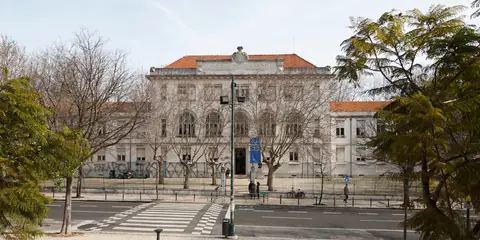
Humberto Delgado spoke at a rally in the gymnasium of the Liceu de Camões; the text of the speech is kept among Manuel Mendes’s papers.1 After this rally, the police charges of his arrival at Santa Apolónia were repeated.2
June 1958 · women: The great Couço strike and the struggle of the Women of Couço
June 1958
June 1958 is marked by the “great Couço strike”, in a place hard hit by repression, which saw more than 200 arrests between 1933 and 25 April.1 The Women of Couço, such as Maria Carmina and Rosa Viseu, were there in the squares where day labourers were hired, in the struggles for the eight-hour day and at the side of the prisoners.1
8 June 1958: The 1958 presidential election and the fraud against Humberto Delgado
8 June 1958
The candidacy of Humberto Delgado, backed by the whole opposition after Arlindo Vicente withdrew, shakes the regime.25 Through intimidation, a ban on poll monitoring and falsified results, the regime proclaimed the election of Américo Tomás.21 Delgado officially obtained 23% of the vote, a result never published in the Diário do Governo (Government Gazette); soon afterwards, the regime abolished the direct election of the President of the Republic.3 Strikes and arrests followed: one of those arrested, the worker Raul Alves, would die at the PIDE headquarters.4
- 1Museu do Aljube Resistência e Liberdade: Humberto da Silva Delgado (biografia)
- 2Museu do Aljube Resistência e Liberdade (EGEAC)
- 3Comissão Comemorativa 50 Anos 25 de Abril
- 4Museu do Aljube Resistência e Liberdade: Raul Alves (biografia)
- 5Centro de Documentação 25 de Abril, Universidade de Coimbra
- 6Memória Comum – Memorial aos Presos e Perseguidos Políticos
- 7Casa Comum – Fundação Mário Soares e Maria Barroso (arquivo Ruella Ramos)
31 July 1958: Raul Alves falls from the third floor of the PIDE headquarters
31 July 1958
Arrested on 16 July, after the strikes at the Companhia Industrial Portuguesa against the June electoral fraud, the worker Raul Alves is held in Caxias and in the Aljube; on the 31st, after being tortured, he falls from a third-floor window of the PIDE headquarters — “thrown”, writes Memória Comum — and several people are said to have seen the fall.31 The PIDE speaks of suicide.3 The Brazilian ambassador’s wife, who saw the fall, tells Cardinal Cerejeira, who writes to the Minister of the Interior; the reply comes back from the ministry: “It is merely an unimportant communist”.13 On the same floor, António Almeida had died in 1949, and José Moreira in 1950.24
PVDE / PIDE / DGS headquarters · Aljube Prison · Caxias Fort — the political prison · Raul Alves
- 1Memória Comum – Memorial aos Presos e Perseguidos Políticos: Raul Alves
- 2Comissão Comemorativa 50 Anos 25 de Abril
- 3Museu do Aljube Resistência e Liberdade: Raul Alves (biografia)
- 4Memória Comum – Memorial aos Presos e Perseguidos Políticos: José Moreira
- 5Museu do Aljube Resistência e Liberdade: José Moreira
26 September 1958: The guitarist Carlos Paredes arrested at his workplace
26 September 1958
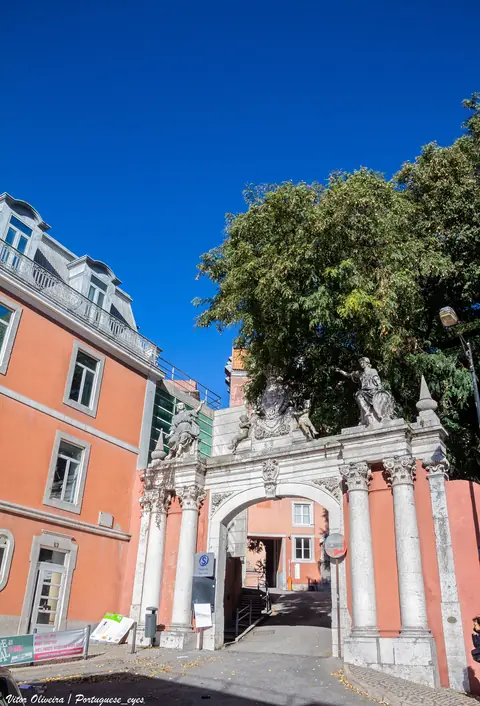
An administrative clerk at the São José Hospital since 1949, the guitarist Carlos Paredes is arrested at his workplace, accused of belonging to the PCP.1 He spends a month in the Aljube and goes on to Caxias: 15 months in prison before his trial by the Plenary Court, in 1959, which is followed by his dismissal from the civil service.1
São José Hospital · Aljube Prison · Caxias Fort — the political prison
1959
16 January 1959: Henrique Galvão escapes from the Santa Maria Hospital
16 January 1959
Sentenced to 19 years in prison and hospitalised under PIDE guard, the regime opponent Henrique Galvão escapes from the Santa Maria Hospital in the early hours; days later he takes refuge in the Argentine Embassy, from where he leaves for exile in May.1 Two years later he would lead the seizure of the liner Santa Maria.1
11 March 1959: The “Revolta da Sé” or Cathedral Revolt (Independent Military Movement)
11 March 1959, 23:00
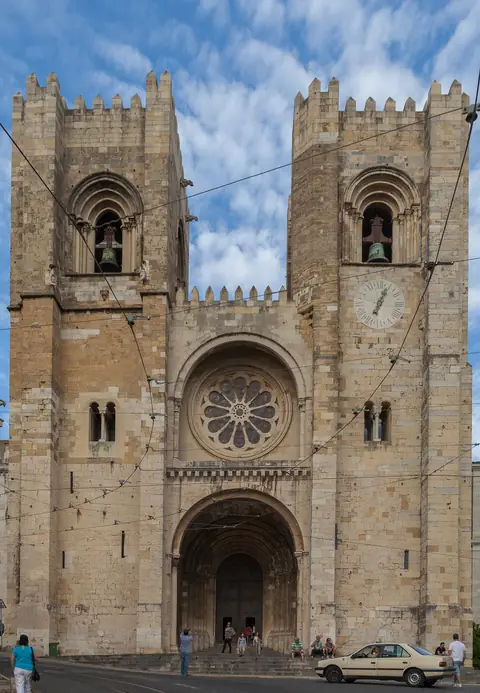
A civilian and military coup of mainly Catholic inspiration, prepared after the 1958 electoral fraud by a junta that included Majors Luís Cesariny Calafate and Pastor Fernandes.13 On the night of 11 March, the leaders of the civilian groups gathered in the cloisters of Lisbon Cathedral; at 23:00, Pastor Fernandes ordered them to disperse — the Government knew everything.3 The PIDE arrested 44 people, the first of them Manuel Serra, the “civilian soul” of the conspiracy; some, like the young Jaime Conde, ended up in the Aljube prison, right next door.32
Lisbon Cathedral (Sé Patriarcal) · Aljube Prison · Manuel Serra
3 August 1959: The Pidjiguiti massacre, in the port of Bissau
3 August 1959
Sailors and dockers of the port of Pidjiguiti, in Bissau, on strike for better wages, are violently repressed by the colonial authorities: about 50 dead and some hundred wounded.1 The massacre was decisive for the organisation of Amílcar Cabral’s PAIGC, which in 1963 would turn to armed struggle.12
15 October 1959 · women: Arrest of Maria Alda Nogueira on Avenida da Liberdade
15 October 1959
Underground since 1949, Maria Alda Nogueira is arrested by the PIDE in a taxi on Avenida da Liberdade.31 Tried by the Plenary Court on 22 October 1960, with Maria Lamas and Isabel Aboim Inglez among her character witnesses, she is sentenced to eight years in prison and security measures, which she serves in Caxias.13 The CIG presents her as the first woman in Portugal to be sentenced to prison for political reasons.2
Boa-Hora Court · Caxias Fort — the political prison · Maria Alda Nogueira · Maria Lamas · Isabel Aboim Inglez
1960
January 1960: The Iberian Revolutionary Directorate of Liberation is founded in Caracas
January 1960
Portuguese and Spanish opposition figures in exile set up the Iberian Revolutionary Directorate of Liberation (DRIL) in Caracas, to overthrow the Iberian dictatorships through armed action.1 Henrique Galvão, who had escaped from Lisbon a year earlier, signs for the Portuguese side, on behalf of Humberto Delgado.1 The DRIL’s most spectacular action would be the seizure of the liner Santa Maria.1
3 January 1960: The Peniche escape: Álvaro Cunhal and nine other leaders break out
3 January 1960, 16:00
At 16:00, a car driven by the actor Rogério Paulo gives the signal and ten PCP prisoners — among them Álvaro Cunhal, Jaime Serra and Francisco Miguel — escape from Peniche Fortress, accompanied by a GNR guard.123 The escape was prepared on the outside by Pires Jorge and by António Dias Lourenço, who had himself escaped from Peniche in 1954, with the help of Octávio Pato and Rui Perdigão; Margarida Tengarrinha illustrated it.15 After it, surveillance was tightened: from then on there were two guards at each post.4
Peniche Fortress — the political prison · Álvaro Cunhal · Margarida Tengarrinha
- 1Museu do Aljube Resistência e Liberdade (EGEAC): Fuga de Peniche
- 2Centro de Documentação 25 de Abril, Universidade de Coimbra
- 3Museu Nacional Resistência e Liberdade (Peniche)
- 4Comissão Comemorativa 50 Anos 25 de Abril
- 5Museu do Aljube Resistência e Liberdade (EGEAC): António Dias Lourenço – Fuga de Peniche
16 June 1960: The Mueda massacre, in northern Mozambique
16 June 1960
At a meeting called by the governor of Cabo Delgado with Makonde representatives, the order to arrest them provokes protests and the authorities open fire.1 The number of dead is uncertain: 14 according to Portuguese reports, 16 according to eyewitnesses, 150 according to FRELIMO and as many as 600 according to some of the literature.1 It was one of the last episodes of resistance before the war in Mozambique.1
1961
4 January 1961: The Baixa do Cassanje revolt, in Angola
4 January 1961
In the Cotonang cotton fields, in Malanje, the peasants refuse to work and burn the seeds, against compulsory cultivation and forced labour.1 The repression, with villages bombed with napalm, caused between many hundreds and ten thousand deaths; the revolt is remembered as the genesis of Angola’s liberation struggle.12
22 January to 2 February 1961: Operation Dulcineia: Henrique Galvão seizes the liner Santa Maria
22 January to 2 February 1961
In collaboration with Humberto Delgado and the DRIL, Henrique Galvão — who had escaped from the Santa Maria Hospital two years earlier — seizes the liner Santa Maria in Caribbean waters, with more than 600 passengers on board, and renames it Santa Liberdade (Saint Liberty): “Operation Dulcineia” draws the world’s attention to the Portuguese dictatorship.123 The hijacking ends on 2 February, in Recife, after the new president of Brazil, Jânio Quadros, guarantees Galvão asylum.2
- 1Centro de Documentação 25 de Abril, Universidade de Coimbra
- 2Museu do Aljube Resistência e Liberdade (EGEAC): O Assalto ao Santa Maria
- 3Museu do Aljube Resistência e Liberdade (EGEAC): Diretório Revolucionário Ibérico de Libertação (DRIL)
- 4Museu do Aljube Resistência e Liberdade (EGEAC): Operação Vagô
- 5Museu do Aljube Resistência e Liberdade
- 6Wikipédia: Oposição à ditadura portuguesa
- 7Wikipédia: Eleições presidenciais portuguesas de 1958
31 January 1961: The opposition releases the “Programa para a Democratização da República” (Programme for the Democratisation of the Republic)
31 January 1961
A group of citizens from the Democratic Opposition makes public the “Programa para a Democratização da República” (Programme for the Democratisation of the Republic).1
4 February 1961: The attack on the Luanda prisons starts the armed struggle in Angola
4 February 1961
In the early hours of 4 February, some 200 men armed with machetes, knives and a few pistols attack the Military Detention House, the PSP Mobile Company and other prisons in Luanda to free nationalist prisoners.12 In the days that follow, the repression in the musseques (shanty towns) leaves hundreds dead and wounded; the date marks the beginning of the armed struggle for the independence of Angola.1
15 March 1961: UPA attacks in northern Angola: the colonial war begins
15 March 1961
The Union of the Peoples of Angola attacks settlements and farms in northern Angola, killing white settlers and black workers.1 Salazar sends troops — it was necessary to “go rapidly and in force” (andar rapidamente e em força), he would say in April, after surviving the Botelho Moniz coup — and a war begins that would drag on until 1974.213
11–13 April 1961: The Botelho Moniz coup — the “Abrilada” (April coup) of 1961
11–13 April 1961
The Minister of Defence, General Júlio Botelho Moniz, together with other senior commanders, tried to remove Salazar by institutional means, in the face of the war that was beginning in Angola.1 Américo Tomás refused to dismiss the head of government, the preparations were exposed and the coup failed; several military chiefs were relieved of their posts.1 Among those implicated was the then Colonel Francisco da Costa Gomes, who was able to continue his career.1 Salazar survives and announces that it is necessary to “go rapidly and in force” (andar rapidamente e em força) to Angola.45
21 April 1961: The first contingent of troops leaves for Angola on the “Niassa”
21 April 1961
Eight days after Salazar took over the Defence portfolio and announced that it was necessary to “go rapidly and in force” (andar rapidamente e em força) to Angola,3 the first contingent sent by sea to the war in Angola embarks on the liner Niassa, at the Rocha do Conde de Óbidos quay; it reaches Luanda on 1 May. Two days earlier the first contingent had left by air.1 From that day on, the Rocha do Conde de Óbidos quay was above all the place from which hundreds of thousands of men left for the colonial war.2
28 April 1961 · women: Founding of the National Women’s Movement (pro-regime)
28 April 1961
Cecília Supico Pinto, the wife of a former minister of Salazar’s, founds the National Women’s Movement, which until 1974 mobilised women in support of the regime and of the colonial war: the “war godmothers” (madrinhas de guerra) wrote to the soldiers, and the movement issued more than 300 million aerogrammes.21 Directly driven by the dictatorship, it was part of a strategy to bring the country to accept the war — the official counterpart to the opposition’s women’s organisations.2
17 June 1961: Tarrafal reopens for prisoners from the liberation movements
17 June 1961
With the start of the colonial war, the Tarrafal concentration camp reopens for nationalists from Angola, Guinea-Bissau and Cape Verde; the first prisoners, from Angola, arrive in February 1962.123 In all, 227 men passed through it, four of whom died there; the last of them would only be released on 1 May 1974.1
Tarrafal Concentration Camp (Cape Verde)
- 1Museu do Aljube Resistência e Liberdade (EGEAC): Encerramento do Campo de Concentração do Tarrafal
- 2Museu do Aljube Resistência e Liberdade (EGEAC): Campo de Concentração do Tarrafal
- 3Museu do Aljube Resistência e Liberdade (EGEAC): Chegam ao Tarrafal os primeiros presos deportados
- 4Diário do Governo (Imprensa Nacional), no Diário da República Eletrónico
- 5Memória Comum – Memorial aos Presos e Perseguidos Políticos
8 August 1961 · women: The “Seis Marias” (Six Marias), the first paratrooper nurses
8 August 1961
At the Arrepiado field, near Tancos, Maria Arminda dos Santos, Maria de Lourdes Rodrigues, Maria da Nazaré Andrade, Maria do Céu Policarpo, Maria Ivone Reis and Maria Zulmira André make the last jump of their course and receive the green beret: they are the Air Force’s first paratrooper nurses, and the press, which puts them on the front page, calls them the “Seis Marias” (Six Marias).1 Throughout the colonial war, the paratrooper nurses evacuated the wounded at the front and on the flights to Lisbon.1
10 November 1961 · women: Operation Vagô: a hijacked plane and leaflets over Lisbon
10 November 1961
Palma Inácio, Maria Helena Vidal and four other members of the opposition take command of a TAP flight from Casablanca to Lisbon and drop thousands of leaflets over Lisbon, Barreiro, Setúbal, Beja and Faro against the farce of the National Assembly elections, due to be held days later; the plane lands in Tangier.12 The operation had been devised by Henrique Galvão, who in January had led the seizure of the Santa Maria; it was the first hijacking of a plane for political reasons in Portugal.2
11 November 1961: Cândido Capilé shot dead at a demonstration in Almada
11 November 1961
A demonstration against the electoral fraud, demanding “Freedom, Peace and Amnesty for political prisoners” (Liberdade, Paz e Amnistia para os presos políticos), marches from Cova da Piedade to Almada and is fired on; the cork worker Cândido Martins Capilé, aged 28, is killed.12 José Dias Coelho drew the scene for Avante! (Forward!).1
4 December 1961: The escape from Caxias in Salazar’s armoured car
4 December 1961, 09:35
Eight PCP prisoners — among them Domingos Abrantes — escape from Caxias Fort in the armoured Chrysler Imperial that had been in Salazar’s service.12 At the wheel is António Tereso, a mechanic whom the guards trusted because they took him for a “rachado” (turncoat); at the shout of “Goal!” (Golo!), the prisoners get into the car, which speeds off through the tunnel and smashes through the outer gate.12
Caxias Fort — the political prison · António Tereso · Domingos Abrantes
Watch in the archive: Museu do Aljube Resistência e Liberdade
Conceição Matos and Domingos Abrantes tell together, in a testimony recorded by the museum on 7 October 2015, of life underground, imprisonment and torture. The museum’s keywords include the Aljube prison, Caxias, the PIDE interrogations and the escape from Caxias.
Original page Licença padrão do YouTube — embed permitido pelo canal oficial do Museu do Aljube
Museu do Aljube Resistência e Liberdade, on YouTube. The player only connects to that site when you press “Watch”.
15 December 1961 · women: Albina Fernandes arrested with her small children
15 December 1961
Living underground with Octávio Pato, Albina Fernandes is arrested on the same day as her partner and takes her two children, aged six and two, with her to Caxias: she rested on her knees on the floor, gripping their wrists, “so that they would not take them from her”.12 The PIDE threatens to hand them over to an institution, but she manages to have them stay with their paternal grandparents, to whom they are handed over on 10 January 1962.23 Tried on 17 November 1962, she spends six years and seven months in prison.12
18–19 December 1961: The Indian Union occupies Goa, Daman and Diu
19 December 1961: The PIDE murders the sculptor José Dias Coelho in Alcântara
19 December 1961
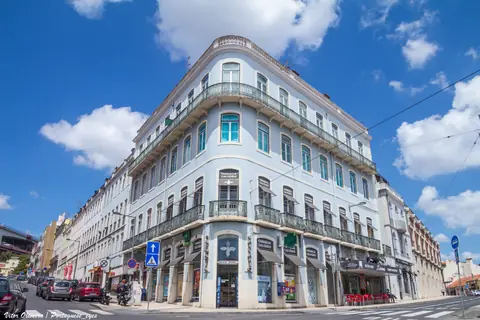
The sculptor and communist activist José Dias Coelho is ambushed by PIDE agents in Alcântara and shot dead on Rua da Creche, which now bears his name.143 His partner, Margarida Tengarrinha, only learnt of his death on 26 December, the day of the burial, and devoted her life to keeping his memory alive.24 José Afonso evoked him in “A Morte Saiu à Rua” (Death Went Out into the Street).46
Rua da Creche (where José Dias Coelho was murdered) · José Dias Coelho · Margarida Tengarrinha · José Afonso (Zeca Afonso)
Watch in the archive: Museu do Aljube Resistência e Liberdade
Margarida Tengarrinha’s testimony, recorded by the Aljube Museum on 8 March 2017 and published in 2021. Going by the museum’s keywords, it covers the Youth Movement of Democratic Unity (MUD Juvenil), underground life in the Portuguese Communist Party (PCP), the document-forgery apparatus, the clandestine press and José Dias Coelho.
Original page Licença padrão do YouTube — embed permitido pelo canal oficial do Museu do Aljube
Museu do Aljube Resistência e Liberdade, on YouTube. The player only connects to that site when you press “Watch”.
RTP Arquivos: A Mulher e o Fascismo: Mulheres que Lutaram – Parte I
RTP Arquivos: A Mulher e o Fascismo: Mulheres que Lutaram – Parte II
1962
1962 · women: Isabel do Carmo, the first woman student to speak at a plenary meeting
1962
A medical student, Isabel do Carmo is the first woman to take the floor at a plenary meeting of the 1962 academic crisis, in the University Stadium.1 The PIDE recorded that she said she was speaking “as one of the women, as any one of them” and that she suggested offering flowers to the police, “the most beautiful weapons created in Portugal”.1
Cidade Universitária de Lisboa (University Stadium and faculties) · Isabel do Carmo
1 January 1962: The Beja revolt
1 January 1962
A military and civilian revolt at the barracks of the 3rd Infantry, in Beja, led by Captain João Varela Gomes, with Manuel Serra as its civilian leader.1 Humberto Delgado and his secretary, Arajaryr Campos, had entered the country clandestinely to take part.24 The revolt failed, and the soldiers involved were arrested and expelled from the Armed Forces;5 but it broke a thirty-year cycle in which the opposition had not taken up arms, and the trial that followed, with 86 defendants, was the largest of the Estado Novo (“New State”).13
Manuel Serra · Humberto Delgado · Arajaryr Campos
- 1Wikipédia: Oposição à ditadura portuguesa
- 2Museu do Aljube Resistência e Liberdade: Humberto da Silva Delgado (biografia)
- 3Wikipédia: Manuel Serra
- 4Museu do Aljube Resistência e Liberdade: Arajaryr Canto Moreira Campos (biografia)
- 5Centro de Documentação 25 de Abril, Universidade de Coimbra
- 6Casa Comum – Fundação Mário Soares e Maria Barroso (arquivo Ruella Ramos)
15 February 1962 · women: Arrest of Stella Piteira Santos
15 February 1962
Stella Piteira Santos, a former member of the Portuguese Women’s Association for Peace and of the National Council of Portuguese Women, is arrested and tortured by the PIDE.2 She had helped to take Humberto Delgado to the Beja revolt, and the police were looking for her husband, Fernando Piteira Santos; she spends almost two months in Caxias, in a cell with Maria Alda Nogueira, Sofia Ferreira and Cândida Ventura.1 She then goes into exile in Algiers, where she would be the voice of Rádio Voz da Liberdade (Voice of Freedom Radio).21
Caxias Fort — the political prison · Stella Piteira Santos · Maria Alda Nogueira · Sofia Ferreira · Humberto Delgado
8 March 1962 · women: Women demonstrate in Porto against the war and repression
12 March 1962: Rádio Portugal Livre begins broadcasting
24 March 1962: Students’ Day banned: the 1962 academic crisis begins
24 March 1962
On the morning of 24 March, the students gather in the Cidade Universitária, defying the ban on the Students’ Day celebrations; the police beat and arrest students, and occupy premises and canteens.1 The struggle goes on for months: the associations of Lisbon and Coimbra declare “luto académico” (academic mourning), Coimbra shows its solidarity and the Coimbra Academic Association is closed down.32 The date is now National Students’ Day.1
Cidade Universitária de Lisboa (University Stadium and faculties)
Watch in the archive: Museu do Aljube Resistência e Liberdade
Helena Cabeçadas tells the Aljube Museum about the student association movement in the secondary schools (liceus), the academic crisis of 1962, which she lived through at 14, and her arrest in 1965, when she was taken to the Civil Government building and to Caxias. Expelled from every school in the country, she left alone for exile in Belgium at 17.
Original page Licença padrão do YouTube — embed permitido pelo canal oficial do Museu do Aljube
Museu do Aljube Resistência e Liberdade, on YouTube. The player only connects to that site when you press “Watch”.
26 March 1962 · women: Declaration of “luto académico” (academic mourning)
26 March 1962
The student associations of Lisbon and Coimbra declared “luto académico” (academic mourning) — a strike from classes, a right banned by the dictatorship.1 The open-air plenary meetings, by the faculties and in the University Stadium, became the movement’s way of taking decisions; at one of them a woman spoke for the first time, the medical student Isabel do Carmo.12
Cidade Universitária de Lisboa (University Stadium and faculties) · Isabel do Carmo
April 1962 to September 1962: José Mário Branco arrested by the PIDE
April 1962 to September 1962
A student and a PCP activist since 1961, José Mário Branco, then aged 19, is arrested by the PIDE in April 1962 and held in the Aljube and in Caxias; he is only released in September.1 The following year, so as not to go to the colonial war, he deserts and leaves for exile in France.12
Aljube Prison · Caxias Fort — the political prison · José Mário Branco
Watch in the archive: Museu do Aljube Resistência e Liberdade
José Mário Branco’s testimony, recorded by the Aljube Museum on 16 May 2019, six months before he died. Going by the museum’s keywords, he talks about the Aljube prison, the PIDE and the interrogations, the students, the colonial war, exile and May 1968.
Original page Licença padrão do YouTube — embed permitido pelo canal oficial do Museu do Aljube
Museu do Aljube Resistência e Liberdade, on YouTube. The player only connects to that site when you press “Watch”.
5–12 April 1962: Marcelo Caetano tenders his resignation as rector
5–12 April 1962
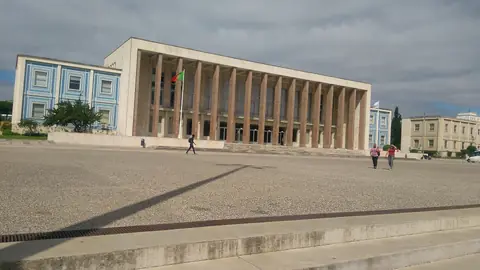
When the Government banned Students’ Day again, having agreed to move it to 7 and 8 April, the rector, Marcelo Caetano — who had defended university autonomy before the students from the balcony of the Rectorate — feeling that his authority had been undermined, tendered his resignation; the academic mourning was resumed.12 His term ended on 12 April 1962.3
27 April 1962 · women: Arrest of the Women of Couço
27 April 1962
In the early hours of 27 April, the PIDE, with the GNR, arrests five women and ten men in Couço who were preparing the struggle for the eight-hour day in the fields: Maria Custódia Chibante, Maria da Conceição Figueiredo, Maria Galveias, Maria Madalena and Olímpia Brás would become known as the Women of Couço.21 During the interrogations at the PIDE headquarters, on Rua António Maria Cardoso, they are tortured with beatings, sleep deprivation and the “statue” torture: Maria Custódia spends 98 hours there without talking, 75 of them without sleep, and has to be carried to Caxias.213 Maria Galveias, arrested together with her school-age daughter, is interrogated for eleven days and eleven nights.1
Caxias Fort — the political prison · PVDE / PIDE / DGS headquarters
1 May 1962: May Day 1962 in Lisbon’s Baixa
1 May 1962
In the midst of the academic crisis, workers and students demonstrate in the Baixa, shouting “We are hungry!” (Temos fome!), “Freedom!” (Liberdade!) and “Down with the PIDE!” (Abaixo a PIDE!); there are clashes in the Terreiro do Paço, the Carmo, the Rossio, Martim Moniz and Alcântara, and the riot police, the GNR, the PIDE and the Portuguese Legion keep up the repression until nightfall.13 Near Largo do Caldas, a burst of police machine-gun fire kills the typographer Estêvão Giro, aged 25.152 In the Rossio, the police went into the Café Gelo and beat the people inside.64
Rossio (Praça de D. Pedro IV) · Largo do Caldas / Rua da Madalena · Café Gelo · Terreiro do Paço (Praça do Comércio) · Estêvão Giro
9 May 1962: Hunger strike in the Cidade Universitária canteen
9 May 1962
At the proposal of Eurico Figueiredo, 81 students begin a hunger strike in the canteen of the Cidade Universitária, and some 1,500 fellow students stay with them, in solidarity.12 In the early hours of 11 May, the riot police surround the canteen and arrest them one by one, despite the mediation of professors such as Luís Lindley Cintra; some are taken to Caxias, where a group of arrested women students go on refusing food.23
Cidade Universitária Canteen · Cidade Universitária de Lisboa (University Stadium and faculties) · Caxias Fort — the political prison · Eurico Figueiredo · Luís Filipe Lindley Cintra
15 May 1962 · women: SPE writers stand in solidarity with the students
15 May 1962
Members of the Portuguese Society of Writers (SPE) — among them Sophia de Mello Breyner Andresen, José Cardoso Pires, José Saramago and Aquilino Ribeiro — signed a petition in solidarity with the student associations in struggle.12 Three years later, the Government would dissolve the SPE.1
Portuguese Society of Writers (headquarters) · Sophia de Mello Breyner Andresen
28 May 1962: Arrest of Eurico Figueiredo
28 May 1962
Eurico Figueiredo, chairman of the Pro-Association Committee of the Medical Students, is arrested and taken to the Aljube.1 His arrest sparks a strong movement of student solidarity, with demonstrations put down by the police, until his release.1 On the same day, someone photographed a riot police lorry from the balcony of the House of the Students of the Empire.2
Aljube Prison · House of the Students of the Empire (CEI) · Eurico Figueiredo
June 1962 to 3 December 1969 · women: Maria Lamas in exile in Paris
June 1962 to 3 December 1969
Persecuted, Maria Lamas goes into exile in Paris, where she supports the Portuguese refugees arriving there and keeps up her activity at the international congresses of women and for peace.541 She returns to Portugal on 3 December 1969 and goes to live in Évora, with her daughter.1
4 June 1962: Police charge at the Faculty of Medicine; Lindley Cintra assaulted
4 June 1962
The riot police charged students and professors at the entrance to the Faculty of Medicine.2 The philologist Luís Lindley Cintra, a professor at the Faculty of Letters who was trying to talk to the police, was assaulted and treated in hospital; the assault earned him the solidarity of his colleagues, and the students later gave him a painting by the artist Fernando Azevedo.1
Cidade Universitária de Lisboa (University Stadium and faculties) · Luís Filipe Lindley Cintra
14 June 1962: A plenary meeting at the Técnico suspends the academic mourning
14 June 1962
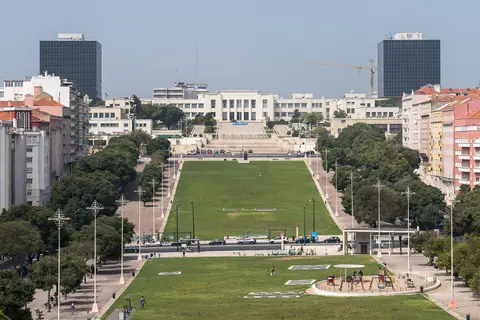
With the exam season looming, a plenary meeting at the Instituto Superior Técnico voted by a majority to suspend the academic mourning; the protest continued over the imprisonment of the student leaders, above all Eurico Figueiredo, and over the disciplinary proceedings.1 At the end of June, a ministerial order expelled 21 strikers from all of Lisbon’s schools for 30 months.2
20 June 1962: Demonstration for the release of the student Eurico Figueiredo
20 June 1962
A demonstration in support of the student leader Eurico Figueiredo, imprisoned in the Aljube, was meant to end outside the prison, but a riot police charge near the cathedral breaks it up; the students go on to the Baixa shouting “Freedom! Autonomy!” (Liberdade! Autonomia!).1
Lisbon Cathedral (Sé Patriarcal) · Aljube Prison · Eurico Figueiredo
December 1962: The Patriotic Front for National Liberation (FPLN) is founded
December 1962
Sectors of the opposition create the Patriotic Front for National Liberation, a united movement with a delegation abroad based in Algeria, where it would operate until 25 April.12 Humberto Delgado would take over its presidency in 1964, only to break with it months later.1
1963
January 1963: The magazine “O Tempo e o Modo” is launched
January 1963
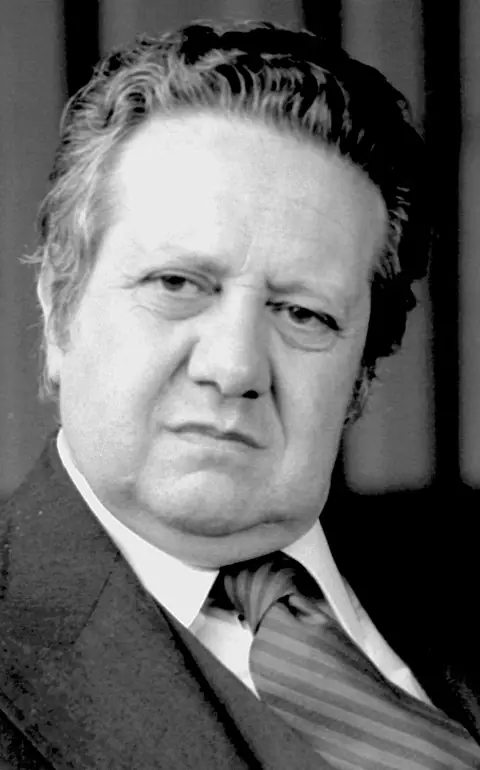
Founded by progressive Catholics such as António Alçada Baptista, its first editor, and João Bénard da Costa, together with secular socialists such as Mário Soares and young people who had come out of the student struggles of 1962, the magazine O Tempo e o Modo (Time and Mode) becomes one of the main spaces for debate and for opposition to the dictatorship.1
23 January 1963: The PAIGC begins the armed struggle in Guinea
23 January 1963
The PAIGC, led by Amílcar Cabral, begins the armed struggle against Portuguese colonialism in Guinea, less than four years after the Pidjiguiti massacre.12
18 March 1963 · women: End of the ban on nurses marrying
18 March 1963
Decree-Law No. 44 923 of 18 March admits married women and widows with children to hospital nursing “when the needs of the service advise such admission”.2 After a 25-year struggle, this brought down the rule imposed in 1938 and reaffirmed in 1942, which accepted only single women or childless widows.13 But the decree itself repeated that the married woman’s place was the home, “where the noblest mission is reserved for her”.2
1964
1 May 1964: Death of David Almeida Reis by the Elevador da Glória
1 May 1964
During the May Day (1 May) demonstration, the worker David Almeida Reis is killed by PIDE agents in front of what was then the Café Palladium, by the Elevador da Glória, near the Palácio Foz.1
Palácio Foz – National Propaganda Secretariat / National Information Secretariat (SPN/SNI)
July 1964 · women: Arrest of Maria Lourença Cabecinha
July 1964
The underground full-time PCP worker Maria Lourença Cabecinha, a rural worker from the Alentejo, is arrested and taken to Caxias, where she undergoes gruelling interrogations and psychological torture; in prison she learns Mathematics and Geography from Maria Alda Nogueira.1 Sentenced in January 1965 to two years and ten months of major imprisonment and to security measures, she is only released in September 1969.1
Caxias Fort — the political prison · Maria Lourença Cabecinha · Maria Alda Nogueira
Watch in the archive: Museu do Aljube Resistência e Liberdade
Three rural women — Eulália Miranda, Hermínia Vicente and Maria Lourença Cabecinha — in a joint testimony recorded by the Aljube Museum on 19 October 2016. According to the museum’s keywords, they talk about the struggle for the 8-hour working day, life underground in the Portuguese Communist Party (PCP), the children of those living underground, imprisonment and interrogation in Caxias.
Original page Licença padrão do YouTube — embed permitido pelo canal oficial do Museu do Aljube
Museu do Aljube Resistência e Liberdade, on YouTube. The player only connects to that site when you press “Watch”.
25 September 1964: FRELIMO begins the armed struggle in Mozambique
25 September 1964
FRELIMO begins the armed struggle in Mozambique, the third front of the colonial war, after Angola and Guinea.1 Mueda, where in 1960 the authorities had opened fire on the Makonde, is remembered as the harbinger of this war.1
1965
26 January 1965: Demonstration outside the Aljube for the release of students
26 January 1965
On 21 January the PIDE arrests some fifty student leaders from the University of Lisbon and locks them up in the “curros” (isolation cells) of the Aljube; on University Day, a mother interrupts the rector, shouting “Free my son”.1 On the 26th, relatives and students demonstrate at the prison door and are charged by the riot police.1 Months later, Aljube Prison would be closed.1
13 February 1965 · women: The PIDE murders Humberto Delgado and Arajaryr Campos
13 February 1965
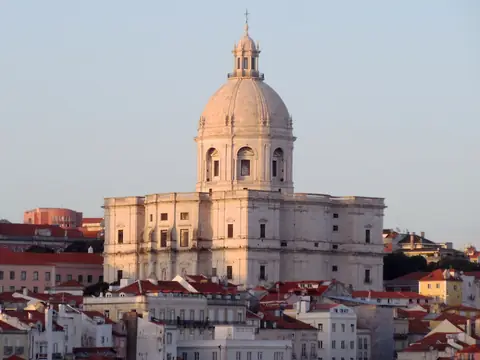
General Humberto Delgado and his secretary, Arajaryr Campos, are murdered by a PIDE squad in an ambush in Spain, near Badajoz: it was “Operation Autumn” (Operação Outono), in preparation since the Beja Revolt.4153 The bodies were only found in April, at Villanueva del Fresno, near the border.42 In 1990, the general’s remains were moved to the National Pantheon.6
Church of Santa Engrácia – National Pantheon · Humberto Delgado · Arajaryr Campos
- 1Museu do Aljube Resistência e Liberdade (EGEAC): Frente Patriótica de Libertação Nacional
- 2Centro de Documentação 25 de Abril, Universidade de Coimbra
- 3Museu do Aljube Resistência e Liberdade (EGEAC): Candidatura de Humberto Delgado – uma jornada de resistência
- 4Museu do Aljube Resistência e Liberdade: Humberto da Silva Delgado (biografia)
- 5Museu do Aljube Resistência e Liberdade: Arajaryr Canto Moreira Campos (biografia)
- 6Panteão Nacional – Museus e Monumentos de Portugal
- 7Reverso / revista Sábado
21 April 1965 · women: Arrest and torture of Conceição Matos
21 April 1965
At 04:00, the PIDE, with the GNR, enters the house in Montijo where Conceição Matos was living underground; hours later it also arrests her partner, Domingos Abrantes, who had escaped from Caxias in 1961.13 Taken to the PIDE headquarters, on Rua António Maria Cardoso, and then to Caxias, she spends a year and a half in prison; during the interrogations she is beaten, stripped and humiliated, and never talks.123
PVDE / PIDE / DGS headquarters · Caxias Fort — the political prison · Conceição Matos · Domingos Abrantes
Watch in the archive: Museu do Aljube Resistência e Liberdade
Conceição Matos and Domingos Abrantes tell together, in a testimony recorded by the museum on 7 October 2015, of life underground, imprisonment and torture. The museum’s keywords include the Aljube prison, Caxias, the PIDE interrogations and the escape from Caxias.
Original page Licença padrão do YouTube — embed permitido pelo canal oficial do Museu do Aljube
Museu do Aljube Resistência e Liberdade, on YouTube. The player only connects to that site when you press “Watch”.
21 May 1965: The Portuguese Society of Writers is dissolved and its headquarters raided
21 May 1965, 22:00
After the Portuguese Society of Writers gave a prize to Luuanda, by Luandino Vieira, then imprisoned at Tarrafal, the Minister of National Education dissolved it by ministerial order.23 That night, at around 22:00, its headquarters, on Rua da Escola Politécnica, were raided and ransacked by “unknown persons” backed by the PIDE, who left the sign “Terrorists’ agency in the Metropole” (Agência dos terroristas na Metrópole).1 The whole jury was questioned by the PIDE — including Fernanda Botelho, the only woman — and three jurors, Alexandre Pinheiro Torres, Augusto Abelaira and Manuel da Fonseca, were detained.14
Portuguese Society of Writers (headquarters) · Tarrafal Concentration Camp (Cape Verde) · José Luandino Vieira · Fernanda Botelho
August 1965: The Aljube political prison closes
August 1965
After national and international protests against conditions in the “curros” (isolation cells) — among them the visit, in 1963, of the British Lord Russell of Liverpool — the Aljube political prison is closed and the prisoners are moved to Caxias, where the North Redoubt is enlarged to take them in.143 Months earlier, the demonstration at the prison door for the release of the students held there had been charged by the police.2
6 September 1965: Closure of the House of the Students of the Empire
6 September 1965
The Minister of National Education dissolves the House of the Students of the Empire, on the pretext that it was not attached to any educational institution; the PIDE questions the board, moves into the buildings and confiscates the archives, library and furniture.13 So ended twenty-one years of a house through which Agostinho Neto, Amílcar Cabral and many other future leaders of the liberation movements had passed.4
House of the Students of the Empire (CEI) · Agostinho Neto · Amílcar Cabral
4 October 1965: Manifesto of the “101 Catholics” against colonial policy
4 October 1965
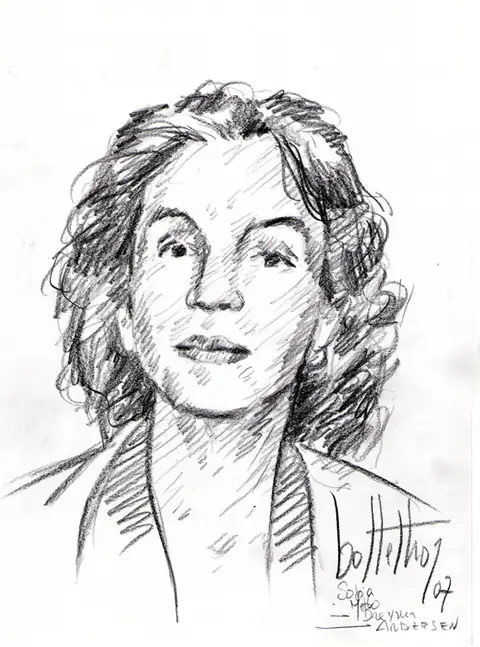
The manifesto of the “101 Catholics against the dictatorship’s colonial policy” is published, bringing together figures such as Alçada Baptista, Helena Cidade Moura, João Bénard da Costa, Ruy Belo, Sophia de Mello Breyner Andresen and Nuno Teotónio Pereira.12 The manifesto marks the declared support of Catholic sectors for the opposition and openly denounces Salazar and the regime.1
1966
1966 · women: Natália Correia publishes the “Antologia de Poesia Portuguesa Erótica e Satírica”, which the censors seize
1966
The poet Natália Correia, a supporter of Humberto Delgado, publishes with Afrodite, Fernando Ribeiro de Mello’s publishing house, the Antologia de Poesia Portuguesa Erótica e Satírica (Anthology of Portuguese Erotic and Satirical Poetry), from the medieval songbooks to the present day, with illustrations by Cruzeiro Seixas; the censors seize it and a long court case begins, the first document of which is dated 17 January 1966.32 The sentence would only come on 21 March 1970, at the end of the trial in the Plenary Court.3 Later, as literary director of Estúdios Cor, Natália would be prosecuted over the publication of the Novas Cartas Portuguesas (New Portuguese Letters).1
25 November 1966 · women: New Civil Code keeps the husband as “head of the family”
25 November 1966
Decree-Law No. 47 344 approves the new Civil Code, which comes into force on 1 June 1967. Article 1674, “Marital power”, states that “the husband is the head of the family, and it is for him, in that capacity, to represent it and to decide on all acts of the common married life”.1 The running of the home falls to the wife; outside the liberal professions and the civil service, if he has not given his consent, the husband may at any time put an end to his wife’s employment contract.2 For the jurist Elina Guimarães, the Code restored marital power in the abstract, even if in practice it extended the legal capacity of the married woman.2 The husband as “head of the family” only disappeared with the 1977 revision.3
1967
17 May 1967: The LUAR raids the Bank of Portugal in Figueira da Foz
17 May 1967
In “Operation Mondego”, led by Palma Inácio — the same man who in 1961 had hijacked a TAP plane — the LUAR raids the Bank of Portugal branch in Figueira da Foz to finance the struggle against the dictatorship.123 The raiders escape in a light aircraft, pretend to head for North Africa and reach France by way of Spain.1
June 1967 · women: Arrest of Helena Pato
June 1967
Helena Pato, active in the PCP and in the Commission for Aid to Political Prisoners, is arrested and taken to Caxias.1 Suspected of links to the armed struggle, she endures long isolation, beatings and sleep torture, until she is released in November.1
Caxias Fort — the political prison · Helena Pato
Watch in the archive: Museu do Aljube Resistência e Liberdade
In a testimony recorded by the Aljube Museum on 30 September 2015, Helena Pato tells of her arrest by the PIDE, the interrogations, torture and isolation in Caxias. The museum’s keywords also point to women, solidarity and aid to political prisoners.
Original page Licença padrão do YouTube — embed permitido pelo canal oficial do Museu do Aljube
Museu do Aljube Resistência e Liberdade, on YouTube. The player only connects to that site when you press “Watch”.
25–26 November 1967: Floods in the Lisbon region expose the destitution hidden by the regime
25–26 November 1967
On the night of 25 to 26 November, a cloudburst flattens poor neighbourhoods and shanty towns in Greater Lisbon: officially 462 dead, perhaps 700.12 The censors order silence about the deaths and about the action of the students, who mobilise for the relief effort — among them José António Ribeiro Santos — and publish the newspaper Solidariedade Estudantil (Student Solidarity); voices such as that of the architect Nuno Teotónio Pereira point to the lack of planning as the cause of the tragedy.13
10 December 1967: The British press reveals the “Ballet Rose” scandal
10 December 1967
British newspapers report on a ring of prostitution and abuse of minors — children aged nine and ten from the poorest parts of the country — that involved senior figures of the regime.1 Salazar and the director of the PIDE, Silva Pais, hush the case up; Mário Soares, accused of being the source of the reports, is arrested, spends Christmas in isolation in Caxias and is deported to São Tomé.1
Caxias Fort — the political prison · Mário Soares · Silva Pais
1968
1968 · women: The Democratic Women’s Movement is founded
1968
The Democratic Women’s Movement is born at an assembly in the Padaria do Povo (People’s Bakery), in Lisbon, and brings together heirs of the National Council of Portuguese Women and of the Portuguese Women’s Association for Peace, such as Maria Alda Nogueira; Isabel do Carmo is among the founders.43 The following year it organises actions on International Women’s Day in Lisbon, Porto, Setúbal and Évora; on 21 October 1973 it holds its 1st National Meeting, in Cova da Piedade, with 250 women, chaired by Luísa Amorim, Helena Neves and Berta Monteiro.14 After 1974, Maria Lamas would be its honorary president.25
The “A Padaria do Povo” cooperative (the People’s Bakery) · Isabel do Carmo · Maria Lamas · Maria Alda Nogueira · Helena Neves
- 1Museu do Aljube Resistência e Liberdade (EGEAC): Dia Internacional da Mulher
- 2Museu do Aljube Resistência e Liberdade (EGEAC): Maria Lamas
- 3Museu do Aljube Resistência e Liberdade: Isabel do Carmo (testemunho e biografia)
- 4MDM – Movimento Democrático de Mulheres: A nossa história – MDM 1968-2023
- 5MDM – Movimento Democrático de Mulheres: Maria Lamas
- 6Museu do Aljube Resistência e Liberdade: Helena Pato (testemunho e biografia)
July 1968 to 3 July 1968: The “Greve da Mala” (Cash-Bag Strike) at Lisbon’s Carris
1968–1974The Caetano years
Marcelo Caetano succeeds Salazar and promises an opening. The war goes on, the police change their name, and the Captains’ Movement is born.80 dates34 women
1968
27 September 1968: Marcelo Caetano succeeds Salazar as head of government
27 September 1968
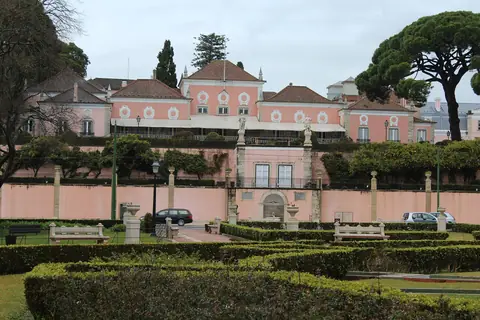
With Salazar removed by illness, Marcelo Caetano is appointed President of the Council (head of government) and the new government is sworn in at the Palácio de Belém; the next day, Caetano makes a statement to the nation in the palace of the National Assembly.124 His arrival brings a “timid opening”, which the dictatorship was quick to contain.3
Palácio de Belém · Palácio de São Bento · Marcelo Caetano · António de Oliveira Salazar
8 December 1968: The PIDE raids the Técnico Students’ Association
8 December 1968
The PIDE raids the Students’ Association of the Instituto Superior Técnico, seizes documents, identifies students and suspends the association’s leaders; the association and the IST are closed until the end of the holidays, and Lisbon’s student body declares “luto académico” (academic mourning).123 There follows the police invasion of the Cidade Universitária — a form of intimidation that would become recurrent.1
Instituto Superior Técnico · Cidade Universitária de Lisboa (University Stadium and faculties)
26 December 1968 · women: A law sets the same voting requirements for women and men for the first time
26 December 1968
Law No. 2137 of 26 December recognises as voters for the National Assembly all Portuguese citizens who are of age or emancipated and can read and write Portuguese — without distinguishing between men and women — as well as those already registered under Law No. 2015 of 1946.4 It was the first time that men and women voted on the same terms, but the requirement to read and write kept far more women away: at the start of the 1970s, one in three could not read.123
31 December 1968 to 1 January 1969 · women: Vigil for peace in the Church of São Domingos
31 December 1968 to 1 January 1969
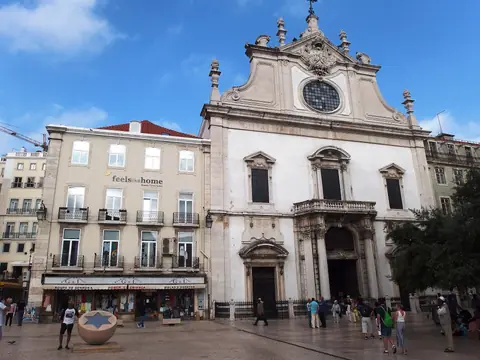
On the night of 31 December, after Cardinal Cerejeira’s Mass, more than a hundred Catholics kept a vigil in the Church of São Domingos until 06:00 on 1 January, the World Day of Peace, denouncing the “political commitment of the Church towards the State” and the colonial war.3 Those present included Nuno Teotónio Pereira, at whose home the vigil had been arranged, and Francisco de Sousa Tavares, among others.31 Francisco Fanhais sang the “Cantata da Paz” (Cantata of Peace), which Sophia de Mello Breyner Andresen wrote for that night: “We see, we hear and we read / We cannot ignore” (Vemos, ouvimos e lemos / Não podemos ignorar).32
Church of São Domingos · Sophia de Mello Breyner Andresen · Nuno Teotónio Pereira · Francisco Fanhais
Watch in the archive: Museu do Aljube Resistência e Liberdade
Francisco Fanhais’s testimony, recorded by the Aljube Museum on 15 January 2020. Going by the museum’s keywords, he talks about the Catholics and the Church, the PIDE, the colonial war, the LUAR, protest music (música de intervenção) and censorship.
Original page Licença padrão do YouTube — embed permitido pelo canal oficial do Museu do Aljube
Museu do Aljube Resistência e Liberdade, on YouTube. The player only connects to that site when you press “Watch”.
1969
1969 · women: Sophia de Mello Breyner and Maria Barroso stand as opposition candidates
1969
In the 1969 elections to the National Assembly, Sophia de Mello Breyner Andresen and Maria Barroso stand as opposition candidates for deputy, on the CEUD lists, according to the Assembly of the Republic.1 In the same year the National Commission for Aid to Political Prisoners is set up, of which Sophia was a member.12
Sophia de Mello Breyner Andresen · Maria Barroso
- 1Assembleia da República
- 2Museu do Aljube Resistência e Liberdade (EGEAC)
- 3Fundação Mário Soares e Maria Barroso
- 4Museu do Aljube Resistência e Liberdade
- 5Casa Comum – Fundação Mário Soares e Maria Barroso (arquivo Ruella Ramos): «No comício democrático em Santarém» (Diário de Lisboa, 6 de outubro de 1969)
- 6Casa Comum – Fundação Mário Soares e Maria Barroso (arquivo Ruella Ramos): Sessão de propaganda da CEUD no Tivoli (Diário de Lisboa, 12 de outubro de 1969)
24 February 1969 · women: “Desfolhada Portuguesa” (Portuguese Husking) wins the Grande Prémio TV da Canção (TV Song Grand Prix), at the São Luiz Theatre
24 February 1969
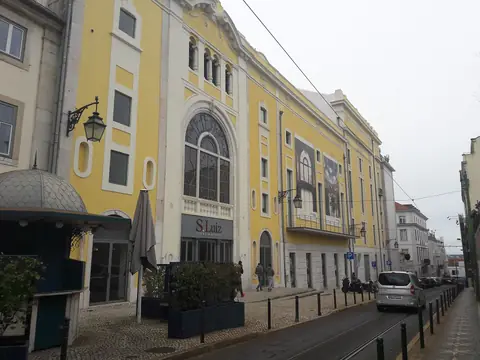
Broadcast live from the São Luiz Theatre — the first time the festival leaves the studios — and presented by the actress Maria de Lourdes Norberto, the Grande Prémio TV da Canção (TV Song Grand Prix) is won by “Desfolhada Portuguesa” (Portuguese Husking), a poem by José Carlos Ary dos Santos with music by Nuno Nazareth Fernandes, sung by Simone de Oliveira.123 Teresa Paula Brito is also among the contestants.1 The censors let through the line “Whoever makes a child, makes it for pleasure” (Quem faz um filho, fá-lo por gosto), which offends the most conservative morality; the singer will be insulted in the street and will come close to being arrested.34
São Luiz Theatre · Simone de Oliveira · Teresa Paula Brito
8 March 1969 · women: Women gather in the Serra de Sintra on Women’s Day
8 March 1969
A year after the founding of the MDM, many dozens of women from Lisbon and its surroundings gather in the Serra de Sintra and, despite the intimidating presence of the police, hand out 5,000 copies of the manifesto “A Mulher na Luta” (Woman in the Struggle).1 In Porto, committees of women workers rally against the rising cost of living and deliver their demands to the civil government.1
17 April 1969: The 1969 academic crisis begins in Coimbra
17 April 1969
The university crisis of 1969 breaks out in Coimbra, leading to a strike from classes and, later, to the boycott of the June exams.1 It had been building up: in December 1968, when the PIDE raided the Técnico Students’ Association, Coimbra had shown its solidarity, and in February the list of the Conselho das Repúblicas (Council of the Student Houses) had won the Academic Association elections.2
15–17 May 1969 · women: The Second Republican Congress of Aveiro
15–17 May 1969
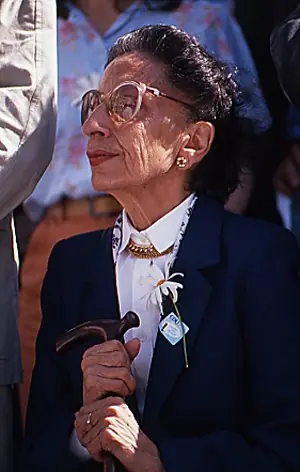
Some 1,500 participants debate at the Teatro Aveirense, among other topics, equal rights for women, the end of censorship and the colonial war; Maria Lamas and Aida Magro send messages, and the delegates include Virgínia Moura, Mário Soares and Emídio Santana.12 The First Congress had met in 1957.1
Maria Lamas · Aida Magro · Virgínia Moura · Mário Soares · Emídio Santana
26 May to 29 December 1969 · women: “Zip-Zip” premieres on RTP, recorded before a live audience at the Villaret Theatre
26 May to 29 December 1969
RTP premieres Zip-Zip, by Raul Solnado, Carlos Cruz and Fialho Gouveia, recorded before a live audience at the Villaret Theatre; on the first programme the guest is Almada Negreiros, and the actress Laura Soveral recites his poem “Pede-se a uma criança: desenha uma flor!” (A child is asked: draw a flower!).1 Until 29 December, the programme brings to light a generation of “baladeiros” (balladeers): there Manuel Freire sings “Pedra Filosofal” (Philosopher’s Stone) in public for the first time, and there the censors veto as “obscene” the song that Ana Maria Teodósio had chosen.43
Villaret Theatre · Manuel Freire · Ana Maria Teodósio
RTP Arquivos: Entrevista a Almada Negreiros no “Zip-Zip”
RTP Arquivos: Zip Zip – Parte II
- 1RTP Arquivos: Entrevista a Almada Negreiros no «Zip-Zip» (primeiro programa, 26 de maio de 1969)
- 2RTP Arquivos: Almada Negreiros no Zip Zip (fotografia da primeira emissão, datada de 24 de maio de 1969)
- 3RTP Arquivos: Zip Zip – Parte II (último programa da série, 29 de dezembro de 1969)
- 4Observador
- 5Time Out Lisboa
October 1969: Campaign of the Lisbon Democratic Electoral Commission (CDE)
October 1969
For the October elections to the National Assembly, the Lisbon Democratic Electoral Commission (CDE) publishes the bulletin Movimento Democrático (Democratic Movement), whose first issue comes out on 9 October.1 The Lisbon CDE includes, among other women, Isabel do Carmo; Emídio Santana speaks on trade union issues at CDE and CEUD rallies.23
Isabel do Carmo · Emídio Santana
- 1Casa Comum – Fundação Mário Soares e Maria Barroso
- 2Museu do Aljube Resistência e Liberdade
- 3Wikipédia
- 4Casa Comum – Fundação Mário Soares e Maria Barroso (arquivo Ruella Ramos): «A primeira sessão pública da C.D.E. de Lisboa» (Diário de Lisboa, 4 de outubro de 1969)
- 5Casa Comum – Fundação Mário Soares e Maria Barroso (arquivo Ruella Ramos): «O último comício da C.D.E. no Teatro Vasco Santana» (Diário de Lisboa, 22 de outubro de 1969)
25 October 1969 · women: Married women no longer need their husband’s permission to have a passport
25 October 1969
Decree No. 49 317 of 25 October ends the requirement for a husband’s authorisation for a married woman to have a passport: the Government itself acknowledged that she no longer needed that authorisation to “take far more important decisions”.2 The requirement, Elina Guimarães recalled, led many separated husbands to refuse it or to use it for blackmail; in the same year, the new employment contract law kept the husband’s right to object to his wife working.1
26 October 1969: The 1969 elections to the National Assembly
26 October 1969
The opposition stands divided — the CDE and the CEUD — under repression and with the usual violations of the law, and National Popular Action, the regime’s party, wins.12 Its lists include the so-called “liberal wing” (Sá Carneiro, Pinto Balsemão, Miller Guerra, among others), many of whom would end up resigning their seats after the constitutional revision of 1971.13
RTP Arquivos: Primeira conferência de imprensa da Comissão Eleitoral de Unidade Democrática
24 November 1969: The PIDE is renamed the Directorate-General of Security
24 November 1969
Decree-Law No. 49 401 abolishes the International and State Defence Police, created in 1945, and creates within the Ministry of the Interior the Directorate-General of Security (DGS), which succeeds it as the political police.32 The DGS would be abolished on 25 April 1974.1
4–15 December 1969 · women: Strike by the women workers of the Penteadora mill, in Unhais da Serra
4–15 December 1969
At the Penteadora woollen mill, in Unhais da Serra (Covilhã), where some 500 people worked, mostly women aged between 14 and 30, the women workers refuse to operate twice as many machines — 800 spindles instead of 400 — and go on a sit-down strike.1 On 12 December, the GNR points machine guns at them and there are dismissals; the women end up winning and keep working 400 spindles.1
27 December 1969 · women: Women primary school teachers no longer need permission to marry
27 December 1969
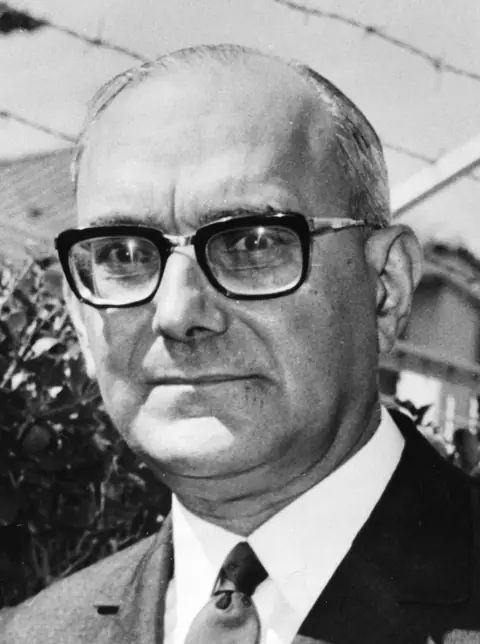
Decree-Law No. 49 473, signed by Marcelo Caetano and by the Minister of National Education, José Hermano Saraiva, revokes Article 9 of the 1936 decree, which made the marriage of women primary school teachers dependent on the minister’s authorisation. The Government acknowledged that the requirement had “long since become a bureaucratic formality that makes it difficult for women teachers to marry”.1
1970
1970 · women: Pintasilgo leads the first working group on women
1970
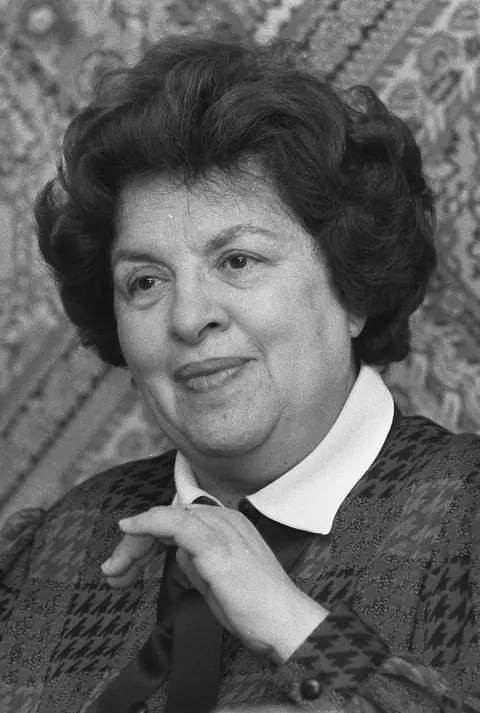
With international relations strained by the refusal to grant independence to the colonies, the regime sets out to learn about the situation of Portuguese women.14 The Ministry of Corporations and Social Welfare invites Maria de Lourdes Pintasilgo, who was a consultant there, and the Working Group for the Definition of a Comprehensive National Policy on Women is born, the seed of the future Commission on the Status of Women.14
1970: Francisco Fanhais barred from being a priest, from teaching and from singing in public
1970
For having attended the wedding of the former priest Felicidade Alves, Francisco Fanhais, who had sung the “Cantata da Paz” (Cantata of Peace) at the São Domingos vigil, is barred from exercising the priesthood and from teaching in state schools, and is also banned from singing in public.1 As a teacher of Religion and Morals, he had based his lessons on the protest songs of the time.2 In April 1971 he left for France, getting a lift from José Afonso.1
Francisco Fanhais · José Afonso (Zeca Afonso)
Watch in the archive: Museu do Aljube Resistência e Liberdade
Francisco Fanhais’s testimony, recorded by the Aljube Museum on 15 January 2020. Going by the museum’s keywords, he talks about the Catholics and the Church, the PIDE, the colonial war, the LUAR, protest music (música de intervenção) and censorship.
Original page Licença padrão do YouTube — embed permitido pelo canal oficial do Museu do Aljube
Museu do Aljube Resistência e Liberdade, on YouTube. The player only connects to that site when you press “Watch”.
January 1970 · women: Arrest of Diana Andringa
January 1970
The journalist Diana Andringa is arrested at the advertising agency where she worked, after the arrest in Angola of anti-colonial activists with whom she had been in contact, and spends two and a half months in isolation in Caxias.1 She would be tried by the Plenary Court in 1971.1
Caxias Fort — the political prison · Diana Andringa
Watch in the archive: Museu do Aljube Resistência e Liberdade
Diana Andringa’s testimony, recorded by the Aljube Museum on 19 April 2017. According to the museum’s keywords, she talks about the student movement, support for political prisoners, her links to the People’s Movement for the Liberation of Angola (MPLA) and the liberation struggle, her imprisonment and interrogation in Caxias, and her trial in the Plenary Court.
Original page Licença padrão do YouTube — embed permitido pelo canal oficial do Museu do Aljube
Museu do Aljube Resistência e Liberdade, on YouTube. The player only connects to that site when you press “Watch”.
17–21 March 1970 · women: Natália Correia tried at the Plenary Court over the “Antologia”
17–21 March 1970
The trial over the Antologia de Poesia Portuguesa Erótica e Satírica (Anthology of Portuguese Erotic and Satirical Poetry), edited by Natália Correia and seized in 1966, begins at the Lisbon Criminal Plenary Court.1 On 21 March 1970, Natália and the publisher, Fernando Ribeiro de Mello, are sentenced to 90 days in prison commuted to a fine; Mário Cesariny, Luiz Pacheco, Ary dos Santos and Melo e Castro, to 45 days.1
27 July 1970: Salazar dies
27 July 1970
Almost two years after illness had removed him from the leadership of the Government, António de Oliveira Salazar dies in Lisbon.1
21 August 1970 · women: Maria Teresa Lobo, the first woman in a Portuguese government
21 August 1970
Marcelo Caetano appoints Maria Teresa Cárcomo Lobo Under-Secretary of State for Health and Welfare: she is the first woman to be part of a government in Portugal.1 She is sworn in at the Palácio de Belém and stays until the reshuffle of November 1973.1 On 20 August 1970, the evening paper A Capital carried the news: “A lady (for the first time) a member of the Government” (Uma senhora (pela primeira vez) membro do Governo).12
1 October 1970: The Intersindical is created
1 October 1970
The Intersindical is created, “the first Portuguese trade union confederation”, according to the 25 April Documentation Centre.1 Before it, under the Republic, there had been the General Confederation of Labour, an anarcho-syndicalist workers’ confederation founded in 1919.2
2 October 1970 · women: Suicide of Albina Fernandes
2 October 1970
Two years after leaving Caxias, her nervous system wrecked by six years and seven months in prison, Albina Fernandes takes her own life.1 The National Commission for Aid to Political Prisoners — in a telegram to Marcelo Caetano signed by, among others, Cecília Areosa Feio, Maria Eugénia Varela Gomes and Sophia de Mello Breyner Andresen — holds the Government responsible, and the funeral turns into a protest demonstration.1 Sofia Ferreira would accuse the PIDE doctor of having denied her medical care in prison.1
Caxias Fort — the political prison · Albina Fernandes · Sofia Ferreira · Sophia de Mello Breyner Andresen
26 October 1970: The ARA sabotages the ship “Cunene” in the Alcântara dock
26 October 1970
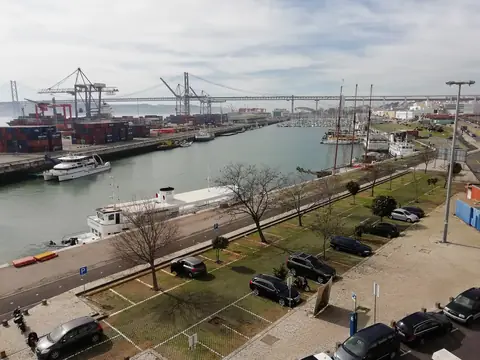
Armed Revolutionary Action (ARA), the armed wing of the PCP, claims its first action: two explosions on the ship Cunene, which was carrying weapons and goods for the colonial troops, left “flooded and immobilised” in the Alcântara dock.12 The action had been studied and decided on in the ARA’s central command by Jaime Serra, Francisco Miguel and Raimundo Narciso.12
10 November 1970: “La Chanson de Combat Portugaise”: the exiled singers in Paris
10 November 1970
In the auditorium of the Maison de la Mutualité, in Paris, Sérgio Godinho, José Mário Branco, Tino Flores and Luís Cília, all of them exiles in France, sing, and so does José Afonso.1 Near the end, a far-left group interrupts José Afonso, accusing him of colluding with the regime by staying in Portugal instead of choosing exile, and he does not manage to sing “Cantar Alentejano” (Alentejo Song).1 The recording of the concert is kept in the Antena 1 archive.1
Sérgio Godinho · José Mário Branco · Luís Cília · José Afonso (Zeca Afonso)
Watch in the archive: Museu do Aljube Resistência e Liberdade
Luís Cília’s testimony, recorded by the Aljube Museum in January 2024. The biography the museum publishes with it recalls his desertion, his exile in Paris from 1964 and his return to Portugal on 30 April 1974.
Original page Licença padrão do YouTube — embed permitido pelo canal oficial do Museu do Aljube
Museu do Aljube Resistência e Liberdade, on YouTube. The player only connects to that site when you press “Watch”.
20 November 1970: Three ARA bombs in Lisbon
20 November 1970
In the early hours, the ARA sets off three devices, each against one front of its struggle: next to the PIDE’s technical school, on Estrada de Benfica, in Sete Rios (repression); at the United States Cultural Centre, on Avenida Duque de Loulé (imperialism); and at the Cais da Fundição, where the charge meant for the ship Niassa, ready to carry war materiel, went off in the warehouse (the colonial war).123 The bomb at the PIDE school, left in the street, killed a 15-year-old boy on his way home from a night’s work: he was the only fatal victim of the ARA’s actions.13
22–23 November 1970: Operation Green Sea (Operação Mar Verde): the invasion of Conakry
22–23 November 1970
António de Spínola, whom Marcelo Caetano had chosen for Guinea, gives the green light for Portuguese forces to invade Guinea-Conakry, in order to depose Sékou Touré, capture Amílcar Cabral, free some twenty Portuguese held there and destroy military targets.12 The operation, proposed by Alpoim Calvão, fails, violates international law and is condemned at the UN; Portugal never acknowledged it.12
1971
1971 · women: Maria Teresa Horta publishes “Minha Senhora de Mim” (My Lady of Myself)
1971
Maria Teresa Horta publishes Minha Senhora de Mim (My Lady of Myself), poems that draw on the cantigas de amigo (songs of a friend) to challenge patriarchal thinking and defend a woman’s right to live her sexuality to the full.2 Like Maina Mendes (1969), by Maria Velho da Costa, and Os Outros Legítimos Superiores (The Other Legitimate Superiors, 1970), by Maria Isabel Barreno, the book challenged the roles the dictatorship assigned to women.1 The PIDE seizes it for offending “the traditional morals of the nation”, the publisher, Snu Abecassis, is threatened with the closure of Dom Quixote if she publishes the author again, and Maria Teresa Horta is beaten up in the street by three men.2 It was then, in May 1971, that the three decided to write the Novas Cartas Portuguesas (New Portuguese Letters) together: “If one woman on her own causes all this fuss, this uproar, this scandal, what would happen if there were three of us?” asked Maria Velho da Costa.2
Maria Isabel Barreno · Maria Teresa Horta · Maria Velho da Costa
RTP Arquivos: Lançamento de “Minha Senhora de Mim” de Maria Teresa Horta
1971 · women: Natália Correia opens the Botequim, in Graça
1971
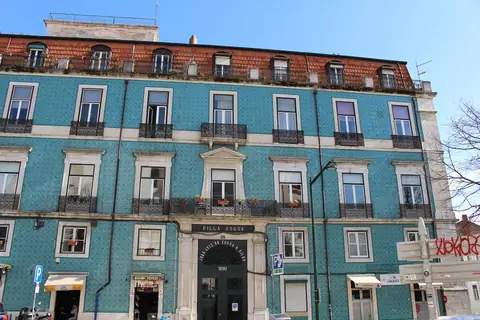
On the ground floor of the Vila Sousa, on Largo da Graça, Natália Correia opens the Botequim — with Isabel Meyrelles, Júlia Marenha and Helena Roseta, according to FCSH+Lisboa and the Aljube Museum; in partnership with Isabel Meyrelles, according to the Imprensa Nacional.163 The salon she had held at home in the 1950s and 1960s moves there.6 In the 1970s and 1980s, the bar, where Natália sang for many years, was a meeting place for writers and politicians, with gatherings, literary get-togethers and café-concert evenings, and a place to discuss literature, politics and feminism freely.514 Helena Roseta ran it between 1991 and 1993, and the Botequim closed after Natália’s death, in 1993.71
Botequim · Home of Natália Correia · Natália Correia · Helena Roseta
- 1FCSH+Lisboa – NOVA FCSH: Natália Correia: todas as personalidades num botequim (19/4/2017)
- 2Museu do Aljube – Resistência e Liberdade
- 3Imprensa Nacional, 2024
- 4FCSH+Lisboa – NOVA FCSH: Graça em estado de graça (roteiro, 20/4/2017)
- 5RTP Ensina
- 6Museu do Aljube Resistência e Liberdade (EGEAC)
- 7Assembleia da República
1971: The DGS concentrates interrogations in the South Redoubt at Caxias
1971
The DGS moves interrogations — and, with them, systematic torture — to the South Redoubt at Caxias, right next to the prisoners held in isolation in the North Redoubt, who could thus be interrogated at any hour.12 The six interrogation rooms are fitted with tape recorders and a system that made it possible to record what went on there and also to pipe in sounds.1
February 1971 to March 1971 · women: Trial of Diana Andringa at the Plenary Court
February 1971 to March 1971
Diana Andringa, arrested in January 1970, is tried by the Lisbon Plenary Court between February and March 1971 and sentenced to 20 months in prison; she is released in September and returns to journalism.1
Boa-Hora Court · Diana Andringa
Watch in the archive: Museu do Aljube Resistência e Liberdade
Diana Andringa’s testimony, recorded by the Aljube Museum on 19 April 2017. According to the museum’s keywords, she talks about the student movement, support for political prisoners, her links to the People’s Movement for the Liberation of Angola (MPLA) and the liberation struggle, her imprisonment and interrogation in Caxias, and her trial in the Plenary Court.
Original page Licença padrão do YouTube — embed permitido pelo canal oficial do Museu do Aljube
Museu do Aljube Resistência e Liberdade, on YouTube. The player only connects to that site when you press “Watch”.
8 March 1971: The ARA destroys helicopters at Tancos Air Base
May 1971 · women: Working Group for the Participation of Women in Economic and Social Life
May 1971
The group led by Maria de Lourdes Pintasilgo is renamed the Working Group for the Participation of Women in Economic and Social Life; the team grows and the scope of its work widens.1
May 1971 · women: Teresa Paula Brito sings “Minha Senhora de Mim” (My Lady of Myself), by Maria Teresa Horta
May 1971
Together with the book Minha Senhora de Mim (My Lady of Myself), the record of the same name is presented: poems by Maria Teresa Horta set to music by Nuno Filipe, sung by Teresa Paula Brito; RTP reports on the session on 18 May 1971.1 According to the musicologist Luís Freitas Branco, the record soon disappeared from the shops, and the singer, when she sang it at the Coliseu, was booed by people who found the songs too sensual.2
Teresa Paula Brito · Maria Teresa Horta
RTP Arquivos: Lançamento de “Minha Senhora de Mim” de Maria Teresa Horta
3 June 1971: The ARA cuts Lisbon’s telecommunications during the NATO meeting
3 June 1971
During the NATO ministerial conference in Lisbon, three ARA operatives disguised as workmen enter the telecommunications exchange with two explosive charges.1 The explosion cuts all of Lisbon’s communications with the outside world for six hours, causes “great embarrassment” to the regime and is reported abroad.12
26–30 July 1971: Bank workers demonstrate in Lisbon’s Baixa
26–30 July 1971
For five days, bank workers in Lisbon and Porto demonstrate and demand the release of the union leader Daniel Cabrita; police repression in Lisbon’s Baixa leaves nine people injured.1
16 August 1971: The 1971 constitutional revision promises “greater autonomy” to the colonies
16 August 1971
In an attempt to give an appearance of openness, the National Assembly approves a constitutional revision that advocates “greater autonomy” for the overseas provinces, while Portugal went on ignoring the UN’s recommendations on the African territories.1 The revision leaves intact the concentration of powers in the President of the Council (head of government) and the President of the Republic, and many of the deputies of the “liberal wing” would end up resigning their seats.2
11 October to 4 November 1971: José Afonso records “Cantigas do Maio” (Songs of May) in France
11 October to 4 November 1971
At the Strawberry Studio of the Château d'Hérouville, in France, José Afonso records Cantigas do Maio (Songs of May), produced by José Mário Branco, in exile since 1963.123 Francisco Fanhais, banned from singing in Portugal, took part in the recordings.4 The record, released by Orfeu, included “Grândola, Vila Morena” (Grândola, swarthy town), written in 1964 and first sung in public in Santiago de Compostela, on 10 May 1972; two years later it would be the signal for the revolution.1
José Afonso (Zeca Afonso) · José Mário Branco · Francisco Fanhais
Watch in the archive: Museu do Aljube Resistência e Liberdade
Francisco Fanhais’s testimony, recorded by the Aljube Museum on 15 January 2020. Going by the museum’s keywords, he talks about the Catholics and the Church, the PIDE, the colonial war, the LUAR, protest music (música de intervenção) and censorship.
Original page Licença padrão do YouTube — embed permitido pelo canal oficial do Museu do Aljube
Museu do Aljube Resistência e Liberdade, on YouTube. The player only connects to that site when you press “Watch”.
- 1Diário de Notícias: #50 «Grândola, vila morena» (José Afonso), José Afonso, 1971 — série «50 canções a chamar Abril»
- 2Diário de Notícias: #38 «Que força é essa» (Sérgio Godinho), Sérgio Godinho, 1972 — série «50 canções a chamar Abril»
- 3Museu do Aljube Resistência e Liberdade (EGEAC): José Mário Branco — biografia e testemunho (Vidas Prisionáveis, recolhido a 16 de maio de 2019)
- 4Museu do Aljube Resistência e Liberdade (EGEAC): Francisco Fanhais — biografia e testemunho (recolhido a 15 de janeiro de 2020)
7 November 1971 · women: First armed action of the Revolutionary Brigades
7 November 1971
The Revolutionary Brigades, born of a split in the PCP led by Isabel do Carmo and Carlos Antunes over armed struggle, carry out their first action: a bomb at the NATO base at Fonte da Telha, where one of the founders worked as a construction worker.123
Watch in the archive: Museu do Aljube Resistência e Liberdade
Isabel do Carmo, in a testimony recorded by the Aljube Museum on 24 April 2019. The museum’s keywords include the student movement, life underground, the armed struggle, imprisonment, torture and isolation in Caxias, and imprisonment after 25 April.
Original page Licença padrão do YouTube — embed permitido pelo canal oficial do Museu do Aljube
Museu do Aljube Resistência e Liberdade, on YouTube. The player only connects to that site when you press “Watch”.
1972
April 1972 · women: The “Novas Cartas Portuguesas” (New Portuguese Letters) are published
April 1972
Estúdios Cor, whose literary director, Natália Correia, refused to cut parts of the text, publishes in full the book written jointly by Maria Isabel Barreno, Maria Teresa Horta and Maria Velho da Costa: a denunciation of the condition of women, of the colonial war and of the judicial system.15 Three days after the launch, the censors withdraw and destroy the first edition, and the regime prosecutes the authors and the publisher, Romeu de Melo, over a book of “irremediably pornographic content, offensive to public morals”.124
Maria Isabel Barreno · Maria Teresa Horta · Maria Velho da Costa · Natália Correia
RTP Arquivos: Maria Velho da Costa
- 1Comissão Comemorativa 50 Anos 25 de Abril
- 2Museu do Aljube Resistência e Liberdade (EGEAC)
- 3Museu do Aljube – Resistência e Liberdade
- 4Imprensa Nacional, 2024
- 5CIG – Comissão para a Cidadania e a Igualdade de Género
- 6Wikipédia (ponto de partida)
- 7Ephemera – Biblioteca e Arquivo de José Pacheco Pereira
- 8Casa Comum – Fundação Mário Soares e Maria Barroso (arquivo Ruella Ramos)
July 1972: The Revolutionary Brigades release “admiral” pigs on the Rossio
July 1972
On 11 July 1972, the Revolutionary Brigades (BR) destroy fifteen Army Berliet lorries destined for the colonial war, with explosives stolen a month earlier from a quarry in Boliqueime, in the Algarve: it was the first BR action to strike the colonial apparatus directly.1 After the re-election of Américo Tomás on 25 July, they release two pigs dressed as admirals in the middle of the Rossio and in Alcântara, while leaflet bombs scatter pamphlets against the “electoral farce”, “a bigger puppet show and a filthy mess” (uma fantochada maior e uma porcaria).12
September 1972: The censors ban “Os Sobreviventes” (The Survivors), by Sérgio Godinho
September 1972
Recorded in April 1971 at the Château d'Hérouville, produced by José Mário Branco, the first LP by Sérgio Godinho, in exile since the age of 20, only comes out in September 1972, so as not to compete with Branco’s Mudam-se os Tempos, Mudam-se as Vontades (Times Change, Wills Change).1 In Portugal the record is banned three days after its release, authorised and banned again; even so, in 1973 the Casa da Imprensa (Press House) gives it the Press Prize for best record.21
Sérgio Godinho · José Mário Branco
- 1Diário de Notícias
- 2Museu do Aljube Resistência e Liberdade (EGEAC)
- 3Casa Comum – Fundação Mário Soares e Maria Barroso (arquivo Ruella Ramos): «O seu a seu dono» — os prémios de música ligeira da Casa da Imprensa (Diário de Lisboa, 1 de abril de 1972)
- 4Casa Comum – Fundação Mário Soares e Maria Barroso (arquivo Ruella Ramos): Nota de discos (Diário de Lisboa, 8 de setembro de 1972)
12 October 1972: Student Ribeiro Santos shot dead by the PIDE/DGS at the ISCEF
12 October 1972
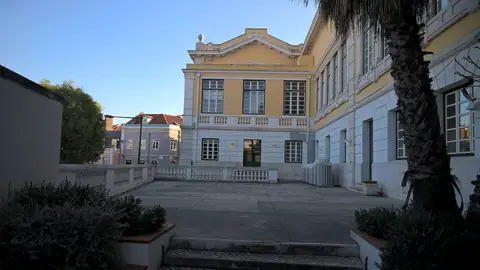
At a “meeting against repression” at the Higher Institute of Economic and Financial Sciences (ISCEF), the students hold a stranger whom they take for a DGS informer; called in to identify him, two agents say they do not know him, but want to take him away.384 In the confusion, the agent António Gomes da Rocha opens fire: he hits José António Ribeiro Santos, a law student linked to the MRPP, in the back — he dies shortly afterwards — and wounds José Lamego; Aurora Rodrigues was in the room.846 That night, three hundred students meeting at the Técnico decide to bring the university to a standstill, and in the wave of arrests that follows Isabel do Carmo is among those arrested.87 The agent was never tried.18
ISCEF, in the Quelhas · Instituto Superior Técnico · José António Ribeiro Santos · Aurora Rodrigues · Isabel do Carmo
Watch in the archive: Museu do Aljube Resistência e Liberdade
Aurora Rodrigues, in a testimony recorded by the Aljube Museum on 12 October 2016. The museum’s keywords include the student movement, the murder of Ribeiro Santos, the Movement for the Reorganisation of the Party of the Proletariat (MRPP), imprisonment, interrogation and torture in Caxias.
Original page Licença padrão do YouTube — embed permitido pelo canal oficial do Museu do Aljube
Museu do Aljube Resistência e Liberdade, on YouTube. The player only connects to that site when you press “Watch”.
Casa Comum – Fundação Mário Soares e Maria Barroso: Ribeiro Santos
- 1Museu do Aljube Resistência e Liberdade (EGEAC)
- 2Centro de Documentação 25 de Abril, Universidade de Coimbra
- 3Museu do Aljube Resistência e Liberdade: José António Leitão Ribeiro Santos (biografia)
- 4Memória Comum – Memorial aos Presos e Perseguidos Políticos
- 5Seara Nova (10/8/2023)
- 6Museu do Aljube Resistência e Liberdade: Aurora Rodrigues (testemunho e biografia)
- 7Museu do Aljube Resistência e Liberdade: Isabel do Carmo (testemunho e biografia)
- 8Comissão Comemorativa 50 Anos 25 de Abril
- 9Casa Comum – Fundação Mário Soares e Maria Barroso
- 10Toponímia de Lisboa – CML (24/3/2014)
- 11Casa Comum – Fundação Mário Soares e Maria Barroso (arquivo Ruella Ramos)
14 October 1972: Funeral of Ribeiro Santos
14 October 1972
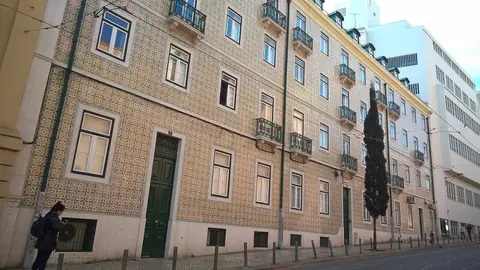
Two days after the murder, thousands of people, mostly students, gather outside the building where José António Ribeiro Santos lived, on the Calçada de Santos — today Calçada Ribeiro Santos — from where the procession sets off for the Ajuda cemetery.32 Amid shouts of “murderers” (assassinos) and “long live freedom” (viva a liberdade), the police charge during the procession and at the cemetery, and some twenty people are arrested: it is one of the largest demonstrations against the dictatorship in its final phase.21
2 November 1972: The UN recognises the legitimacy of the armed struggle against Portugal
2 November 1972
The UN General Assembly recognises the “legitimacy of the armed struggle against Portugal, in Africa”.1
16 December 1972: The Wiriyamu massacre, in Mozambique
16 December 1972
In “Operation Trick” (Operação Marosca), aircraft, commandos and DGS agents attack five villages in the Tete region; 385 people are thought to have died, about a third of the inhabitants, many of them women and children.12 Father Domingos Ferrão and Domingo Kansande drew up the list of victims and got it to Spanish and Dutch priests; the English priest Adrian Hastings revealed the massacre in The Times on 10 July 1973, days before Marcelo Caetano’s visit to London.1 Portugal never officially admitted it.1
30–31 December 1972 · women: The Capela do Rato vigil against the colonial war
30–31 December 1972
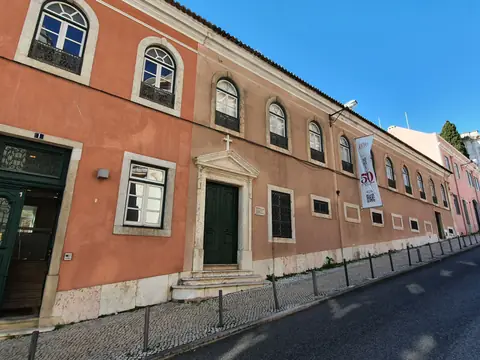
Christians and non-Christians begin a 48-hour vigil for peace in the Capela do Rato, with a hunger strike; it is opened by Maria da Conceição Moita, who reads out the declaration at the microphone.13 On the 31st, they approve a motion against the “criminal war” and the “complicity of the hierarchy of the Catholic Church”; at the end of the day, the police break up the vigil and take the participants to the police station on Largo do Rato, and some, like Nuno Teotónio Pereira, are sent on to Caxias.135 The civil servants who were present face dismissal proceedings, and the petitions of solidarity gather names such as Sophia de Mello Breyner Andresen, Maria Isabel Barreno and Isabel do Carmo.137
Capela do Rato · Caxias Fort — the political prison · Largo do Rato (formerly Praça do Brasil) · Maria da Conceição Moita · Sophia de Mello Breyner Andresen · Isabel do Carmo · Nuno Teotónio Pereira · Maria Isabel Barreno
Casa Comum – Fundação Mário Soares e Maria Barroso: A Paz é Obrigatória
1973
1973 · women: The Commission for Social Policy on Women is created
1973
The working group led by Maria de Lourdes Pintasilgo becomes the Commission for Social Policy on Women, and she is appointed its president.21 The commission set out to go beyond the world of work and to look at women’s access to education, family responsibilities and the professions closed to them; in 1975 it would be renamed the Commission on the Status of Women.32
1973 · women: Violante Saramago Matos imprisoned with her 18-month-old daughter
1973
Arrested in 1973, Violante Saramago Matos had her eighteen-month-old daughter with her in the cell, and the little girl learned to walk in prison: “Come on, my girl, put some strength in those little legs”, she told her every day, in the cell and in the exercise yard.1 The same year the political police also arrested Helena Roseta, a future member of the Constituent Assembly.2
20 January 1973: Amílcar Cabral assassinated in Conakry
20 January 1973
After dark, as he arrives home in Conakry with his wife, Ana Maria, the leader of the PAIGC, Amílcar Cabral, is shot dead by a group of armed men.12 Who was behind it remains controversial: everything points to a joint action by PAIGC dissidents, the authorities of Guinea-Conakry, the PIDE/DGS and sectors of the Portuguese military.1 Two years earlier, Operation Green Sea had tried to capture him.3
4 April 1973: Third Congress of the Democratic Opposition, in Aveiro
4 April 1973
Four years after the Second Congress, the Third Congress of the Democratic Opposition, meeting in Aveiro, adopts as its immediate goals the end of the colonial war, the struggle against the absolute power of monopoly capital and the winning of democratic freedoms; it is marked by extremely violent police repression.142 Maria Barroso was the only woman to speak at the opening session.3
19 April 1973: The Socialist Party is founded in Germany
19 April 1973
At a meeting of Portuguese Socialist Action near Bonn, the Socialist Party is founded; Maria Barroso was the only woman present.12
3 May 1973 · women: Arrest of Aurora Rodrigues
3 May 1973
Aurora Rodrigues, a law student who had witnessed the murder of Ribeiro Santos and had then joined the MRPP, is arrested after a students’ meeting.2 In Caxias, in strict isolation, she is subjected to the “statue” torture, sixteen consecutive days of sleep torture, beatings and simulated drowning, with her head forced into a washbasin; she never talks.2 She is released three months later, without charge, without trial and without having been able to speak to a lawyer.21
Caxias Fort — the political prison · Aurora Rodrigues
Watch in the archive: Museu do Aljube Resistência e Liberdade
Aurora Rodrigues, in a testimony recorded by the Aljube Museum on 12 October 2016. The museum’s keywords include the student movement, the murder of Ribeiro Santos, the Movement for the Reorganisation of the Party of the Proletariat (MRPP), imprisonment, interrogation and torture in Caxias.
Original page Licença padrão do YouTube — embed permitido pelo canal oficial do Museu do Aljube
Museu do Aljube Resistência e Liberdade, on YouTube. The player only connects to that site when you press “Watch”.
June 1973 · women: The Three Marias, the first international feminist cause
June 1973
At a conference of the National Organization for Women, in Boston, the case of the Three Marias is voted the first international feminist cause.1 Simone de Beauvoir, Marguerite Duras, Doris Lessing, Iris Murdoch and Stephen Spender led the solidarity campaign with Maria Isabel Barreno, Maria Teresa Horta and Maria Velho da Costa, and there were feminist actions outside several Portuguese embassies; as late as 17 May 1974, people were demonstrating in New York in support of the three.21
Maria Isabel Barreno · Maria Teresa Horta · Maria Velho da Costa
13 July 1973: Decree-Law No. 353/73 sets off the captains’ protest
13 July 1973
To make up for the shortage of permanent-cadre captains on the African fronts, the Army Minister, Sá Viana Rebelo, has a decree-law passed that allows the four years of the Military Academy to be replaced by an intensive two-semester course.12 The decree and the amending decree of 20 August (Decree-Law No. 409/73) were the detonator of the protest that would lead to 25 April: on 9 September the captains met in Alcáçovas, and on 12 October a circular from the Army Ministry suspended both decrees, before the minister was dismissed.123
15 July 1973: Caetano in London amid the Wiriyamu revelations
15 July 1973
Days after The Times revealed the Wiriyamu massacre, Marcelo Caetano visits London and is met with hostility and with a demonstration against the colonial policy outside the Portuguese embassy, which is surrounded by a police cordon.123
9 September 1973: Meeting at Monte do Sobral (Alcáçovas): the Captains’ Movement is born
9 September 1973
Against the legislation with which the Government wanted to make up for the shortage of officers in the war in Africa, 136 officers meet clandestinely at Monte do Sobral, in Alcáçovas, and sign a petition to Marcelo Caetano asking for the decrees to be revoked.51 The Captains’ Movement is born, later the Armed Forces Movement.5164 In August, officers had already met in Bissau.13
- 1Centro de Documentação 25 de Abril, Universidade de Coimbra
- 2Comissão Comemorativa 50 Anos 25 de Abril: A Reunião de Óbidos
- 3Comissão Comemorativa 50 Anos 25 de Abril: Fita do Tempo
- 4Comissão Comemorativa 50 Anos 25 de Abril: O 25 de abril
- 5Comissão Comemorativa 50 Anos 25 de Abril: O Encontro de Alcáçovas
- 6Associação 25 de Abril
24 September 1973: The PAIGC unilaterally proclaims the independence of Guinea-Bissau
24 September 1973
Meeting on a hill in the Boé region, in an area liberated by the PAIGC, the National People’s Assembly unilaterally proclaims the State of Guinea-Bissau.123 On 2 November, by 93 votes to 7, the UN General Assembly welcomes “the recent accession to independence of the people of Guinea-Bissau” and condemns the “illegal presence of Portugal”.3
October 1973 · women: Arrest and torture of Maria José Morgado
October 1973
The law student Maria José Morgado, an MRPP activist living underground since the age of 19, is arrested in the house where she was hiding, near the Feira da Ladra.1 On the fourth floor of the PIDE headquarters, as she tells it, where the interrogations took place, she is slapped several times; in Caxias she suffers five days of sleep torture and beatings with a hippopotamus-hide whip (cavalo-marinho).1
PVDE / PIDE / DGS headquarters · Caxias Fort — the political prison · Maria José Morgado
25 October 1973 · women: The trial of the Three Marias begins, behind closed doors
25 October 1973, 10:00
At the Correctional Court in the Boa-Hora, the trial of the authors and the publisher of the Novas Cartas Portuguesas (New Portuguese Letters) begins.1 The judge declares the hearing secret and orders dozens of those attending to leave — Portuguese and foreign journalists, women observers from the feminist movement, people from the PEN Club — and the censors impose absolute silence on the newspapers about the case.12 Maria Isabel Barreno, Maria Teresa Horta and Maria Velho da Costa had been questioned by an officer of the Judicial Police who specialised in prostitution cases.52 The defence witnesses would include Natália Correia, Fernanda Botelho and Maria Lamas, who gave evidence on 1 March 1974; the international support campaign made the case the “first international feminist cause”.486
Boa-Hora Court · Headquarters of the Censorship Services / “Prior Examination” (1969-1974) · Maria Isabel Barreno · Maria Teresa Horta · Maria Velho da Costa · Natália Correia · Maria Lamas · Fernanda Botelho
Hemeroteca Municipal de Lisboa: «Novas Cartas Portuguesas» – Julgamento secreto
RTP Arquivos: Entrevista às “Três Marias”
- 1Hemeroteca Municipal de Lisboa – Livros que foram notícia: «Novas Cartas Portuguesas» – Julgamento secreto (Diário de Lisboa, 25/10/1973)
- 2Hemeroteca Municipal de Lisboa – Livros que foram notícia: «As Três Marias foram absolvidas» / «Absolvição para as Novas Cartas Portuguesas» (Diário de Lisboa, 8 de maio de 1974)
- 3Museu do Aljube – Resistência e Liberdade
- 4Wikipédia (ponto de partida)
- 5Museu do Aljube Resistência e Liberdade (EGEAC)
- 6Comissão Comemorativa 50 Anos 25 de Abril
- 7Museu do Aljube Resistência e Liberdade
- 8RUN – Repositório da Universidade Nova de Lisboa
6 November 1973: Father Felicidade Alves and Nuno Teotónio Pereira tried by the Plenary Court
6 November 1973
Father José Felicidade Alves, Canon Abílio Tavares Cardoso, the architect Nuno Teotónio Pereira and Manuel Mendes Mourão are tried by the Lisbon Plenary Court, charged with “acts against the security of the State” over the Cadernos GEDOC (GEDOC Booklets).1 Launched in February 1969, the eleven issues of the booklets, up to 1970, criticised the Catholic hierarchy, the colonial war and the country’s political situation.1
24 November 1973 · women: The DGS case against the anti-colonial group and the Revolutionary Brigades
24 November 1973
At Caxias, the DGS formally opens its case against the Revolutionary Brigades and an anti-colonial “grouping”, which sweeps up many of the people linked to the Capela do Rato vigil.12 Maria da Conceição Moita is slapped until she faints and subjected several times to sleep torture — the first time for seven days and eight nights — and to fourteen hours of the “statue”; Maria Luísa Sarsfield Cabral endures four days and four nights of sleep torture; Nuno Teotónio Pereira is beaten and deprived of sleep.1
Caxias Fort — the political prison · Capela do Rato · Maria da Conceição Moita · Nuno Teotónio Pereira
1 December 1973: The Óbidos meeting enlarges the Coordinating Committee
1 December 1973
Under the pretext of a chestnut-roasting party (magusto), some 180 delegates of the Captains’ Movement meet in the Casa do Povo (People’s House) of Óbidos.1 The idea of a coup d’état is discussed, but, out of caution, the legalist path prevails; the Coordinating Committee grows to 19 members — among them Otelo Saraiva de Carvalho and Salgueiro Maia — the movement is renamed the Armed Forces Officers’ Movement (MOFA) and chooses Costa Gomes and António de Spínola as its prestigious leaders.123
Otelo Saraiva de Carvalho · Salgueiro Maia · Costa Gomes · António de Spínola
6 December 1973 to 26 April 1974 · women: Arrest of Maria da Conceição Moita
6 December 1973 to 26 April 1974
Maria da Conceição Moita, an organiser of the Capela do Rato vigil and an activist of the Revolutionary Brigades, to which she gave logistical support, is arrested by the DGS as she was preparing to flee to Paris, after the arrest of several comrades, among them her brother, Luís Moita.13 Tortured and held in isolation, she remains in Caxias until the release of the prisoners, on the night of 26 to 27 April 1974.13 At the end of 1973 Nuno Teotónio Pereira was also arrested, and he remained in Caxias until the release of the prisoners, after 25 April.23
Caxias Fort — the political prison · Maria da Conceição Moita · Nuno Teotónio Pereira
1974
1974 · women: “Somos Livres” (We Are Free): Ermelinda Duarte’s song is born in the theatre
1974
In the chronicle Lisboa 72-74, which Luzia Maria Martins wrote for the Teatro Estúdio de Lisboa (Lisbon Studio Theatre), “Somos Livres” (We Are Free) is heard for the first time, with words and music by the actress Ermelinda Duarte and arrangements by José Cid.123 Known for the line “A seagull was flying, flying” (Uma gaivota voava, voava), it is, according to RTP, one of the most popular songs after the overthrow of the dictatorship and the end of censorship.3
Ermelinda Duarte · Luzia Maria Martins
Watch in the archive: Edições Valentim de Carvalho
Ermelinda Duarte’s single with “Somos Livres” (We Are Free), published by the Valentim de Carvalho label, which dates it to 1975: two songs of her own, with arrangements by José Cid. The song had been born in 1974 in the chronicle “Lisboa 72-74”, by the Teatro Estúdio de Lisboa.
Original page Licença padrão do YouTube — embed permitido pelo canal oficial da editora Valentim de Carvalho
Edições Valentim de Carvalho, on YouTube. The player only connects to that site when you press “Watch”.
RTP Arquivos: Canção «Somos livres»
RTP Arquivos: Memórias da Revolução: Ermelinda Duarte e a canção «Somos Livres»
1974 · women: “Mulheres Guerrilheiras” (Guerrilla Women): the MLM launches a feminist record at the Vasco Santana Theatre
1974
Late in the afternoon, at a show with free admission at the Vasco Santana Theatre, the Women’s Liberation Movement launches “Mulheres Guerrilheiras” (Guerrilla Women), which O Século announces as the first Portuguese feminist record: a poem by Maria Teresa Horta, music by Pedro Jordão, sung by Teresa Paula Brito. In the cultural part, the artists Leonor Poeira, Maria da Glória and Teresa Paula Brito make “a denunciation of the current situation of sexist discrimination”.1
Vasco Santana Theatre (former Feira Popular funfair) · Maria Teresa Horta · Teresa Paula Brito
Casa Comum – Fundação Mário Soares e Maria Barroso: Movimento de Libertação das Mulheres - O Século
22 February 1974: Spínola publishes “Portugal e o Futuro” (Portugal and the Future)
22 February 1974
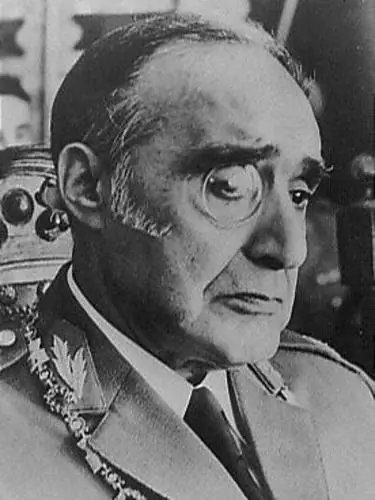
In the book Portugal e o Futuro (Portugal and the Future), General António de Spínola, Deputy Chief of the Armed Forces General Staff, argues that the solution to the colonial war is political, not military.13 The book, which had been submitted for the opinion of the Chief of the General Staff, Costa Gomes, sells some 350,000 copies in a few months and undermines relations between the regime and the Armed Forces.34 The “Rheumatic Brigade” ceremony and the dismissal of the two generals follow.2
1 March 1974 · women: Maria Lamas, defence witness in the Three Marias trial
1 March 1974
Maria Lamas, then aged 80, gives evidence as a defence witness for Maria Isabel Barreno in the Novas Cartas Portuguesas (New Portuguese Letters) trial, in Lisbon.1 The trial had been taking place behind closed doors at the Boa-Hora Court since October 1973.2 The verdict would only be read after 25 April.3
Boa-Hora Court · Maria Lamas · Maria Isabel Barreno
- 1RUN – Repositório da Universidade Nova de Lisboa
- 2Hemeroteca Municipal de Lisboa – Livros que foram notícia: «Novas Cartas Portuguesas» – Julgamento secreto (Diário de Lisboa, 25/10/1973)
- 3Hemeroteca Municipal de Lisboa – Livros que foram notícia: «As Três Marias foram absolvidas» / «Absolvição para as Novas Cartas Portuguesas» (Diário de Lisboa, 8 de maio de 1974)
5 March 1974: The Cascais meeting: the coup becomes irreversible
5 March 1974
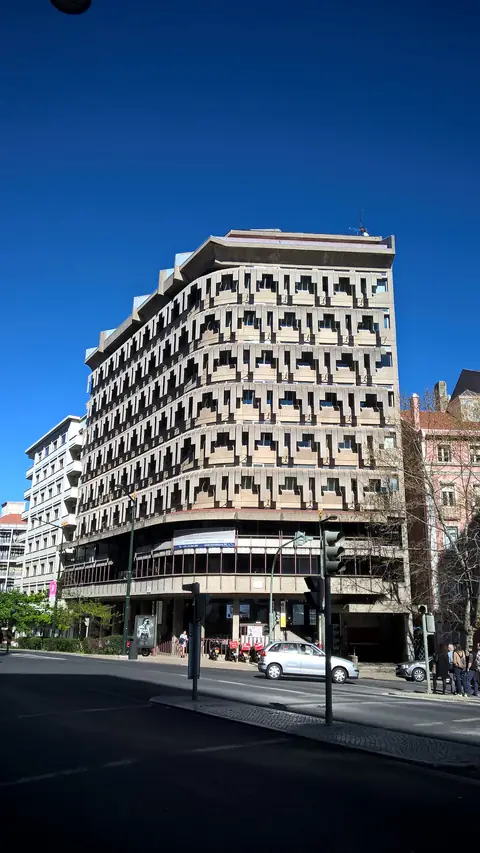
Some two hundred officers, representing more than six hundred, meet clandestinely in the studio of the architect Braula Reis, in Cascais; the original plan had been to meet in the Franjinhas Building, in Lisbon.13 The captains accept the option of a coup d’état as irreversible and approve “The Movement, the Armed Forces and the Nation” (O Movimento, as Forças Armadas e a Nação), a document presented by Melo Antunes.342
7 March 1974: “E Depois do Adeus” (And After the Goodbye) wins the Grande Prémio TV da Canção (TV Song Grand Prix), at the Maria Matos Theatre
7 March 1974
Live from the Maria Matos Theatre, presented by Glória de Matos and Artur Agostinho, the 11th Grande Prémio TV da Canção (TV Song Grand Prix) is won by “E Depois do Adeus” (And After the Goodbye), with words by José Niza and music by José Calvário, sung by Paulo de Carvalho.1 It is Glória de Matos who chalks up on the board the results that Artur Agostinho announces, and who hands the prize to the winner.2 On 24 April, the song will be the first signal of the Armed Forces Movement.3
Glória de Matos · Paulo de Carvalho
14 March 1974: The “Rheumatic Brigade” and the dismissal of Spínola and Costa Gomes
14 March 1974
At the Palácio de São Bento, general officers from the three branches of the Armed Forces pledge their solidarity with the regime and its colonial policy, at a ceremony that the opposition ironically called the “Rheumatic Brigade” (Brigada do Reumático).12 Marcelo Caetano thanks them, certain that the country “can count on its Armed Forces”.3 On the pretext that they had stayed away, Generals Costa Gomes and António de Spínola are removed as Chief and Deputy Chief of the General Staff; the dismissal speeds up the captains’ plans and precipitates the Caldas uprising.13
Palácio de São Bento · Costa Gomes · António de Spínola · Marcelo Caetano
16 March 1974: The Caldas da Rainha uprising
16 March 1974
One day after the dismissal of Costa Gomes and Spínola, the captains of the 5th Infantry Regiment take command of the barracks in Caldas da Rainha and advance on Lisbon in the early hours, under the command of Captain Armando Ramos.2 It is the only unit to move out; the coup fails and some two hundred soldiers are arrested.12 Those held at RAL 1 and in the Trafaria Detention House would not be freed until 25 April.34
Barracks of Light Artillery Regiment No. 1 (RAL 1, later RALIS) · Costa Gomes · António de Spínola
24 March 1974: Last meeting of the Movement’s Coordinating Committee
24 March 1974
At the home of Captain Candeias Valente, the last clandestine meeting of the Movement’s Coordinating Committee decided to overthrow the regime.2 Otelo Saraiva de Carvalho was put in charge of drawing up the operations plan and Vítor Alves of the political direction, and the coup was scheduled for the period from 22 to 29 April; the Committee’s circulars and meetings were also suspended.1
29 March 1974: The 1st Portuguese Song Meeting at the Coliseu
29 March 1974
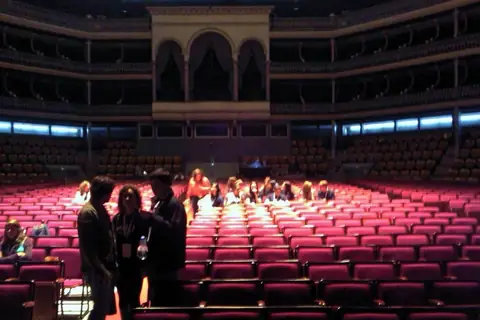
Under a heavy police presence, the Coliseu dos Recreios filled up for the 1st Portuguese Song Meeting (I Encontro da Canção Portuguesa), with José Afonso, Adriano Correia de Oliveira, Manuel Freire, José Jorge Letria and Ary dos Santos, among others.14 The audience sang “Grândola, Vila Morena” (Grândola, swarthy town) in chorus and, at the end, thousands of people shouted “Down with repression!” (abaixo a repressão!).1 A month later, the captains would choose that song as the signal for the revolution.2
Coliseu dos Recreios · José Afonso (Zeca Afonso) · Adriano Correia de Oliveira · Maria do Amparo · Francisco Fanhais · Manuel Freire
Watch in the archive: Câmara Municipal de Lisboa
A Lisbon City Council report on the night when, forty years later, the Coliseu dos Recreios recalled the 1st Portuguese Song Meeting (I Encontro da Canção Portuguesa) of March 1974, which, according to the City Council, inspired the soldiers of April in their choice of the signal. The hall sang “Grândola” once again.
Original page Licença padrão do YouTube — embed permitido pelo canal oficial da Câmara Municipal de Lisboa
Câmara Municipal de Lisboa, on YouTube. The player only connects to that site when you press “Watch”.
Casa Comum – Fundação Mário Soares e Maria Barroso: I Encontro da Canção Portuguesa
22–24 April 1974: Setting up the Pontinha Command Post and the listening network
22–24 April 1974
On the nights of 22 and 23 April, the MFA secretly strung about 4 km of overhead telephone cable in Lisbon to connect the Army telephone exchange to Engineering Regiment No. 1, in Pontinha.1 On the 23rd, Otelo Saraiva de Carvalho, Garcia dos Santos and Jaime Neves met at the barracks, and the Command Post was ready.2 At 21:00 on the 24th, the Signals Practical School began listening in on the networks of the GNR, the Legion, the DGS and the PSP.13
MFA Command Post – Engineering Regiment No. 1 (Pontinha Barracks) · Otelo Saraiva de Carvalho
23–24 April 1974: “Grândola” is chosen as the signal on the programme “Limite”
23–24 April 1974
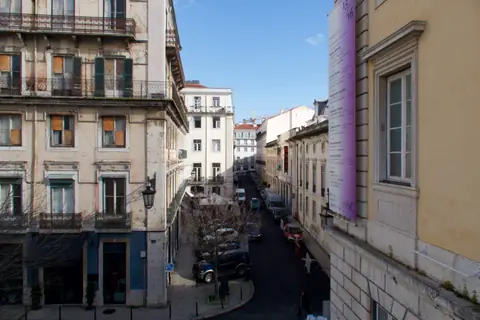
On 23 April, Álvaro Guerra, sent by Almada Contreiras, asked Carlos Albino — both of them journalists on República — to play “Venham Mais Cinco” (Let five more come), by José Afonso, on the programme Limite; as the song was banned by the internal censorship of Rádio Renascença, Albino suggested alternatives, with “Grândola” at the top of the list.14 On the morning of the 24th the choice was settled, for 00:20 on the 25th.52 Carlos Albino and the sound engineer Manuel Tomás worked out the details kneeling in the Church of São João de Brito, and recorded a sequence in the voice of Leite de Vasconcelos, who did not know what it was for.356
Rádio Renascença (the Rua Capelo studios) · Headquarters of the newspaper República (Rua da Misericórdia) · Carlos Albino · Leite de Vasconcelos · José Afonso (Zeca Afonso)
Watch in the archive: Associação José Afonso
José Afonso sings “Venham Mais Cinco” (Let five more come) at the Coliseu dos Recreios concert of 29 January 1983, in an excerpt published by the José Afonso Association. This was the song the MFA first asked for as the signal, in April 1974, and which the internal censorship of Rádio Renascença did not let through.
Original page Licença padrão do YouTube — embed permitido pelo canal oficial da Associação José Afonso
Associação José Afonso, on YouTube. The player only connects to that site when you press “Watch”.
- 1Associação 25 de Abril: Preparativos para a transmissão da senha, 23/04/1974 (cronologia)
- 2Associação 25 de Abril: Preparativos para a transmissão da senha, 24/04/1974 (cronologia)
- 3Associação 25 de Abril: Preparativos para a transmissão da senha, 24/04/1974 – Igreja de S. João de Brito (cronologia)
- 4Associação 25 de Abril: MFA – Preparativos para a Acção, 23/04/1974 (Limite)
- 5Associação 25 de Abril: MFA – Preparativos para a Acção, 24/04/1974 (escolha da Grândola)
- 6Associação 25 de Abril: Movimentações do dia 25 de Abril
23 April 1974: Otelo hands over the “Final Instructions” in Parque Eduardo VII
23 April 1974, 18:00
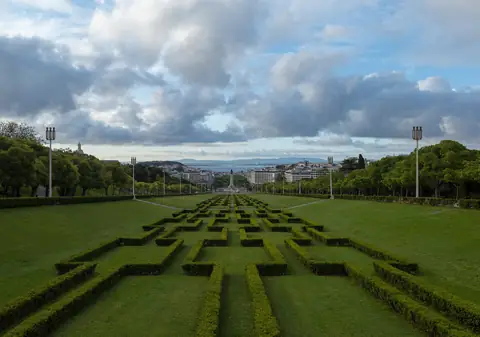
From 18:00, Otelo Saraiva de Carvalho handed the liaison officers, in Parque Eduardo VII, the “Final Instructions” and the “Signals Annex”, in sealed envelopes hidden in the newspaper Época (Epoch).13 The instructions set the start of operations for 03:00 on 25 April and fixed the password “Courage” (Coragem) and the countersign “For victory” (Pela vitória).2
24 April 1974: Otelo sets up the MFA command post at Pontinha
24 April 1974, 22:00
At 22:00, Otelo Saraiva de Carvalho and five other MFA officers are at Engineering Regiment No. 1, in Pontinha, where the command post for the operations against the regime had been secretly prepared since the day before.42 In an annexe of the barracks, its windows covered with army blankets, Otelo pins up topographic maps of Lisbon to follow the movements of the units.2
MFA Command Post – Engineering Regiment No. 1 (Pontinha Barracks) · Otelo Saraiva de Carvalho
24 April 1974: “E Depois do Adeus” (And After the Goodbye): the first signal of the revolution
24 April 1974, 22:55
At the Emissores Associados de Lisboa, on Avenida Elias Garcia, the announcer João Paulo Diniz puts on the air “E Depois do Adeus” (And After the Goodbye), a song by José Niza sung by Paulo de Carvalho: it is the signal for the military operations to begin.325 At 00:20, “Grândola” would confirm that the operations were under way and irreversible.6
Emissores Associados de Lisboa (the studio on Avenida Elias Garcia) · João Paulo Diniz · Paulo de Carvalho
Watch in the archive: RTP
Paulo de Carvalho sings “E Depois do Adeus” (And After the Goodbye), by José Niza, the song that won the 1974 Festival da Canção (Song Festival), in an RTP recording from that year. At 22:55 on 24 April, broadcast by the Emissores Associados de Lisboa, it was the first signal of the revolution.
Original page Licença padrão do YouTube — embed permitido pelo canal oficial da RTP
RTP, on YouTube. The player only connects to that site when you press “Watch”.
- 1Centro de Documentação 25 de Abril, Universidade de Coimbra
- 2Museu do Aljube Resistência e Liberdade (EGEAC)
- 3Associação 25 de Abril: Emissores Associados de Lisboa (Lugares de Abril)
- 4Associação 25 de Abril: Movimentações do dia 25 de Abril
- 5Comissão Comemorativa 50 Anos 25 de Abril
- 6Centro de Documentação 25 de Abril – Universidade de Coimbra
1974–1976The Revolution
From 25 April to the Constitution: freedom, the end of the war, independence for the colonies, the vote for every woman and every man.94 dates23 women
1974
25 April 1974: The National Assembly meets for the last time, without a quorum
25 April 1974
On the morning of 25 April, the National Assembly of the Estado Novo (“New State”) meets for the last time, without a quorum, in the Palácio de São Bento.12 Law No. 2/74 of 14 May would abolish the National Assembly and the Corporative Chamber.3
25 April 1974: Decree-Law No. 171/74 abolishes the DGS, the Legion and the Portuguese Youth
25 April 1974
On the 25th itself, the National Salvation Junta, presided over by António de Spínola and with Costa Gomes among its members, abolishes the Directorate-General of Security, the Portuguese Legion, the Portuguese Youth (Mocidade Portuguesa) and the Women’s Portuguese Youth (Mocidade Portuguesa Feminina).12 The investigation of crimes against State security passes to the Judicial Police; in the “Ultramar” (the overseas territories), the DGS would be purged and reorganised as the Military Intelligence Police.14
PVDE / PIDE / DGS headquarters · Portuguese Legion Command · Palácio da Independência – headquarters of the Portuguese Youth (Mocidade Portuguesa) · António de Spínola · Costa Gomes
25 April 1974 · women: Celeste Caeiro and the carnations
25 April 1974
The Sir restaurant, in the Franjinhas Building, was turning one year old and did not open; the carnations bought to give to the women customers were given to the women employees.12 Celeste Caeiro was carrying a bunch when, on Rua do Carmo, a soldier asked her for a cigarette; she did not smoke, and gave him a carnation, which he put in the barrel of his rifle.31 The gesture was repeated in the Rossio, and the carnation became the symbol of the revolution.56
Edifício Franjinhas — the restaurant of the carnations · Rua do Carmo — Celeste Caeiro’s carnations · Rossio (Praça de D. Pedro IV) · Celeste Caeiro
Watch in the archive: Câmara Municipal de Lisboa
The unveiling, at the end of Rua do Carmo, by the Rossio, of a plaque bearing the poem “Celeste em Flor” (Celeste in Bloom), by Rosa Guerreiro Dias, which recalls the carnation Celeste Caeiro gave to a soldier who had asked her for a cigarette. The plaque marks the gesture 51 years on.
Original page Licença padrão do YouTube — embed permitido pelo canal oficial da Câmara Municipal de Lisboa
Câmara Municipal de Lisboa, on YouTube. The player only connects to that site when you press “Watch”.
RTP Arquivos: Entrevista a Celeste Caeiro, Garcia dos Santos, Carlos Cedoura e Pena Madeira
25 April 1974: “Grândola, Vila Morena” on Rádio Renascença confirms the revolution
25 April 1974, 00:20
On the programme Limite, on Rádio Renascença, “Grândola, Vila Morena” (Grândola, swarthy town), by José Afonso, is played: it is the signal confirming that the military operations are under way and irreversible.124 The first verse is heard in the voice of Leite de Vasconcelos, recorded the day before without his knowing what for; in the booth, the sound engineer Manuel Tomás, an accomplice of Carlos Albino, makes sure the reel starts at the right moment.57
Rádio Renascença (the Rua Capelo studios) · José Afonso (Zeca Afonso) · Leite de Vasconcelos · Carlos Albino
Watch in the archive: Wikimedia Commons
The Casa da Achada choir and passers-by sing “Grândola, Vila Morena” (Grândola, swarthy town) in the street, in Lisbon, on 25 April 2023. Almost half a century after it served as the signal for the revolution, José Afonso’s song is still sung in chorus every 25 April.
Original page CC BY-SA 4.0 — Contaminadas (obra própria, Wikimedia Commons)
Wikimedia Commons, on Wikimedia Commons. The player only connects to that site when you press “Watch”.
- 1Centro de Documentação 25 de Abril, Universidade de Coimbra
- 2Museu do Aljube Resistência e Liberdade (EGEAC): 25 de Abril de 1974
- 3Museu do Aljube Resistência e Liberdade (EGEAC): Zeca Afonso
- 4Associação 25 de Abril: Rádio Renascença, 25/04/1974, 00:20 (Movimentações do dia 25 de Abril)
- 5Associação 25 de Abril: Movimentações do dia 25 de Abril
- 6Centro de Documentação 25 de Abril – Universidade de Coimbra: O 25 de Abril para os mais novos – Cronologia hora a hora
- 7Centro de Documentação 25 de Abril – Universidade de Coimbra: Cronologia do 25 de Abril, por Jofre Alves (blogue Abril de Novo, 2010), na Biblioteca Digital do CD25A
- 8Comissão Comemorativa 50 Anos 25 de Abril
25 April 1974: Occupation of the Emissora Nacional
25 April 1974, 03:15
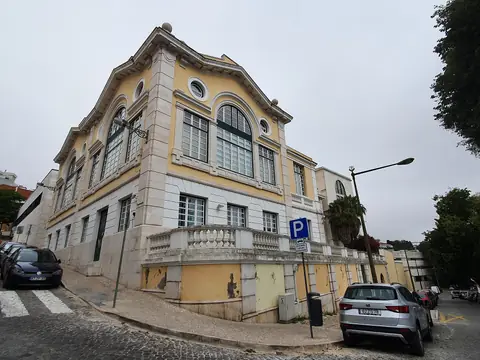
A force from the Serra da Carregueira Firing Range, under Captains Oliveira Pimentel and Frederico Morais, disarmed the PSP guard and occupied the studios of the Emissora Nacional, on Rua do Quelhas, to serve as the MFA’s reserve broadcaster.12 Frederico Morais reported to the Command Post: “we have occupied TOKYO without any incident”.1
25 April 1974: Occupation of Rádio Clube Português
25 April 1974, 03:20
A group of MFA officers, supported by a company of Light Infantry Battalion No. 5 (Caçadores 5), occupied without incident the studios of Rádio Clube Português, on Rua Sampaio e Pina, which became the Movement’s broadcaster.13 Captain Santos Coelho reported to the Command Post: “MEXICO occupied without incident”.2 From there, shortly afterwards, the MFA’s first communiqué would be read.4
Rádio Clube Português (the Rua Sampaio e Pina studios)
- 1Associação 25 de Abril: Rádio Clube Português (Lugares de Abril)
- 2Associação 25 de Abril: Movimentações do dia 25 de Abril
- 3Associação 25 de Abril: Quartel do Batalhão de Caçadores n.º 5 (Lugares de Abril)
- 4Comissão Comemorativa 50 Anos 25 de Abril
- 5Centro de Documentação 25 de Abril – Universidade de Coimbra
25 April 1974: Occupation of the RTP studios in Lumiar
25 April 1974, 03:59
About a hundred soldiers of the Military Administration Practical School, commanded by Captain Teófilo Bento, entered the RTP studios, on Alameda das Linhas de Torres, disarmed the PSP and reported: “We have just occupied MONACO without incident”.123 Shortly afterwards, with bursts of fire into the air, they drove off PSP and DGS men who were prowling around the building.1 It was from there that the National Salvation Junta would present itself to the country, in the early hours of the 26th.1
RTP Arquivos: Ocupação militar na RTP e a Revolução de 25 abril no Largo do Carmo
25 April 1974: Occupation of the airport and closure of the airspace
25 April 1974, 04:25
About two hundred soldiers of the Infantry Practical School, under Captain Rui Rodrigues, occupied Portela airport; Air Force Captain José Costa Martins had the airspace closed and traffic diverted to Madrid and Las Palmas.12 The message “NEW YORK has been occupied” cleared the way for the reading of the first communiqué.1
25 April 1974: Rádio Clube Português reads the MFA’s first communiqué
25 April 1974, 04:26
Over the microphones of Rádio Clube Português, the journalist Joaquim Furtado reads the first communiqué of the Armed Forces Movement, followed by the national anthem and military marches.145 During the early hours and the morning, RTP, the Emissora Nacional, the airport, the General Headquarters, the Bank of Portugal and Marconi are occupied.23
Rádio Clube Português (the Rua Sampaio e Pina studios) · Joaquim Furtado
RTP Arquivos: Primeiro Comunicado do MFA
- 1Museu do Aljube Resistência e Liberdade (EGEAC)
- 2Centro de Documentação 25 de Abril, Universidade de Coimbra
- 3Associação 25 de Abril: Movimentações do dia 25 de Abril
- 4Associação 25 de Abril: Rádio Clube Português (Lugares de Abril)
- 5Comissão Comemorativa 50 Anos 25 de Abril
- 6Centro de Documentação 25 de Abril – Universidade de Coimbra
25 April 1974: Silva Pais warns Caetano: “the Revolution is out in the streets”
25 April 1974, 05:00
The director of the PIDE/DGS, Silva Pais, telephoned Marcelo Caetano: “the Revolution is out in the streets!” (a Revolução está na rua!) — the rebels had occupied the radio stations, the television and the General Headquarters of the Lisbon Military Region.12 In a second call he advised him to go to the Carmo Barracks, “because the GNR is solid”; Caetano set himself up there with his military aide, Commander Coutinho Lanhoso.13
Largo do Carmo and the Carmo Barracks · Silva Pais · Marcelo Caetano
25 April 1974: Salgueiro Maia’s column occupies the Terreiro do Paço
25 April 1974, 06:00
Having left Santarém at 03:30 under the command of Salgueiro Maia, the column from the Cavalry Practical School reached the Baixa and occupied the Terreiro do Paço, the Bank of Portugal and Rádio Marconi — “Toledo, Brussels and Vienna” in the MFA’s code.314 The first forces sent by the regime — Chaimite armoured cars of the 7th Cavalry Regiment and the Military Police guarding the Army Ministry — placed themselves under the MFA’s orders.34
25 April 1974: The frigate “Almirante Gago Coutinho” on the Tagus
25 April 1974, 07:30
The frigate was ordered to take up position opposite the Terreiro do Paço and open fire on the MFA’s armoured vehicles.21 The order was not carried out and, at around midday, the ship withdrew to the Mar da Palha; the MFA artillery near the Cristo-Rei had orders to sink it if it opened fire.3
Terreiro do Paço (Praça do Comércio)
- 1Associação 25 de Abril: Rio Tejo frente ao Terreiro do Paço (Lugares de Abril)
- 2Comissão Comemorativa 50 Anos 25 de Abril
- 3Centro de Documentação 25 de Abril – Universidade de Coimbra
- 4Associação 25 de Abril: Movimentações do dia 25 de Abril
- 5Comissão Portuguesa de História Militar / Ministério da Defesa (jun. 2024)
25 April 1974: Ministers escape through a wall knocked open with pickaxes
25 April 1974, 08:30
Seeing the Terreiro do Paço occupied, the Army Minister had a brick wall into the library of the Navy Ministry knocked through with pickaxes.12 Before 10:00 ministers and military chiefs escaped that way, and set up the command post of the forces loyal to the regime at the Lanceiros 2 Regiment, on Calçada da Ajuda.31
Terreiro do Paço (Praça do Comércio) · Lanceiros 2 Barracks / Military Police Regiment (Calçada da Ajuda)
25 April 1974: Ribeira das Naus: the soldiers refuse to fire
25 April 1974, 10:00
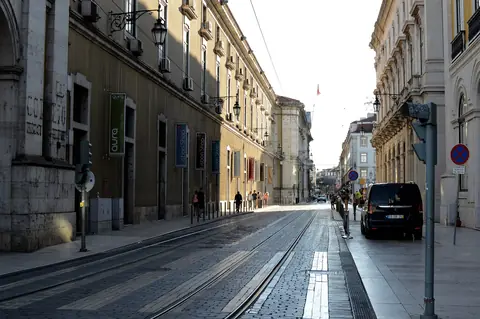
Brigadier Junqueira dos Reis ordered Officer Cadet Fernando Sottomayor, and then the gunners of the M47 tanks, to fire on Salgueiro Maia, who was advancing with a white handkerchief along Avenida da Ribeira das Naus; they all refused.13 Major Pato Anselmo surrendered and the tanks went over to the MFA — “That was where 25 April was won” (Foi ali que se ganhou o 25 de Abril), Maia would say.15
Rua do Arsenal and Avenida da Ribeira das Naus · Junqueira dos Reis · Fernando Sottomayor · Salgueiro Maia
Watch in the archive: Comissão Comemorativa 50 Anos 25 de Abril
The second chapter of the film made from the photographs Alfredo Cunha took in Lisbon on 25 April 1974, with music by Rodrigo Leão, directed by Miguel Brugo, and published by the Commission on 14 February 2024. It follows the book of the same name, in which this part has a text by Adelino Gomes and pictures of the Ribeira das Naus, Rua do Arsenal and Largo do Carmo.
Original page Licença padrão do YouTube — embed permitido pelo canal oficial da Comissão Comemorativa 50 Anos 25 de Abril
Comissão Comemorativa 50 Anos 25 de Abril, on YouTube. The player only connects to that site when you press “Watch”.
- 1Comissão Comemorativa 50 Anos 25 de Abril: Operação Viragem Histórica
- 2Associação 25 de Abril: Movimentações do dia 25 de Abril
- 3Associação 25 de Abril: Ribeira das Naus, 25/04/1974, 07:00–10:30 (Movimentações do dia 25 de Abril)
- 4Centro de Documentação 25 de Abril – Universidade de Coimbra
- 5Comissão Comemorativa 50 Anos 25 de Abril: Salgueiro Maia
25 April 1974: Rua do Arsenal: the brigadier assaults Lieutenant Assunção
25 April 1974, 10:45
On Rua do Arsenal, Lieutenants Alfredo Assunção and Santos Silva and Sergeant Nunes tried to negotiate with Junqueira dos Reis, who again ordered them to fire and again was not obeyed.13 Exasperated, the brigadier punched Lieutenant Assunção three times; the lieutenant saluted him and withdrew.1
Rua do Arsenal and Avenida da Ribeira das Naus · Junqueira dos Reis · Alfredo Assunção
Watch in the archive: Comissão Comemorativa 50 Anos 25 de Abril
The second chapter of the film made from the photographs Alfredo Cunha took in Lisbon on 25 April 1974, with music by Rodrigo Leão, directed by Miguel Brugo, and published by the Commission on 14 February 2024. It follows the book of the same name, in which this part has a text by Adelino Gomes and pictures of the Ribeira das Naus, Rua do Arsenal and Largo do Carmo.
Original page Licença padrão do YouTube — embed permitido pelo canal oficial da Comissão Comemorativa 50 Anos 25 de Abril
Comissão Comemorativa 50 Anos 25 de Abril, on YouTube. The player only connects to that site when you press “Watch”.
25 April 1974: Lisbon disobeys the MFA and takes to the streets
25 April 1974, 11:00
At around 11:00, Salgueiro Maia sets the column moving from the Terreiro do Paço towards the Carmo Barracks.2 Disobeying the MFA’s appeals to stay at home, the population takes to the streets in support of the soldiers.21 In the course of the day, the Portuguese Legion would be the first paramilitary force to surrender.1
Terreiro do Paço (Praça do Comércio) · Largo do Carmo and the Carmo Barracks · Salgueiro Maia
25 April 1974: The MFA Programme is delivered to the newspaper “República”
25 April 1974, 11:00
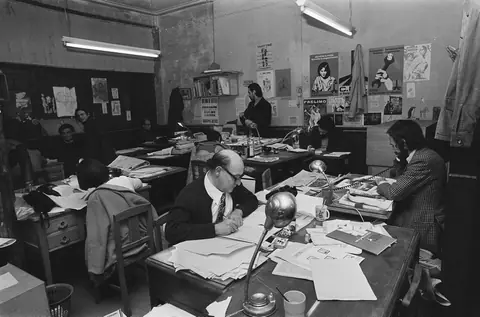
Commander Martins Guerreiro delivered the MFA Programme, as approved by the drafting committee, to the offices of República, on Rua da Misericórdia.1 That would not be the version presented to the country: the text was changed that night, at Pontinha, after a meeting of the Movement’s leaders with Generals António de Spínola and Costa Gomes.12
Headquarters of the newspaper República (Rua da Misericórdia) · MFA Command Post – Engineering Regiment No. 1 (Pontinha Barracks) · António de Spínola · Costa Gomes
25 April 1974: The Cavalry Practical School (EPC) column climbs to the Carmo and surrounds the GNR barracks
25 April 1974, 12:30
Leaving the Terreiro do Paço, the column of Salgueiro Maia crossed the Rossio, where a company of the 1st Infantry Regiment sent to stop it joined the MFA, and climbed Rua do Carmo among thousands of people shouting “Victory!” (Vitória!).351 At 12:30 it surrounded the Carmo Barracks; an attempted counter-encirclement by the GNR and the remnants of the forces of Junqueira dos Reis collapsed with the arrival of the 3rd Cavalry Regiment, from Estremoz.142
Rossio (Praça de D. Pedro IV) · Rua do Carmo — Celeste Caeiro’s carnations · Largo do Carmo and the Carmo Barracks · Salgueiro Maia · Junqueira dos Reis
- 1Comissão Comemorativa 50 Anos 25 de Abril
- 2Associação 25 de Abril: Movimentações do dia 25 de Abril
- 3Associação 25 de Abril: Rossio – participação popular (Lugares de Abril)
- 4Associação 25 de Abril: Largo e Quartel do Carmo (Lugares de Abril)
- 5Centro de Documentação 25 de Abril – Universidade de Coimbra
25 April 1974: Surrender of the Portuguese Legion command
25 April 1974, 13:30
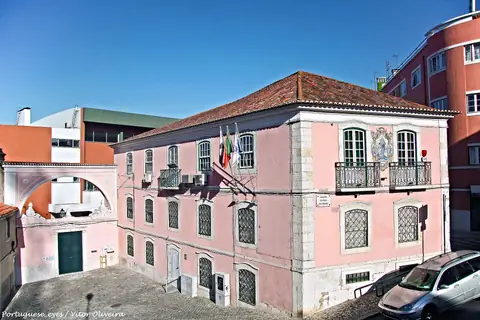
A force from the Cavalry Practical School commanded by Major Jaime Neves surrounds the Portuguese Legion command, in Penha de França, and gives it fifteen minutes to surrender; General Pereira de Castro and his staff surrender.12 That same day, the National Salvation Junta abolished the Legion.3
25 April 1974 · women: A woman’s voice reads the communiqué on the siege of the Carmo
25 April 1974, 14:30
At around 14:30, Rádio Clube Português broadcasts an MFA communiqué announcing the objectives already taken and the siege of Marcelo Caetano and members of the Government in the Carmo Barracks.1 It is read by Clarisse Guerra — “now read by a woman”, as the Commemorative Commission for the 50th Anniversary stresses.2
Rádio Clube Português (the Rua Sampaio e Pina studios) · Largo do Carmo and the Carmo Barracks · Clarisse Guerra · Marcelo Caetano
25 April 1974: Ultimatum and bursts of fire at the façade of the Carmo Barracks
25 April 1974, 15:10
Through a loudhailer, Salgueiro Maia gave the GNR ten minutes to surrender the Carmo Barracks, after which he would open fire.12 At 15:25, with the time up, Lieutenant Santos Silva fired bursts from the Chaimite’s machine gun at the upper part of the façade, shattering windowpanes; inside, the psychological effect was enormous.12
Largo do Carmo and the Carmo Barracks · Salgueiro Maia
- 1Comissão Comemorativa 50 Anos 25 de Abril
- 2Associação 25 de Abril
- 3Centro de Documentação 25 de Abril – Universidade de Coimbra: Cronologia do 25 de Abril, por Jofre Alves (blogue Abril de Novo, 2010), na Biblioteca Digital do CD25A
- 4Museu do Aljube Resistência e Liberdade (EGEAC)
- 5Centro de Documentação 25 de Abril – Universidade de Coimbra: O 25 de Abril para os mais novos – Cronologia hora a hora
25 April 1974: Spínola’s emissaries enter the Carmo; Caetano agrees to surrender
25 April 1974, 16:00
As Salgueiro Maia was counting down for an armoured car to fire, Lieutenant Alfredo Assunção brought him Pedro Feytor Pinto and Nuno Távora, bearing a message from General Spínola.13 Received by Marcelo Caetano in the Carmo Barracks, they heard him decide to surrender — “so that power does not fall into the street” (assim o poder não cai na rua) — and left with a note: “The President of the Council is ready to hand over the Government to General António de Spínola”.2
Largo do Carmo and the Carmo Barracks · Alfredo Assunção · Marcelo Caetano · António de Spínola · Salgueiro Maia
25 April 1974: Spínola at the Carmo; Caetano leaves in the Chaimite “Bula”
25 April 1974, 19:30
Late in the afternoon, General Spínola enters the Carmo Barracks, with a mandate from the MFA, and receives power from Marcelo Caetano, who had asked for a general officer so that power would not fall “into the street”.742 Through the crowd, Salgueiro Maia has the Chaimite armoured car “Bula” brought in, and it takes Caetano and two ministers to the command post at Pontinha; at 19:30 the siege is lifted.431
Largo do Carmo and the Carmo Barracks · MFA Command Post – Engineering Regiment No. 1 (Pontinha Barracks) · António de Spínola · Marcelo Caetano · Salgueiro Maia
Watch in the archive: Comissão Comemorativa 50 Anos 25 de Abril
The second chapter of the film made from the photographs Alfredo Cunha took in Lisbon on 25 April 1974, with music by Rodrigo Leão, directed by Miguel Brugo, and published by the Commission on 14 February 2024. It follows the book of the same name, in which this part has a text by Adelino Gomes and pictures of the Ribeira das Naus, Rua do Arsenal and Largo do Carmo.
Original page Licença padrão do YouTube — embed permitido pelo canal oficial da Comissão Comemorativa 50 Anos 25 de Abril
Comissão Comemorativa 50 Anos 25 de Abril, on YouTube. The player only connects to that site when you press “Watch”.
RTP Arquivos: Acontecimentos no Largo do Carmo
- 1Centro de Documentação 25 de Abril, Universidade de Coimbra
- 2Museu do Aljube Resistência e Liberdade (EGEAC)
- 3Associação 25 de Abril: Movimentações do dia 25 de Abril
- 4Comissão Comemorativa 50 Anos 25 de Abril
- 5Centro de Documentação 25 de Abril – Universidade de Coimbra: Cronologia do 25 de Abril, por Jofre Alves (blogue Abril de Novo, 2010), na Biblioteca Digital do CD25A
- 6Associação 25 de Abril: Largo e Quartel do Carmo (Lugares de Abril)
- 7Centro de Documentação 25 de Abril – Universidade de Coimbra: O 25 de Abril para os mais novos – Cronologia hora a hora
- 8Revista Portuguesa de História Militar, ano IV, n.º 6 (Comissão Portuguesa de História Militar)
25 April 1974: PIDE/DGS gunfire kills four people on Rua António Maria Cardoso
25 April 1974, 20:00
From the PIDE/DGS headquarters, on Rua António Maria Cardoso, political police agents fire on the crowd surrounding the building: Fernando Giesteira, José Barneto, Fernando Reis and João Arruda are killed, and there are about 45 wounded.1125 After the shooting, many ran to Largo do Carmo to ask the MFA troops for help.12 The director of the police, Silva Pais, would not surrender the headquarters until the following morning.11
PVDE / PIDE / DGS headquarters · Largo do Carmo and the Carmo Barracks · Fernando Giesteira · José Barneto · Fernando Reis · João Arruda · Silva Pais
- 1Centro de Documentação 25 de Abril, Universidade de Coimbra
- 2Museu do Aljube Resistência e Liberdade (EGEAC)
- 3Associação 25 de Abril: Sede da Pide/DGS (Locais de Abril)
- 4Museu do Aljube Resistência e Liberdade: João Guilherme Rego Arruda (biografia)
- 5Museu do Aljube Resistência e Liberdade: Fernando Carvalho Giesteira (biografia)
- 6Museu do Aljube Resistência e Liberdade: José James Harteley Barneto (biografia)
- 7Museu do Aljube Resistência e Liberdade: Fernando Luís Barreiros dos Reis (biografia)
- 8Comissão Portuguesa de História Militar / Ministério da Defesa (jun. 2024)
- 9Centro de Documentação 25 de Abril – Universidade de Coimbra
- 10Associação 25 de Abril: Movimentações do dia 25 de Abril
- 11Comissão Comemorativa 50 Anos 25 de Abril
- 12Esquerda.net
25 April 1974: The MFA Proclamation on Rádio Clube Português
25 April 1974, 20:00
Rádio Clube Português broadcast the Proclamation of the Armed Forces Movement, which announced to the Nation a programme “for the salvation of the Country and the restitution to the Portuguese People of the civic freedoms of which it has been deprived”.12
25 April 1974: Paratroopers head for Caxias prison
25 April 1974, 23:00
Two companies of paratroopers from Tancos landed at Portela airport; one of them, with Captains José Brás and Mário Pinto at its head, went on to Caxias Fort, where the DGS was still holding out.12 They would take the prison the following morning, before the release of the prisoners.3
Caxias Fort — the political prison · Lisbon Airport (Portela)
26 April 1974: Surrender and occupation of the DGS headquarters
26 April 1974
On the morning of the 26th, the DGS headquarters surrenders — after a telephone conversation between Spínola and the director, Silva Pais, according to the 50 Years Commemorative Commission and the 25 April Documentation Centre — and is occupied by marines and by soldiers of the 3rd Cavalry Regiment, from Estremoz.451 Silva Pais declared that the police were joining the Movement; asked why the portraits of the regime’s leaders were still on the wall, he asked for a chair and took down one of the photographs himself.3
PVDE / PIDE / DGS headquarters · Silva Pais · António de Spínola
26 April 1974: The people storm the censorship headquarters
26 April 1974
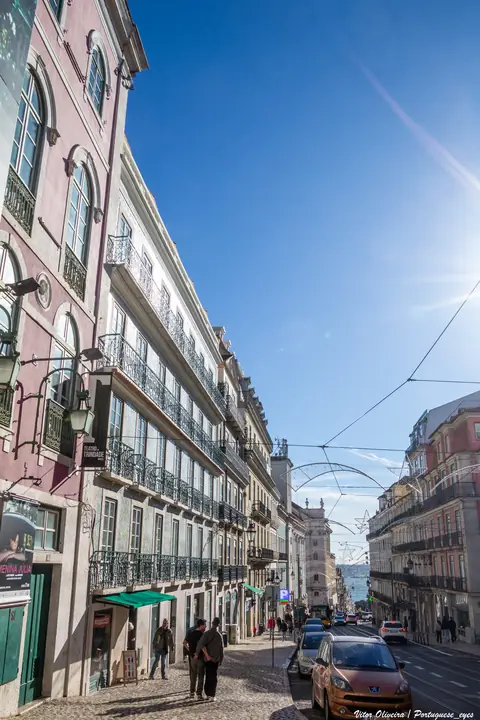
After República came out on 25 April with the line “This newspaper has not been vetted by any Censorship Commission” (Este jornal não foi visado por qualquer Comissão de Censura), the censors abandon the headquarters of the “Prior Examination”, on the other side of Rua da Misericórdia.2 On the morning of the 26th the headquarters is stormed by the people; shortly before, the last chief censor, Mário Bento, had advised a colonel to “stay put and keep quiet”.13
Headquarters of the Censorship Services / “Prior Examination” (1969-1974) · Headquarters of the newspaper República (Rua da Misericórdia)
26 April 1974: Amnesty for political crimes
26 April 1974
The National Salvation Junta grants an amnesty, with immediate effect, for political crimes and disciplinary offences of the same nature, and allows the reinstatement of State employees, military and civilian, who had been removed for political reasons.21 It was this law that made possible the release of the political prisoners of Caxias and Peniche.1
Caxias Fort — the political prison · Peniche Fortress — the political prison
26 April 1974: The National Salvation Junta presents itself to the country
26 April 1974, 01:30
Live and in colour from the Lumiar studios, General Spínola read the proclamation of the National Salvation Junta, flanked by Costa Gomes, Rosa Coutinho, Pinheiro de Azevedo, Silvério Marques and Galvão de Melo.12 He promised “full expression to all currents of opinion” and the election, by direct suffrage, of a Constituent Assembly and of the President of the Republic.1
RTP studios in Lumiar · António de Spínola · Costa Gomes · Pinheiro de Azevedo
26 April 1974: Caetano and Tomás leave for Funchal
26 April 1974, 07:00
After a night held at the command post in Pontinha, Marcelo Caetano and the former ministers Silva Cunha and Moreira Baptista boarded, together with Américo Tomás and escorted by MFA forces, an Air Force plane that left Lisbon airport for Funchal, where they were kept under surveillance.312
Lisbon Airport (Portela) · MFA Command Post – Engineering Regiment No. 1 (Pontinha Barracks) · Marcelo Caetano
- 1Associação 25 de Abril
- 2Centro de Documentação 25 de Abril – Universidade de Coimbra: O 25 de Abril para os mais novos – Cronologia hora a hora
- 3Centro de Documentação 25 de Abril – Universidade de Coimbra: Cronologia do 25 de Abril, por Jofre Alves (blogue Abril de Novo, 2010), na Biblioteca Digital do CD25A
26 April 1974: The MFA Programme is made public
26 April 1974, 07:30
After a night of negotiations with Spínola and Costa Gomes, Major Vítor Alves read the Programme of the Armed Forces Movement to journalists, in the operations room of the Pontinha barracks — the programme of the “three Ds”: decolonise, democratise, develop.12 It was not the text delivered to República the day before; it provided for the restoration of fundamental freedoms, an amnesty for political prisoners and the election, within twelve months, of a Constituent Assembly by universal, direct and secret suffrage.13
MFA Command Post – Engineering Regiment No. 1 (Pontinha Barracks) · António de Spínola · Costa Gomes
26–27 April 1974 · women: Caxias is taken and the political prisoners are released
26–27 April 1974, 08:30
The paratroopers took Caxias prison at 08:30 on 26 April, but the Junta wanted to separate the “ideological” prisoners from those accused of common crimes; the prisoners replied: “All of us or none” (ou todos ou ninguém).12 Colonel Dias de Lima went to consult the Junta at Cova da Moura and came back at 23:55 with the order to release them all, under the amnesty.1 Between 00:30 and 01:00 on the 27th, 78 prisoners walked out, along with four from the prison hospital, among them Palma Inácio and the journalists Helena Neves and Elvira Nereu.1
Caxias Fort — the political prison · Palácio da Cova da Moura · Helena Neves
Watch in the archive: Câmara Municipal de Lisboa
Fernanda Gonçalves tells how she heard about the revolution while in Aveiro, arrived the next day at Santa Apolónia on a train full of friends and went on to Caxias, where thousands of people were waiting for the political prisoners to come out. She remembers the passage the crowd kept open for the negotiations with the PIDE, inside.
Original page Licença padrão do YouTube — embed permitido pelo canal oficial da Câmara Municipal de Lisboa
Câmara Municipal de Lisboa, on YouTube. The player only connects to that site when you press “Watch”.
RTP Arquivos: Libertação dos Presos Políticos
- 1Esquerda.net
- 2Comissão Comemorativa 50 Anos 25 de Abril
- 3Associação 25 de Abril
- 4Museu do Aljube Resistência e Liberdade
- 5Centro de Documentação 25 de Abril – Universidade de Coimbra
- 6Centro de Documentação 25 de Abril, Universidade de Coimbra: Cronologia Ilustrada – 1974
- 7Museu do Aljube Resistência e Liberdade (EGEAC)
- 8Centro de Documentação 25 de Abril, Universidade de Coimbra: Legislação 25A – Amnistia dos crimes políticos (Dec.-Lei 173/74 de 26 de Abril)
- 9Memória Comum – Memorial aos Presos e Perseguidos Políticos
- 10Museu do Aljube Resistência e Liberdade (26/4/2019)
- 11URAP – União de Resistentes Antifascistas Portugueses
27 April 1974: The political prisoners of Peniche Fortress are released
27 April 1974
The PIDE/DGS agents at Peniche Fortress do not surrender until the morning of the 26th; faced with the people gathered outside, the action of the MFA and the prisoners’ decision to leave “all or none” (todos ou nenhum), they are all released in the early hours of 27 April.15 The first to leave, Dinis Miranda, walked out of the fort 23 minutes after midnight; the last, at 03:00.3
Peniche Fortress — the political prison
Watch in the archive: Museu Nacional Resistência e Liberdade (Peniche)
A video published by the Peniche Fortress museum on 27 April 2020, the 46th anniversary of the release of the political prisoners from the fort’s prison on 27 April 1974.
Original page Licença padrão do YouTube — embed permitido pelo canal oficial do Museu Nacional Resistência e Liberdade
Museu Nacional Resistência e Liberdade (Peniche), on YouTube. The player only connects to that site when you press “Watch”.
27 April 1974: May Day (1 May) becomes a national holiday
27 April 1974
Decree-Law No. 175/74 makes May Day (1 May), “Workers’ Day” (Dia do Trabalhador), a compulsory national holiday — the first legal achievement after the revolution.12 Four days later, Lisbon would see the first May Day in freedom.4
- 1Centro de Documentação 25 de Abril, Universidade de Coimbra: Legislação 25A – O «Dia do Trabalhador» (Dec.-Lei 175/74 de 27 de Abril)
- 2Museu do Aljube Resistência e Liberdade (EGEAC)
- 3Centro de Documentação 25 de Abril, Universidade de Coimbra: Cronologia Ilustrada – 1974
- 4Comissão Comemorativa 50 Anos 25 de Abril
28 April 1974: Mário Soares arrives from exile at Santa Apolónia
28 April 1974
Accompanied by Maria Barroso, also a founder of the PS, the party’s general secretary, Mário Soares, arrived by train at Santa Apolónia, where a crowd was waiting for him; he spoke from the station balcony, loudhailer in hand, and went on to the Palácio da Cova da Moura to meet Spínola.12 Two days later Álvaro Cunhal would arrive.1
Santa Apolónia Station · Palácio da Cova da Moura · Mário Soares · Maria Barroso · António de Spínola
30 April 1974: Álvaro Cunhal arrives from exile at the airport
30 April 1974
After 14 years in exile, the general secretary of the PCP, Álvaro Cunhal, was welcomed at the airport by an emotional crowd; Mário Soares was waiting for him by the plane. Cunhal spoke to the crowd from the top of a Chaimite armoured car.12 That same day, a communiqué from the National Salvation Junta authorised the return of all political exiles.3
30 April 1974: José Mário Branco and Luís Cília arrive from exile and are welcomed with “Grândola”
30 April 1974
Five days after the revolution, José Mário Branco and Luís Cília, in exile in France since 1963 and 1964 respectively, arrive at Portela airport.123 RTP films Branco hugging his mother, his wife and his friends; José Afonso talks about 25 April and everyone, with Adriano Correia de Oliveira, José Jorge Letria and Ary dos Santos, sings “Grândola” in chorus.1 That same day, Álvaro Cunhal arrived.4
Lisbon Airport (Portela) · José Mário Branco · Luís Cília · José Afonso (Zeca Afonso) · Adriano Correia de Oliveira
Watch in the archive: Edições Valentim de Carvalho
The LP “Resposta” (Answer), by Luís Cília, which the Valentim de Carvalho label dates to 1975 and has published in full on its channel. It came out after the singer returned from exile in France, on 30 April 1974.
Original page Licença padrão do YouTube — embed permitido pelo canal oficial da editora Valentim de Carvalho
Edições Valentim de Carvalho, on YouTube. The player only connects to that site when you press “Watch”.
RTP Arquivos: Regresso de José Mário Branco
RTP Arquivos: Luís Cília («Retratos — 25 Nomes, 25 Dias, 25 Anos»)
- 1RTP Arquivos
- 2Museu do Aljube Resistência e Liberdade (EGEAC): José Mário Branco — biografia e testemunho (Vidas Prisionáveis, recolhido a 16 de maio de 2019)
- 3Museu do Aljube Resistência e Liberdade (EGEAC): Luís Cília — biografia e testemunho (Memórias na Resistência, recolhido em janeiro de 2024)
- 4Comissão Comemorativa 50 Anos 25 de Abril
May 1974: The 1st Free Popular Song Meeting, in Porto
May 1974
At the Pavilhão dos Desportos (Sports Pavilion) in Porto, the Círculo de Cultura Teatral (Theatre Culture Circle) brings together singers of various tendencies at the 1st Free Popular Song Meeting (I Encontro Livre da Canção Popular).1 José Mário Branco reads the communiqué of the Cultural Action Collective; Luís Cília, Fausto, Adriano Correia de Oliveira, Francisco Fanhais, Manuel Freire and José Jorge Letria sing, and José Afonso sings “Venham Mais Cinco” (Let five more come), the song that the internal censorship of Rádio Renascença had not let through as the signal.123
José Mário Branco · Luís Cília · Adriano Correia de Oliveira · Francisco Fanhais · José Afonso (Zeca Afonso) · Manuel Freire
May 1974: A “free singing” show at the São Luiz Theatre
May 1974
The Emissora Nacional and RTP organise a “free singing” show at the São Luiz Theatre: poems by Vinicius de Moraes, Alexandre O’Neill, Ary dos Santos, Manuel Alegre and Sophia de Mello Breyner Andresen are recited, and “Cantar Não É Talvez Suficiente” (Singing Is Perhaps Not Enough), by Manuel Alegre, with music by Francisco Fanhais, is sung.1
São Luiz Theatre · Sophia de Mello Breyner Andresen · Francisco Fanhais
1 May 1974: The first May Day in freedom
1 May 1974
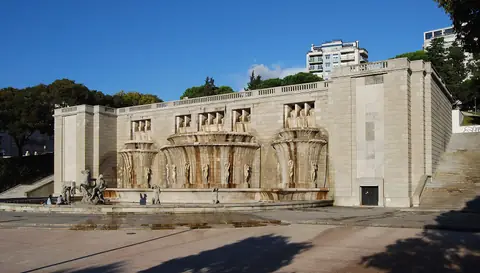
A week after the revolution, around half a million people fill Lisbon: Alameda D. Afonso Henriques is the meeting point and the rally takes place at the FNAT stadium, at once renamed Estádio 1.º de Maio (May Day Stadium), under the slogan “Peace, Bread and Freedom” (Paz, Pão e Liberdade).124 The speakers at the rally include Nuno Teotónio Pereira, for the progressive Catholics, and Mário Soares and Álvaro Cunhal, who embrace.4 It is the largest demonstration the country has ever seen.2
Alameda D. Afonso Henriques and the Fonte Luminosa · FNAT Stadium (renamed Estádio 1.º de Maio) · Mário Soares · Álvaro Cunhal · Nuno Teotónio Pereira
Watch in the archive: Comissão Comemorativa 50 Anos 25 de Abril
The third chapter of Alfredo Cunha’s film (music by Rodrigo Leão, directed by Miguel Brugo), published by the Commission on 14 February 2024, with photographs from the months that followed the revolution. In the book, this part has a text by Fernando Rosas and includes the rally of the first May Day (1 May) in freedom, at the stadium of the National Foundation for Joy at Work (FNAT).
Original page Licença padrão do YouTube — embed permitido pelo canal oficial da Comissão Comemorativa 50 Anos 25 de Abril
Comissão Comemorativa 50 Anos 25 de Abril, on YouTube. The player only connects to that site when you press “Watch”.
1 May 1974: Release of the Tarrafal prisoners
1 May 1974
Reopened in 1961 for prisoners from the liberation movements of Angola, Guinea-Bissau and Cape Verde, the Tarrafal concentration camp still held, at the time of the revolution, 50 Angolans and 14 Cape Verdeans.31 On 1 May, PAIGC activists and supporters go to the camp and free the prisoners.12
7 May 1974 · women: The “Three Marias” are acquitted
7 May 1974
Scheduled for 18 April, the reading of the verdict only takes place on the afternoon of 7 May, in the small courtroom of the 6th Correctional Court in the Boa-Hora: Judge Acácio Lopes Cardoso declares that the Novas Cartas Portuguesas (New Portuguese Letters) are neither pornographic nor immoral, but “a work of art, of a high standard”, and acquits Maria Teresa Horta, Maria Velho da Costa, Maria Isabel Barreno and the publisher, Romeu de Melo.51114 The writers wear red carnations on their chests; the courtroom, full of Portuguese and foreign feminists, shouts “Women united will never be defeated” (Mulheres unidas jamais serão vencidas).43 That night the Women’s Liberation Movement is born.3
Boa-Hora Court · Maria Isabel Barreno · Maria Teresa Horta · Maria Velho da Costa
Hemeroteca Municipal de Lisboa: As Três Marias foram absolvidas
RTP Arquivos: Entrevista às “Três Marias”
- 1Museu do Aljube Resistência e Liberdade (EGEAC): “As três Marias foram absolvidas”
- 2Museu do Aljube Resistência e Liberdade (EGEAC): Processo “Novas Cartas Portuguesas”
- 3Esquerda.net
- 4Hemeroteca Municipal de Lisboa – Livros que foram notícia
- 5Malomil (blogue)
- 6Comissão Comemorativa 50 Anos 25 de Abril
- 7Wikipédia (ponto de partida)
- 8Museu do Aljube – Resistência e Liberdade
- 9Observador
- 10CIG – Comissão para a Cidadania e a Igualdade de Género
- 11Casa Comum – Fundação Mário Soares e Maria Barroso (arquivo Ruella Ramos)
7 May 1974 · women: The Women’s Liberation Movement (MLM) is born
7 May 1974
On the night of the acquittal of the “Three Marias”, a group of women meets at the home of Maria Isabel Barreno, in Areeiro, to discuss setting up a feminist movement: the Women’s Liberation Movement is born, to “fight for equality and for the liberation of women”, in the words of Maria Teresa Horta.13 Its founders included Madalena Barbosa.4 It was, according to the historian Manuela Tavares, the first feminist association to put abortion, sexualities and violence against women on the political agenda.3
Maria Isabel Barreno · Madalena Barbosa · Maria Teresa Horta
14 May 1974: The National Assembly and the Corporative Chamber are abolished
14 May 1974
Law No. 2/74 abolishes the National Assembly and the Corporative Chamber.1 Law No. 3/74 sets out the transitional constitutional structure: the 1933 Constitution remains in force insofar as it does not contradict the MFA Programme, and a Constituent Assembly, elected by universal, direct and secret suffrage by 31 March 1975, will draw up the new one.2 On the same day, Decree-Law No. 199/74 abolishes the censorship commissions for public performances.3
- 1Centro de Documentação 25 de Abril, Universidade de Coimbra: Legislação 25A – Extinção da Assembleia Nacional e da Câmara Corporativa (Lei 2/74 de 14 de Maio)
- 2Centro de Documentação 25 de Abril, Universidade de Coimbra: Legislação 25A – Estrutura constitucional transitória (Lei 3/74 de 14 de Maio)
- 3Centro de Documentação 25 de Abril, Universidade de Coimbra: Legislação 25A – Extinção da censura a espectáculos (Dec.-Lei 199/74 de 14 de Maio)
15 May 1974: Spínola is sworn in as President of the Republic
15 May 1974
Proclaimed President of the Republic by the National Salvation Junta, with powers similar to those under the Constitution then in force and until the elections, General António de Spínola is sworn in at the Palácio de Queluz, greeted on the Junta’s behalf by Costa Gomes.21 The choice of Adelino da Palma Carlos as prime minister of the First Provisional Government is seen as a Spinolist victory.1
16 May 1974: Palma Carlos’s First Provisional Government is sworn in
16 May 1974
The First Provisional Government is sworn in, headed by Adelino da Palma Carlos, with Mário Soares, Álvaro Cunhal and Sá Carneiro, among others.21 Maria de Lourdes Pintasilgo is Secretary of State for Social Security.3
16 May 1974 · women: Maria de Lourdes Pintasilgo, Secretary of State for Social Security
16 May 1974
In the First Provisional Government, the engineer Maria de Lourdes Pintasilgo — who since 1973 had chaired the Commission for Social Policy on Women — is Secretary of State for Social Security, in the Ministry of Social Affairs.13 The lawyer Maria de Belém joined her office as an aide.2
17 May 1974: The first legal “Avante!” (Forward!) comes out
17 May 1974
After 43 years of clandestine publication — the first issue had come out in February 1931 — the PCP’s newspaper comes out legally for the first time.1
27 May 1974: The first national minimum wage is set
27 May 1974
Decree-Law No. 217/74 guarantees all employees, including civil servants, pay of no less than 3,300 escudos — the first national minimum wage, which benefited about half the working population.21 Left out, for the time being, were the military, rural workers, domestic workers and those under twenty.2 It was a time of major labour disputes, at companies such as Lisnave, Timex and the CTT (Post, Telegraphs and Telephones), and of occupations of empty houses.1
- 1Centro de Documentação 25 de Abril, Universidade de Coimbra: Cronologia Ilustrada – 1974
- 2Centro de Documentação 25 de Abril, Universidade de Coimbra: Legislação 25A – Primeiras medidas económicas do Governo Palma Carlos: salário mínimo nacional e congelamento de rendas (Dec.-Lei 217/74 de 27 de Maio)
- 3Diário do Governo – Imprensa Nacional-Casa da Moeda (arquivo do Diário da República)
28 May 1974: Artists cover up the statue of Salazar at the Palácio Foz
28 May 1974
Around a hundred artists brought together by the Democratic Movement of Visual Artists, born on 8 May at the National Society of Fine Arts, enter the courtyard of the Palácio Foz, the former headquarters of the Secretariat of State for Information and Tourism, and cover the statue of Salazar, a work by the sculptor Francisco Franco, with a black cloth and a green and red banner.1 They want it put away in a museum: “Fascist art is bad for the eyes” (A arte fascista faz mal à vista), said the painter Vespeira.1
Palácio Foz – National Propaganda Secretariat / National Information Secretariat (SPN/SNI) · National Society of Fine Arts · António de Oliveira Salazar
12 June 1974 · women: Decree-Law No. 251/74 opens the judiciary to women
12 June 1974
Decree-Law No. 251/74 declares any discrimination based on sex contrary to democratic principles and opens to all citizens, “regardless of their sex”, the posts of judge, in the Public Prosecutor’s Office and on the staff of the courts.21 Until the end of 1977, women up to the age of 45 could apply to become judges and deputy public prosecutors.2 Weeks later, Decree-Law No. 308/74 would open the diplomatic career to women.3
- 1Centro de Documentação 25 de Abril, Universidade de Coimbra
- 2Diário do Governo – Imprensa Nacional-Casa da Moeda (arquivo do Diário da República): Diário do Governo, I série, n.º 136, de 12 de junho de 1974 (Decreto-Lei n.º 251/74)
- 3Instituto de Ciências Sociais da Universidade de Lisboa – Análise Social
- 4Jornal Objectivo
- 5Diário do Governo – Imprensa Nacional-Casa da Moeda (arquivo do Diário da República): Diário do Governo, I série, n.º 156, suplemento, de 6 de julho de 1974 (Decreto-Lei n.º 308/74)
6 July 1974 · women: Decree-Law No. 308/74: women enter the diplomatic career
6 July 1974
Signed by the Minister of Foreign Affairs, Mário Soares, the decree amends the ministry’s organic law and no longer requires candidates for the diplomatic service to be “of the male sex”.21 The first recruitment competition open to women opens on 13 November 1974: women at once account for 25% of the applications and 11 of the 43 admitted.1
18 July 1974 · women: Maria de Lourdes Pintasilgo, Minister of Social Affairs
18 July 1974
Secretary of State for Social Security in the First Provisional Government, Maria de Lourdes Pintasilgo takes over the Ministry of Social Affairs in the Second, under Vasco Gonçalves, and keeps it in the Third, until 25 March 1975.125 She introduces the principle of the universality of the State’s social benefits and brings the Commission on the Status of Women into being.54
RTP Arquivos: Conferência de Imprensa de Melo Antunes
- 1Governo da República Portuguesa – Arquivo Histórico: Governo Provisório II – Composição
- 2Governo da República Portuguesa – Arquivo Histórico: Governo Provisório III – Composição
- 3Centro de Documentação 25 de Abril, Universidade de Coimbra
- 4Comissão para a Cidadania e a Igualdade de Género (CIG)
- 5Arquivo Maria de Lourdes Pintasilgo / Fundação Cuidar o Futuro
- 6RTP Ensina
- 7Diário de Notícias
- 8Casa Comum – Fundação Mário Soares e Maria Barroso (arquivo Ruella Ramos)
27 July 1974: Law No. 7/74 recognises the colonies’ right to independence
27 July 1974
The constitutional law recognises the right of the peoples of the colonies to self-determination, “with all its consequences”, including the acceptance of independence, and repeals the corresponding part of Article 1 of the 1933 Constitution.1 Spínola, reluctantly, signs it and announces it to the country.32
27 August 1974: Decree-Law No. 392/74 regulates the right to strike
27 August 1974
Revoking the ban on strikes and lockouts in the 1933 National Labour Statute, the decree guarantees workers the right to strike, except for the military and militarised forces, judges and public prosecutors, the police forces, prison guards and firefighters.1
7 September 1974: The Lusaka Agreement sets Mozambique’s independence for 25 June 1975
7 September 1974
Signed in Lusaka by Samora Machel’s FRELIMO and by a Portuguese delegation that included Mário Soares, the agreement provides for the gradual transfer of powers, with a High Commissioner and a Transitional Government, and for the independence of Mozambique on 25 June 1975, the anniversary of FRELIMO.1 The ceasefire begins at 00:00 on 8 September.1
10 September 1974: Portugal recognises the independence of Guinea-Bissau
10 September 1974
In fulfilment of the protocol signed in Algiers on 26 August with the PAIGC, President Spínola declares that Portugal solemnly recognises the independence of the Republic of Guinea-Bissau, which the PAIGC had unilaterally proclaimed in September 1973.124
- 1Centro de Documentação 25 de Abril, Universidade de Coimbra: Legislação 25A – Declaração sobre a independência da Guiné-Bissau
- 2Centro de Documentação 25 de Abril, Universidade de Coimbra: Legislação 25A – Acordo entre o Governo Português e o PAIGC
- 3Centro de Documentação 25 de Abril, Universidade de Coimbra: Cronologia Ilustrada – 1974
- 4Associação 25 de Abril
- 5Diário do Governo – Imprensa Nacional-Casa da Moeda (arquivo do Diário da República)
28 September 1974: The “silent majority” and the barricades
28 September 1974
Spínola and conservative sectors called a demonstration in support of the President for 28 September, in Belém, to legitimise the strengthening of his powers.12 Trade unions, residents’ committees and left-wing parties put up barricades on the roads into Lisbon and all over the country; the COPCON of Otelo Saraiva de Carvalho arrested organisers, Spínola called off the demonstration and the MFA banned it.1325 On 30 September, Spínola resigned and Costa Gomes succeeded him.4
Palácio de Belém · António de Spínola · Otelo Saraiva de Carvalho · Costa Gomes
RTP Arquivos: Liberdade é Nome de Mulher
- 1Comissão Comemorativa 50 Anos 25 de Abril: 28 de Setembro
- 2Comissão Comemorativa 50 Anos 25 de Abril: Apelos à «maioria silenciosa»
- 3Comissão Comemorativa 50 Anos 25 de Abril: Detenções do 28 de setembro
- 4RTP – Memórias da Revolução (textos de Aniceto Afonso, Carlos Matos Gomes e Maria Inácia Rezola)
- 5Centro de Documentação 25 de Abril, Universidade de Coimbra
30 September 1974: Spínola resigns; Costa Gomes becomes President
30 September 1974
At a meeting of the Council of State, in a speech broadcast by RTP, General Spínola announces his resignation from the Presidency of the Republic, two days after the failure of the “silent majority”.12 He is succeeded by General Costa Gomes, and the Third Provisional Government is sworn in, again headed by Vasco Gonçalves; the political dominance of the military and the left is strengthened.43
15 November 1974 · women: Electoral law enshrines universal suffrage at 18
15 November 1974
Decree-Law No. 621-A/74, which approves the part of the electoral law dealing with voter registration, defines as voters for the Constituent Assembly “Portuguese citizens of both sexes, over 18 years of age”, and recognises the right of the illiterate to vote.1 For the first time, women vote on the same terms as men.24 Registration begins on 9 December and enrols more than 6.2 million voters, 53% of them women, for the elections of 25 April 1975.32
- 1Diário da República Eletrónico
- 2Assembleia da República
- 3Centro de Documentação 25 de Abril, Universidade de Coimbra
- 4Ordem dos Advogados
- 5Wikipédia (português)
- 6RTP – Memórias da Revolução (textos de Aniceto Afonso, Carlos Matos Gomes e Maria Inácia Rezola): Eleições para a Assembleia Constituinte
- 7RTP – Memórias da Revolução (textos de Aniceto Afonso, Carlos Matos Gomes e Maria Inácia Rezola): A eleição da Assembleia Constituinte
21 November 1974: Humberto Delgado posthumously reinstated
21 November 1974
Considering that “the Nation feels it to be its duty to give public recognition to the virtues and the valour” of General Humberto Delgado, Decree-Law No. 647/74 posthumously reinstates him in his Air Force rank.1 Murdered in 1965 near Olivença, Delgado would have his remains transferred to Lisbon in 1975 and to the National Pantheon in 1990.2
1975
1975 · women: Maria Lamas returns to “Modas e Bordados” (Fashions and Embroidery) as honorary editor
1975
Forced out of O Século in 1947, when the police closed the National Council of Portuguese Women, Maria Lamas is invited by Maria Antónia Fiadeiro, the managing editor, to become honorary editor of the magazine where she had worked for almost twenty years.1 Fiadeiro devotes a special issue to her, and the magazine is renamed Mulher – Modas e Bordados (Woman – Fashions and Embroidery), with a feminist editorial line.2
O Século — the newsroom of “Modas e Bordados” · Maria Lamas · Maria Antónia Fiadeiro
13 January 1975 · women: MLM feminist demonstration attacked in Parque Eduardo VII
13 January 1975
Some fifteen activists of the Women’s Liberation Movement, among them Maria Teresa Horta, prepare a symbolic action in Parque Eduardo VII: burning “symbols of oppression” — the Civil and Penal Codes, pornographic magazines, dusters — with a bride, a housewife and a vamp embodying the female stereotypes.21 Drawn by a report in Expresso announcing a “strip-tease”, a crowd of men insults, gropes and assaults the women; only the bride is left untouched.23 Many take refuge in the home of Madalena Barbosa, next to the park.3 “Just ten women were enough to throw the city centre into an uproar. What might a hundred thousand do?” asked Maria Antónia Palla in O Século Ilustrado.1
Parque Eduardo VII · Madalena Barbosa · Maria Antónia Palla · Maria Teresa Horta
RTP Arquivos: Boicote à manifestação do Movimento de Libertação das Mulheres
15 January 1975: The Alvor Agreement sets the date of Angola’s independence
1 February 1975 · women: The Commission on the Status of Women is created
1 February 1975
On the initiative of Maria de Lourdes Pintasilgo, Minister of Social Affairs, Decree-Law No. 47/75 gives administrative autonomy to the Commission on the Status of Women (CCF) and places it in its setting-up phase — heir to the Commission for Social Policy on Women, which she had chaired since 1973.513 The forerunner of today’s CIG, the CCF begins to survey the legal discrimination against women and to draw up the first proposals for change in family and labour law.1
15 February 1975 · women: Additional Protocol to the Concordat opens the way to divorce for Catholic marriages
15 February 1975
In the Vatican, Portugal and the Holy See sign an Additional Protocol that rewrites Article XXIV of the 1940 Concordat: the civil courts are no longer barred from granting divorces in Catholic marriages, and the Holy See merely reminds Catholics of their “grave duty” not to resort to it.31 It was signed for the Portuguese State by the Minister of Justice, Salgado Zenha.1 It opened the way to the new divorce law, in May.4
19 February to 7 November 1975: The “Renascença affair”
19 February to 7 November 1975
After 11 March, a workers’ committee occupies the Lisbon studios of Rádio Renascença, owned by the Episcopate.12 On 18 June, a demonstration in support of the workers runs into a counter-demonstration of Catholics, who take refuge in the Patriarchate.1 The prime minister, Pinheiro de Azevedo, orders the station to be shut down on 29 September; the station is reoccupied on 21 October, and the conflict only ends with the bombing of the Buraca transmitters, on the Government’s orders, on 7 November.1
Rádio Renascença (the Rua Capelo studios) · Pinheiro de Azevedo
8 March 1975 · women: First International Women’s Day celebrated in freedom
8 March 1975
After clandestine and repressed commemorations — in Lisbon, in 1953, in Porto, in 1962, in the Serra de Sintra, in 1969 — 8 March is celebrated in freedom in Portugal for the first time.1 It is International Women’s Year, proclaimed by the UN.2
RTP Arquivos: Comemorações do Dia Internacional da Mulher em Lisboa
11 March 1975: The Spinolist coup of 11 March fails
11 March 1975
The Spinolist wing attempts a coup: aircraft from Air Base No. 3 attack the RAL 1 barracks, in Lisbon, and paratroopers from Tancos surround it; the soldier Joaquim Carvalho Luís is killed.531 At the Carmo Barracks, GNR officers arrest their commander-general; COPCON occupies the airport, the 5th Division takes the Emissora Nacional, and the Rádio Clube Português transmitter at Porto Alto is attacked.536 The coup fails early in the afternoon and Spínola flees by helicopter to Spain; there follow the creation of the Council of the Revolution and the nationalisation of the banks and insurance companies.62
Barracks of Light Artillery Regiment No. 1 (RAL 1, later RALIS) · Largo do Carmo and the Carmo Barracks · Lisbon Airport (Portela) · Emissora Nacional (Rua do Quelhas) · Rádio Clube Português (the Rua Sampaio e Pina studios) · António de Spínola
RTP Arquivos: Intentona de 11 de Março
- 1Centro de Documentação 25 de Abril, Universidade de Coimbra: Cronologia Ilustrada – 1975
- 2Centro de Documentação 25 de Abril, Universidade de Coimbra: Legislação 25A – Instituição do Conselho da Revolução (Lei 5/75 de 14 de Março)
- 3Comissão Comemorativa 50 Anos 25 de Abril
- 4Ler História, n.º 69 (OpenEdition Journals)
- 5RTP – Memórias da Revolução (textos de Aniceto Afonso, Carlos Matos Gomes e Maria Inácia Rezola): RAL 1 – Lisboa
- 6RTP – Memórias da Revolução (textos de Aniceto Afonso, Carlos Matos Gomes e Maria Inácia Rezola): Os acontecimentos do 11 de Março de 1975
- 7RTP Ensina
14 March 1975: Creation of the Council of the Revolution and nationalisation of the banks
14 March 1975
Constitutional Law No. 5/75 abolishes the National Salvation Junta and the Council of State and creates the Council of the Revolution and the MFA Assembly — the MFA is thus institutionalised after 11 March.41 On the same day, Decree-Law No. 132-A/75 nationalises the commercial banks; on 15 March the nationalisations are extended to the insurance companies.2
- 1Comissão Comemorativa 50 Anos 25 de Abril: Institucionalização do MFA
- 2Comissão Comemorativa 50 Anos 25 de Abril: Reformas económicas
- 3RTP – Memórias da Revolução (textos de Aniceto Afonso, Carlos Matos Gomes e Maria Inácia Rezola)
- 4Centro de Documentação 25 de Abril, Universidade de Coimbra: Legislação 25A – Instituição do Conselho da Revolução (Lei 5/75 de 14 de Março)
- 5Centro de Documentação 25 de Abril, Universidade de Coimbra: Legislação 25A – As jornadas de Março segundo a Imprensa; Costa Gomes dá posse ao Conselho da Revolução (20/3/75)
- 6RTP Arquivos
25 April 1975 · women: The first free elections by universal suffrage
25 April 1975
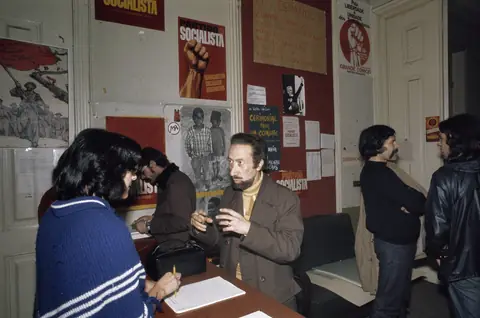
A year after the revolution, 91.7% of voters cast their vote in the first free elections, for the Constituent Assembly; the electoral register had grown from around 1.8 million voters, in 1973, to more than 6.2 million, 53% of them women.214 The PS wins with 37.9%, followed by the PPD (26.4%) and the PCP (12.5%).2 Twenty women deputies are elected out of 250, around 8%.1
Watch in the archive: Assembleia da República
A short documentary by Parliament on the elections to the Constituent Assembly of 25 April 1975, the country’s first free election by universal suffrage. Around 92% of registered voters cast their vote — almost six million people.
Original page Licença padrão do YouTube — embed permitido pelo canal oficial da Assembleia da República
Assembleia da República, on YouTube. The player only connects to that site when you press “Watch”.
RTP Arquivos: Eleições para a Assembleia Constituinte em Lisboa
- 1Assembleia da República
- 2Centro de Documentação 25 de Abril, Universidade de Coimbra
- 3Comissão Nacional de Eleições
- 4Museu do Aljube Resistência e Liberdade (EGEAC)
- 5RTP – Memórias da Revolução (textos de Aniceto Afonso, Carlos Matos Gomes e Maria Inácia Rezola): Eleições para a Assembleia Constituinte
- 6RTP – Memórias da Revolução (textos de Aniceto Afonso, Carlos Matos Gomes e Maria Inácia Rezola): Resultado das eleições
- 7Comissão Comemorativa 50 Anos 25 de Abril
- 8Assembleia da República – Comunicar
- 9Centro de Documentação 25 de Abril – Universidade de Coimbra
25 April 1975 · women: Election of the Constituent Assembly: 20 women deputies
25 April 1975
In the elections to the Constituent Assembly, 20 women are elected out of a total of 250 deputies.2 With resignations and replacements, 27 women deputies serve until 2 April 1976 — 16 from the PS, five from the PCP, five from the PPD and one from the CDS — among them Sophia de Mello Breyner Andresen, Maria Alda Nogueira and Helena Roseta.12 In the Chamber they were addressed as “minha senhora” (madam), and the laughter that greeted the proposal for an article on the equality of women justified, in Alda Nogueira’s view, keeping the principle in the Constitution.2
Palácio de São Bento · Sophia de Mello Breyner Andresen · Maria Alda Nogueira · Helena Roseta
Watch in the archive: Assembleia da República
A short piece from Parliament’s series “Cápsula do Tempo” (Time Capsule), devoted to the women in the Constituent Assembly of 1975–1976.
Original page Licença padrão do YouTube — embed permitido pelo canal oficial da Assembleia da República
Assembleia da República, on YouTube. The player only connects to that site when you press “Watch”.
19 May 1975: The “República affair” begins
19 May 1975
The workers of República remove the editor, Raul Rego, the deputy editor and the managing editor, accusing them of being mouthpieces for the PS; Rego and the journalists who side with them are held on the premises until the Minister of Social Communication orders their release.21 The affair becomes one of the main confrontations of the revolution: when the paper comes out again, in July, under military direction, the ministers of Mário Soares’s PS leave the Government.23
Headquarters of the newspaper República (Rua da Misericórdia) · Mário Soares
27 May 1975 · women: Decree-Law No. 261/75 allows those married in church to divorce
27 May 1975
Applying the Additional Protocol to the Concordat, the Fourth Provisional Government amends the Civil Code: Catholic marriage comes to be governed, as to its effects, by the law of the State, and can be dissolved in the civil courts “on the same terms and on the same grounds” as civil marriage.12 The decree, by the Minister of Justice, Salgado Zenha — the new divorce law — also introduces divorce by mutual consent.1
27 May 1975 · women: The new divorce law
27 May 1975
Promulgated on 22 May, Decree-Law No. 261/75 became known as the new divorce law.13 Since the 1940 Concordat, the civil courts had been unable to grant divorces in Catholic marriages — a solution that, the decree noted, applied only in Portugal and the Dominican Republic.3 For the historians of RTP’s Memórias da Revolução (Memories of the Revolution), until 25 April women were barred from divorcing and from travelling abroad without their husband’s consent.2
- 1RTP – Memórias da Revolução (textos de Aniceto Afonso, Carlos Matos Gomes e Maria Inácia Rezola): Nova lei do divórcio
- 2RTP – Memórias da Revolução (textos de Aniceto Afonso, Carlos Matos Gomes e Maria Inácia Rezola): Direitos das mulheres
- 3Diário da República Eletrónico
- 4Instituto de Ciências Sociais da Universidade de Lisboa – Análise Social
2 June 1975 · women: Opening session of the Constituent Assembly
2 June 1975
With a speech by President Costa Gomes, the Constituent Assembly opens at São Bento; it will work for ten months.31 Of the 27 women deputies who sat there, only six took part in committees, and only Sophia de Mello Breyner Andresen chaired one, the committee that drafted the preamble to the Constitution; Maria Alda Nogueira was the only woman on the 1st Committee.1
Palácio de São Bento · Costa Gomes · Sophia de Mello Breyner Andresen · Maria Alda Nogueira
Watch in the archive: Assembleia da República
Parliament looks back at the opening session of the Constituent Assembly, opened at 16:12 on 2 June 1975 by the interim president Henrique de Barros. It follows the Assembly’s work up to the approval of the Constitution on 2 April 1976.
Original page Licença padrão do YouTube — embed permitido pelo canal oficial da Assembleia da República
Assembleia da República, on YouTube. The player only connects to that site when you press “Watch”.
RTP Arquivos: Abertura solene da Assembleia Constituinte
- 1Assembleia da República
- 2RTP – Memórias da Revolução (textos de Aniceto Afonso, Carlos Matos Gomes e Maria Inácia Rezola): A eleição da Assembleia Constituinte
- 3RTP – Memórias da Revolução (textos de Aniceto Afonso, Carlos Matos Gomes e Maria Inácia Rezola): Abertura solene da Assembleia Constituinte
25 June 1975: Independence of Mozambique
25 June 1975
Mozambique becomes independent, on the date set by the Lusaka Agreement: the anniversary of the founding of FRELIMO.123
5 July 1975: Independence of Cape Verde
5 July 1975
The independence of Cape Verde is proclaimed in the city of Praia.12 The PAIGC, the party for the independence of Guinea and Cape Verde, had been founded in 1956 by Amílcar Cabral and others; Cabral had been assassinated in Conakry in 1973.43
12 July 1975: Independence of São Tomé and Príncipe
12 July 1975
São Tomé and Príncipe becomes independent.12 In November, the poet Alda do Espírito Santo, later Minister of Education and Culture, writes the words of the national anthem, “Independência Total” (Total Independence).3
13 July 1975: The attack on the PCP offices in Rio Maior opens the “Hot Summer”
19 July 1975: PS rally at the Fonte Luminosa
19 July 1975
On Alameda D. Afonso Henriques, by the Fonte Luminosa, the PS gathered a crowd; Mário Soares directly attacked the PCP, the prime minister, Vasco Gonçalves, and the Intersindical, and demanded the resignation of the head of government.12 It is considered one of the decisive moments of the Hot Summer.21
Alameda D. Afonso Henriques and the Fonte Luminosa · Mário Soares
August 1975 to October 1975: The “air bridge” brings more than 228,000 people from Angola
August 1975 to October 1975
Between August and October 1975, the “air bridge” organised by the Government between Luanda and Lisbon airport carries 228,471 passengers, some of them in aircraft lent by other countries, before the independence of Angola, set for 11 November.1 It is estimated that around half a million people, who became known as “retornados” (returnees), arrived from the former colonies, mostly in the summer and autumn of 1975.2 For months, the crates holding their belongings covered the quay of the Alcântara Maritime Station.3
8 August 1975: The “Document of the Nine”
8 August 1975
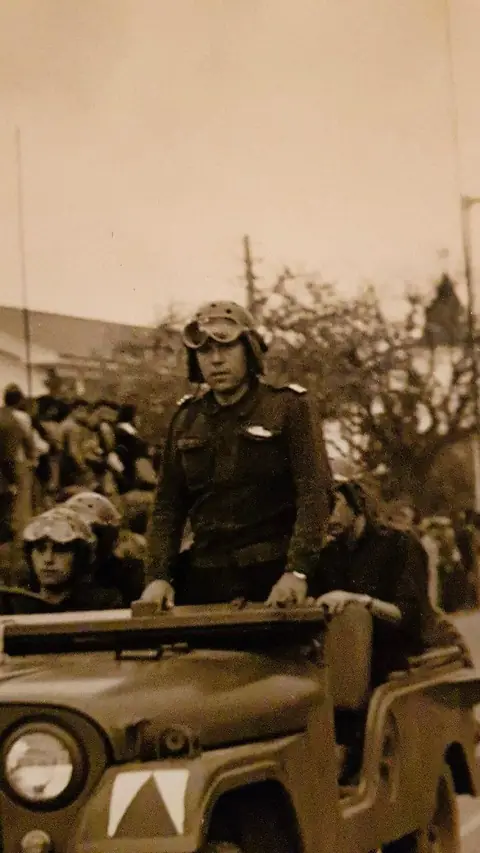
A group of MFA officers — the signatories included Salgueiro Maia — signs the “Document of the Nine” (Documento dos Nove), against the line taken by the prime minister, Vasco Gonçalves.13 On 13 August, the COPCON of Otelo Saraiva de Carvalho responds with its “revolutionary self-criticism”, the “COPCON Document”: the MFA splits into three camps — the “Nine”, close to the PS, the “Gonçalvists”, linked to the PCP, and Otelo’s line.2
27 September 1975: Demonstrators destroy the Spanish Embassy in Lisbon
12 October 1975 · women: The MDM’s 2nd National Meeting at the Liceu D. Filipa de Lencastre
12 October 1975
Under the slogan “Woman: the new Portugal is your child too” (Mulher: Portugal novo também é teu filho), the Democratic Women’s Movement meets at the Liceu D. Filipa de Lencastre, in Lisbon, with Maria Lamas and other women leaders presiding.1 It elects Maria Lamas honorary president, approves its first statutes and sends the president of the Constituent Assembly a motion protesting that not a single “measure concerning equal rights between women and men” has yet been approved.1
7 November 1975: Soldiers blow up the Rádio Renascença transmitters
7 November 1975
On the Government’s orders, the Military Intervention Group blows up the Rádio Renascença transmitters at Buraca, putting an end to the conflict with the workers who were occupying the station.12 On 27 November, Rádio Renascença would be returned to the Church.1
11 November 1975: Independence of Angola
11 November 1975
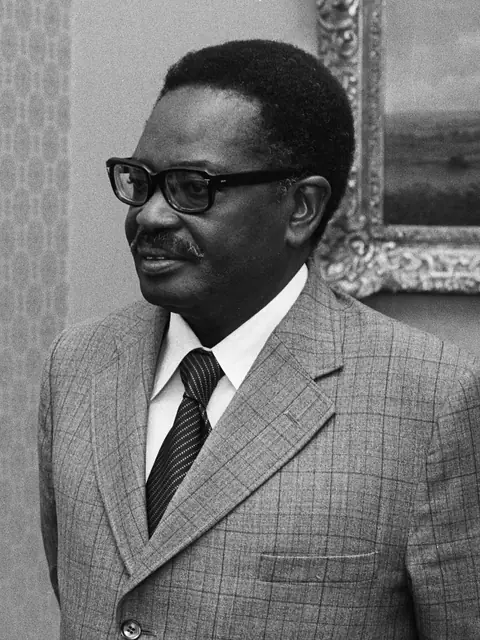
After the Portuguese authorities withdraw on 10 November, the independence of Angola, set by the Alvor Agreement, is proclaimed; the MPLA of Agostinho Neto takes power on its own in Luanda, and the country plunges into a long civil war.123
12 November 1975: Construction workers besiege the Constituent Assembly
12 November 1975
In the fight for their collective labour agreement, a demonstration of construction workers — some 100,000 people, according to the press of the time — surrounds the Palácio de São Bento and keeps the constituent deputies from leaving for 36 hours.42 In the official residence next door, the prime minister, Pinheiro de Azevedo, is held captive, and only in the early hours of the 14th does he reach an agreement with the unions; the deputies leave late in the morning of the 13th, between lines of demonstrators.467 Among them were Sophia de Mello Breyner Andresen, who replied “Fascist, me?” (Fascista, eu?), and Helena Roseta, who would protest in the Constituent Assembly against the “spectacle of manipulation”.34
Palácio de São Bento · Pinheiro de Azevedo · Sophia de Mello Breyner Andresen · Helena Roseta
RTP Arquivos: Sessão na Assembleia Constituinte
- 1Assembleia da República – Comunicar (n.º 94)
- 2Centro de Documentação 25 de Abril, Universidade de Coimbra
- 3Assembleia da República
- 4Assembleia da República – Comunicar: O cerco ao Palácio de São Bento (12/13 de novembro)
- 5RTP – Memórias da Revolução (textos de Aniceto Afonso, Carlos Matos Gomes e Maria Inácia Rezola): Cerco à Assembleia Constituinte – Parte 1
- 6RTP – Memórias da Revolução (textos de Aniceto Afonso, Carlos Matos Gomes e Maria Inácia Rezola): Cerco à Assembleia Constituinte – Parte 2
- 7RTP – Memórias da Revolução (textos de Aniceto Afonso, Carlos Matos Gomes e Maria Inácia Rezola): A eleição da Assembleia Constituinte
- 8Assembleia da República – Comunicar: A construção da democracia (1974-1976)
16 November 1975: Unity demonstration in the Terreiro do Paço
16 November 1975
Four days after the siege of São Bento, a large unity demonstration was held in the Terreiro do Paço against the “turn to the right” of the Sixth Provisional Government; the PS, PPD and CDS deputies had left for Porto, believing that Lisbon was not safe.1 In the Constituent Assembly, the communist deputy Octávio Pato described it as “a milestone in the struggle for the democratic revolution, on the road to socialism”.1
Terreiro do Paço (Praça do Comércio)
RTP Arquivos: Manifestação de trabalhadores da cintura industrial de Lisboa I
25 November 1975: 25 November: the end of the revolutionary period
25 November 1975
In the early hours, paratroopers from the Tancos Base-School occupy air bases and the Command of the 1st Air Region, at Monsanto; forces of RALIS, the former RAL 1, take up positions, and the Military Administration Practical School occupies the RTP studios.24 At the Palácio de Belém, President Costa Gomes calls in Álvaro Cunhal to demobilise the PCP’s activists and declares a state of siege in the Lisbon region; the Amadora Commandos, on the side of the “Group of Nine” officers, respond.21 The Emissora Nacional is occupied by the Military Police and Rádio Clube Português goes off the air; on the 26th, the Commandos’ attack on the Military Police Regiment, on Calçada da Ajuda — the Lanceiros 2 barracks — leaves three dead.21 Otelo Saraiva de Carvalho is removed from the command of COPCON.1
Palácio de Belém · Lanceiros 2 Barracks / Military Police Regiment (Calçada da Ajuda) · RTP studios in Lumiar · Emissora Nacional (Rua do Quelhas) · Rádio Clube Português (the Rua Sampaio e Pina studios) · Barracks of Light Artillery Regiment No. 1 (RAL 1, later RALIS) · Costa Gomes · Otelo Saraiva de Carvalho · Álvaro Cunhal
- 1Centro de Documentação 25 de Abril, Universidade de Coimbra
- 2Comissão Comemorativa 50 Anos 25 de Abril: 25 de Novembro de 1975
- 3RTP – Memórias da Revolução (textos de Aniceto Afonso, Carlos Matos Gomes e Maria Inácia Rezola): 25 de Novembro
- 4RTP – Memórias da Revolução (textos de Aniceto Afonso, Carlos Matos Gomes e Maria Inácia Rezola): O desencadear do 25 de Novembro
- 5Comissão Comemorativa 50 Anos 25 de Abril: Salgueiro Maia
1976
4 February 1976 · women: RTP broadcasts “O Aborto não é um Crime” (Abortion Is Not a Crime), by Maria Antónia Palla
4 February 1976
In the series Nome Mulher (Name: Woman), which she made with Antónia de Sousa, the journalist Maria Antónia Palla shows the practice of clandestine abortion in a report directed by Monique Rutler, of the Cinequipa cooperative.12 In the face of the protests, the series is suspended and, after a complaint by the management of the Alfredo da Costa Maternity Hospital for the “illegal practice of medicine”, the Public Prosecutor’s Office charges Palla with offending public decency and incitement to crime.21 The trial begins on 16 May 1979 at the Boa-Hora Court, with the lawyer Lia Viegas for the defence; Palla then argues that abortion must urgently be legalised, to put an end to “that scandalous business that is clandestine abortion”.12 She is eventually acquitted.2
Boa-Hora Court · Maria Antónia Palla
2 April 1976 · women: The Constituent Assembly approves the Constitution of the Republic
2 April 1976
After ten months of work in the Palácio de São Bento, the Constituent Assembly reads out the full text of the Constitution from 09:45 and approves it in the afternoon, with the CDS voting against; at around 22:00, President Costa Gomes signs the decree promulgating it.109 Article 13 forbids privileging or disadvantaging anyone on grounds of sex, and Article 36 gives spouses “equal rights and duties”, which makes it necessary to revise the Civil Code.62 Of the 27 women deputies who sat in the Constituent Assembly, only Sophia de Mello Breyner Andresen chaired a committee, the one that drafted the preamble.1 The Constitution comes into force on 25 April 1976, the day of the first legislative elections.610
Palácio de São Bento · Costa Gomes · Sophia de Mello Breyner Andresen
Watch in the archive: Assembleia da República
Parliament looks back at the opening session of the Constituent Assembly, opened at 16:12 on 2 June 1975 by the interim president Henrique de Barros. It follows the Assembly’s work up to the approval of the Constitution on 2 April 1976.
Original page Licença padrão do YouTube — embed permitido pelo canal oficial da Assembleia da República
Assembleia da República, on YouTube. The player only connects to that site when you press “Watch”.
RTP Arquivos: Aprovação da Constituição da República Portuguesa 1976
- 1Assembleia da República: As mulheres na Constituinte de 1975-1976
- 2Assembleia da República: A revisão do Código Civil e os Direitos das Mulheres (1977)
- 3Centro de Documentação 25 de Abril, Universidade de Coimbra
- 4Comissão para a Cidadania e a Igualdade de Género (CIG)
- 5Instituto de Ciências Sociais da Universidade de Lisboa – Análise Social
- 6Assembleia da República: Constituição da República Portuguesa – texto originário, aprovado em 2 de abril de 1976
- 7Assembleia da República – Comunicar: O cerco ao Palácio de São Bento (12/13 de novembro)
- 8Assembleia da República – Comunicar: A construção da democracia (1974-1976)
- 9RTP – Memórias da Revolução (textos de Aniceto Afonso, Carlos Matos Gomes e Maria Inácia Rezola)
- 10Assembleia da República – Comunicar: Sessão de encerramento da Assembleia Constituinte (1976)
1976–todayAfter 1976
Constitutional democracy — and women’s struggle for equality in law and in life, which did not end in 1976.51 dates34 women
1976
25 April 1976: The first legislative elections
25 April 1976
On the day the new Constitution comes into force, the Portuguese elect, for the first time, the 263 deputies of the Assembly of the Republic, a year after the elections to the Constituent Assembly.52 Mário Soares’s PS wins with 34.88% and 107 deputies, ahead of the PPD (24.35%), the CDS (15.97%) and the PCP (14.39%); abstention doubles, from 8.34% to 16.47%.51 The campaign takes place in a climate of political violence: on 2 April, a bomb planted in the car in which they were travelling kills Father Maximino de Sousa, the UDP candidate for Vila Real, and a young woman of 19.5
Palácio de São Bento · Mário Soares
- 1Centro de Documentação 25 de Abril, Universidade de Coimbra
- 2Comissão Comemorativa 50 Anos 25 de Abril
- 3Assembleia da República – Comunicar: O cerco ao Palácio de São Bento (12/13 de novembro)
- 4Assembleia da República – Comunicar: A construção da democracia (1974-1976)
- 5Assembleia da República
- 6Comissão Nacional de Eleições
29 April 1976 · women: The Council of the Revolution shuts down Natália Correia’s “O Século — Hoje”
29 April 1976
Since 20 April, Natália Correia had been editing O Século — Hoje (O Século — Today), a daily political supplement of O Século, at the invitation of the paper’s editor, João Gaspar Simões; the first issue carried the Universal Declaration of Human Rights as its editorial, and the issue of 24 April, the eve of the elections, came out with “Vetted by the Reflection Commission” (Visado pela Comissão de Reflexão) in red on the front page.1 On 29 April, on a proposal from President Costa Gomes, the Council of the Revolution shuts it down for publishing articles “offensive and slanderous to the Council of the Revolution and to the Armed Forces”.1 The ninth and last issue comes out the following day.1
O Século — the newsroom of “Modas e Bordados” · Natália Correia · Costa Gomes
27 June 1976: Ramalho Eanes elected the first constitutional President
27 June 1976
António Ramalho Eanes is the first President of the Republic elected under the 1976 Constitution, with 61.5% of the vote, ahead of Otelo Saraiva de Carvalho (16.5%), Pinheiro de Azevedo (14.4%) and Octávio Pato (7.5%).1 On the same day, the regional assemblies of the Azores and Madeira are elected.2 Only after this election is the First Constitutional Government sworn in.3
23 July 1976: Mário Soares’s First Constitutional Government is sworn in
23 July 1976
The First Constitutional Government is sworn in, made up of the PS alone and headed by Mário Soares, who won the April elections without an absolute majority and keeps his promise to govern alone; the period of the provisional governments comes to an end.134 Across the Government’s membership, from 1976 to 1978, there is only one woman: Manuela Morgado, Secretary of State for the Treasury and later for Finance.1
1977
November 1977 · women: Revision of the Civil Code ends the “head of the family”
November 1977
In January 1977, the commission revising the Civil Code is sworn in before the Minister of Justice, Almeida Santos; it is chaired by Isabel de Magalhães Colaço, the first woman to obtain a doctorate in law in Portugal, and its members include Maria da Nazareth Lobato Guimarães, the first woman to teach law at the University of Coimbra.1 On 12 July, the Assembly of the Republic authorises the Government to legislate, with only the CDS voting against; Alda Nogueira, of the PCP, welcomes a proposal that “restores woman to her rightful place” in the family, “as the being of equal rights and duties that she is”.1 Decree-Law No. 496/77, promulgated on 6 October and published on 25 November, comes into force on 1 April 1978: marital power ends, and marriage comes to rest on the equal rights and duties of the spouses.41 The Commission on the Status of Women was closely involved in these changes.3
Palácio de São Bento · Maria Alda Nogueira
Watch in the archive: Assembleia da República
A piece by Parliament on the 1977 revision of the Civil Code, which came into force on 1 April 1978 and changed women’s rights in the family and at work.
Original page Licença padrão do YouTube — embed permitido pelo canal oficial da Assembleia da República
Assembleia da República, on YouTube. The player only connects to that site when you press “Watch”.
17 November 1977 · women: Decree-Law No. 485/77 institutionalises the Commission on the Status of Women
17 November 1977
In its setting-up phase since 1975, the Commission on the Status of Women gains its own organic law: Decree-Law No. 485/77 places it within the Presidency of the Council of Ministers, answerable to the prime minister, to “support all forms of raising the awareness of Portuguese women and the elimination of the discrimination practised against them”.21 Its advisory council has an interministerial section and another made up of women’s non-governmental organisations, which Maria de Lourdes Pintasilgo had already brought in to work with the commission.21 The CIG, its heir, celebrates its institutional anniversary on this date.1
25 November 1977 · women: Decree-Law No. 496/77: the reform of the Civil Code
25 November 1977
Published in a supplement of the Diário da República (the official gazette), Decree-Law No. 496/77 rewrites family law to comply with the 1976 Constitution, which requires “the full equality of rights and duties of the spouses”.1 Marital power disappears: the running of family life is a matter for both spouses, the family residence is chosen by agreement, a married woman no longer has her husband’s domicile as her legal domicile, and each spouse may take up any profession without the other’s consent.1 The minimum age for marriage becomes 16 for women, as for men, the age of majority falls to 18, and discrimination against children born outside marriage comes to an end.1 Promulgated on 6 October, the decree comes into force on 1 April 1978 and completes the revision prepared during 1977.12
Watch in the archive: Assembleia da República
A piece by Parliament on the 1977 revision of the Civil Code, which came into force on 1 April 1978 and changed women’s rights in the family and at work.
Original page Licença padrão do YouTube — embed permitido pelo canal oficial da Assembleia da República
Assembleia da República, on YouTube. The player only connects to that site when you press “Watch”.
1978
18 February 1978: Lisbon accompanies the transfer of the Tarrafal dead
18 February 1978
In heavy rain, thousands of people walk through Lisbon accompanying the remains of the prisoners who died in the Tarrafal concentration camp, shouting “Tarrafal never again” (Tarrafal nunca mais) and “Fascism never again” (Fascismo nunca mais).1 At the Alto de São João Cemetery, a mausoleum built by public subscription is inaugurated, bearing the names of the 32 victims and the dedication “To those who in the long night of fascism were bearers of freedom and for freedom died in the Tarrafal Concentration Camp”.1 The 32 died between 1936 and the first closure of the camp, in 1954.2
Tarrafal Concentration Camp (Cape Verde)
RTP Arquivos: Funeral e trasladação das vítimas do Campo de Concentração do Tarrafal
1979
1 August 1979 · women: Maria de Lourdes Pintasilgo, the first woman prime minister
1 August 1979
Invited by President Ramalho Eanes to head a caretaker government, Maria de Lourdes Pintasilgo is sworn in at the Palácio da Ajuda at the head of the Fifth Constitutional Government, which lasts until January 1980.134 She is the first woman to head a government in Portugal and the second in Europe, after Margaret Thatcher.35 There are two more women in her Government, the secretaries of state Teresa Santa Clara Gomes and Gabriela Guedes Salgueiro, and the writer Maria Velho da Costa is an aide to the Secretary of State for Culture, Helder Macedo.28
20 September 1979 · women: Decree-Law No. 392/79: equality at work and in employment
20 September 1979
The decree guarantees women equal opportunities and equal treatment with men at work and in employment, bans job advertisements that state a preference for either sex, and revokes the rules that barred them from any job or profession; it creates, attached to the Ministry of Labour, the Commission for Equality in Labour and Employment (CITE).1 In the preamble, the Government acknowledges that equality “will not be achieved by the mere work of the law”.1 It was approved by the Council of Ministers on 31 July 1979, still by the Government of Carlos Mota Pinto, and promulgated by President Ramalho Eanes on 31 August.1
1980
25 April 1980: A citizens’ plaque at the former PIDE headquarters
25 April 1980
On the sixth anniversary of the revolution, a group of citizens puts up a plaque on the façade of the former PIDE/DGS headquarters, on Rua António Maria Cardoso: “Here, on the afternoon of 25 April 1974, the PIDE opened fire on the people of Lisbon and killed”, followed by the names of Fernando Giesteira, José Barneto, Fernando Reis and João Arruda — two of them misspelt, “Fernando C. Gesteira” and “José Guilherme R. Arruda”.1234 Removed during the works that turned the building into a luxury apartment complex, the plaque was only put back at the end of 2009, after a complaint from the Não Apaguem a Memória (Do Not Erase Memory) movement, and in a bottom corner almost invisible to passers-by.1 Stolen at the end of March 2014, it was replaced by Lisbon City Council with a replica, in the same place, in April that year.5 In 2010, the City Council had put up another plaque there, on the history of the place.3
PVDE / PIDE / DGS headquarters · Fernando Giesteira · José Barneto · Fernando Reis · João Arruda
26 July 1980 · women: Portugal ratifies the CEDAW Convention without reservations
26 July 1980
Law No. 23/80, approved by the Assembly of the Republic on 27 June and promulgated by President Ramalho Eanes on 14 July, approves for ratification the Convention on the Elimination of All Forms of Discrimination against Women (CEDAW), adopted by the United Nations General Assembly on 18 December 1979.452 Portugal, which had signed it on 24 April, deposits its ratification on 30 July 1980, without reservations.5 It was one of the first countries to do so, thanks to the overall revision of legislation carried out after 25 April, with the Commission on the Status of Women identifying the discrimination in the laws.23
- 1Comissão para a Cidadania e a Igualdade de Género (CIG): Legislação (base de dados)
- 2Comissão para a Cidadania e a Igualdade de Género (CIG): História da CIG
- 3Comissão para a Cidadania e a Igualdade de Género (CIG): Igualdade entre Mulheres e Homens – Enquadramento
- 4Diário da República Eletrónico
- 5Nações Unidas – United Nations Treaty Collection
18 October 1980: “Os 10 Magníficos” (The Magnificent Ten) at the Coliseu, for the ten years of the CGTP-IN
18 October 1980
For the 10th anniversary of the CGTP-IN trade union confederation, José Afonso, Adriano Correia de Oliveira, Sérgio Godinho, José Mário Branco, Paulo de Carvalho, Carlos Mendes, Paco Bandeira, Luísa Basto, the Catalan Pi de la Serra and the Uruguayan Quintín Cabrera take the stage of the Coliseu dos Recreios — the group that came to be called “Os 10 Magníficos” (The Magnificent Ten).1
Coliseu dos Recreios · José Afonso (Zeca Afonso) · Adriano Correia de Oliveira · Sérgio Godinho · José Mário Branco · Paulo de Carvalho · Luísa Basto
1982
2 March 1982 · women: The first parliamentary debate on abortion, and Natália Correia’s poem
2 March 1982
In the first parliamentary debate on the legalisation of abortion, after Zita Seabra presents the PCP’s bill No. 309/II, the CDS deputy João Morgado asks whether a woman is not an object “when her maternal function is separated from the practice of the sexual act”, and recalls that the Church forbids abortion because, “when the sexual act is practised”, it is “so that one may see the birth of a child”; the version that lodged in memory, “the sexual act is for making children” (o acto sexual é para fazer filhos), he denied a few days later.21 Natália Correia, who was absent from the session, answers him with a satirical poem handwritten on Assembly letterhead, which she circulates among the deputies but never reads in the chamber: “Since coitus — says Morgado — has as its crystalline, precise and immaculate end the making of a girl or a boy…” (Já que o coito – diz Morgado – tem como fim cristalino, preciso e imaculado fazer menina ou menino…).12 The bill is rejected on 11 November 1982; Natália is the only PSD deputy to vote in favour.1
Palácio de São Bento · Natália Correia
- 1Assembleia da República
- 2Polígrafo (SAPO)
- 3Casa Comum – Fundação Mário Soares e Maria Barroso (arquivo Ruella Ramos): Diário de Lisboa, n.º 20 793, de 5 de março de 1982 (p. 24: «Um poema de Natália Correia a João Morgado (CDS)»)
- 4Casa Comum – Fundação Mário Soares e Maria Barroso (arquivo Ruella Ramos): Diário de Lisboa, de 3 de março de 1982 (p. 5: «"É preciso ter coragem para acabar com o flagelo do aborto clandestino"» e «PCP: um discurso intocável. CDS: a boçalidade sem limites…»)
16 October 1982: Adriano Correia de Oliveira dies
16 October 1982
Adriano Correia de Oliveira, the voice of “Trova do Vento que Passa” (Ballad of the Passing Wind), dies in Avintes, aged 40.12 In 1983 he was posthumously awarded the rank of Commander of the Order of Liberty, and in 2009 Lisbon City Council gave his name to a street in the Avenidas Novas.1 Twenty years later, RTP remembered him with Manuel Alegre, the author of the poem of the “Trova”.3
RTP Arquivos: 20.º aniversário da morte de Adriano Correia de Oliveira
1983
29 January 1983: José Afonso’s last great concert at the Coliseu
29 January 1983
Already ill, José Afonso gives one of the last great concerts of his life at the Coliseu dos Recreios; a live record came out of the recording, and RTP filmed it.12 At the end, “Grândola” is sung together by the musicians and the audience.3
Coliseu dos Recreios · José Afonso (Zeca Afonso)
Watch in the archive: Associação José Afonso
José Afonso sings “Grândola, Vila Morena” (Grândola, swarthy town) at the Coliseu dos Recreios concert of 29 January 1983, in an excerpt published by the José Afonso Association. It was one of the singer’s last great concerts, when he was already ill, and the song that had served as the signal for 25 April was sung together with the audience.
Original page Licença padrão do YouTube — embed permitido pelo canal oficial da Associação José Afonso
Associação José Afonso, on YouTube. The player only connects to that site when you press “Watch”.
RTP Arquivos: Concerto de José Afonso no Coliseu dos Recreios
1984
24 March 1984 · women: Law No. 3/84 on sex education and family planning
24 March 1984
Law No. 3/84 guarantees the right to sex education, as part of the right to education, and free access to family planning consultations, which are free of charge in the public services, as are the contraceptives these provide.3 School curricula are to teach human anatomy, physiology, genetics and sexuality, and to contribute to “overcoming discrimination on grounds of sex and the traditional division of roles between woman and man”.3 The law calls on the Commission on the Status of Women, which made family planning one of its areas of work, to collaborate in the campaigns to spread knowledge of contraceptive methods.32
5 April 1984 · women: Law No. 4/84: the protection of maternity and paternity
5 April 1984
Law No. 4/84 recognises maternity and paternity as “eminent social values” and guarantees parents, “on equal terms”, professional fulfilment and participation in civic life.2 Women workers become entitled to 90 days’ maternity leave, 60 of them immediately after childbirth, and to two daily breaks of up to an hour to breastfeed, until the child is a year old; the father may only take part of the leave if the mother becomes incapacitated or dies.2 Absences for maternity do not entail any loss of rights and count as actual work, except as regards pay.21
11 May 1984 · women: Law No. 6/84 decriminalises termination of pregnancy in some cases
11 May 1984
Approved by the Assembly of the Republic on 14 February and published on 11 May, Law No. 6/84 amends the Penal Code: an abortion carried out by a doctor, in an official or officially recognised health establishment and with the woman’s consent, is no longer punishable when it is the only means of removing a danger of death or of serious and irreversible injury to her and, within time limits, to avoid serious danger to her health (12 weeks), in the case of serious illness or incurable malformation of the foetus (16 weeks) or of a pregnancy resulting from rape (12 weeks).4 Outside these cases, abortion remains a crime, punishable by up to three years in prison, for the woman too; decriminalisation at the woman’s request only comes in 2007.43 Feminists such as Madalena Barbosa, spokeswoman for the National Campaign for Abortion and Contraception in 1979, were fighting for decriminalisation; in the year of the law, the journalist Maria Antónia Fiadeiro publishes Aborto, o crime está na lei (Abortion, the Crime Is in the Law).3
Palácio de São Bento · Maria Antónia Fiadeiro · Madalena Barbosa
1985
1985 · women: Leonor Beleza, the first woman Minister of Health
1985
Leonor Beleza, who had been a member of the Commission on the Status of Women from 1975 to 1982 and had chaired the Council of Europe’s Committee for Equality between Women and Men, becomes, in Cavaco Silva’s government, the first woman Minister of Health, a post she holds until 1990.1 Before that she had been Secretary of State for the Presidency of the Council of Ministers and for Social Security.1
1986
26 January 1986 · women: Pintasilgo, the first woman candidate for the Presidency of the Republic
26 January 1986
In the presidential election of 26 January 1986, Maria de Lourdes Pintasilgo is the first woman to stand for President of the Republic, as an independent candidate.32 She wins 418,961 votes (7.38%) and comes fourth, behind Freitas do Amaral, Mário Soares and Salgado Zenha; the second round is fought between the first two.4 On election night, her campaign director, Sousa e Castro, tells RTP that he had expected a higher percentage.1
1987
23 February 1987: José Afonso dies
23 February 1987
José Afonso dies in the early hours in Setúbal, of amyotrophic lateral sclerosis, and his wake is held in the gymnasium of the São Julião Secondary School.12 That night, RTP recalls the Coliseu concert of 1983.4 The next day, the coffin, covered in red cloth, is carried shoulder-high to the Piedade cemetery, with a band playing “Grândola” and the people singing.3
RTP Arquivos: Concerto de José Afonso no Coliseu dos Recreios
1989
1989 · women: Assunção Esteves, the first woman judge of the Constitutional Court
1989
A graduate in Law and in Legal and Political Sciences, Assunção Esteves is elected a judge of the Constitutional Court at the age of 33 — the first woman to hold the post.1 First elected a deputy in 1987, she would become, in 2011, the first woman to preside over the Assembly of the Republic.1
1990
5 October 1990: Humberto Delgado in the National Pantheon
5 October 1990
With Pantheon honours granted by the Assembly of the Republic in 1988, the remains of Humberto Delgado — murdered near Olivença in 1965, buried in Spain and brought to Lisbon in 1975 — enter the National Pantheon.13 At the ceremony, with a guard of honour and military aircraft flying over the Pantheon, the speakers are Emídio Guerreiro, of the honorary committee for the tribute, and President Mário Soares, before the prime minister, Cavaco Silva, and Maria Barroso.2
Church of Santa Engrácia – National Pantheon · Humberto Delgado · Mário Soares · Maria Barroso
RTP Arquivos: Trasladação dos restos mortais de Humberto Delgado
1991
9 May 1991 · women: The Commission on the Status of Women becomes the CIDM
9 May 1991
Decree-Law No. 166/91 turns the Commission on the Status of Women into the Commission for Equality and Women’s Rights (CIDM).21 In the preamble, the Government considers that “globally egalitarian legislation” has been achieved and explains the new name: the commission must move on from “denouncing discrimination against women” to “developing actions for the building of a true equality of opportunity”.2 Its objectives include achieving “the effective co-responsibility of women and men” in family, working and political life.2
1997
1997 · women: Constitutional revision makes equality between women and men a task of the State
1997
The fourth constitutional revision — Constitutional Law No. 1/97, approved by the Assembly of the Republic on 3 September and published on 20 September — adds to the fundamental tasks of the State, in Article 9, “to promote equality between men and women”.3 The article on political participation, which becomes Article 109, replaces “of citizens” with “of men and women” and requires the law to promote “non-discrimination on grounds of sex in access to political office” — the basis of the future Parity Law.31
24 March 1997 · women: The first Global Plan for Equal Opportunities is approved
24 March 1997
Resolution of the Council of Ministers No. 49/97 approves the First Global Plan for Equal Opportunities, which requires equality between women and men to be built into all policies and provides for measures against violence against women and for equality in employment, in reconciling family and working life, in the protection of maternity, in health and in education.42 The preamble acknowledges that the participation of women in political decision-making positions “is very limited”, but the plan contains no measures to change this, notes the Assembly of the Republic.43
1998
28 June 1998 · women: The first referendum on the voluntary termination of pregnancy
28 June 1998
In the first national referendum, voters answer the question “Do you agree with the decriminalisation of the voluntary termination of pregnancy, if carried out, at the woman’s choice, in the first 10 weeks, in a legally authorised health establishment?”2 Turnout is 31.9% of those registered; the “no” wins narrowly, with 1,356,754 votes (50.9%) against 1,308,130 (49.1%) for the “yes”.1 Decriminalisation at the woman’s request would only come after the second referendum, in 2007.3
1999
1999 · women: Maria de Belém, Minister for Equality
1999
In the Fourteenth Constitutional Government, Maria de Belém Roseira, who after 25 April had started out as an aide to Maria de Lourdes Pintasilgo at the Secretariat of State for Social Security, is appointed Minister for Equality, a post she holds until 2000.1 Before that she had been Minister of Health, from 1995 to 1999.1
1999 · women: Sophia de Mello Breyner Andresen, the first Portuguese woman to win the Camões Prize
1999
The poet Sophia de Mello Breyner Andresen, who had been a deputy in the Constituent Assembly and had chaired the committee that drafted the preamble to the 1976 Constitution, becomes the first Portuguese woman to receive the Camões Prize.1
2000
27 May 2000 · women: Domestic violence becomes a public crime
27 May 2000
Law No. 7/2000 rewrites Article 152 of the Penal Code and removes from it the 1998 rule that made proceedings against anyone who mistreated a spouse or partner depend on a complaint by the victim: physical or psychological ill-treatment in conjugal life becomes a public crime, and the law extends it to anyone who assaults the father or mother of a child they have in common.451 The aggressor may be banned from contacting the victim and removed from her home for up to two years; the victim may ask for the provisional suspension of the proceedings.4 The CIG marked 25 years of the public crime in 2025.1
- 1Comissão para a Cidadania e a Igualdade de Género (CIG): 25 anos de crime público: compromisso renovado no combate à violência contra as mulheres e à violência doméstica
- 2Procuradoria-Geral Regional de Lisboa (PGDL)
- 3Comissão para a Cidadania e a Igualdade de Género (CIG): História da CIG
- 4Diário da República Eletrónico: Lei n.º 7/2000, de 27 de maio — Reforça as medidas de proteção a pessoas vítimas de violência (altera o artigo 152.º do Código Penal; Diário da República n.º 123/2000, Série I-A)
- 5Diário da República Eletrónico: Lei n.º 65/98, de 2 de setembro — Altera o Código Penal (redação do artigo 152.º anterior a 2000; Diário da República n.º 202/1998, Série I-A)
2006
21 August 2006 · women: The Parity Law: a minimum of 33% of each sex on the lists
21 August 2006
After a first decree vetoed by President Cavaco Silva, who saw in the rejection of non-compliant lists “an excessive and disproportionate system of sanctions”, Organic Law No. 3/2006, re-approved with amendments on 6 July, requires the lists for the Assembly of the Republic, the European Parliament and local government to include at least 33% of each sex, on pain of cuts in the public subsidies for the campaigns.13 It comes seven years after the Government’s first proposal and the rejection or lapse of five initiatives, and nine years after the 1997 constitutional revision required the law to promote non-discrimination in access to political office.1 In the 2009 legislative elections, the first held under the law, women rise to 27.4% of the deputies; the threshold would rise to 40% in 2019.1
2007
2007 · women: The CIDM gives way to the Commission for Citizenship and Gender Equality
2007
Decree-Law No. 164/2007 of 3 May sets out the organisation of the Commission for Citizenship and Gender Equality (CIG), which succeeds the Commission for Equality and Women’s Rights and the Mission Structure against Domestic Violence, both abolished.2 The new name results from a “conceptual and terminological review” in the light of advances in matters of gender; the advisory council keeps the section of non-governmental organisations and gains a technical and scientific group.21 The CIG is the heir to the Commission on the Status of Women of 1975.1
11 February 2007 · women: The second referendum: the “yes” to decriminalising the voluntary termination of pregnancy wins
11 February 2007
Nine years after the first referendum, voters once again answer the question “Do you agree with the decriminalisation of the voluntary termination of pregnancy, if carried out, at the woman’s choice, in the first 10 weeks, in a legally authorised health establishment?”2 Turnout is 43.57% of those registered; the “yes” wins with 2,231,529 votes (59.25%), against 1,534,669 (40.75%) for the “no”.1 Two months later, the law decriminalising termination at the woman’s request is published.3
17 April 2007 · women: Law No. 16/2007 decriminalises the voluntary termination of pregnancy at the woman’s request
17 April 2007
Following the February referendum, Law No. 16/2007, approved on 8 March, adds to the Penal Code a new case in which the termination of pregnancy is not punishable: when it is carried out “at the woman’s choice, in the first 10 weeks of pregnancy”, by a doctor or under a doctor’s direction, in an official or officially recognised health establishment.32 The woman decides after a compulsory consultation and a reflection period of at least three days; the National Health Service must organise itself to carry out terminations within the time limits, without doctors’ conscientious objection preventing this.3 The law revokes Law No. 6/84 and Law No. 90/97, which had amended it.3
2008
2008 · women: Manuela Ferreira Leite, the first woman to lead a party
2008
The first woman to lead a parliamentary group, that of the PSD, between 2001 and 2002, and the first woman Minister of State and Finance, in 2002, Manuela Ferreira Leite becomes in 2008 the first woman elected to lead a Portuguese political party, the PSD.1 She had previously been Secretary of State for the Budget and Minister of Education.1
2009
16 September 2009 · women: Law No. 112/2009 sets out the system for protecting victims of domestic violence
16 September 2009
Law No. 112/2009 establishes the legal framework for preventing domestic violence and for protecting and assisting its victims.21 It creates victim status, granted as soon as the complaint is made, provides for protection through teleassistance and organises the support network, from shelters to support centres.2 Approved on 23 July, it comes into force 30 days after publication, replaces Law No. 107/99 and strengthens the protection of the victims of a crime that has been public since 2000.23
2010
25 April 2010: A municipal plaque marks the former PIDE/DGS headquarters
25 April 2010
At the proposal of the Não Apaguem a Memória (Do Not Erase Memory) movement, born on 5 October 2005, Lisbon City Council unveils, next to the building on Rua António Maria Cardoso, a vertical plaque marking the former PIDE/DGS headquarters.123 A procession of 150 to 200 people sets off from the City Hall (Paços do Concelho); after the unveiling, the speakers are former political prisoners — Edmundo Pedro, José Manuel Tengarrinha and Helena Pato — and the mayor, António Costa.1 The plaque tells the history of the place and recalls the dead of 25 April 1974, joining the one a group of citizens had put up there in 1980.4
2011
21 June 2011 · women: Assunção Esteves, the first woman President of the Assembly of the Republic
21 June 2011
At the opening session of the 12th Legislature, in the Palácio de São Bento, Assunção Esteves — who in 1989 had been the first woman judge of the Constitutional Court — is elected the first woman President of the Assembly of the Republic.1 In her speech, she dedicates the moment “to all women”, and “above all to anonymous and oppressed women”.1
2013
21 January 2013 · women: Parliament approves the Istanbul Convention
21 January 2013
Resolution of the Assembly of the Republic No. 4/2013, approved on 14 December 2012 and signed by the president of the Assembly, Assunção Esteves, approves the Council of Europe Convention on Preventing and Combating Violence against Women and Domestic Violence, adopted in Istanbul on 11 May 2011.21
2015
25 April 2015: The Aljube Museum – Resistance and Freedom opens
25 April 2015
On the 41st anniversary of 25 April, the former political prison of the Aljube, closed in 1965, opens as the Aljube Museum – Resistance and Freedom, devoted to the memory of the fight against the dictatorship and of the resistance, with a restoration project by the architects Manuel Graça Dias and Egas José Vieira.12 The long-term exhibition presents the dictatorial regime, censorship, the police forces and the political courts, the oppositions, the anti-colonial struggle and 25 April.1
Watch in the archive: Câmara Municipal de Lisboa
A report by Lisbon City Council on the opening of the Aljube Museum, on 25 April 2015, in the premises of the former political prison. It includes the words of the mayor, Fernando Medina: “We must be aware of what freedom cost.”
Original page Licença padrão do YouTube — embed permitido pelo canal oficial da Câmara Municipal de Lisboa
Câmara Municipal de Lisboa, on YouTube. The player only connects to that site when you press “Watch”.
2017
1 August 2017 · women: A law imposes balanced representation on company boards
1 August 2017
Law No. 62/2017, approved on 23 June, sets minimums for each sex on management and supervisory boards: 33.3% in companies of the state business sector from 1 January 2018; in companies listed on the stock exchange, 20% of new appointments from the first elective general meeting of 2018, and 33.3% from that of 2020.21 In the public sector, an appointment that does not comply is null and void; the CIG monitors the application of the law and produces an annual report.2
2019
28 March 2019 · women: Balanced representation among the senior staff of the Public Administration
28 March 2019
Law No. 26/2019, approved on 8 February, sets at 40% the minimum proportion of each sex among the senior managers of the direct and indirect administration of the State and on the governing bodies of public higher education institutions and of public professional associations; on lists for elected bodies, the first two candidates may not be of the same sex.21 The next day, Organic Law No. 1/2019 is published, which brings the same threshold to electoral lists.3
- 1Comissão para a Cidadania e a Igualdade de Género (CIG)
- 2Diário da República Eletrónico: Lei n.º 26/2019, de 28 de março — Representação equilibrada entre homens e mulheres no pessoal dirigente e nos órgãos da Administração Pública (Diário da República n.º 62/2019, Série I)
- 3Diário da República Eletrónico: Lei Orgânica n.º 1/2019, de 29 de março — Segunda alteração à lei da paridade nos órgãos do poder político (Diário da República n.º 63/2019, Série I)
29 March 2019 · women: Revision of the Parity Law raises the threshold to 40%
29 March 2019
Organic Law No. 1/2019, approved on 8 February, raises from 33% to 40% the minimum representation of each sex on the lists for the Assembly of the Republic, the European Parliament and local government, forbids more than two consecutive candidates of the same sex and requires a list that is not corrected to be rejected — the sanction that had led to the veto of the first parity decree, in 2006.31 In that year’s legislative elections, 89 women deputies are elected, 38.7% of Parliament.1 The day before, Law No. 26/2019 had come out, with the same threshold for the senior staff of the Public Administration.4
- 1Assembleia da República
- 2Comissão para a Cidadania e a Igualdade de Género (CIG)
- 3Diário da República Eletrónico: Lei Orgânica n.º 1/2019, de 29 de março — Segunda alteração à lei da paridade nos órgãos do poder político (Diário da República n.º 63/2019, Série I)
- 4Diário da República Eletrónico: Lei n.º 26/2019, de 28 de março — Representação equilibrada entre homens e mulheres no pessoal dirigente e nos órgãos da Administração Pública (Diário da República n.º 62/2019, Série I)
25 April 2019: Digital Memorial to Political Prisoners and the Politically Persecuted at Baixa-Chiado station
25 April 2019
On the initiative of citizens, the digital version of the Memorial to Political Prisoners and the Politically Persecuted (1926–1974) is inaugurated at the Baixa-Chiado station of the Lisbon Metro, where it stays for a year; with it, the Memória Comum website begins.1 It is the first step towards the memorial that the City Council would approve in 2021 for Largo da Boa-Hora.1
19 November 2019: José Mário Branco dies; the farewell at A Voz do Operário
19 November 2019
José Mário Branco dies at the age of 77.1 At the wake, at A Voz do Operário, former members of the Cultural Action Group (GAC) – Vozes na Luta sing “A cantiga é uma arma” (The song is a weapon), and on 21 November the funeral sets off from there for the Alto de São João cemetery.2 The Assembly of the Republic unanimously approves a vote of condolence and observes a minute’s silence, with the family in the galleries.34
2021
19 May 2021: Lisbon City Council approves the Memorial to Political Prisoners and the Politically Persecuted in Largo da Boa-Hora
19 May 2021
Following a proposal from citizens, who in 2019 had set up the digital version of the memorial in the Baixa-Chiado Metro station, Lisbon City Council unanimously approves, at an extraordinary meeting, the construction of the Memorial to Political Prisoners and the Politically Persecuted (1926–1974), to be installed in Largo da Boa-Hora.12 The design is by Álvaro Siza Vieira, who handed it over to the City Council; in August 2025, after letters, petitions and a municipal working group, the work had still not gone ahead.12
2024
25 April 2024: 50 years of 25 April: the popular parade on Avenida da Liberdade
25 April 2024, 15:00
On the 50th anniversary of the revolution, the popular parade organised by the Promoting Committee for the Popular Commemorations of 25 April sets off at 15:00 from Marquês de Pombal, goes down Avenida da Liberdade and ends in the Rossio, with speeches and cultural performances.1 Among the thousands going down the Avenida is Celeste Caeiro, the woman of the carnations.2
27 April 2024: The National Museum of Resistance and Freedom opens in Peniche Fortress
27 April 2024
Fifty years after the release of the political prisoners, the former political prison in Peniche Fortress opens as the National Museum of Resistance and Freedom, inaugurated by President Marcelo Rebelo de Sousa, with the exhibition “Resistência e Liberdade” (Resistance and Freedom).12 “We cannot let that memory fall away or lapse with the passing of the years,” said the President; Domingos Abrantes, imprisoned for ten years in Peniche and a member of the committee set up for the museum, recalled that the country had spent “almost half a century waiting”.2 It was from here that Álvaro Cunhal got away in 1960, in the escape from Peniche.2
Peniche Fortress — the political prison · Domingos Abrantes · Álvaro Cunhal
15 November 2024 · women: Celeste Caeiro, the woman of the carnations, dies
15 November 2024
Celeste Caeiro, who on 25 April 1974 gave carnations to the soldiers and made them the symbol of the revolution, dies aged 91 at Leiria Hospital, where she had been transferred with breathing problems.13 Her granddaughter lamented that she had never been honoured in her lifetime; President Marcelo Rebelo de Sousa announced a posthumous decoration.12 In April, for the 50 years of the revolution, she had gone down Avenida da Liberdade with thousands of people, and the deputy Rui Tavares had proposed, at the parliament’s solemn session, honouring her with a statue; in May, Lisbon City Council had approved awarding her the city’s medal of honour.21
2025
7 March 2025 · women: Parliament marks 50 years of universal suffrage for women
7 March 2025
On a proposal from the Livre party, the Assembly of the Republic meets in a solemn session to mark the 50 years of the “universalisation of women’s right to vote”, with speeches by the president of the Assembly, José Pedro Aguiar-Branco, and by deputies from the nine parties represented.1 The road had begun with the vote of Carolina Beatriz Ângelo in 1911, to which the 1913 law responded by reserving the vote for men; it went by way of the first women deputies, elected under the dictatorship — Domitila de Carvalho, Maria Cândida Parreira and Maria Guardiola — and the 1968 law, which made the requirements the same for women and men.1 Only after 25 April did the vote become universal, enshrined in the 1976 Constitution for “all citizens over the age of eighteen”.1
Palácio de São Bento · Carolina Beatriz Ângelo · Domitila de Carvalho · Maria Cândida Parreira · Maria Guardiola
An acronym you don’t know — PIDE, MUD, COPCON? It’s in the glossary.