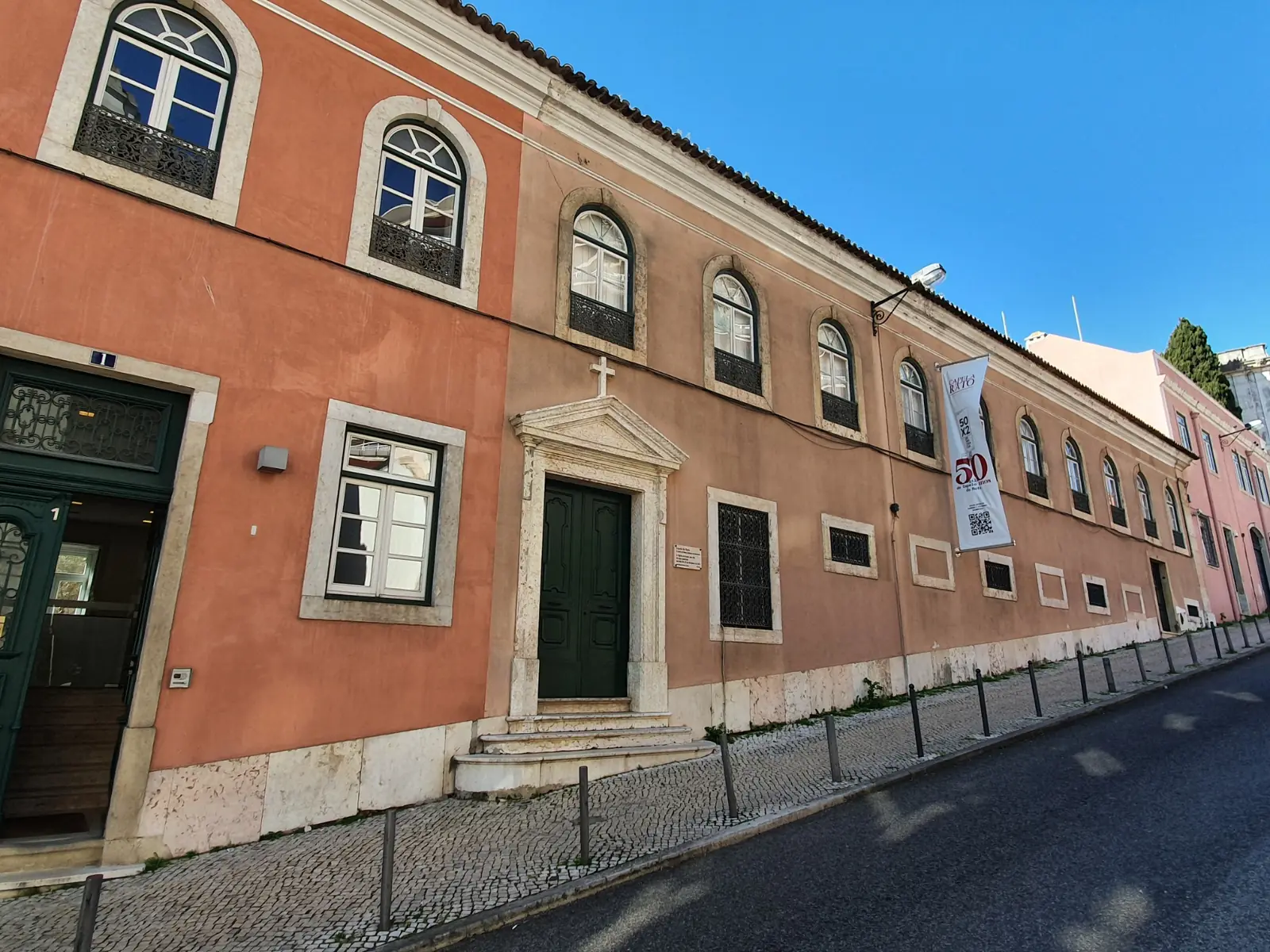
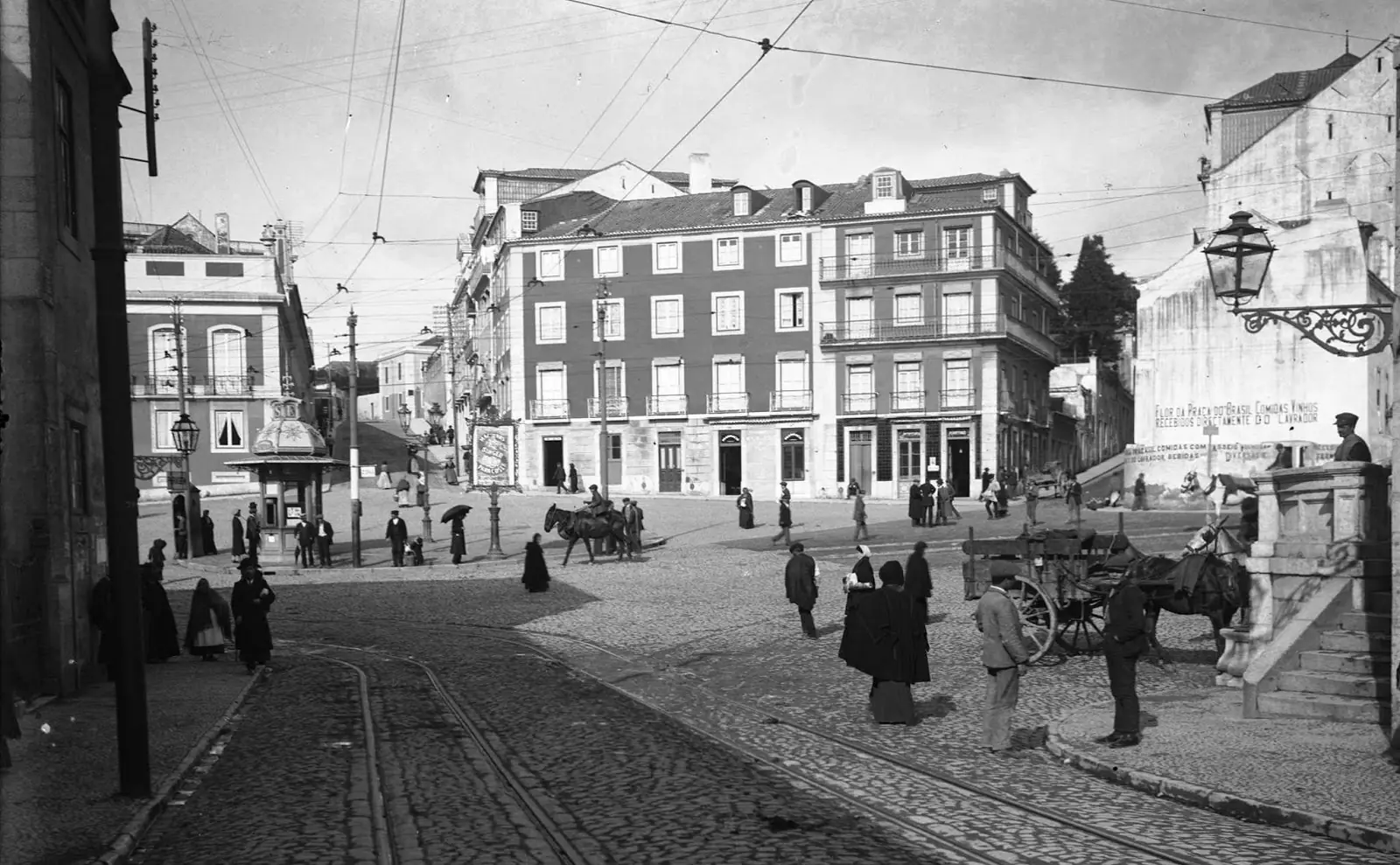
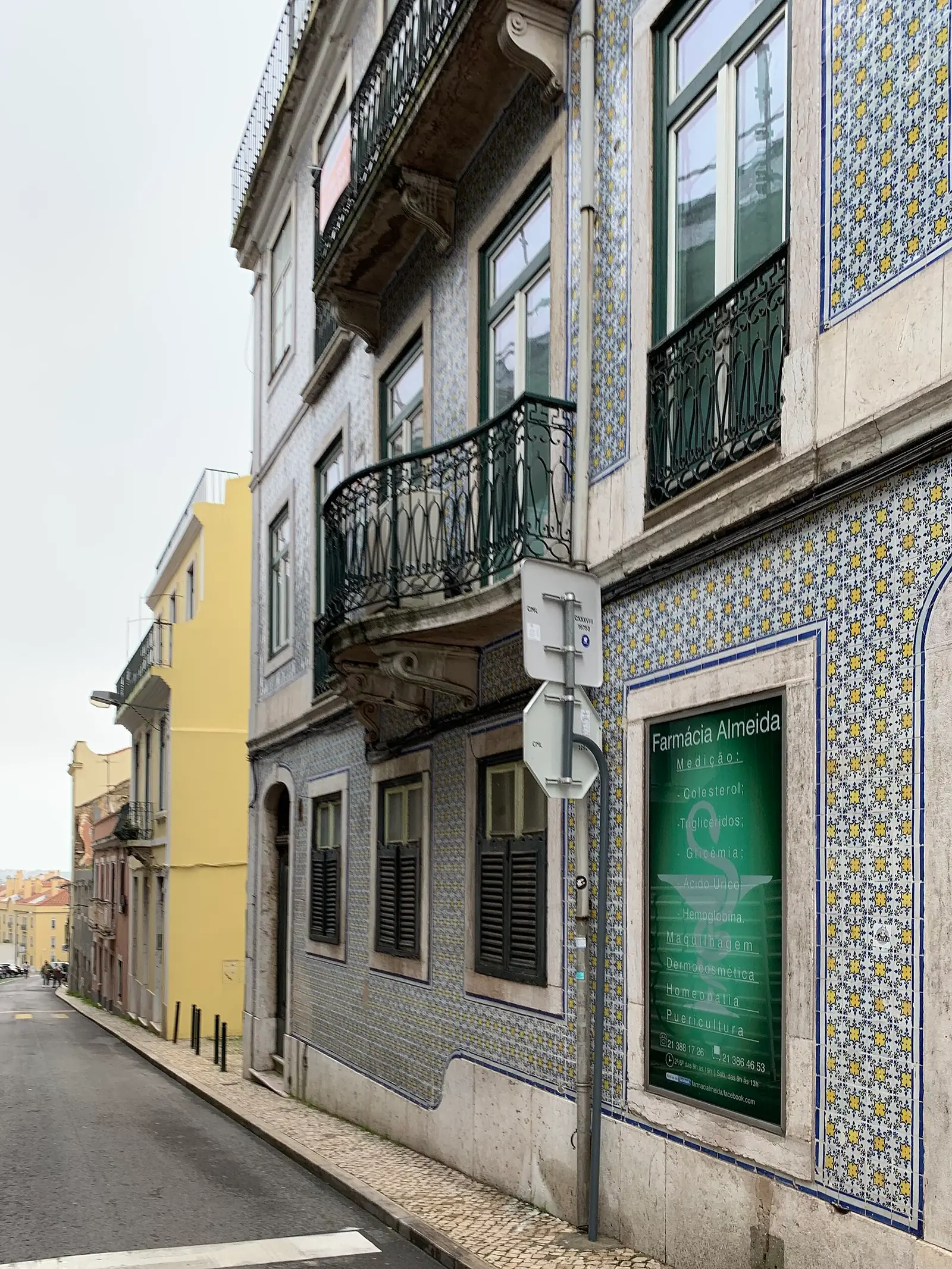
In Amoreiras, near Travessa da Fábrica das Sedas: the building of the former Silk Fabric Factory (Fábrica dos Tecidos de Seda), in 2024.JnpoJuwan, CC0 1.0
Santo António
Last headquarters of the CNMP, closed by the police in 1947
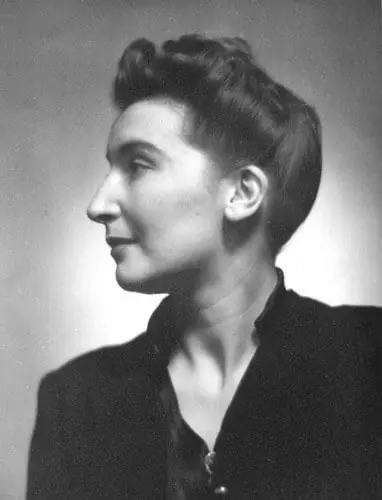
In 1946, the National Council of Portuguese Women, chaired by Maria Lamas, moved its headquarters to this lane in Amoreiras. On 28 June 1947, the police closed it “without prior notice”, putting an end to 33 years of the association.
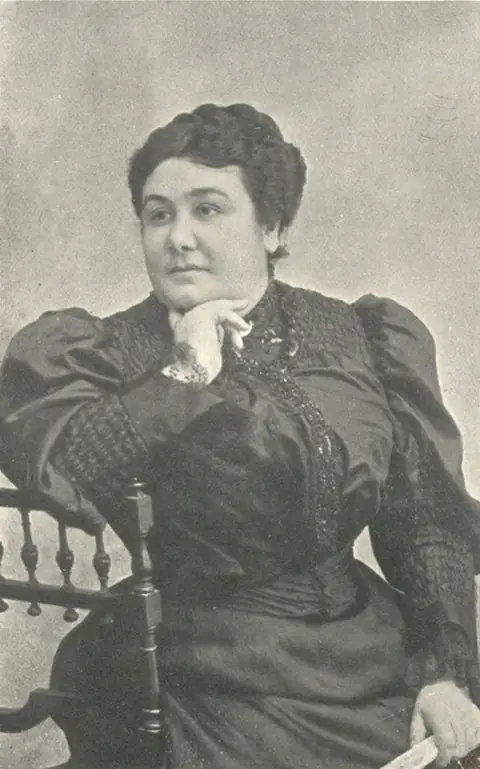
The National Council of Portuguese Women (CNMP), founded in 1914 by Adelaide Cabete, had its headquarters for 32 years on the first floor of no. 13 Praça dos Restauradores, in its founder’s surgery. In 1946 it moved to this lane, in Amoreiras.1Since 1945 its president had been the journalist and writer Maria Lamas: under her, many women joined and branches opened around the country, where illiteracy and the economic situation of women were discussed. According to research by Rosa de Lurdes Correia, it was the change of headquarters that gave the regime the opportunity to intervene.1
In 1946, the actress Manuela Porto was appointed vice-president of the Council,4 and the jurist Elina Guimarães was elected vice-president of the general assembly.56 From 4 to 12 January 1947, the Council organised the Exhibition of Books Written by Women at the National Society of Fine Arts: three thousand books by four hundred women authors from thirty countries.24 Newspapers linked to the regime, such as A Defesa and Novidades, accused the Council of being against the Estado Novo (“New State”) and of linking feminism with communism.1 Maria Lamas was forced to choose between editing the magazine Modas e Bordados, published by O Século, and the Council — and she chose the Council.4
On 28 June 1947, the police closed these headquarters “without prior notice”. So ended 33 years of the Council.12 Maria Lamas responded with a book: between 1948 and 1950 she published, in 24 instalments advertised as “How Portuguese women live and work” (Como vivem e trabalham as mulheres portuguesas), As Mulheres do Meu País (The Women of My Country) — a work which, for the researcher Teresa Joaquim, has its “original gesture” in this closure.2
Quem mandou fechar a sede: «forças policiais» (CIG), a Polícia Judiciária (Virgínia Baptista) ou o Governo de Salazar (Teresa Joaquim). A ordem de encerramento não foi encontrada.
O ponto no mapa marca o meio da travessa, não o prédio do n.º 1 (o número vem do processo do Governo Civil de Lisboa; a FCSH+Lisboa dá só a rua, que escreve «Travessa das Fábricas das Sedas»).
O processo do Governo Civil de Lisboa (1914–1947) dá como sede do Conselho a Rua da Ilha Terceira, n.º 44, rés-do-chão, e a Travessa da Fábrica das Sedas como sede «anteriormente»: falta saber quando houve essa mudança e se a última sede fechada pela polícia, a 28 de junho de 1947, foi a das Amoreiras (como dizem a FCSH+Lisboa e Teresa Joaquim) ou a da Rua da Ilha Terceira. Só a leitura do processo (caixa 734) o resolve.
Do you know more, or do you have a document? Tell us.
6Elina Guimarães. Wikipédia (português) — consulted on 2 October 2026
7Isabel Lousada, Adelaide Cabete (1867–1935). Comissão para a Cidadania e Igualdade de Género (coleção «Fio de Ariana»); Repositório da Universidade NOVA de Lisboa (RUN), 2010 — consulted on 4 October 2026Dá o consultório de Adelaide Cabete na «Praça dos Restauradores, n.º 13, 2.º», morada que era também a da sede da Liga Portuguesa Abolicionista, e a da projetada Associação de Mulheres Universitárias («Praça dos Restauradores, 13, 2.º», segundo O Povo).
8Conselho Nacional das Mulheres Portuguesas (processo de associação do Governo Civil de Lisboa, PT/SGMAI/GCLSB/H-B/001/13330). Secretaria-Geral do Ministério da Administração Interna, arquivo do Governo Civil de Lisboa (Archeevo) — consulted on 4 October 2026Processo de 1914-04-24 a 1947-11-20 (93 f., caixa 734, cota antiga «1487/A. Extintas»). A descrição dá a data da constituição, 24 de abril de 1914; a sede na Rua da Ilha Terceira, n.º 44, rés-do-chão, e, «anteriormente», na Travessa da Fábrica das Sedas, n.º 1.
Coordinates: OpenStreetMap (Nominatim), consultado a 2 de outubro de 2026.