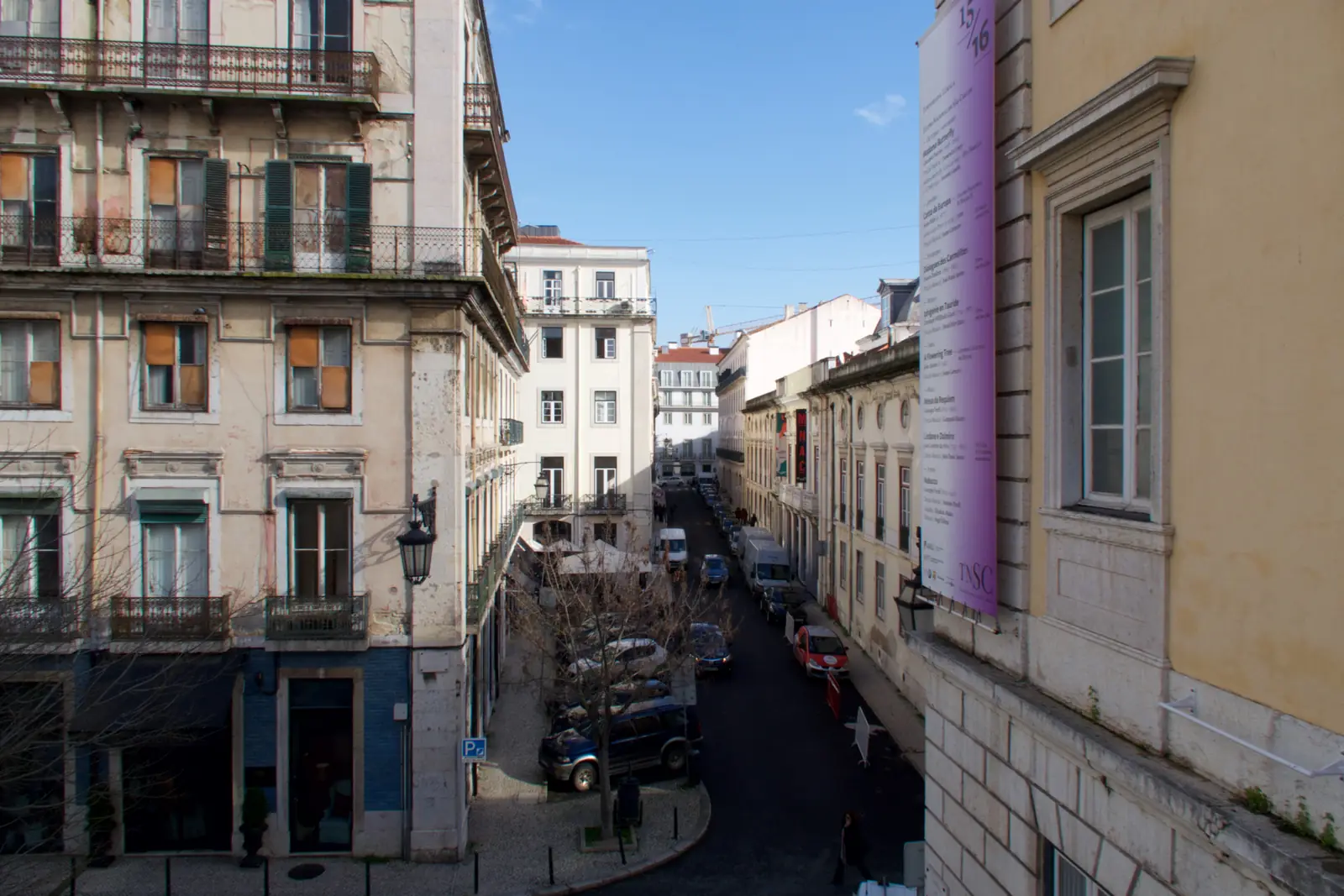
Rua do Arsenal, next to the City Hall (Paços do Concelho), in 2017.Sam, CC BY 2.0
Santa Maria Maior / Misericórdia
Rua do Arsenal and Avenida da Ribeira das Naus
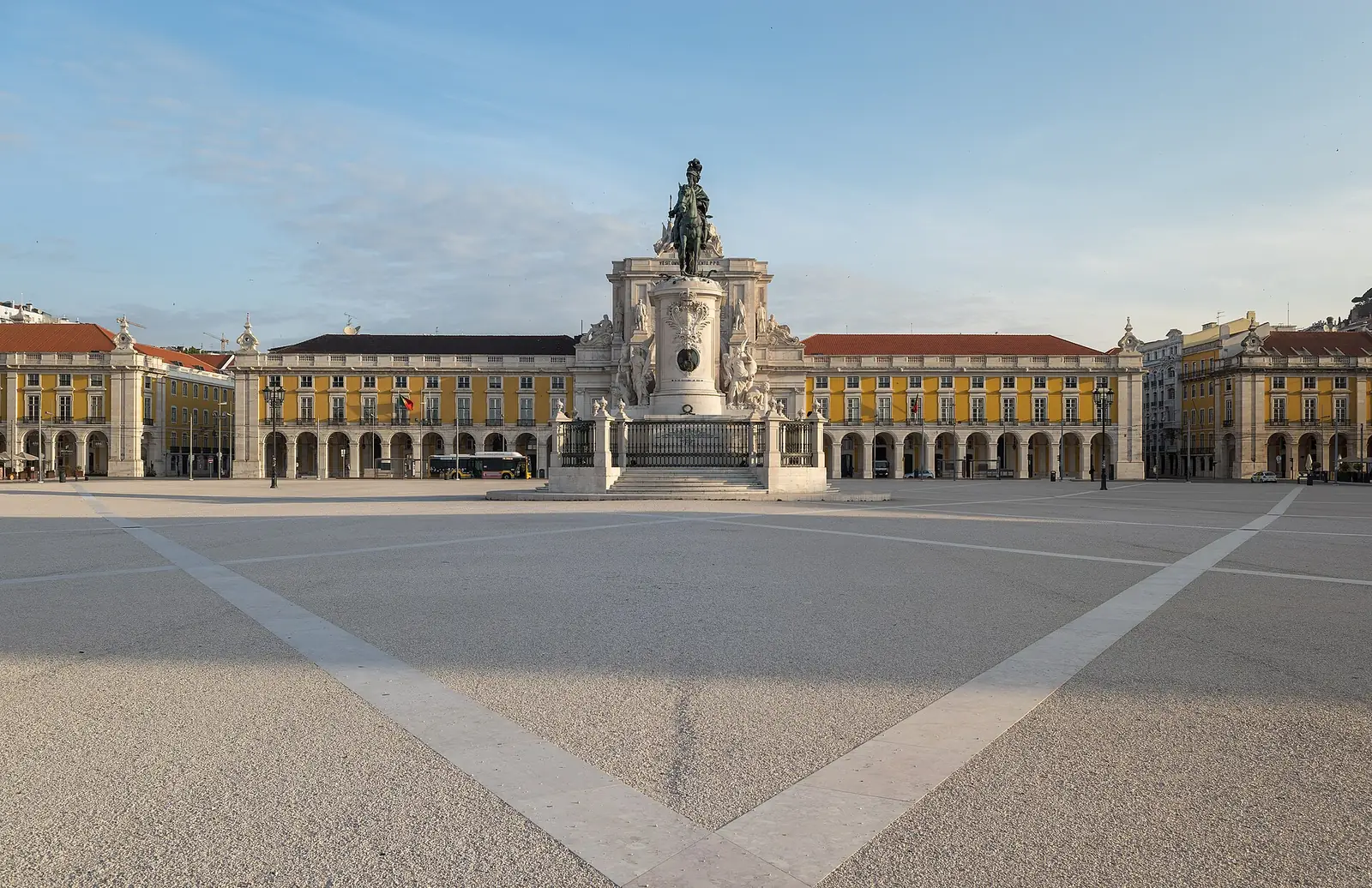
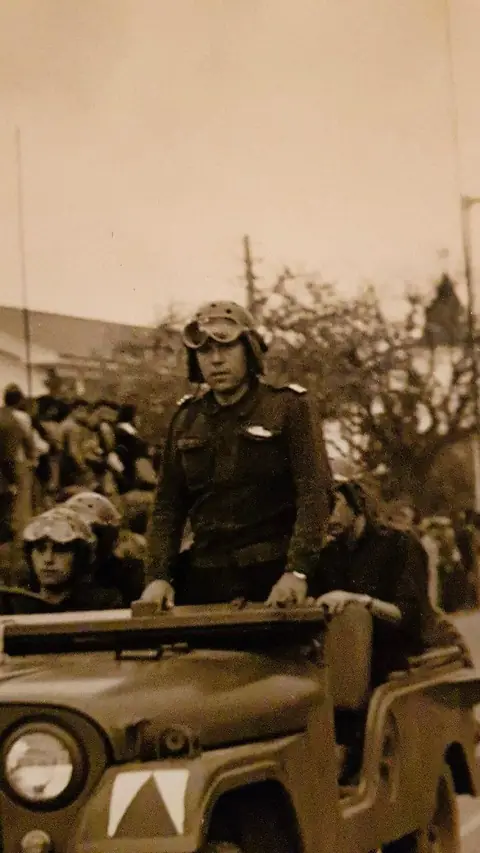
On the Ribeira das Naus and Rua do Arsenal, on the morning of 25 April 1974, the soldiers of the forces loyal to the regime refused Brigadier Junqueira dos Reis’s orders to fire on Salgueiro Maia. “That was where 25 April was won” (Foi ali que se ganhou o 25 de Abril), Maia would say.
On the morning of 25 April 1974, the forces of the Armed Forces Movement (MFA) were in the Terreiro do Paço, under the command of Captain Salgueiro Maia. From the command post it had set up at Lanceiros 2, the regime launched its counter-offensive: five M47 tanks and Panhard armoured cars of the 7th Cavalry Regiment left Ajuda, with Brigadier Junqueira dos Reis, Colonel Romeiras Júnior, Lieutenant Colonel Ferrand de Almeida and Major Pato Anselmo.3 At around 07:00, on Avenida da Ribeira das Naus, Ferrand de Almeida could not get his men to obey him and surrendered to Maia, beneath the windows of the Army Ministry.34
At 09:35 the brigadier arrived, the second-in-command of the Lisbon Military Region.4 Two M47s commanded by Officer Cadet Fernando Sottomayor advanced along the Ribeira das Naus, with riflemen from the 1st Infantry Regiment and a small force from Lanceiros 2. Salgueiro Maia walked towards them with a white handkerchief. The brigadier ordered Sottomayor to open fire on Maia; the cadet refused and was placed under arrest. The same order was given to the tank gunners, who also refused.4 Major Pato Anselmo surrendered, the M47 turrets swung round 180 degrees and the tanks went over to the Movement’s side.3 Maia would later say that, in the photograph in which he is biting his lip, he was holding back tears: “That was where 25 April was won” (Foi ali que se ganhou o 25 de Abril).4
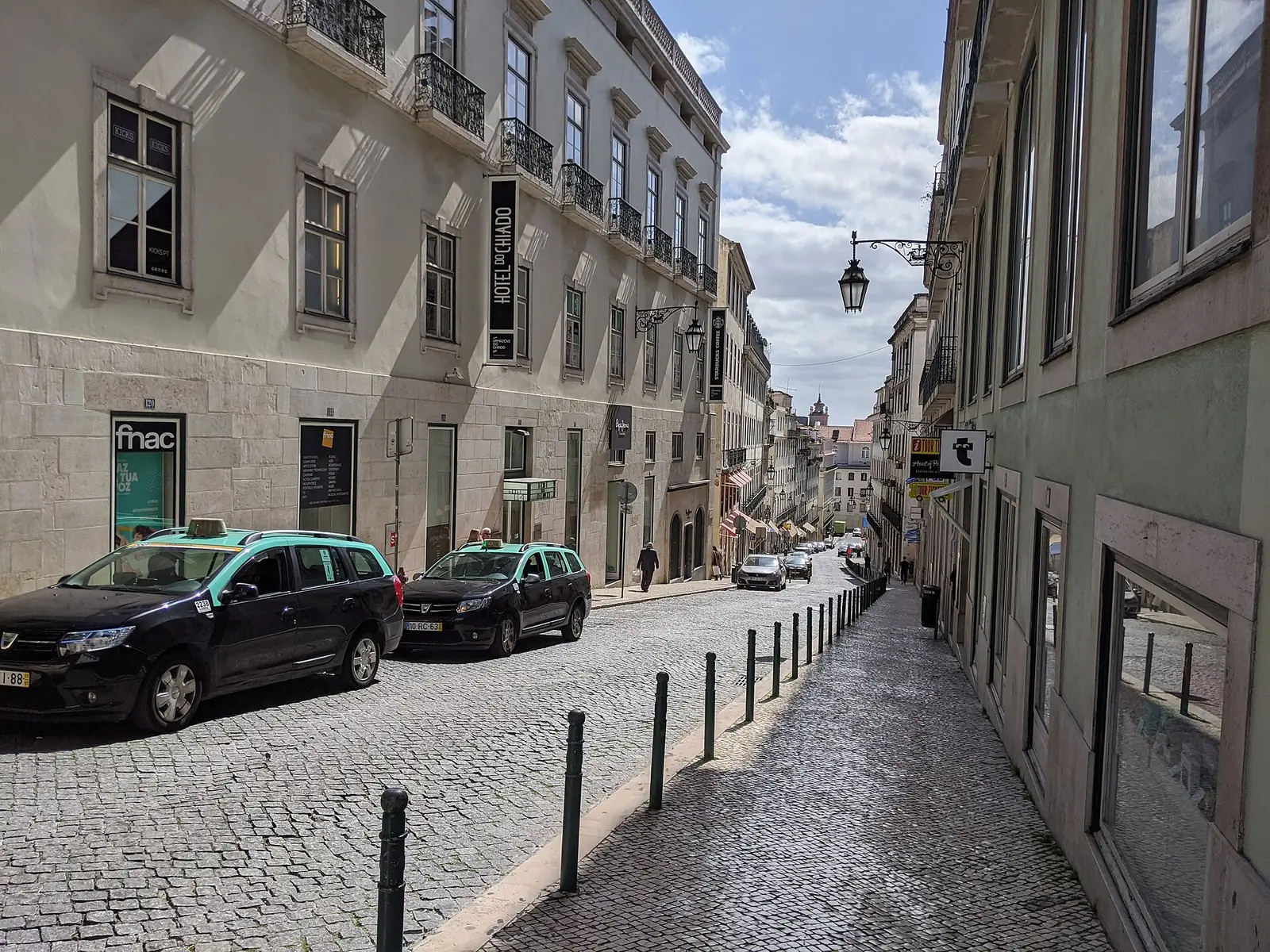
Junqueira dos Reis fell back to Rua do Arsenal, where the rest of the column was, with Colonel Romeiras.3 Lieutenants Alfredo Assunção and Santos Silva, of the Cavalry Practical School, and Sergeant Nunes, of the 7th Cavalry Regiment, tried to negotiate with him, to no avail. The brigadier again ordered them to fire, and again no one fired; exasperated, he punched Lieutenant Assunção three times, and Assunção did not hit back: he saluted him and withdrew.4 Colonel Romeiras placed himself between the weapons and the lieutenant, calling for calm.3
In the afternoon, the brigadier still tried to surround Maia’s column in Largo do Carmo, from Largo de Camões. He left ten minutes after the 3rd Cavalry Regiment, from Estremoz, arrived, and what was left of his forces joined the Movement.3
The second chapter of the film made from the photographs Alfredo Cunha took in Lisbon on 25 April 1974, with music by Rodrigo Leão, directed by Miguel Brugo, and published by the Commission on 14 February 2024. It follows the book of the same name, in which this part has a text by Adelino Gomes and pictures of the Ribeira das Naus, Rua do Arsenal and Largo do Carmo.
Original page Licença padrão do YouTube — embed permitido pelo canal oficial da Comissão Comemorativa 50 Anos 25 de Abril
Comissão Comemorativa 50 Anos 25 de Abril, on YouTube. The player only connects to that site when you press “Watch”.
Notes on the sources3
Fernando Sottomayor’s rank: officer cadet (25 April Association, Commemorative Commission for the 50th Anniversary of 25 April) or conscript second lieutenant (Jofre Alves’s chronology; Toponímia de Lisboa, 2019; Corporal Alves Costa, the tank’s gunner, to the Correio da Manhã, 2014). The military record (Arquivo Histórico Militar or the Ordem do Exército) is missing, as is the article “A cavalaria em 25 de abril de 1974” in the Revista Portuguesa de História Militar, which would not open.
The times: the 25 April Association places the confrontations between 06:30 or 07:00 and 10:30, and the assault on Lieutenant Assunção at 10:45, as does Jofre Alves; the Commemorative Commission puts the confrontation on Rua do Arsenal at 10:30.
Whether the brigadier fired two shots into the air before falling back to Rua do Arsenal: only Jofre Alves’s chronology says so.
Do you know more, or do you have a document? Tell us.



.jpg)