Women of the resistance
Luzia Maria Martins
1927–2000
A stage director and playwright, called the mother of Portuguese independent theatre. She founded the Teatro Estúdio de Lisboa (Lisbon Studio Theatre) and confronted the censors; it was in her chronicle “Lisboa 72-74”, in 1974, that “Somos Livres” (We Are Free), by Ermelinda Duarte, was heard for the first time.
- Born
- 27 May 1927, Lisbon
- Died
- 13 September 2000, Lisbon
Biography
She was born in Lisbon on 27 May 1927, the daughter of the set designer Reinaldo Martins, and set foot on the stage of the Politeama at the age of 6.2 She studied at the Liceu Maria Amália Vaz de Carvalho, worked in radio and journalism and, in 1953, left for London, where she studied theatre and worked at the BBC.32
Back in Lisbon, in 1964 she founded, with Helena Félix and Valentina Trigo de Sousa, the Teatro Estúdio de Lisboa (Lisbon Studio Theatre, TEL), the city’s first independent theatre company, which first performed in the municipal pavilion of the Feira Popular funfair that in 1972 became the Vasco Santana Theatre.235 Her play about Bocage, from 1967, was banned by the Censorship Commission shortly after it opened, and in 1968 she had to answer in court for the reading, which the censors had banned, of a message by Helene Weigel on World Theatre Day.23
In 1974 she wrote Lisboa 72-74, scenes of everyday life in which “Somos Livres” (We Are Free), with words and music by the actress Ermelinda Duarte, was heard for the first time.23 The TEL closed in 1991; she died in Lisbon on 13 September 2000, and since 2001 a square (largo) in Quinta dos Barros, in São Domingos de Benfica, has borne her name.23
Places


People
They crossed paths with her
Ermelinda Duarte
b. 1946 · actress
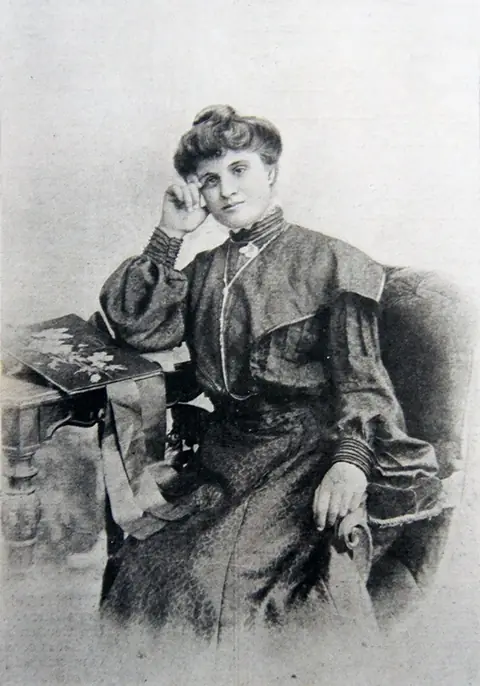
Domitila de Carvalho
1871–1966 · first woman to attend the University of Coimbra
Helena Félix
1920–1991 · actress
Maria Guardiola
1895–1987 · Mathematics teacher
Maria Teresa Horta
1937–2025 · poet
Teresa Paula Brito
1944–2003 · singer

Videos
Ermelinda Duarte’s single with “Somos Livres” (We Are Free), published by the Valentim de Carvalho label, which dates it to 1975: two songs of her own, with arrangements by José Cid. The song had been born in 1974 in the chronicle “Lisboa 72-74”, by the Teatro Estúdio de Lisboa.
Original page Licença padrão do YouTube — embed permitido pelo canal oficial da editora Valentim de Carvalho
Edições Valentim de Carvalho, on YouTube. The player only connects to that site when you press “Watch”.
Sources5
- 1Programa da peça «Bocage – Alma Sem Mundo» / Teatro Estúdio de Lisboa / Teatro Vasco Santana / 1967. Museu Nacional do Teatro e da Dança (MatrizNet / Raiz), 1967 — consulted on 4 October 2026Programa do TEL de 1967, com texto e direção de Luzia Maria Martins e Vasco Lima Couto no papel de Bocage.
- 2A mãe do teatro independente num Largo da Quinta dos Barros. Câmara Municipal de Lisboa — Toponímia de Lisboa, 2013 — consulted on 3 October 2026
- 3Marta Brites Rosa, Luzia Maria Martins (Lisbon, 27/05/1927 – Lisbon, 13/09/2000). DramaOnline — Dramaturgia portuguesa dos séculos XX e XXI (dir. Sebastiana Fadda); versão revista da entrada do Centro Virtual Camões — consulted on 3 October 2026
- 4Canção «Somos livres» (Noticiário Nacional, janeiro de 1975). RTP Arquivos — consulted on 3 October 2026
- 5José Leite, Teatro Vasco Santana. Restos de Colecção (blogue), 2014 — consulted on 4 October 2026Com fotografias do Arquivo Municipal de Lisboa e da Hemeroteca Digital e uma lista das peças em cena no teatro, de 1963 a 1989.