
Women of the resistance
Maria Antónia Palla
b. 1933
Maria Antónia de Assis dos Santos Palla e Carmo
A pioneering journalist, the first woman in the newsroom of the “O Século” company. With Antónia de Sousa she made the series “Nome Mulher” (Name: Woman, 1974–1976) for RTP, whose report “O aborto não é um crime” (Abortion Is Not a Crime) took her to court. She was acquitted.
- Born
- 1933
Biography
She was born in 1933.1 In 1968 she joined the newsroom of the Diário Popular with Margarida Silva Dias and Maria Armanda Passos, the first group of women journalists to be hired there through an open competition.1 Dismissed for insisting on writing a review of May ’68 in Paris, she moved to O Século Ilustrado and was the first woman in the newsroom of the O Século company. Before 25 April she rose to managing editor of the magazine.1
Between 1974 and 1976 she made, with Antónia de Sousa, the fortnightly RTP programme Nome Mulher (Name: Woman), about women’s problems and struggles: divorce, single mothers, cohabitation.12 On 4 February 1976 the report “O aborto não é um crime” (Abortion Is Not a Crime) went on the air.2 The programme was suspended, and the management of the Alfredo da Costa Maternity Hospital filed a complaint against her for the “illegal practice of medicine”.1 She was tried in 1979 and acquitted.231
On 13 January 1975 she stayed to the end of the Women’s Liberation Movement demonstration in Parque Eduardo VII, although she never belonged to the movement. Years later she dismissed the legend that bras had been burnt there: “It’s all lies.”3 She was the first woman vice-president of the board of the Journalists’ Union, in 1979–1980, and in 1985 she became president of the League for Women’s Rights. In 2013 she was among the women who founded the Ana de Castro Osório Specialist Library.1
Places


Dates
Walks
People
They crossed paths with her
Madalena Barbosa
1942–2008 · feminist
Maria Teresa Horta
1937–2025 · poet
Maria Antónia Fiadeiro
1942–2023 · journalist
Maria Isabel Barreno
1939–2016 · writer
Maria Lamas
1893–1983 · journalist
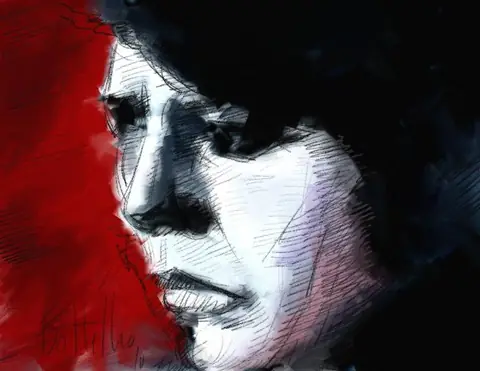
Natália Correia
1923–1993 · poet


Videos
In other archives
These can only be viewed on each archive’s own website.
- RTP Arquivos · Video · broadcast on 31 August 1974 · 50 minMaria LamasA portrait of Maria Lamas in the series “Nome Mulher” (Name: Woman), by Maria Antónia Palla and Antónia de Sousa, with interviews in Torres Novas and in the newsroom of “Modas e Bordados” (Fashions and Embroidery) at “O Século”, and footage of Caxias prison. She talks about presiding over the National Council of Portuguese Women and its closure, about prison and about what 25 April meant.Open in the archive
- RTP Arquivos · Video · broadcast on 27 September 1974 · 22 minA Mulher e o Fascismo: Mulheres que Lutaram – Parte IA programme by Antónia de Sousa and Maria Antónia Palla in which Maria Barroso, Margarida Tengarrinha and Isabel do Carmo tell how they came to the struggle against the dictatorship. Tengarrinha talks about life underground and the murder of José Dias Coelho; Isabel do Carmo, in Barreiro, about the strikes and workers’ struggles that shaped her.Open in the archive
- RTP Arquivos · Video · broadcast on 27 September 1974 · 19 minA Mulher e o Fascismo: Mulheres que Lutaram – Parte IIIn the second part, Margarida Tengarrinha speaks by the plaque that remembers José Dias Coelho, on the former Rua da Creche, and near Caxias prison; Maria Barroso at Santa Apolónia, and Isabel do Carmo in the Rossio. All three talk about 25 April and the road to democracy.Open in the archive
- RTP Arquivos · Video · broadcast on 5 October 1974 · 43 minLiberdade é Nome de MulherA programme in the series “Nome Mulher” (Name: Woman) on the role of women on 28 September 1974: barricades and cars searched at the entrances to Lisbon, members of the public and soldiers interviewed, the outside of the Palácio de Belém. It ends with Isabel Vilhena, the widow of Captain Vilhena.Open in the archive
Show 7 more
- RTP Arquivos · Video · broadcast on 11 January 1975 · 48 minAno Novo, Vida NovaA programme in the series “Nome Mulher” (Name: Woman) on women’s rights after 25 April, with reports from the fields, the markets and the street. Maria Teresa Horta talks about the acquittal of the “Three Marias” and the women’s liberation movement, and Madalena Barbosa, a founder of the Women’s Liberation Movement (MLM), about women’s problems at home and at work.Open in the archive
- RTP Arquivos · Video · broadcast on 15 April 1975 · 17 minO Voto das Mulheres – Parte IIn the series “Nome Mulher” (Name: Woman), Elina Guimarães, a former leader of the National Council of Portuguese Women, tells the history of the suffragist movement in Portugal. The programme ends with the bust of the Republic and old photographs of women at demonstrations.Open in the archive
- RTP Arquivos · Video · broadcast on 20 September 1975 · 45 minSe as Mulheres MandassemMaria Antónia Palla interviews Maria de Lourdes Pintasilgo about being a woman among men in the provisional governments and about discrimination against women at work and in power. Also speaking are Maria João Seixas and other women from the Commission on the Status of Women, the doctor Lígia Monteiro, and women in the street and in the countryside.Open in the archive
- RTP Arquivos · Video · broadcast on 4 February 1976 · 23 minO Aborto não é um Crime – Parte IThe first part of Maria Antónia Palla’s programme on clandestine abortion, in the series “Nome Mulher” (Name: Woman): a group of women in Lisbon gives contraception consultations and supports women who have abortions. At one session, a pregnant woman asks for help, and the difference between abortion by “scraping” and the suction method is explained.Open in the archive
- RTP Arquivos · Video · broadcast on 4 February 1976 · 24 minO Aborto não é um Crime – Parte IIIn the second part, the group carries out a suction abortion in a clinic and discusses women’s right to abortion, the law and contraception. It ends with a family-planning session at the Odivelas Mother and Child Dispensary.Open in the archive
- RTP Arquivos · Video · broadcast on 16 May 1979 · 1 minInício do julgamento de Maria Antónia PallaAt the Boa-Hora court, the trial begins of Maria Antónia Palla, charged with offending public decency and incitement to crime over her 1976 programme “O Aborto não é um Crime” (Abortion Is Not a Crime). In her statements, she argues for the legalisation of abortion to put an end to the business of clandestine abortion.Open in the archive
- RTP Arquivos · Video · broadcast on 17 December 1980 · 26 minAngelina Vidal e a Mulher no JornalismoIn the series “Mulher a Mulher” (Woman to Woman), Maria Isabel Barreno introduces Angelina Vidal, with the façade of A Voz do Operário and the Rua Angelina Vidal street sign. Then, in the newsroom of the magazine “Mulheres” (Women), Maria Teresa Horta and Helena Neves talk about journalism made by women, and Maria Antónia Palla about the obstacles women journalists overcame.Open in the archive
Notes on the sources2
- Em que tribunal de Lisboa foi julgada, em 1979.
- Se a redação de O Século Ilustrado ficava no edifício do jornal, na Rua de O Século.
Do you know more, or do you have a document? Tell us.
Sources3
- 1Mulheres pela Igualdade (biografias). CIG – Comissão para a Cidadania e a Igualdade de Género — consulted on 2 October 2026
- 2Nome Mulher. Wikipédia (inglês) — consulted on 2 October 2026
- 3A manifestação feminista que não chegou a acontecer, 45 anos depois (Rafaela Cortez, 26/4/2020). Comunidade Cultura e Arte — consulted on 2 October 2026