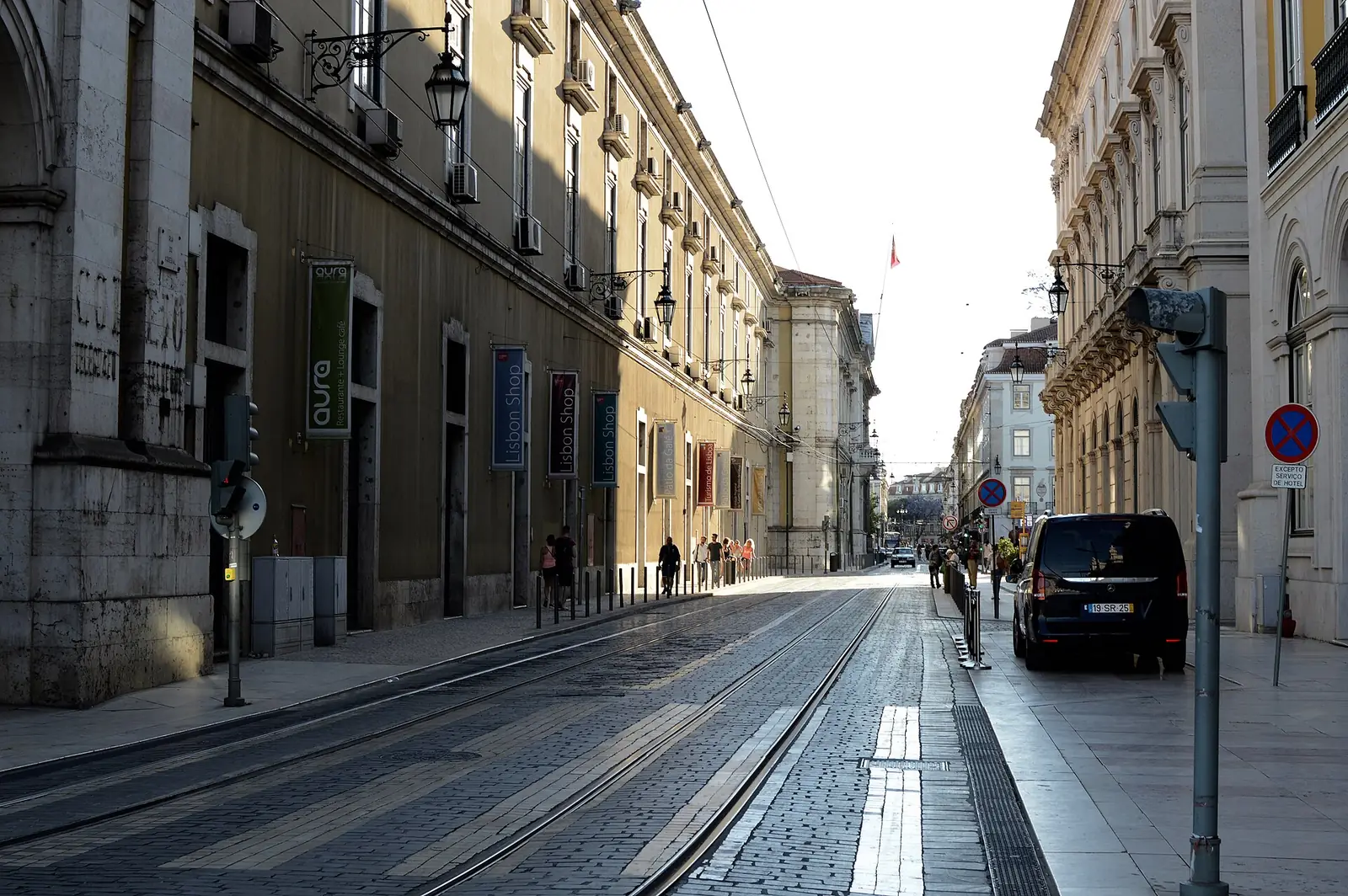
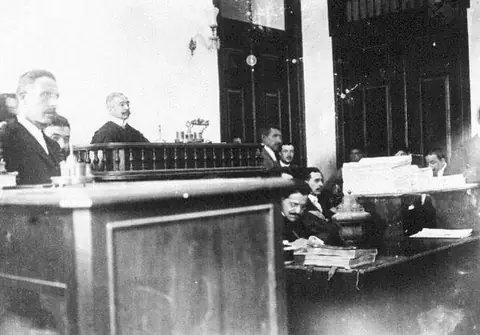
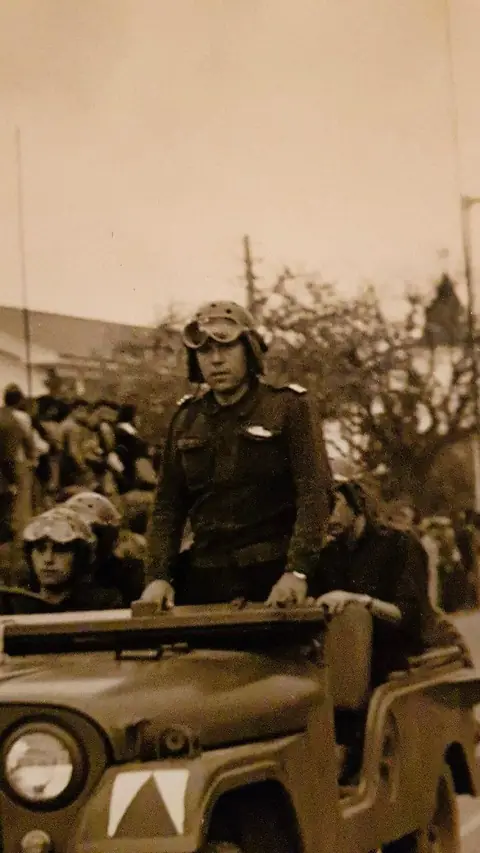
The square of the ministries, the centre of power of the Estado Novo (“New State”). At dawn on 25 April 1974 Captain Salgueiro Maia’s column from Santarém occupied it; the forces sent against it went over one after another to the Movement’s side, and the ministers escaped through a wall knocked open with pickaxes.
Today: Praça do ComércioThere is a marker at the siteApproximate location
Under the dictatorship, the square of the ministries was also a place of protest. In May 1958, on Humberto Delgado’s return to Lisbon after his day in Porto, a crowd waited for the general all the way from Santa Apolónia to here; the PIDE diverted his motorcade and the GNR chased and beat his supporters across the Terreiro do Paço, the Rossio and the Restauradores.8 On May Day (1 May) 1962, at the height of the academic crisis, workers and students demonstrated in the Baixa and there were clashes in the Terreiro do Paço, the Carmo, the Rossio, Martim Moniz and Alcântara.9
On 25 April 1974, this square was the main centre of the regime’s political power. The Armed Forces Movement included it among the objectives to be occupied because it was a symbol of the power to be overthrown and because the Army and Navy ministries were here, from which the regime could interfere in the operations.1 The column from the Cavalry Practical School had left Santarém at 03:30 — ten armoured vehicles, twelve transport vehicles, two ambulances and a jeep — with the mission of controlling access to the Bank of Portugal, Rádio Marconi and the Terreiro do Paço.4 There were about 220 soldiers, commanded by Captain Salgueiro Maia, Captain Mário Tavares de Almeida and Lieutenants Alfredo Assunção and Rui Santos Silva.1 At around 06:00, Maia reported to the Command Post: “I report that we have occupied Toledo and that we control Brussels and Vienna” (Informo que ocupamos Toledo e que controlamos Bruxelas e Viena) — the Terreiro do Paço, the Bank of Portugal and Rádio Marconi.5
The PSP surrounding the area did not interfere and helped to keep civilians away.4 The forces sent by the regime went over one after another to the Movement’s side: the 7th Cavalry Regiment’s platoon of Chaimite armoured cars under conscript Second Lieutenant David e Silva, the two Military Police platoons guarding the Army Ministry and, later, the Panhard armoured car force of Lieutenant Colonel Ferrand de Almeida, who could not get his men to obey him and was arrested and disarmed by Maia.56
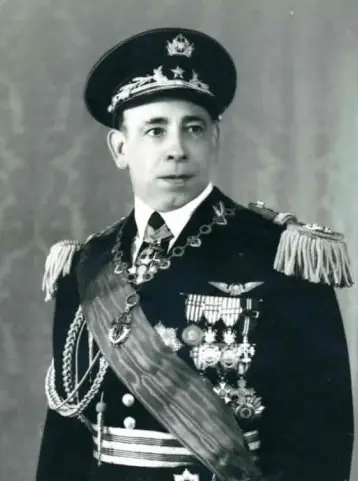
From the windows of the Army Ministry the occupied square could be seen. At around 08:30, the minister, General Andrade e Silva, had a brick wall that led into the library of the Navy Ministry knocked through with pickaxes. Before 10:00 the Ministers of Defence, of Information and Tourism and of the Navy, the Chief of the General Staff of the Armed Forces, the military governor of Lisbon and Admiral Henrique Tenreiro, among others, escaped that way; the command post of the forces loyal to the regime was set up at the Lanceiros 2 Regiment, on Calçada da Ajuda.5
On the river, at 07:30, the frigate Almirante Gago Coutinho was ordered to take up position opposite the Terreiro do Paço and, later, to open fire on the armoured vehicles. The order was not carried out.5 Who stopped it is still debated: some say it was the executive officer, Lieutenant Fernando Caldeira Ferreira dos Santos, with other officers; the Navy’s 1976 inquiry gave the decision to the commander, Seixas Louçã.1213 The MFA artillery positioned near the Cristo-Rei had orders to sink the frigate if it fired; at midday, the ship withdrew to the Mar da Palha.6 At 09:35 the force of Brigadier Junqueira dos Reis arrived along the Ribeira das Naus; there, Officer Cadet Fernando Sottomayor and the tank gunners refused to fire on Salgueiro Maia, who was advancing with a white handkerchief.5 Close to midday, with thousands of people in the Baixa, Maia left here with a column for Largo do Carmo.4
On 16 November 1975, four days after the siege of the Constituent Assembly at São Bento, the square filled with a demonstration against the government. In the Constituent Assembly, the communist deputy Octávio Pato called it “a milestone in the struggle for the democratic revolution”.7
Colonel Rodrigo Sousa e Castro talks about Salgueiro Maia’s route “from Terreiro do Paço to Largo do Carmo” and about the PIDE/DGS, from the taking of its headquarters to the abolition of the political police. It is the second session of the “Roteiro Didáctico e Pedagógico” (Teaching Itinerary), a course by the 25 April Association published on the association’s channel in 2021.
Original page Licença padrão do YouTube — embed permitido pelo canal oficial da Associação 25 de Abril
Associação 25 de Abril, on YouTube. The player only connects to that site when you press “Watch”.
In other archives
These can only be viewed on each archive’s own website.
Who stopped the frigate from firing: the 25 April Association attributes it to the executive officer, Lieutenant Fernando Luís Caldeira Ferreira dos Santos (the full name is in the Seixas Louçã papers, at the 25 April Documentation Centre; the Association calls him “Caldeira dos Santos”, Jofre Alves “Ferreira dos Santos”); the Commemorative Commission speaks of the crew, which was “with the Movement”; the Navy’s 1976 report, by Admiral Fernando Santos Silva, gives the decision to the commander, Seixas Louçã. The report and the officers’ statements (Anais do Clube Militar Naval, 1994) were not read directly.
Where in the square the “Places of April” plaque is.
Do you know more, or do you have a document? Tell us.
12Espólio de António Seixas Louçã. Centro de Documentação 25 de Abril (Universidade de Coimbra) — consulted on 4 October 2026Dossiês do comandante da fragata «Almirante Gago Coutinho» a 25 de Abril de 1974, com documentos do imediato, o primeiro-tenente Fernando Luís Caldeira Ferreira dos Santos, e a resposta do comandante à versão dele.
13O veredicto da Marinha sobre a fragata «Gago Coutinho» relido em 2014 (I). RTP Notícias, 2014 — consulted on 4 October 2026Relê o relatório de 1976 do almirante Fernando Santos Silva, que atribui ao comandante Seixas Louçã, e não ao imediato, a decisão de não fazer fogo; o autor declara ser filho do comandante.
Coordinates: OpenStreetMap (Nominatim), consultado a 2 de outubro de 2026.