
Women of the resistance
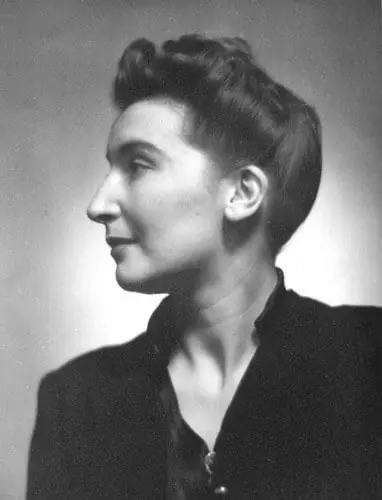
Virgínia Moura
1915–1998
Virgínia Faria de Moura
The first woman recognised as a civil engineer in Portugal, and a communist activist, she was arrested sixteen times by the PIDE. In 1949 she was held in Caxias at the same time as Maria Lamas.
- Born
- 19 July 1915, São Martinho do Conde (Guimarães)
- Died
- 1998
Biography
She was born on 19 July 1915 in São Martinho do Conde, in the municipality of Guimarães.4 She was the first woman recognised as a civil engineer in Portugal. At 18 she joined the Portuguese Communist Party (PCP) and, in the same year, the Portuguese section of International Red Aid, which supported political prisoners in Portugal and Spain. Her opposition to the regime meant she was never allowed a public-sector job.1
At the end of 1945 she joined the Porto District Committee of the Movement of Democratic Unity, and while underground she was a member of the PCP Central Committee. In the 1940s and 1950s, under the pseudonym Maria Selma, she contributed to newspapers and magazines and organised lectures.1 She was active in the Portuguese Women’s Association for Peace, alongside Isabel Aboim Inglez, Manuela Porto and Elina Guimarães.3 She was at the rally in support of Norton de Matos’s candidacy and supported that of Humberto Delgado, the 1962 academic crisis and the congresses of the democratic opposition in Aveiro, in 1969 and 1973.1
She was arrested sixteen times by the PIDE, prosecuted nine times and convicted three times, and was beaten by the police in public on several occasions.1 Her first arrest was on 17 December 1949, and she was then held in Caxias at the same time as Maria Lamas and others.24 In 1951 she was tried for “treason against the Fatherland”, for having signed a declaration demanding that Salazar negotiate with the government of India over Goa, Daman and Diu.1
After 25 April she was made a Grand Officer of the Order of Liberty and received the Medal of Honour of Porto City Council. She published Mulher de Abril: álbum de memórias (Woman of April: an album of memories). She died in 1998.1
Places

Dates
People
They crossed paths with her
Maria Lamas
1893–1983 · journalist
Maria Alda Nogueira
1923–1998 · teacher
Aida Magro
1918–2011 · chemical engineer
Cesina Bermudes
1908–2001 · obstetrician
Elina Guimarães
1904–1991 · jurist and writer
Manuela Porto
1908–1950 · actress


Videos
In other archives
These can only be viewed on each archive’s own website.
Notes on the sources2
- The day and place of death: 19 April 1998, in Porto, according to Wikipedia, which cites the University of Porto’s former students page and the “Avante!” of 23 April 1998 (neither of them opened); the CIG gives only the year.
- The pseudonym: “Maria Selma”, according to the CIG; “Maria Salema”, according to Memória Comum.
Do you know more, or do you have a document? Tell us.
Sources4
- 1Mulheres pela Igualdade (biografias). CIG – Comissão para a Cidadania e a Igualdade de Género — consulted on 2 October 2026
- 2Maria Lamas. MDM – Movimento Democrático de Mulheres — consulted on 2 October 2026
- 3Maria Isabel Aboim Inglês. Wikipédia (português) — consulted on 2 October 2026
- 4Virgínia de Faria Moura. Memorial aos Presos e Perseguidos Políticos (Memória Comum) — consulted on 4 October 2026Nascida em São Martinho do Conde, Guimarães, a 19 de julho de 1915; primeira prisão a 17 de dezembro de 1949, depois mais 15; assinava «Maria Salema».