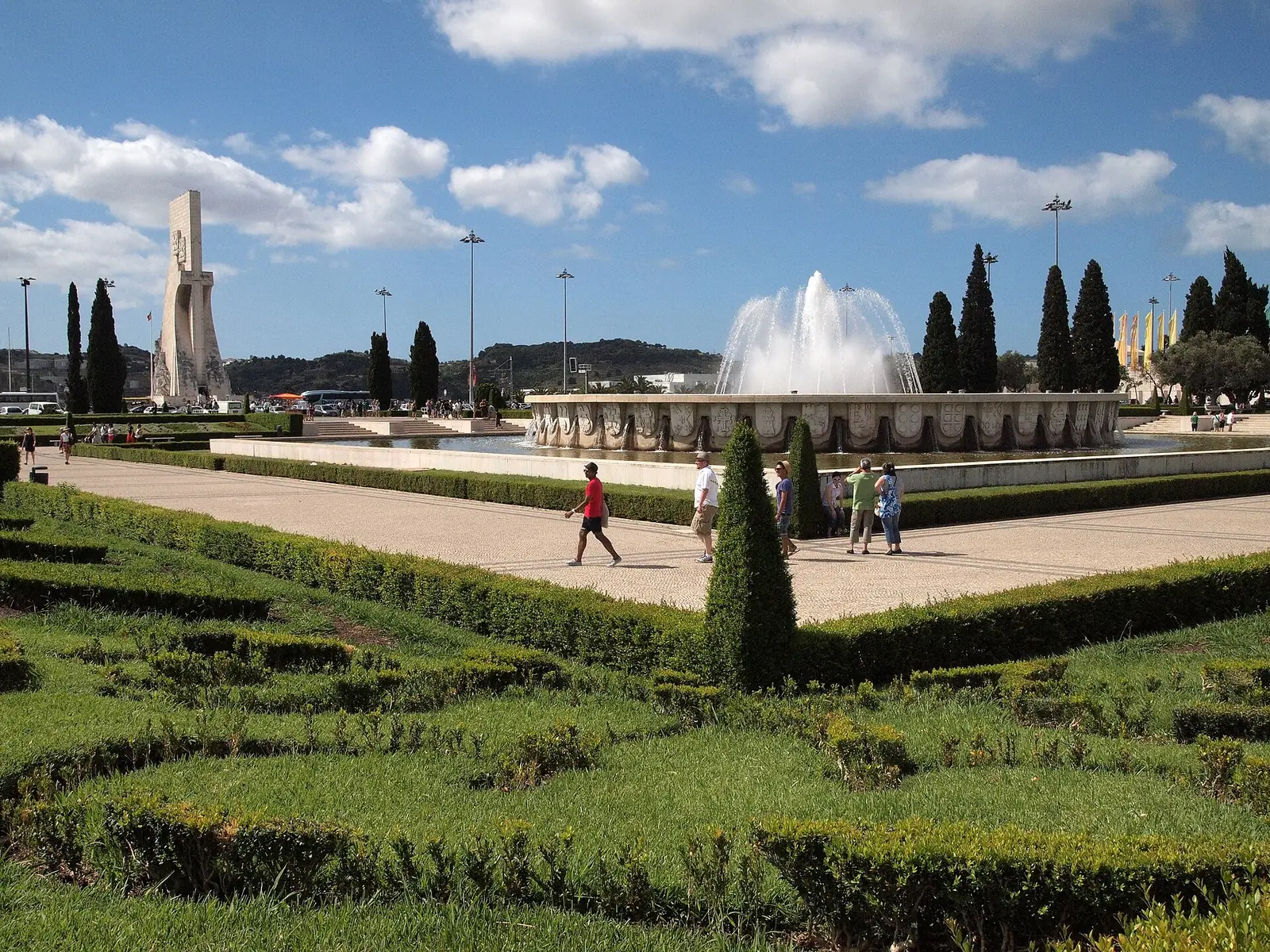
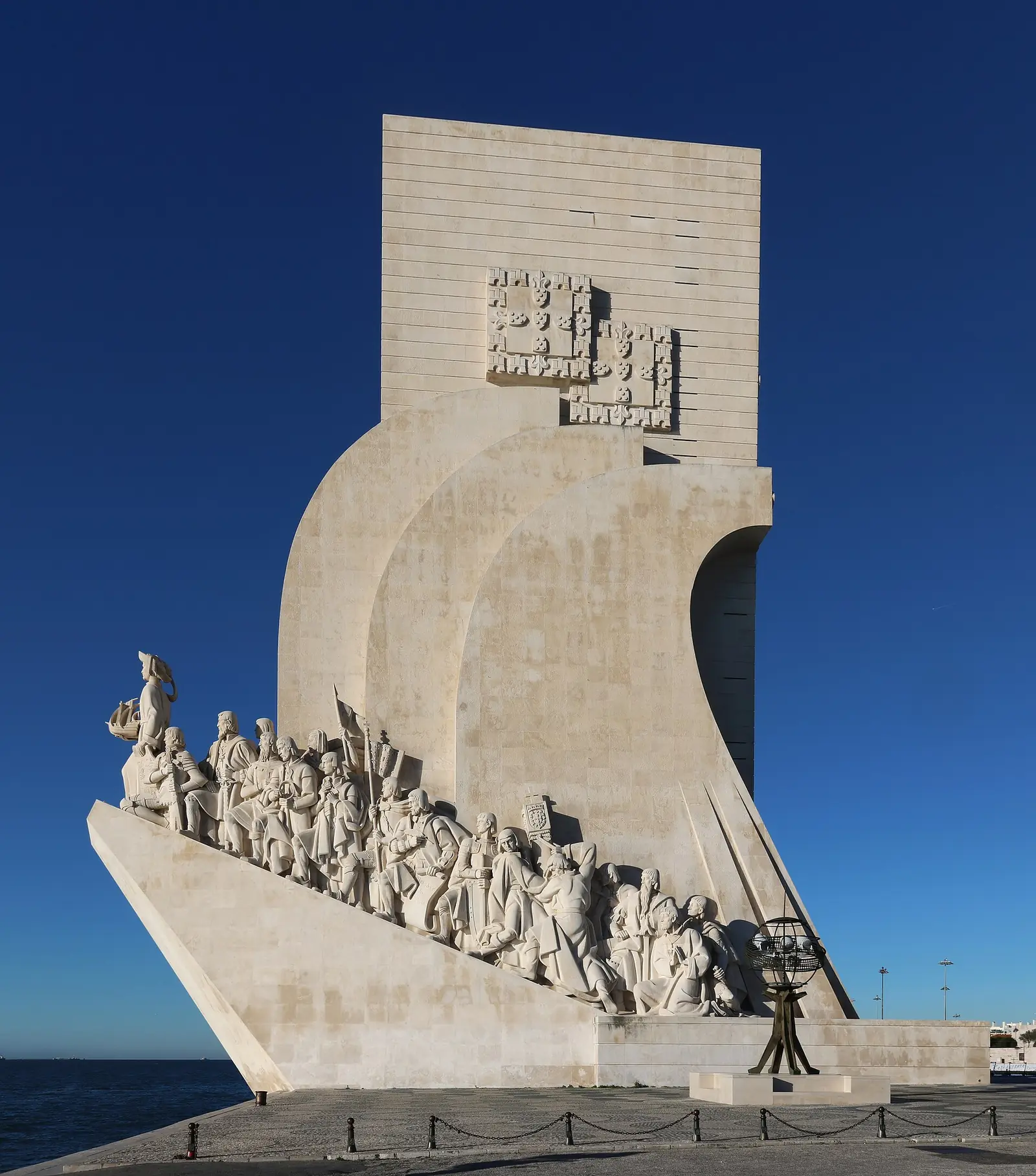
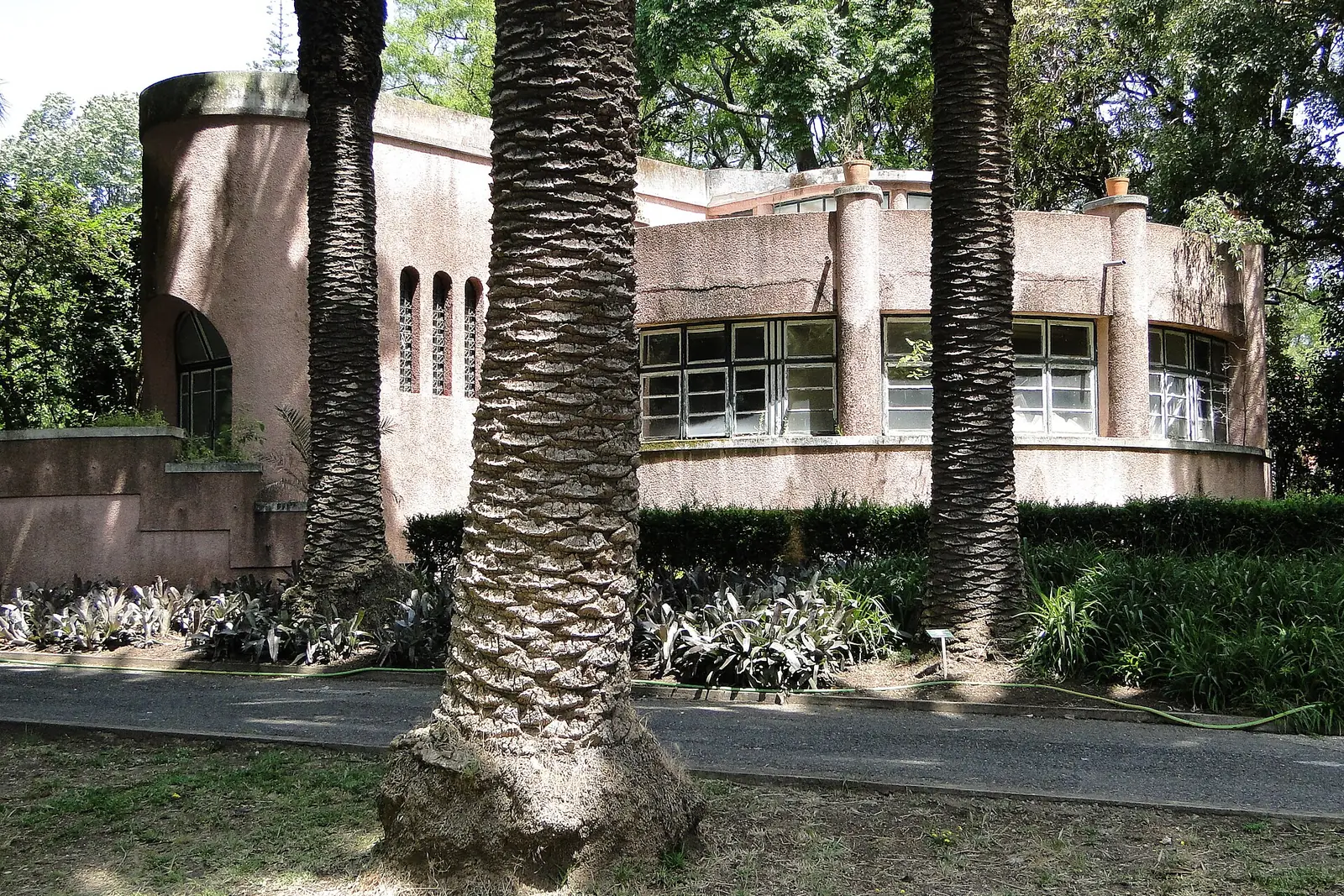
Caxias Fort, now Caxias Prison, seen from the hillside in 2022.GualdimG, CC BY-SA 4.0
União das Freguesias de Oeiras e São Julião da Barra, Paço de Arcos e Caxias (Oeiras)
Caxias Fort — the political prison
The political prison of the Lisbon region: the South Redoubt for men from 1935, the North Redoubt for women from 1938. Eight prisoners escaped from here in Salazar’s armoured car in 1961, and the last political prisoners walked out of here in the early hours of 27 April 1974.
Caxias Fort, in Oeiras, had been a prison since 1916. According to the Memória Comum project, the South Redoubt passed to the political police in January 1935, for men, and the North Redoubt in May 1938, for women.1 From then on, women political prisoners spent the whole of their pre-trial detention and served their sentences here.2
The prison regime was harsh for everyone — isolation, letters and visits cut off, punishments in “muddy casemates, without air or light” — and particularly for the women prisoners. The Commemorative Commission for the 50 Years of 25 April describes it: two by two in the same room, for months or years, two hours of exercise a day, always with the same companion, meals in the cell, and visits in a visiting room with a pane of glass in between, unable to hug their children. Some had small children with them; others gave birth in prison.2
Among the many women who passed through here were Maria Lamas, kept in isolation for months in 1949 and imprisoned here again in 1950–1951 and in 1953;36 the doctor Cesina Bermudes; Albina Fernandes, who had her children, aged six and two, with her after she was arrested in December 1961;9 and Maria Alda Nogueira, who served almost ten consecutive years of her sentence.10 With Sofia Ferreira, Alda Nogueira ran the Portuguese Communist Party (PCP) cell in the prison, and in 1961 she smuggled out of here the “Caxias Manifesto”, thirteen letters addressed to women’s organisations around the world about the conditions of the women prisoners.2829
On 4 December 1961, at around 09:35 — the time given in the prison’s official report —, eight communist activists escaped from the moat of the North Redoubt in the armoured Chrysler Imperial that had served Salazar, driven by António Tereso — who for months had passed himself off as a collaborator of the guards. The escape lasted little more than a minute.54
When the Aljube closed, in 1965, Caxias took in its prisoners, and from 1971 the DGS’s continuous interrogations were carried out in the South Redoubt, in rooms with tape recorders and sound systems.8 On the night of 31 December 1972, the police broke up the Capela do Rato vigil; fourteen of those detained went through the Civil Government and arrived here before dawn, to spend about a fortnight in the custody of the DGS. Among them were the architect Nuno Teotónio Pereira and only one woman, the librarian Maria Benedita Galamba de Oliveira.3435 It was here that the student Aurora Rodrigues, arrested on 3 May 1973, endured sixteen consecutive days of sleep torture.33
On 25 April, the DGS also held out at Caxias, and the release was delayed: the National Salvation Junta wanted to separate those imprisoned for ideological reasons from those accused of common crimes. “All of us or none” (Ou todos ou ninguém), replied the prisoners. A committee of lawyers argued that all the acts were political, and near midnight on the 26th the order to release everyone came from the Junta. According to the newspaper República, the prisoners began to walk out at 00:30 on the 27th, and by one in the morning there were no political prisoners left in Caxias.16 Among the women released were the journalists Helena Neves and Elvira Nereu, whom a photograph in the newspaper A Capital shows on their way out, and Manuela Gil, an office worker sentenced to two years in prison “for alleged participation in the Portuguese workers’ movement”: she had been in prison for 21 months, she told the same newspaper.16 Outside, thousands of people were shouting “the people united will never be defeated” (o povo unido jamais será vencido).16 On the 27th itself, the Diário de Lisboa published the list of those released: in the North Redoubt there were 77 people, 68 men and nine women — among them Helena Neves, Elvira Nereu and Conceição Moita, who had read the statement in the Capela do Rato — and three more prisoners in the prison hospital. The release of everyone had been decided after eight and a half hours of negotiations between the lawyers and two officers of the Junta. Fernando Correia, a journalist on the same paper and one of those released, described the arrival of the paratroopers and marines sent for “operação-Caxias” (Operation Caxias).17
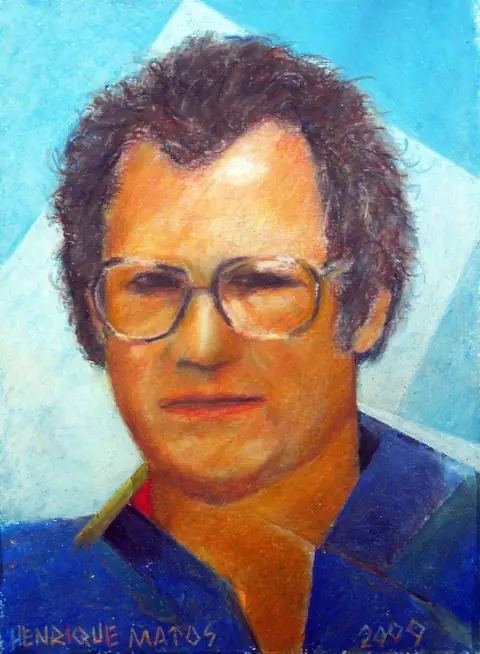
Conceição Matos and Domingos Abrantes tell together, in a testimony recorded by the museum on 7 October 2015, of life underground, imprisonment and torture. The museum’s keywords include the Aljube prison, Caxias, the PIDE interrogations and the escape from Caxias.
Original page Licença padrão do YouTube — embed permitido pelo canal oficial do Museu do Aljube
Museu do Aljube Resistência e Liberdade, on YouTube. The player only connects to that site when you press “Watch”.
On the day of its 60th anniversary, Domingos Abrantes, one of the eight leaders of the Portuguese Communist Party (PCP) who escaped from Caxias Fort on 4 December 1961, recalls the escape. The prisoners got out in the armoured Chrysler that had once served Salazar, driven by António Tereso, smashing through the fort’s outer gate.
Original page Licença padrão do YouTube — embed permitido pelo canal oficial do Museu do Aljube
Museu do Aljube Resistência e Liberdade, on YouTube. The player only connects to that site when you press “Watch”.
Diana Andringa’s testimony, recorded by the Aljube Museum on 19 April 2017. According to the museum’s keywords, she talks about the student movement, support for political prisoners, her links to the People’s Movement for the Liberation of Angola (MPLA) and the liberation struggle, her imprisonment and interrogation in Caxias, and her trial in the Plenary Court.
Original page Licença padrão do YouTube — embed permitido pelo canal oficial do Museu do Aljube
Museu do Aljube Resistência e Liberdade, on YouTube. The player only connects to that site when you press “Watch”.
Isabel do Carmo, in a testimony recorded by the Aljube Museum on 24 April 2019. The museum’s keywords include the student movement, life underground, the armed struggle, imprisonment, torture and isolation in Caxias, and imprisonment after 25 April.
Original page Licença padrão do YouTube — embed permitido pelo canal oficial do Museu do Aljube
Museu do Aljube Resistência e Liberdade, on YouTube. The player only connects to that site when you press “Watch”.
Testimony of the journalist Helena Neves, recorded by the Aljube Museum on 13 March 2019. Going by the museum’s keywords, it covers her family, the Catholics, the local cultural and recreational associations, the Democratic Women’s Movement, imprisonment, interrogation and torture.
Original page Licença padrão do YouTube — embed permitido pelo canal oficial do Museu do Aljube
Museu do Aljube Resistência e Liberdade, on YouTube. The player only connects to that site when you press “Watch”.
Aurora Rodrigues, in a testimony recorded by the Aljube Museum on 12 October 2016. The museum’s keywords include the student movement, the murder of Ribeiro Santos, the Movement for the Reorganisation of the Party of the Proletariat (MRPP), imprisonment, interrogation and torture in Caxias.
Original page Licença padrão do YouTube — embed permitido pelo canal oficial do Museu do Aljube
Museu do Aljube Resistência e Liberdade, on YouTube. The player only connects to that site when you press “Watch”.
Three rural women — Eulália Miranda, Hermínia Vicente and Maria Lourença Cabecinha — in a joint testimony recorded by the Aljube Museum on 19 October 2016. According to the museum’s keywords, they talk about the struggle for the 8-hour working day, life underground in the Portuguese Communist Party (PCP), the children of those living underground, imprisonment and interrogation in Caxias.
Original page Licença padrão do YouTube — embed permitido pelo canal oficial do Museu do Aljube
Museu do Aljube Resistência e Liberdade, on YouTube. The player only connects to that site when you press “Watch”.
Helena Cabeçadas tells the Aljube Museum about the student association movement in the secondary schools (liceus), the academic crisis of 1962, which she lived through at 14, and her arrest in 1965, when she was taken to the Civil Government building and to Caxias. Expelled from every school in the country, she left alone for exile in Belgium at 17.
Original page Licença padrão do YouTube — embed permitido pelo canal oficial do Museu do Aljube
Museu do Aljube Resistência e Liberdade, on YouTube. The player only connects to that site when you press “Watch”.
In a testimony recorded by the Aljube Museum on 30 September 2015, Helena Pato tells of her arrest by the PIDE, the interrogations, torture and isolation in Caxias. The museum’s keywords also point to women, solidarity and aid to political prisoners.
Original page Licença padrão do YouTube — embed permitido pelo canal oficial do Museu do Aljube
Museu do Aljube Resistência e Liberdade, on YouTube. The player only connects to that site when you press “Watch”.
A visitor to the National Museum of Resistance and Freedom sings the “Hino de Caxias” (Caxias Anthem), a song from 1953–1954 with music by the political prisoner Vasco Costa Marques and lyrics written jointly by prisoners in Caxias, among them Aurélio Santos and Rolando Verdial.
Original page Licença padrão do YouTube — embed permitido pelo canal oficial do Museu Nacional Resistência e Liberdade
Museu Nacional Resistência e Liberdade (Peniche), on YouTube. The player only connects to that site when you press “Watch”.
Fernanda Gonçalves tells how she heard about the revolution while in Aveiro, arrived the next day at Santa Apolónia on a train full of friends and went on to Caxias, where thousands of people were waiting for the political prisoners to come out. She remembers the passage the crowd kept open for the negotiations with the PIDE, inside.
Original page Licença padrão do YouTube — embed permitido pelo canal oficial da Câmara Municipal de Lisboa
Câmara Municipal de Lisboa, on YouTube. The player only connects to that site when you press “Watch”.
José Mário Branco’s testimony, recorded by the Aljube Museum on 16 May 2019, six months before he died. Going by the museum’s keywords, he talks about the Aljube prison, the PIDE and the interrogations, the students, the colonial war, exile and May 1968.
Original page Licença padrão do YouTube — embed permitido pelo canal oficial do Museu do Aljube
Museu do Aljube Resistência e Liberdade, on YouTube. The player only connects to that site when you press “Watch”.
An Antena 1 programme, made in partnership with the Clube dos Jornalistas (Journalists’ Club), in which two journalists tell of their 25 April — Maria Antónia Palla, who was then working at “O Século”, and Fernanda Mestrinho, of the “Diário de Lisboa”, who was at the release of the political prisoners from Caxias. On YouTube, the sound plays over a still image.
Original page Licença padrão do YouTube — embed permitido pelo canal oficial da Antena 1 (RTP)
RTP – Antena 1, on YouTube. The player only connects to that site when you press “Listen”.
José Lamego, a law student, was in the ISCEF lecture theatre on 12 October 1972 — when the DGS agent fired at Ribeiro Santos, he grappled with him hand to hand and was shot in the leg. In the testimony the Aljube Museum published in 2024, he also tells of the three imprisonments that followed, in Caxias, with 34 days of sleep torture in all, until he was released on 26 April 1974.
Original page Licença padrão do YouTube — embed permitido pelo canal oficial do Museu do Aljube
Museu do Aljube Resistência e Liberdade, on YouTube. The player only connects to that site when you press “Watch”.
In other archives
These can only be viewed on each archive’s own website.
Since when the Estado Novo held political prisoners here: the South Redoubt passed to the political police in January 1935, but the 2020 sculpture counts the prisoners from 1936.
Who was held in the North Redoubt: Memória Comum says it passed to the political police in May 1938, for women, but its own records list male prisoners taken there in 1937 and 1939, and the 1961 escape set out from its moat, with male prisoners. In April 1974, according to the Diário de Lisboa list, the North Redoubt held 68 men and nine women.
The dates of Cesina Bermudes’s imprisonment at Caxias (from 14 October 1949 to 14 January 1950) and Stella Piteira Santos’s time here, in February 1962, have only been found in Wikipedia.
Who commanded the taking of Caxias: Captains José Brás and Mário Pinto, at the head of paratroopers, according to the chronology of the 25 April Association and that of the Portuguese Commission of Military History; Lieutenant Commander Abrantes Serra and Captain Mário Pinto, at the head of marines and paratroopers, according to the “Presos políticos” (Political prisoners) page of the same Association. Fernando Correia’s testimony in the Diário de Lisboa of 27 April 1974 mentions paratroopers and marines, but does not name the officers.
How many prisoners were released: 82 — 78 and, finally, the four from the prison hospital — according to República as cited by Esquerda.net; 85, according to the 50 Years Commemorative Commission; 80 from the Diário de Lisboa list of 27 April 1974 (77 in the North Redoubt and three in the prison hospital). That is why the text gives the Diário de Lisboa list and not a total.
Whether the fort can be visited — it is now a working prison — and where the 2019 plaque is, inside or outside the grounds.
Do you know more, or do you have a document? Tell us.
Sources36
1Cárceres do império. Memória Comum – Memorial aos Presos e Perseguidos Políticos — consulted on 2 October 2026
17«A lista dos presos libertos em Caxias»; «Depoimento de um jornalista do Diário de Lisboa hoje libertado em Caxias» (Fernando Correia). Diário de Lisboa, n.º 18441, 27 de abril de 1974, pp. 3 e 20 (Casa Comum, Fundação Mário Soares e Maria Barroso), 1974 — consulted on 4 October 2026No Reduto Norte estavam detidas 77 pessoas, 68 homens e nove mulheres (entre elas Helena Neves, Maria Elvira Nereu e Conceição Moita), e na prisão-hospital mais três presos; a libertação total foi decidida ao fim de oito horas e meia de negociações entre advogados e dois oficiais da Junta; o jornalista Fernando Correia, libertado nesse dia, refere paraquedistas e fuzileiros navais destacados para a «operação-Caxias».
36Maria da Conceição Vassalo e Silva da Cunha Lamas. Memória Comum – Memorial aos Presos e Perseguidos Políticos — consulted on 4 October 2026Primeira prisão a 17 de dezembro de 1949; presa na prisão de Caxias em 1949, 1950–1951 e 1953.
Coordinates: OpenStreetMap (Nominatim), consultado a 2 de outubro de 2026.