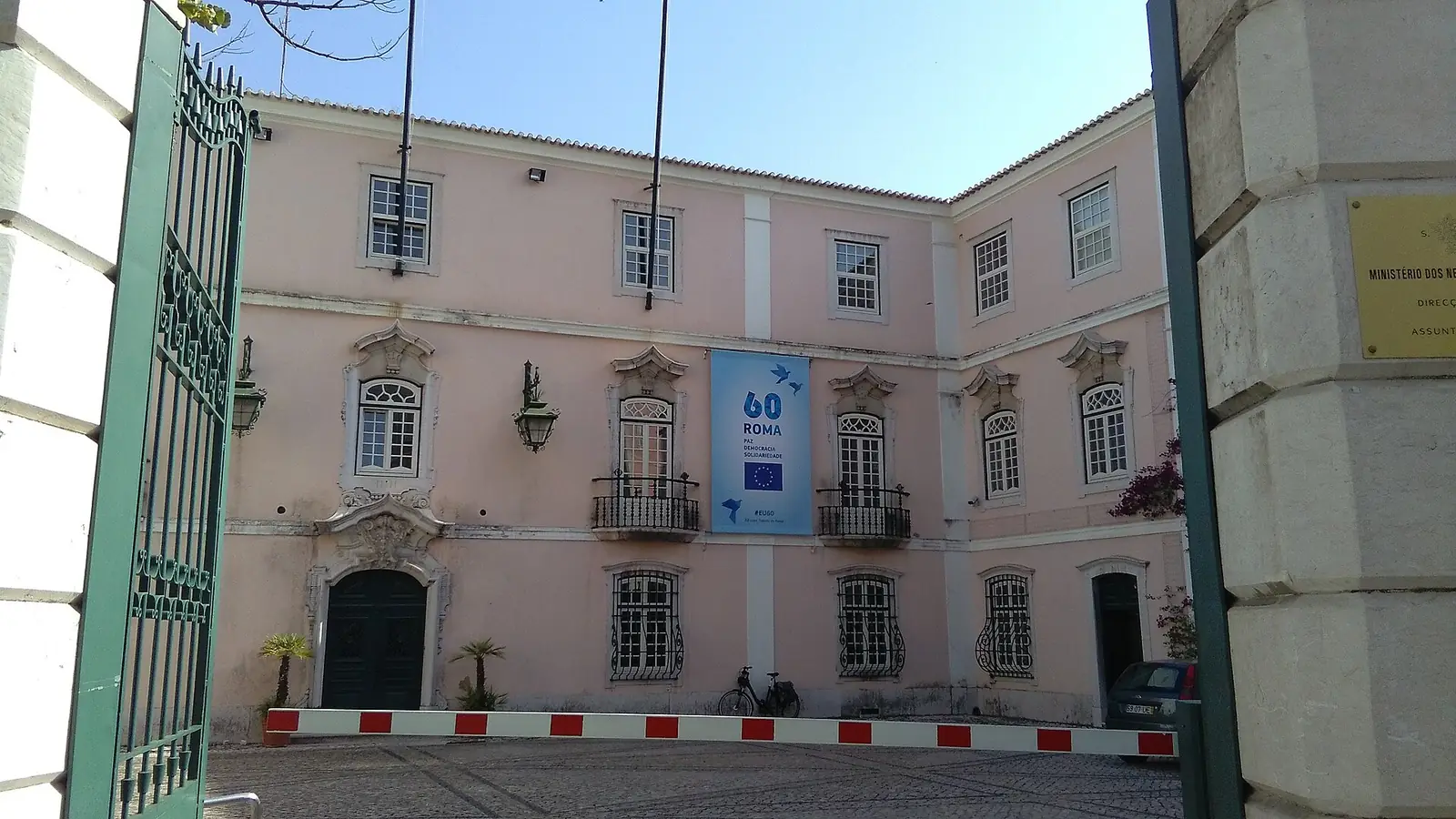
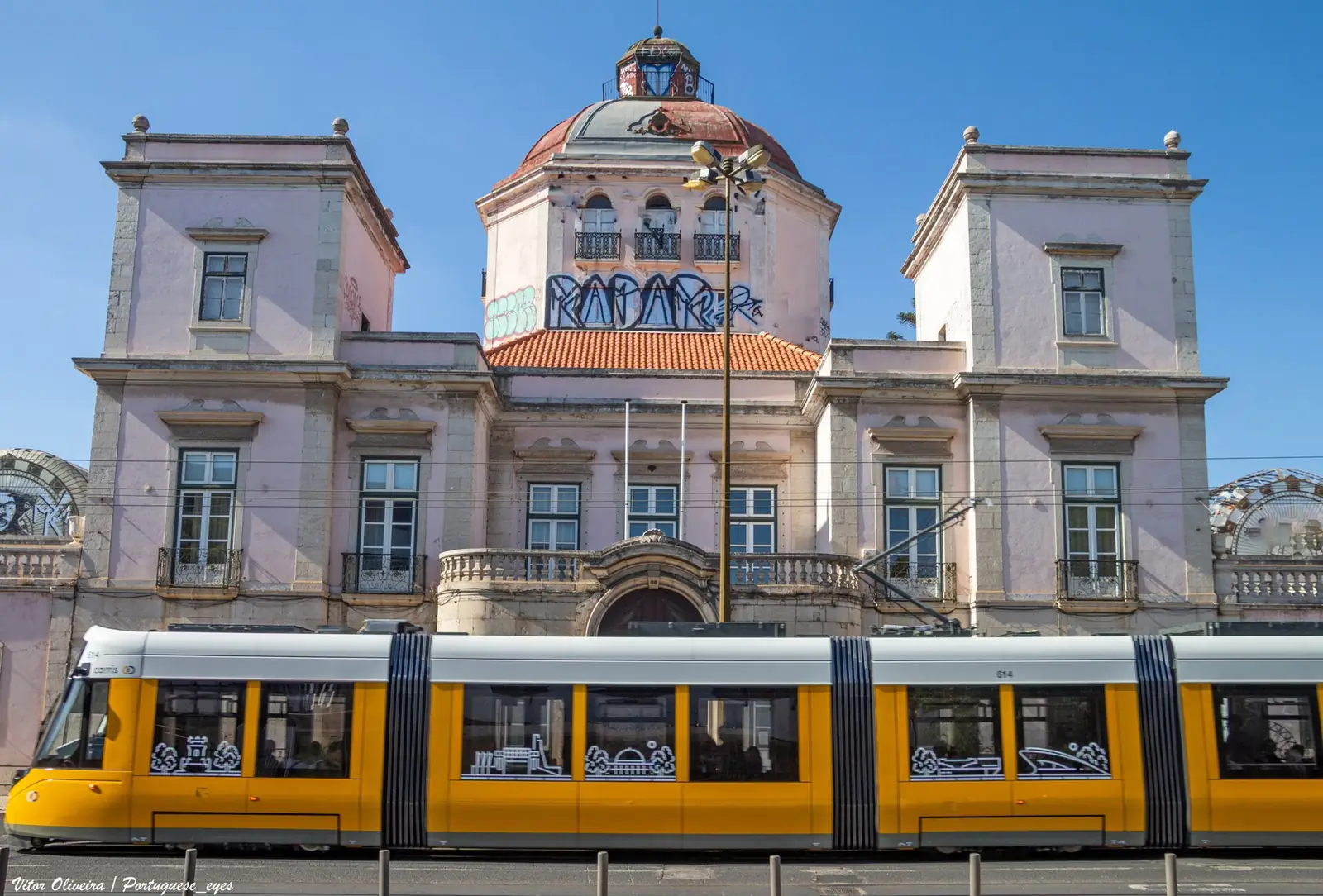
A corner building in Largo do Calvário, in Alcântara, next to Rua José Dias Coelho, in 2025.Vitor Oliveira, CC BY-SA 4.0
Alcântara
Rua da Creche (where José Dias Coelho was murdered)
In this street in Alcântara, then Rua da Creche, PIDE agents shot dead the sculptor and communist leader José Dias Coelho on 19 December 1961. His partner, Margarida Tengarrinha, only learned of his death a week later. The street has borne his name since 1975.
Today: Rua José Dias CoelhoThere is a marker at the siteApproximate location
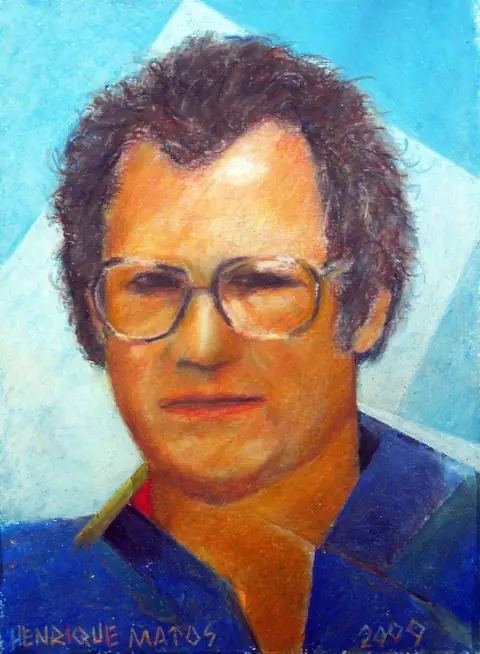
The sculptor and painter José Dias Coelho went underground in 1955, as a full-time worker for the Portuguese Communist Party (PCP). The clandestine house he shared with his wife, Margarida Tengarrinha, herself a figure of the resistance, housed the party’s document-forging office — identity cards, bicycle licences, driving licences, passports. From 1960 the two of them drew illustrations and mastheads for clandestine publications such as A Voz das Camaradas (The Voice of the Women Comrades) and Avante!. Dias Coelho was part of the leadership of the Lisbon organisation and was in charge of the party’s intellectual sector.2
On 19 December 1961, the PIDE agents António Domingues, Manuel Lavado and Pedro Ferreira, of José Gonçalves’s squad, ambushed him on Rua dos Lusíadas, near Largo do Calvário. Dias Coelho ran off and turned into this street, then Rua da Creche; the agents surrounded him and fired two shots in front of no. 30 — one point-blank, in the chest, and the other when he was already on the ground.1 According to the newspaper of A Voz do Operário, it was only two hours later that the agents took him, dying, to the CUF Hospital.5 He was 38.2
Margarida Tengarrinha, who was still living underground, only found out a week later: “When, early in the evening of 26 December 1961, at a meeting in the street, a comrade told me that Zé had been shot dead by the PIDE, I couldn’t believe it.” The funeral had taken place that day, at the Benfica cemetery. She then decided, she wrote, “not to let his memory die”.3José Afonso recalled the crime in the song “A Morte Saiu à Rua” (Death Went Out into the Street).2
After 25 April, at the request of the Alcântara Parish Council, an edict of 17 February 1975 gave Rua da Creche the name of José Dias Coelho. The Parish Council wanted the caption to read “Communist Party activist murdered by the PIDE in 1961”, but the Street Names Committee would not allow references to political organisations, and the caption became “Sculptor and anti-fascist activist/1923 – 1961” (Escultor e militante antifascista/1923 – 1961).4 At the scene of the crime there is now an inscription with the words of Dias Coelho’s last engraving, dedicated to the worker Cândido Martins Capilé, killed at a demonstration: “Of all the seeds cast upon the earth, it is the blood shed by the martyrs that raises the most abundant harvests” (De todas as sementes deitadas à terra, é o sangue derramado pelos mártires que faz levantar as mais copiosas searas). Every year, on 19 December, the PCP holds a tribute there.5
José Dias Coelho is shot dead by the PIDE in front of no. 30 Rua da Creche.
26 December 1961
Funeral at the Benfica cemetery; Margarida Tengarrinha learns of his death that day.
20 December 1974
Favourable opinion from the Municipal Street Names Committee.
17 February 1975
Edict giving Rua da Creche the name of José Dias Coelho.
Videos
Margarida Tengarrinha’s testimony, recorded by the Aljube Museum on 8 March 2017 and published in 2021. Going by the museum’s keywords, it covers the Youth Movement of Democratic Unity (MUD Juvenil), underground life in the Portuguese Communist Party (PCP), the document-forgery apparatus, the clandestine press and José Dias Coelho.
Original page Licença padrão do YouTube — embed permitido pelo canal oficial do Museu do Aljube
Museu do Aljube Resistência e Liberdade, on YouTube. The player only connects to that site when you press “Watch”.
José Afonso sings “A Morte Saiu à Rua” (Death Went Out into the Street), the song in which he evoked the sculptor José Dias Coelho, killed by the PIDE in 1961, at the Coliseu dos Recreios concert of 29 January 1983. The excerpt was published by the José Afonso Association.
Original page Licença padrão do YouTube — embed permitido pelo canal oficial da Associação José Afonso
Associação José Afonso, on YouTube. The player only connects to that site when you press “Watch”.
In other archives
These can only be viewed on each archive’s own website.



.jpg)