
People
Norton de Matos
1867–1955
Agence de presse Meurisse, Public domain
José Maria Mendes Ribeiro Norton de Matos
A general of the First Republic, in 1949 he was the united opposition’s candidate for President of the Republic: he held rallies at A Voz do Operário and withdrew on the eve of the election. Like many in the opposition, he advocated a colonialist policy, which he set out in 1953 in “África Nossa” (Our Africa).
- Born
- 23 March 1867, Ponte de Lima
- Died
- 2 January 1955, Ponte de Lima
Biography
He was born in Ponte de Lima on 23 March 1867. A general and politician of the First Republic, he was governor-general of Angola and Minister for the Colonies, and from 1930 to 1935 grand master of the Grande Oriente Lusitano Unido (United Lusitanian Grand Orient).3
In July 1948 he came forward as a candidate in the presidential election of 13 February 1949, against Marshal Óscar Carmona. The programme called for the abolition of the political police and of censorship, an amnesty for political prisoners and freedom for political parties. But if the line was progressive at home, on the colonial front the position was “quite different”.2 The platform brought together republicans, Freemasons, socialists, communists and Catholics, among others. The campaign began in January 1949, with the candidate’s house under surveillance and supporters being arrested.2
In Lisbon, the campaign held rallies at A Voz do Operário. A photograph of 28 January 1949 shows him there with Isabel Aboim Inglez;5 others, from February, show Maria Lamas and Cesina Bermudes.2
The regime refused his minimum demands, such as freedom of propaganda and the scrutiny of the vote count, and Norton de Matos withdrew on the eve of the election.324 Like many republicans and opponents of the Estado Novo (“New State”), he advocated a colonialist policy. In 1953, in the book África Nossa (Our Africa), he wrote that Portugal had to “populate those lands, intensely and rapidly, with white Portuguese families” and to go on “assimilating the coloured inhabitants we find there”.3 He died in Ponte de Lima on 2 January 1955.3
Places

Dates
Dec 1943
The Movement of National Anti-Fascist Unity (MUNAF) is founded28 Jul 1946
The MUD Juvenil is formally constituted28 Jan 1949
Meeting of the Women’s Committee of Norton de Matos’s campaign28 Jan 1949
Norton de Matos rally at the Voz do Operário10 Feb 1949
Norton de Matos campaign rally at the Voz do Operário, with Maria Lamas and Cesina Bermudes12 Feb 1949
Norton de Matos withdraws from the presidential election14 Oct 1949
Arrest of Cesina Bermudes, a leader of the National Democratic Women’s Movement
People
They crossed paths with him
Cesina Bermudes
1908–2001 · obstetrician
Maria Lamas
1893–1983 · journalist
Isabel Aboim Inglez
1902–1963 · teacher
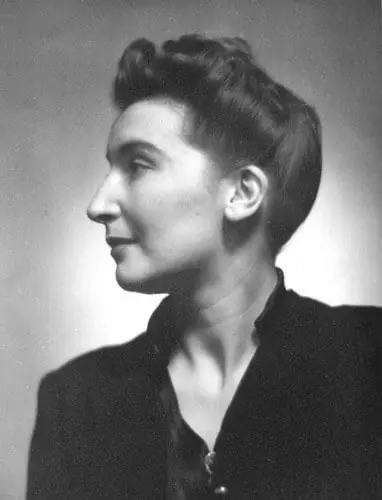
Manuela Porto
1908–1950 · actress
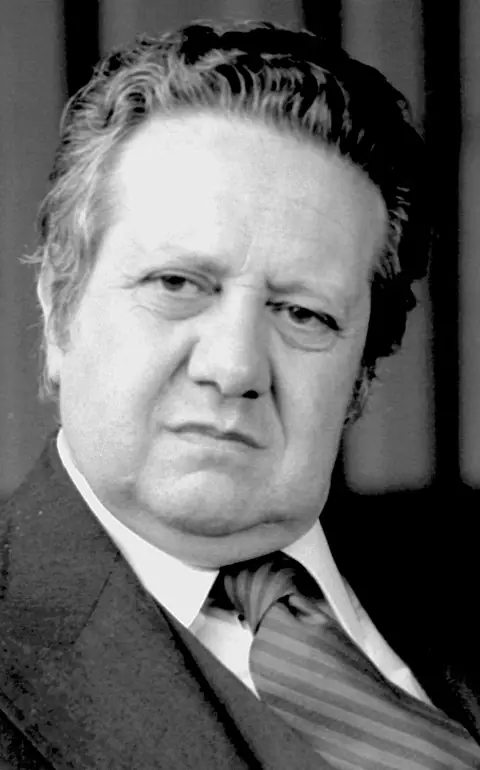
Mário Soares
1924–2017 · general secretary of the Socialist Party
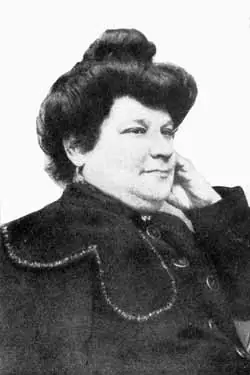
Angelina Vidal
1847–1917 · teacher


.jpg)
Videos
In other archives
These can only be viewed on each archive’s own website.
- Casa Comum – Fundação Mário Soares e Maria Barroso · Photograph · 28 January 1949Candidatura de Norton de Matos às eleições presidenciais, comício de Lisboa (Voz do Operário)A photograph of a rally for Norton de Matos’s candidacy at A Voz do Operário, from Manuel Mendes’s papers. Among those present, Casa Comum identifies Isabel Aboim Inglez, Norton de Matos, Carvalhão Duarte, Câmara Reys and Mário de Azevedo Gomes.Open in the archive
- Casa Comum – Fundação Mário Soares e Maria Barroso · Photograph · 10 February 1949Candidatura de Norton de Matos às eleições presidenciais, comício de Lisboa (Voz do Operário)A photograph of another rally for Norton de Matos’s candidacy at A Voz do Operário, also from Manuel Mendes’s papers. Among those present are Maria Lamas, Manuel João da Palma Carlos and Cesina Bermudes.Open in the archive
Sources5
- 1Norton de Matos and the Presidential Elections of 1949 (dossiê do mês). Museu do Aljube – Resistência e Liberdade — consulted on 4 October 2026As ameaças do regime e a fraude obrigaram Norton de Matos a retirar a candidatura «on the eve of the poll», na véspera da votação de 13 de fevereiro de 1949.
- 2Eleições de 1949. Museu do Aljube Resistência e Liberdade (EGEAC) — consulted on 2 October 2026
- 3José Norton de Matos. Wikipédia — consulted on 2 October 2026
- 4Eleições presidenciais portuguesas de 1949. Wikipédia — consulted on 2 October 2026
- 5Candidatura de Norton de Matos [...] comício de Lisboa (Voz do Operário) – fotografia (cota 04654.000.038). Casa Comum – Fundação Mário Soares e Maria Barroso — consulted on 2 October 2026