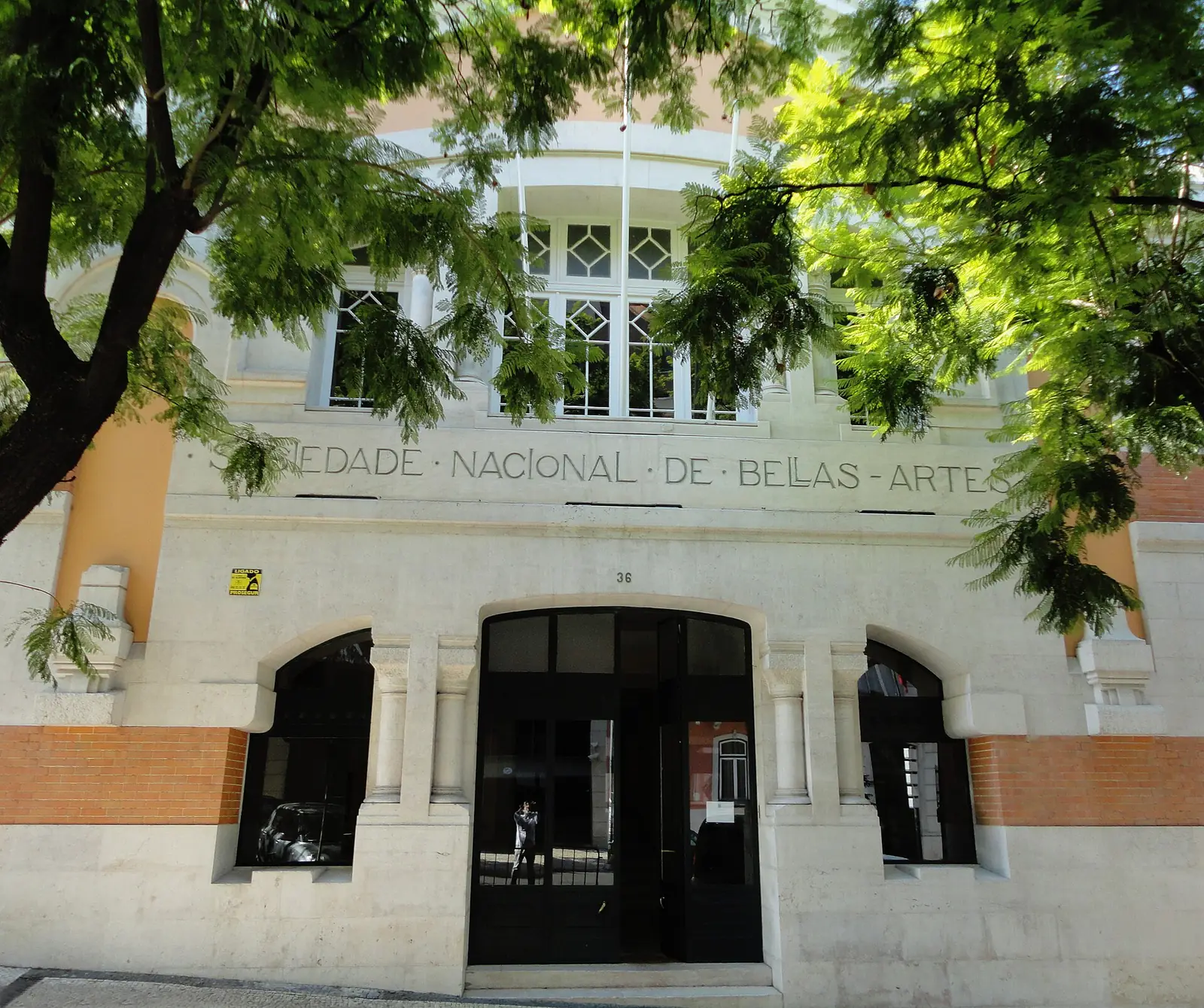
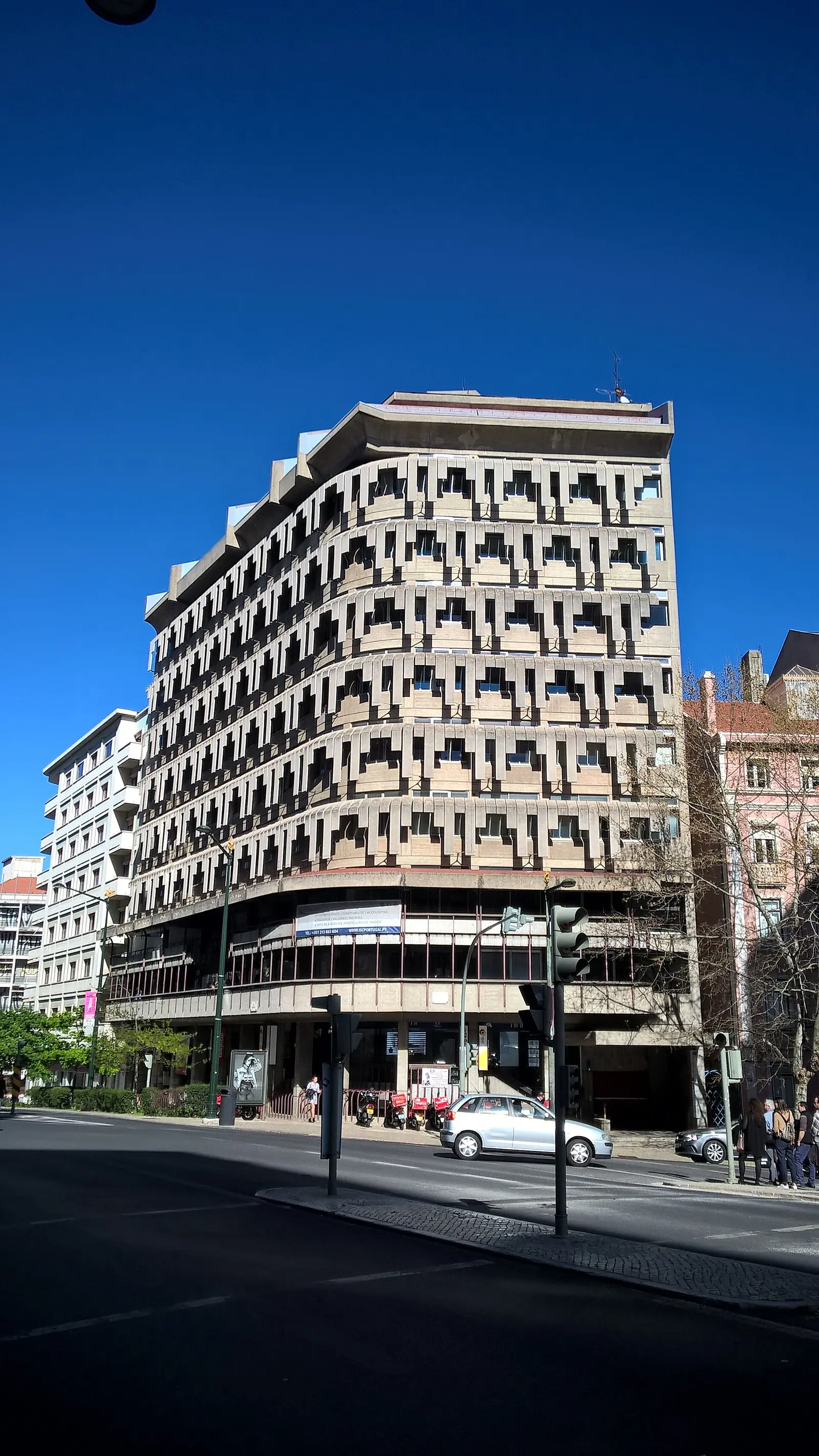
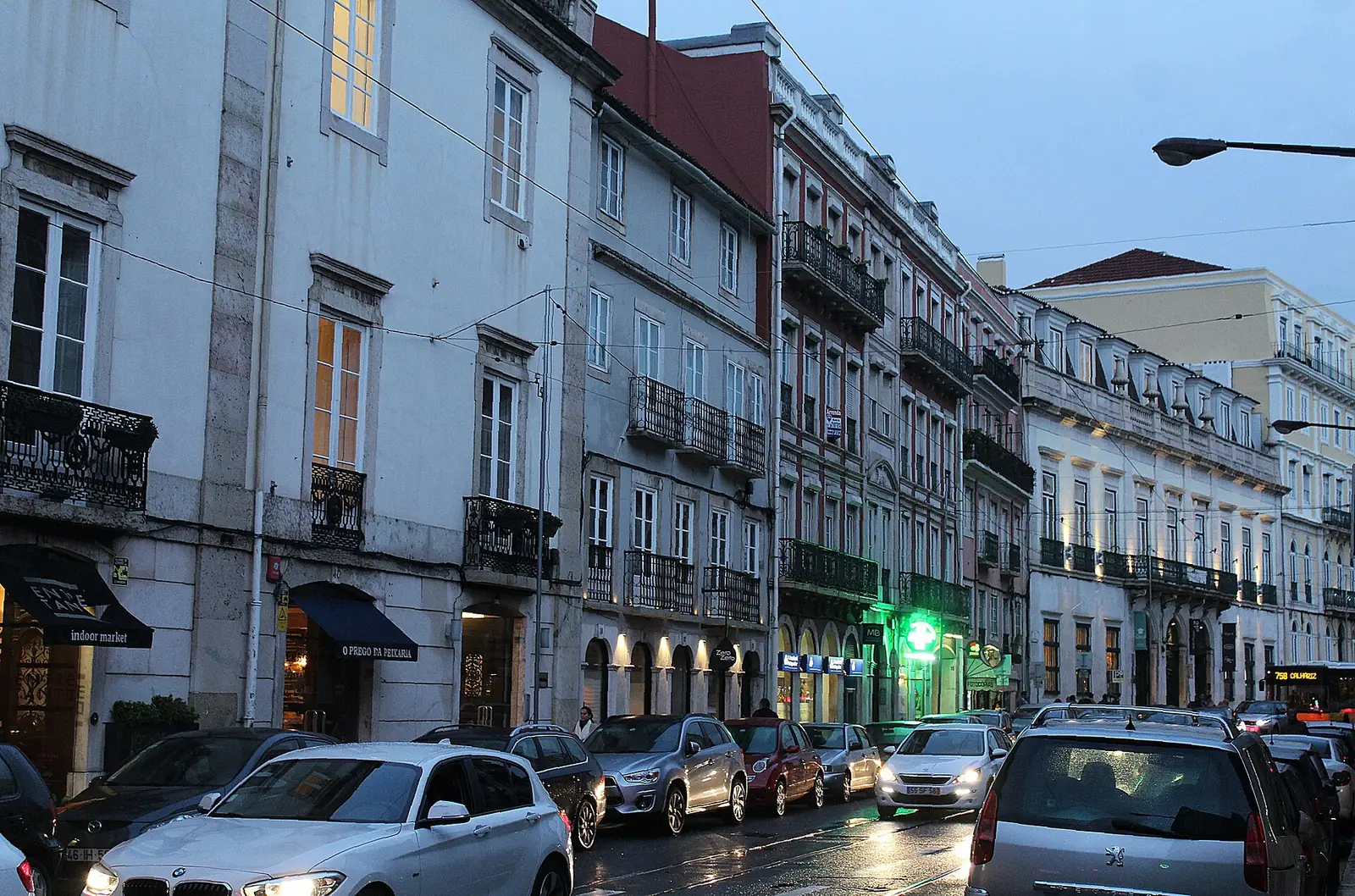
Rua Rodrigues Sampaio, where Natália Correia lived, seen from above, in 2011.deror_avi, CC BY-SA 3.0
Santo António
Home of Natália Correia
Natália Correia lived on the fifth floor of no. 52 from 1953 until her death in 1993. In the 1950s and 1960s the flat hosted her salons and, in 1955, a theatre premiere behind closed doors: her translation of Sartre’s “Huis clos”.
On 31 July 1953, Natália Correia married Alfredo Machado, owner of the Hotel Império, and rented the fifth floor of no. 52 Rua Rodrigues Sampaio, “to which she moves and where she settles for the rest of her life”.1
In the 1950s and 1960s, this flat was the centre of the salons that brought together names from Portuguese culture and literature; from 1971, Natália took them to the Botequim, in Graça, which, according to the Aljube Museum, she founded with Isabel Meyrelles, Júlia Marenha and Helena Roseta.3 In July 1955 her translation of Sartre’s Huis clos premiered here behind closed doors, directed by Carlos Wallenstein, with sets by João Santiago and with Alexandre de Castro Freire, Maria Ferreira and Manuel de Lima in the cast.15 She was living here when, in 1966, she published the Antologia de Poesia Portuguesa Erótica e Satírica (Anthology of Portuguese Erotic and Satirical Poetry), which the censors seized and which brought her before the Plenary Court: the trial began on 3 June 1969 and ended on 21 March 1970, with a sentence of 90 days in prison, commuted to a fine. In the case over the Novas Cartas Portuguesas (New Portuguese Letters), published in 1972 by Estúdios Cor, where she was literary director, she was named a defendant as the editor responsible.1
She died in this flat, of a heart attack, in the early hours of 16 March 1993, after coming back from the Botequim. The flat and its contents were left untouched until the death of her husband, Dórdio Guimarães, in 1997; that year it was emptied of thousands of books and manuscripts and hundreds of works of art, from Vieira da Silva to Almada Negreiros and Mário Cesariny. Under the terms of Dórdio Guimarães’s will, the estate has been in Ponta Delgada since 2011: the papers and books in the Public Library and Regional Archive, the works of art and some furniture in the Carlos Machado Museum.1
The 1971 recording of Natália Correia’s poem set to music by José Mário Branco, from the LP “Mudam-se os Tempos, Mudam-se as Vontades” (Times Change, Wills Change), recorded in France, in exile. The track reaches YouTube through the label’s distributor, on the singer’s automatic channel.
Original page Licença padrão do YouTube — faixa entregue ao YouTube pela Parlophone Spain (℗ 1971 José Mário Branco, em licença exclusiva à Warner Music Portugal); embed permitido (oEmbed)
Warner Music Portugal (canal «José Mário Branco – Topic», do YouTube), on YouTube. The player only connects to that site when you press “Listen”.
Notes on the sources3
Whether the building has any plaque in memory of Natália Correia.
The point on the map comes from a medical practice at no. 52 (OpenStreetMap), not from the entrance to the building.
The sentence over the “Antologia”: 90 days in prison commuted to a fine, on 21 March 1970, according to the chronology by Luiz Fagundes Duarte, who elsewhere speaks of a suspended prison sentence; the Aljube Museum speaks of a suspended sentence and places it in 1966, the year of the book.
Do you know more, or do you have a document? Tell us.
4Natália Correia. Assembleia da República — consulted on 2 October 2026
5Jean-Paul Sartre, Huis clos suivi de Les Mouches. Gallimard (coleção Folio) — consulted on 3 October 2026A ficha do editor de Sartre, com o título da peça tal como ele a publicou: «Huis clos».
6Francisco Topa, A sádica nostalgia das fogueiras do Santo Ofício: o processo judicial contra a Antologia de poesia portuguesa erótica e satírica. Historiæ (Rio Grande), 6 (1), pp. 122–141; Repositório Aberto da Universidade do Porto, 2015 — consulted on 4 October 2026A partir do processo (Torre do Tombo, Tribunal da Comarca de Lisboa, 4.º Juízo Criminal, processo n.º 90/1966), diz que o julgamento devia ter começado a 3 de junho de 1969, mas que, por sucessivos adiamentos, a primeira sessão só foi a 17 de março de 1970 e a sentença a 21; Natália Correia e o editor foram condenados a 90 dias de prisão substituídos por igual tempo de multa e mais 15 dias de multa, a 50$00 por dia.
Coordinates: OpenStreetMap (Nominatim), consultado a 2 de outubro de 2026.