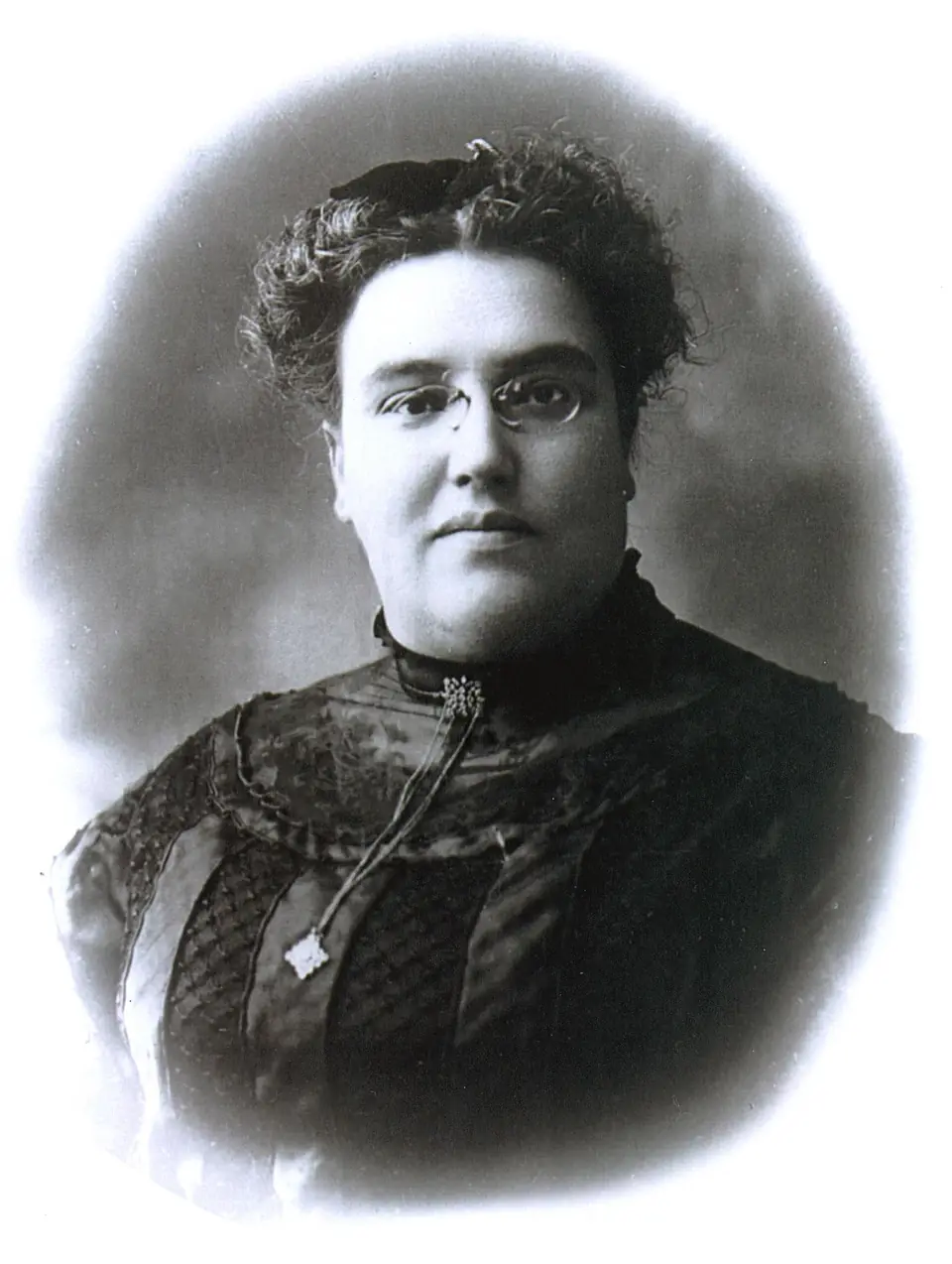
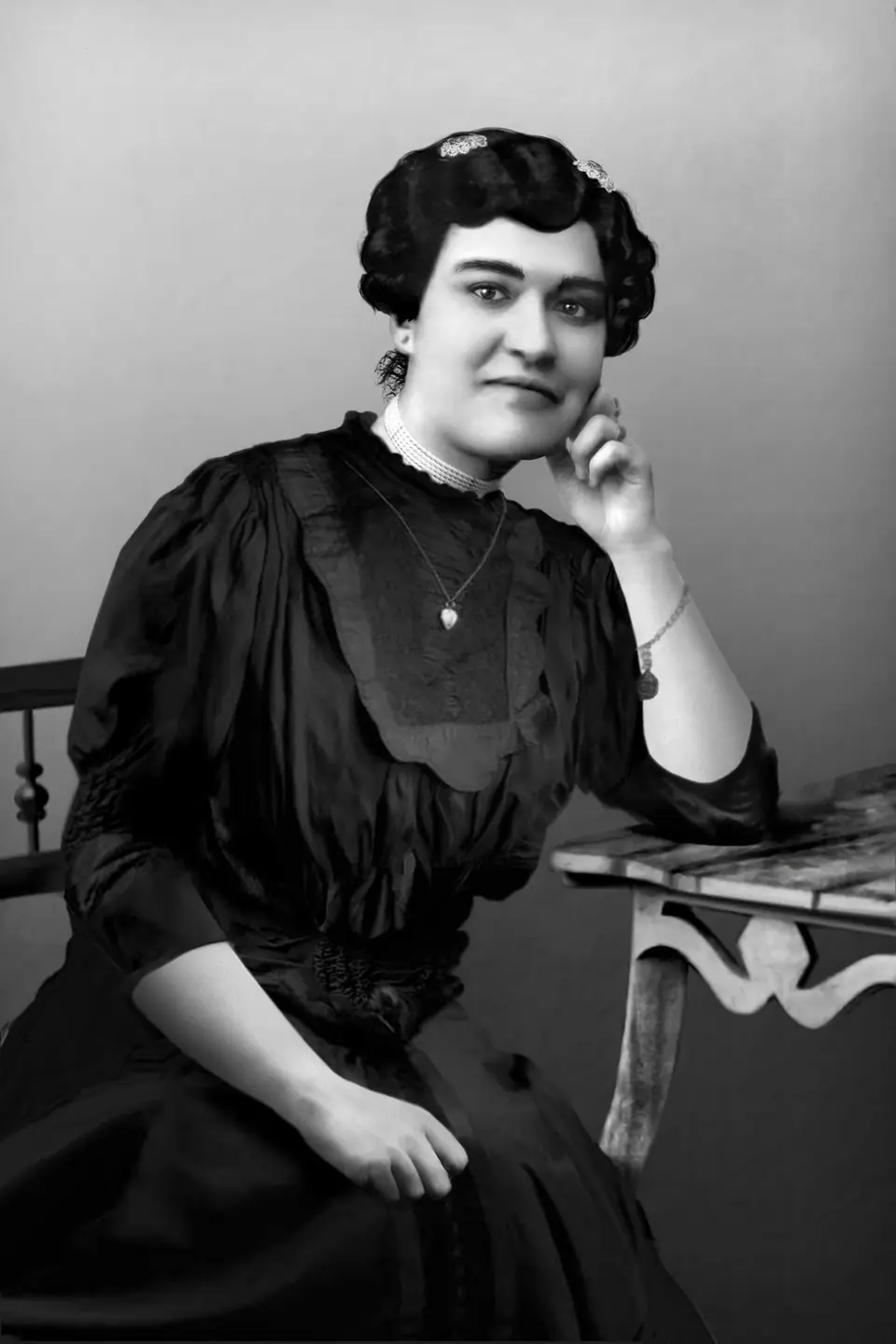
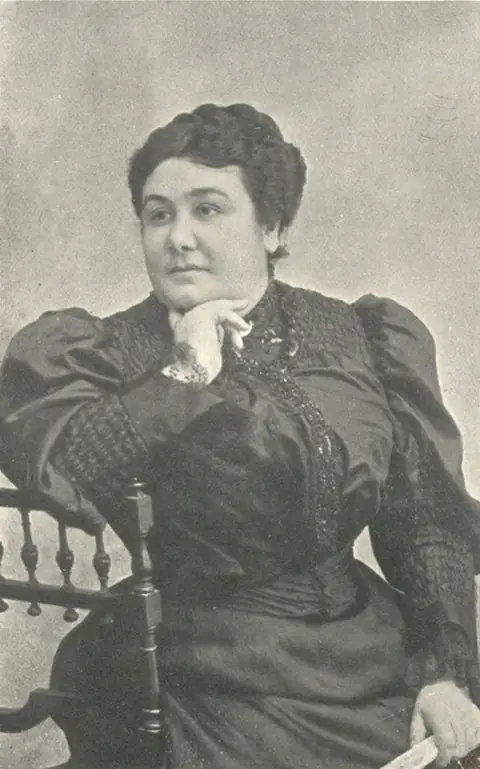
A teacher and journalist from Faro, and a single mother, she gave evening classes to illiterate women and led the Republican League of Portuguese Women, advocating unrestricted votes for women.
Republicteacherwriter and journalistpresident of the Republican League of Portuguese Women (from 1911)advocate of unrestricted votes for womenfounder of the Obra Maternal (Maternal Work)
Maria Veleda is the pen name of Maria Carolina Frederico Crispim, born in Faro in 1871.12 She contributed to dozens of newspapers and magazines and lived in hardship, as a teacher and single mother.2 In Lisbon she was the teacher in charge at the Dr Afonso Costa Republican School Centre, on Calçada de Arroios, where she set up free evening classes to teach women to read and write.21
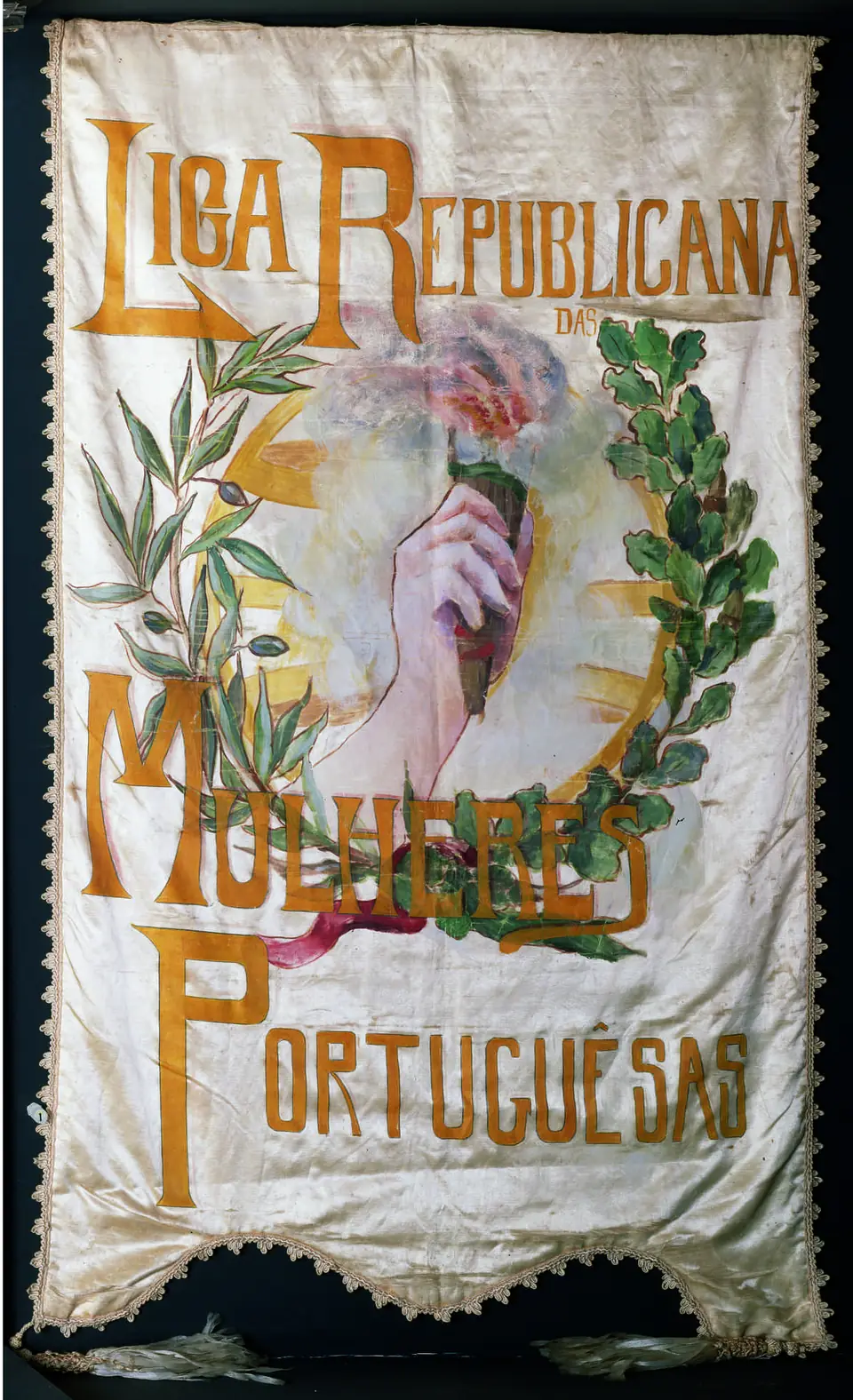
In 1907 she was in the Portuguese Group for Feminist Studies, and she joined Freemasonry under the symbolic name “Angústia” (Anguish).1 She belonged to the Republican League of Portuguese Women — as a founding member, according to Toponímia de Lisboa; according to Wikipedia, she joined in 1909, without being on the organising committee — and, from August 1910, edited its organ, A Mulher e a Criança (Woman and Child), which was followed by A Madrugada (The Dawn).123 Unlike Ana de Castro Osório and Carolina Beatriz Ângelo, who wanted the vote for women who were educated and who worked, she argued that the right to vote should only be accepted if it came without restrictions.4 In 1911, when Ana de Castro Osório left the League, she became its president.12
With Ana de Castro Osório, Adelaide Cabete and Carolina Beatriz Ângelo she founded the Obra Maternal (Maternal Work), to take in abandoned children; she ran it and taught there.12 She joined the Democratic Party and founded the Women’s Association for Democratic Propaganda, which was dissolved in July 1916, when the Sacred Union was formed.1 She published the pamphlet Emancipação Feminina (Women’s Emancipation) and the lectures collected in A Conquista (The Conquest); her memoirs came out in 1950 in the newspaper República.1 She died in Lisbon on 8 April 1955.12
6Natividade Monteiro, Maria Veleda (1871-1955). Comissão para a Cidadania e a Igualdade de Género (coleção Fio de Ariana), 2013 — consulted on 4 October 2026Cronologia e biografia — nasceu em Faro a 26 de fevereiro de 1871; «Emancipação Feminina» (Porto, 1902); em 1907 pertencia ao Grupo de Estudos Feministas; sócia fundadora da Liga em 1908, recusada para a primeira direção por António José de Almeida; dirigente da Liga a partir de 1911; demitiu-se de todos os cargos na Liga em 1915.
7Teresa Pinto, Recensão de «Memórias de Maria Veleda» (Natividade Monteiro, 2011). ex æquo, n.º 28, 2013 — consulted on 4 October 2026As memórias começaram a sair no «República» no domingo 26 de fevereiro de 1950, «data do septuagésimo nono aniversário da autora».