Paço de São Cristóvão / Palácio Vagos — Mutual Aid Association of Commercial Employees of Lisbon
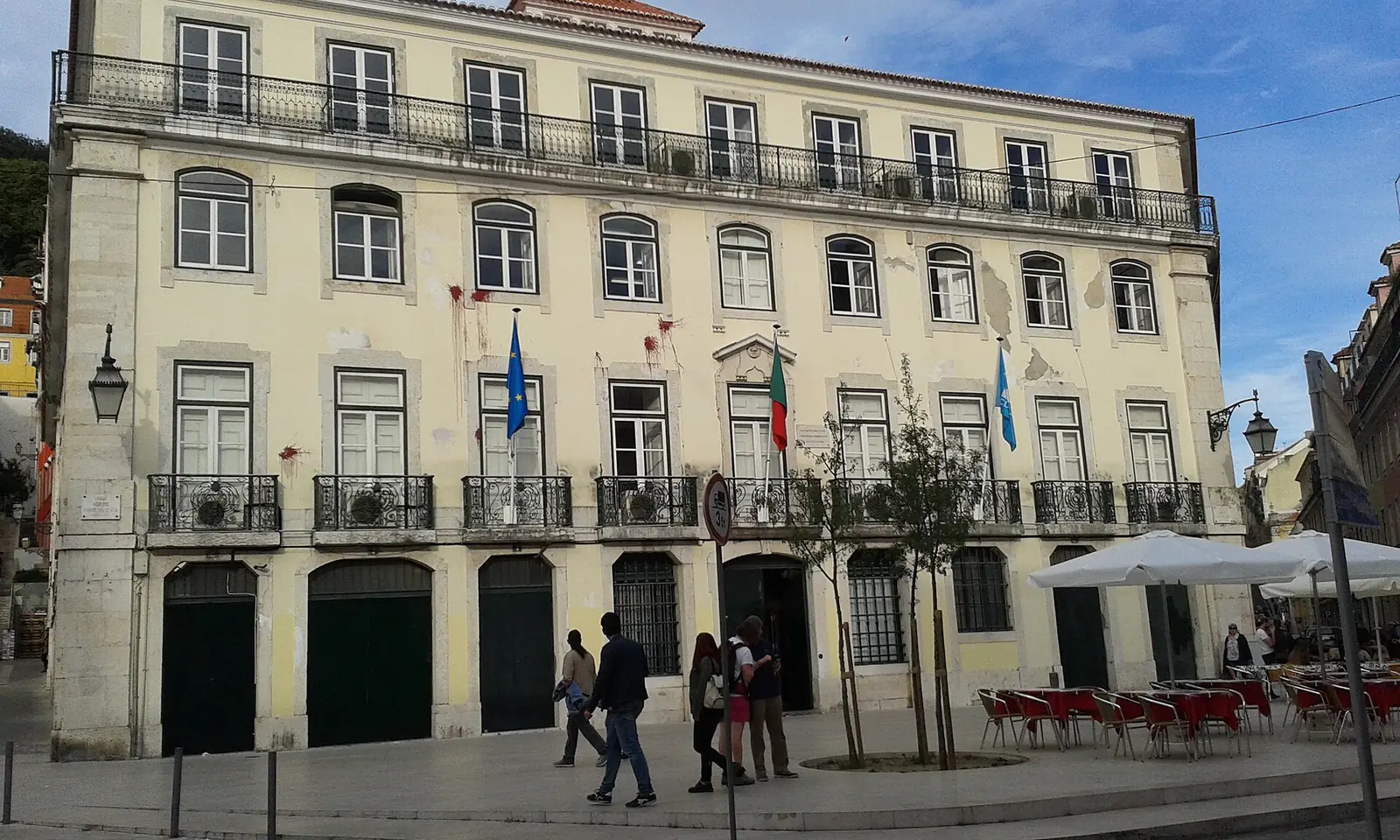
A palace in Mouraria that has belonged since 1913 to the Mutual Aid Association of Commercial Employees of Lisbon. In May 1924 the First Feminist and Education Congress, the first in the country, was held in the association’s great hall.
Today: São Cristóvão Clinic, run by the Mutual Aid Association of Commercial Employees of Lisbon
The old Paço de São Cristóvão is thought to have been built in the first half of the 15th century. It was here, in 1451 or 1452, that the proxy marriage of D. Leonor, daughter of King Duarte, to Frederick III of Germany was celebrated. It later became the residence of the Counts of Aveiras, later Marquises of Vagos, and almost entirely collapsed in the earthquake of 1755; in 1864 the marquis sold the ruins, and the new owner rebuilt the palace, keeping the main façade. Of the 15th-century palace there remains the Gothic side doorway, on Rua do Regedor, a national monument since 1910. Since 1913 the palace has belonged to the Mutual Aid Association of Commercial Employees of Lisbon.4
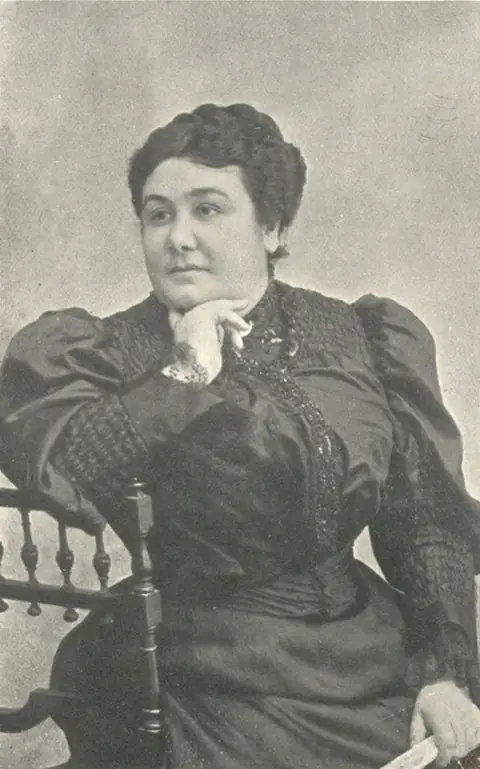
It was in that association’s great hall that, from 4 to 9 May 1924, the National Council of Portuguese Women held, to mark its tenth anniversary, the First Feminist and Education Congress — the first feminist congress in the country.12 The sources name the association and not the building, but by then the association already owned this palace. The organising committee brought together ten women and two men: Adelaide Cabete, president of the Council, Aurora de Castro e Gouveia, Angélica Viana Porto, Domingas Lazary Amaral, Albertina Gamboa, Laura Corte Real, Maria O'Neill, Deolinda Lopes Vieira, Vitória Pais Madeira and Elisa Lima, with Arnaldo Brazão and João Teixeira Simões.8 The President of the Republic, Manuel Teixeira Gomes, presided over the opening session and closed it with a speech: women, to whom the education of their children was entrusted, had “the right to take part in the public life of their country”.123 (A 2024 NOVA FCSH seminar gives the opening as 5 May; this entry follows the dates 4 to 9 May, which the study by Jaqueline Moraes de Almeida and Daniel Giesbrecht also gives.)12
At the opening session, Adelaide Cabete answered “the faint-hearted who ask where Feminism will stop”: it would end “where all ideas of Progress and all generous hope end”.9 Twenty-five papers were presented, seventeen of them written by women.3 Aurora de Castro e Gouveia, the country’s first woman notary, demanded full political equality and the right to vote for women.5 Angélica Viana Porto spoke on assistance to women offenders; Maria O'Neill, on welfare and work; Deolinda Lopes Vieira, on the education of children with disabilities; Domingas Lazary Amaral, on the education of “indígenas” (native) children in the colonies.876 Among the proposals approved were a month’s rest before childbirth for women workers, sex education in schools, equal pay for equal work and legal equality between husband and wife.3
Today the palace houses the São Cristóvão Clinic, run by the same association.11
The Gothic side doorway is listed as a national monument.
1913
The palace becomes the property of the Mutual Aid Association of Commercial Employees of Lisbon.
4 May 1924
The First Feminist and Education Congress opens.
9 May 1924
The congress closes.
Notes on the sources1
Whether the great hall where the congress took place was the one in this palace: the sources say only “on the premises” or in the great hall of the association, and the purchase of the palace in 1913 has only been read in Wikipedia.
Do you know more, or do you have a document? Tell us.