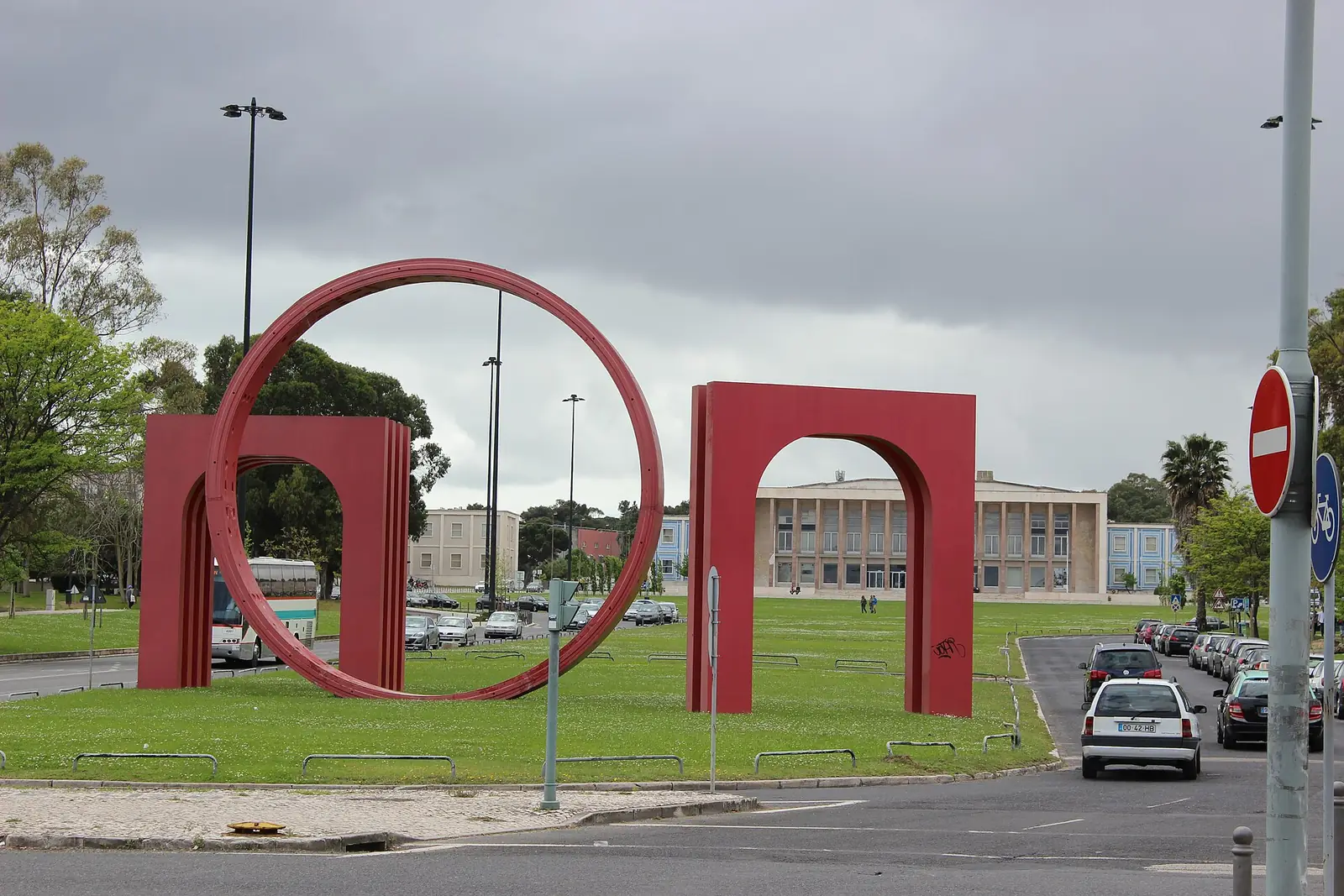
INATEL’s Estádio 1.º de Maio (May Day Stadium) — the former FNAT Stadium — in 2007.Paulo Juntas, CC BY-SA 2.5
Alvalade
FNAT Stadium (renamed Estádio 1.º de Maio)
On the first May Day in freedom, a week after the revolution, the Lisbon march ended in a rally at this FNAT stadium, which that day was renamed Estádio 1.º de Maio (May Day Stadium). At the rally, Mário Soares embraced Álvaro Cunhal.
The stadium belonged to the FNAT, the National Foundation for Joy at Work. On 27 April 1974, two days after the revolution, Decree-Law no. 175/74 made May Day (1 May) a compulsory national holiday, with immediate effect.1 It was, in the words of the Aljube Museum, the first legal achievement after the revolution.2
Four days later, there were large demonstrations in at least 78 places, and around a million people took to the streets.1 In Lisbon, the march gathered on the Alameda D. Afonso Henriques and went through the streets to here; that day the FNAT stadium was renamed Estádio 1.º de Maio (May Day Stadium).12 The 25 April Documentation Centre counts around 500,000 people at the Lisbon demonstration.3
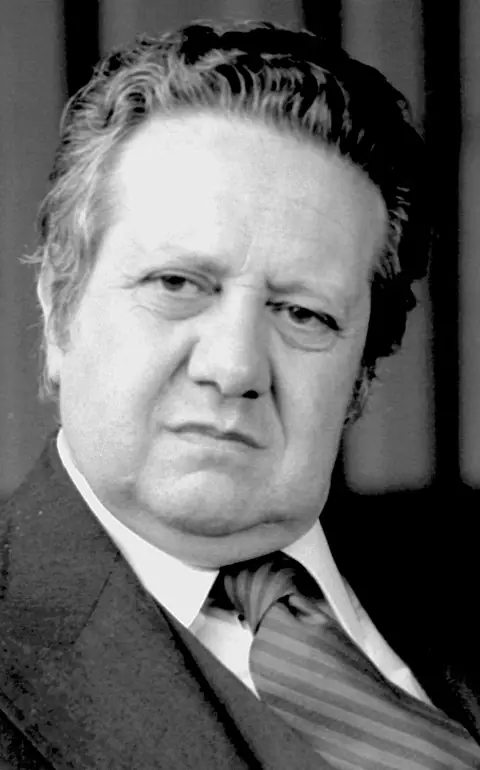
The rally was held under the slogan “Peace, Bread and Freedom” (Paz, Pão e Liberdade). Those who spoke were trade union leaders — Manuel Correia Lopes, Jerónimo Franco, Gomes Peres and José Nunes Lourenço — delegates from foreign organisations and well-known opponents of the deposed regime: Pereira de Moura, for the MDP, the architect Nuno Teotónio Pereira, for the progressive Catholics, and the two leaders who had returned from exile in those days, Mário Soares, of the PS, and Álvaro Cunhal, of the PCP. Soares hailed the Armed Forces and all the parties, “without any exception or any discrimination”, and embraced Cunhal; Cunhal acclaimed the military and the first measures “to liquidate the fascist dictatorship and establish freedom”. The Commemorative Commission for the 50 Years of 25 April calls it the first and last May Day in unity.1
The third chapter of Alfredo Cunha’s film (music by Rodrigo Leão, directed by Miguel Brugo), published by the Commission on 14 February 2024, with photographs from the months that followed the revolution. In the book, this part has a text by Fernando Rosas and includes the rally of the first May Day (1 May) in freedom, at the stadium of the National Foundation for Joy at Work (FNAT).
Original page Licença padrão do YouTube — embed permitido pelo canal oficial da Comissão Comemorativa 50 Anos 25 de Abril
Comissão Comemorativa 50 Anos 25 de Abril, on YouTube. The player only connects to that site when you press “Watch”.
RTP archive footage of the first May Day (1 May) in freedom, in Lisbon, published by the 25 April Association — the crowd, the banners, the raised fists and the soldiers with carnations among the people. That day, the Lisbon march ended in a rally at the stadium of the National Foundation for Joy at Work (FNAT), which was renamed Estádio 1.º de Maio (May Day Stadium).
Original page Licença padrão do YouTube — embed permitido pelo canal oficial da Associação 25 de Abril
Associação 25 de Abril, on YouTube. The player only connects to that site when you press “Watch”.
In other archives
These can only be viewed on each archive’s own website.
5Parque de Jogos 1.º de Maio. Fundação INATEL — consulted on 4 October 2026O antigo Estádio da FNAT, inaugurado em junho de 1959 em Alvalade, é hoje o Parque de Jogos 1.º de Maio, da Fundação INATEL, na Avenida do Rio de Janeiro (1700-330 Lisboa). A página situa por engano o comício em «1 de maio de 1975».