Women of the resistance
Elina Guimarães
1904–1991
Elina Júlia Chaves Pereira Guimarães (Elina Guimarães da Palma Carlos)
A jurist and feminist, a leader of the National Council of Portuguese Women until the Estado Novo (“New State”) closed it down in 1947. A forerunner of “legal feminism”, she championed votes for women, co-education and the rights of working women, and was part of the democratic opposition.
- Born
- 8 August 1904, Lisbon
- Died
- 24 June 1991, Lisbon
Biography
She was born in Lisbon in 1904, the daughter of Vitorino Guimarães, an Army officer, teacher and minister of the First Republic.1 Afonso Costa called her a “woman of the future”.4 While still a student, she challenged in the magazine Vida Académica what Júlio Dantas had written about women; she graduated in Law in Lisbon in 1926, with a mark of 18 out of 20.1 In 1928 she married Adelino da Palma Carlos, a fellow student since secondary school,3 who in 1974 would head the first government after 25 April.5
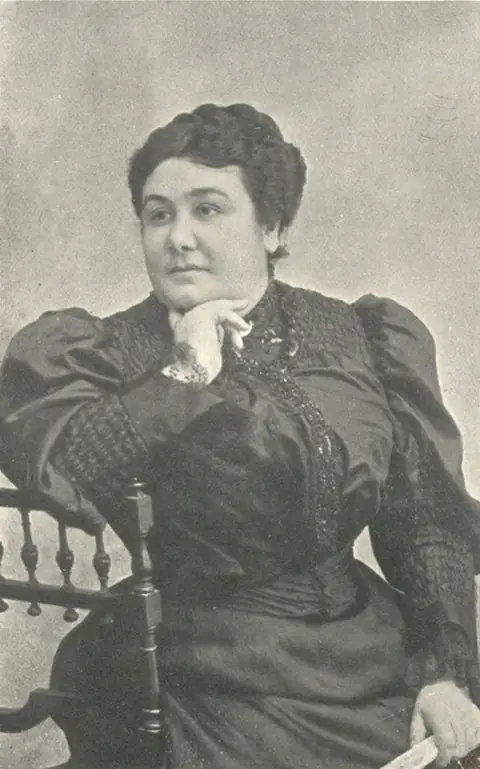
Invited by Adelaide Cabete, she joined the National Council of Portuguese Women,4 where she was secretary-general (1927), vice-president of the board (1928, 1929 and 1931), head of the legal and suffrage sections and editor of the magazine Alma Feminina (1929–1930).1 A forerunner of “legal feminism”, she defined it as the current that “imposes and advocates the equality of the sexes before the law”.1 At the Second Feminist and Education Congress, in 1928, she argued in her paper “Protecção à mulher trabalhadora” (Protection for the working woman) that women should receive part of their wages during the compulsory rest before and after childbirth, and that pregnancy should not be grounds for ending an employment contract.2 She also chaired the executive committee of the national subscription opened by the newspaper O Rebate for the families of political prisoners, deportees and exiles.3
In 1931 she was among those who protested to the Minister of Public Instruction against the end of co-education in primary schools.4 She wrote in the press about women’s rights, as far as the censors allowed, and published O Poder Maternal (Maternal Authority, 1933) and A Lei em que Vivemos (The Law We Live Under, 1937), on the law in women’s lives.1 In 1946 she was elected vice-president of the Council’s general assembly, and was in office when the Estado Novo closed it down, in 1947, at its Amoreiras headquarters.15
In the opposition, she joined the MUD in 1945, took part in the Aveiro Republican Congress, in 1969, and in the Congress of the Democratic Opposition, in 1973, sitting on its national committee. After 25 April she chaired the League for Women’s Civic Rights.1 In 1985, at the close of the International Decade for Women, President Ramalho Eanes made her an Officer of the Order of Liberty.15 She died in Lisbon on 24 June 1991; in November that year, the City Council named a street in Santa Clara after her.1
Places


Dates
Jan 1917
The National Council of Portuguese Women’s magazine “Alma Feminina” comes out10 May 1919
Law abolishes civil restrictions on grounds of sex24 Jun 1928
Second Feminist and Education Congress1945
Women in the Movement of Democratic Unity28 Jun 1947
The police close down the National Council of Portuguese Women25 Nov 1966
New Civil Code keeps the husband as “head of the family”25 Oct 1969
Married women no longer need their husband’s permission to have a passport
People
They crossed paths with her
Adelaide Cabete
1867–1935 · obstetrician and gynaecologist
Manuela Porto
1908–1950 · actress
Maria Lamas
1893–1983 · journalist
Isabel Aboim Inglez
1902–1963 · teacher
Angélica Viana Porto
1881–1938 · philanthropist
Deolinda Lopes Vieira
1888–1993 · primary school teacher and nursery teacher


Videos
In other archives
These can only be viewed on each archive’s own website.
- RTP Arquivos · Video · broadcast on 26 January 1974 · 1 minEncontro de mulheres em LisboaIn January 1974, at a feminist meeting in Lisbon, the Brazilian Romy Medeiros da Fonseca proposes an association to defend the rights of Portuguese women. In the audience are Maria Lamas and Elina Guimarães.Open in the archive
- RTP Arquivos · Video · broadcast on 15 April 1975 · 17 minO Voto das Mulheres – Parte IIn the series “Nome Mulher” (Name: Woman), Elina Guimarães, a former leader of the National Council of Portuguese Women, tells the history of the suffragist movement in Portugal. The programme ends with the bust of the Republic and old photographs of women at demonstrations.Open in the archive
- RTP Arquivos · Video · broadcast on 30 May 1988 · 21 minAs FeministasIn the programme “Mátria” (Motherland), Natália Correia evokes Ana de Castro Osório: her granddaughter, Isabel de Castro, reads a text on the right to vote, and portraits of Carolina Beatriz Ângelo, Maria Veleda and Adelaide Cabete are shown. Elina Guimarães gives her testimony on women’s struggle and 25 April.Open in the archive
Notes on the sources1
- O ano do artigo contra Júlio Dantas na «Vida Académica»: 1922 (Toponímia de Lisboa) ou 1925 (Wikipédia). Ela própria, numa entrevista de 1983 citada por Fernanda de Almeida Pinheiro («Faces de Eva», n.º 52), diz só que o escreveu quando estava na Faculdade e que foi por ele que Adelaide Cabete a convidou para o Conselho — onde entrou em 1925, segundo Anne Cova (mesma revista).
Do you know more, or do you have a document? Tell us.
Sources7
- 1A Rua Elina Guimarães, Mulher de Liberdade. Toponímia de Lisboa (Câmara Municipal de Lisboa) — consulted on 2 October 2026
- 2Conselho Nacional das Mulheres Portuguesas. Wikipédia (pt) — consulted on 2 October 2026
- 3[2502.] Conselho Nacional das Mulheres Portuguesas || Direcção - 1928. Silêncios e Memórias (blogue) — consulted on 2 October 2026
- 4Mulheres pela Igualdade (biografias). CIG – Comissão para a Cidadania e a Igualdade de Género — consulted on 2 October 2026
- 5Elina Guimarães. Wikipédia (português) — consulted on 2 October 2026
- 6Anne Cova, O ativismo feminista transnacional de Elina Guimarães através do manuscrito «La Femme portugaise» e de algumas cartas pós-28 de Maio de 1926. Faces de Eva, n.º 52 (NOVA FCSH) — consulted on 4 October 2026Aos 21 anos, estudante de Direito, «em 1925, integrou o CNMP a convite da presidente fundadora, Adelaide Cabete»; assinava «Elina Guimarães da Palma Carlos» depois de casar (1928).
- 7Fernanda de Almeida Pinheiro, Elina Guimarães, a mulher do futuro. Faces de Eva, n.º 52 (NOVA FCSH) — consulted on 4 October 2026«Elina Júlia Chaves Pereira Guimarães nasceu […] a 8 de agosto de 1904»; o artigo contra «O terceiro sexo», de Júlio Dantas, foi escrito «quando estava na Faculdade» e levou Adelaide Cabete a convidá-la para o CNMP.