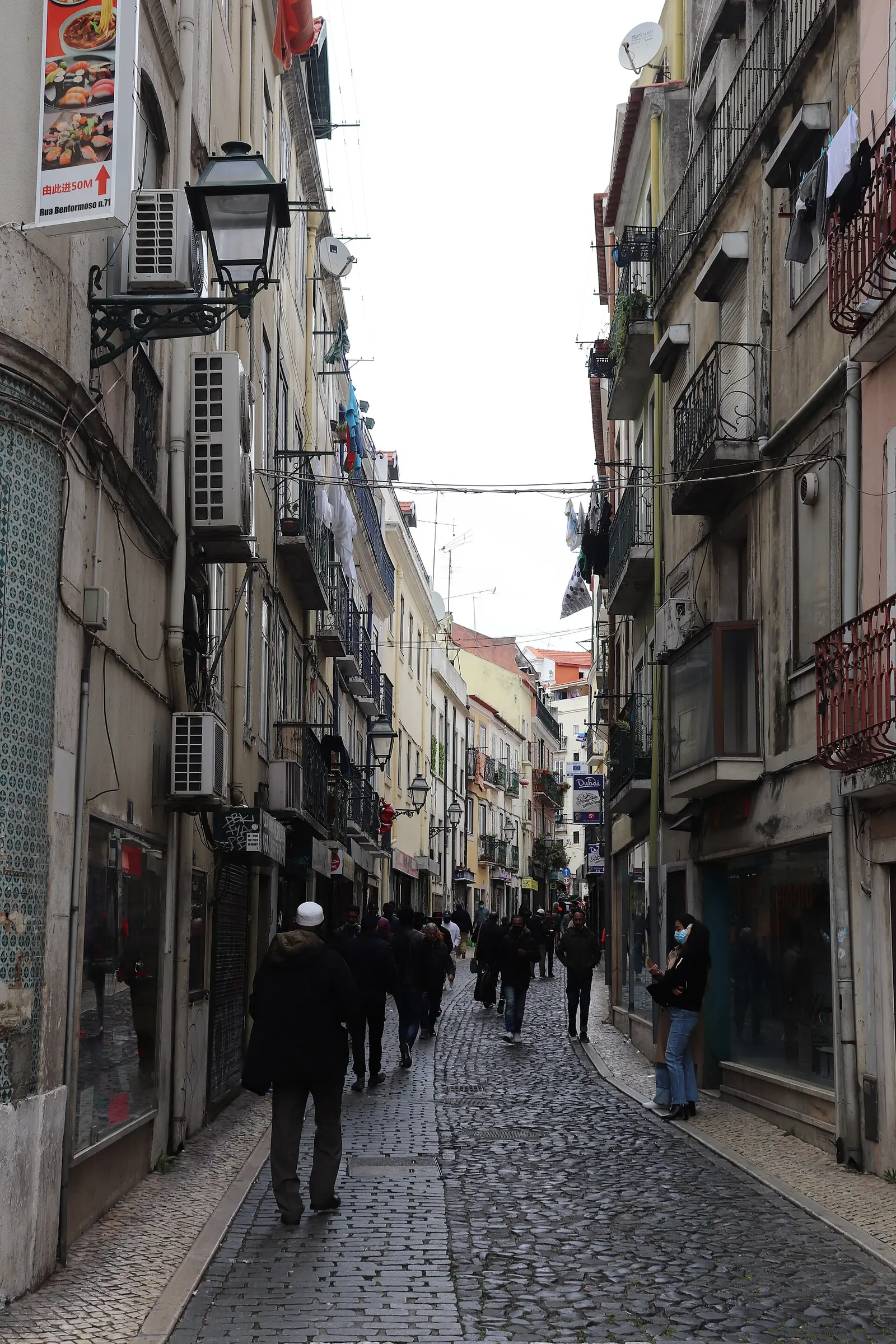
Rua Angelina Vidal, in Graça, in October 2016.swissbert, CC0 1.0
São Vicente / Arroios / Penha de França
Rua Angelina Vidal
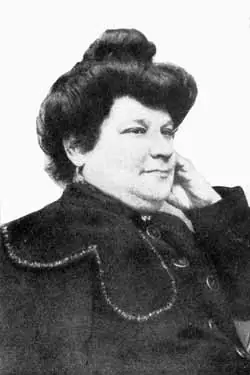
In 1924 the former Caminho do Forno do Tijolo was named after Angelina Vidal, a republican propagandist, with the caption “Illustrious Lecturer and Propagandist of Social Emancipation”. She did not live here: she died in 1917 on nearby Rua de São Gens.
This street was the Caminho do Forno do Tijolo. By an edict of 17 October 1924, seven years after the death of Angelina Vidal, Lisbon City Council gave it her name, with the caption “Illustrious Lecturer and Propagandist of Social Emancipation” (Ilustre Conferencista e Propagandista da Emancipação Social); an edict of 8 June 1925 extended the name to the whole of the old road, which crosses the present-day parishes of Arroios, Penha de França and São Vicente.1
Angelina Vidal was a teacher, journalist and writer, and spread republican ideas at rallies and in newspapers; she defended the rights of women workers and the education of women as the road to equality. She died almost destitute on 1 August 1917, at no. 41 Rua de São Gens, close by — the day after she had at last been granted the survivor’s pension for her husband’s death.1
Republican Lisbon gave women little room in its streets: from 1910 to 1926 it gave 14 streets women’s names, mostly those of heroines — the Nurses of the Great War, the English nurse Edith Cavell, Sara de Matos, Maria da Fonte — or of local tradition, and only four names of women known for their work: Angelina Vidal, the painter Josefa de Óbidos, the actress Emília das Neves and the opera singer Luísa Todi. Under the same Republic, women did not vote: Carolina Beatriz Ângelo managed to in 1911, as a head of household, and a 1913 law then reserved that right for male heads of household.2
Whether the street signs carry the 1924 caption, “Illustrious Lecturer and Propagandist of Social Emancipation” (Ilustre Conferencista e Propagandista da Emancipação Social).
Do you know more, or do you have a document? Tell us.






.jpg)