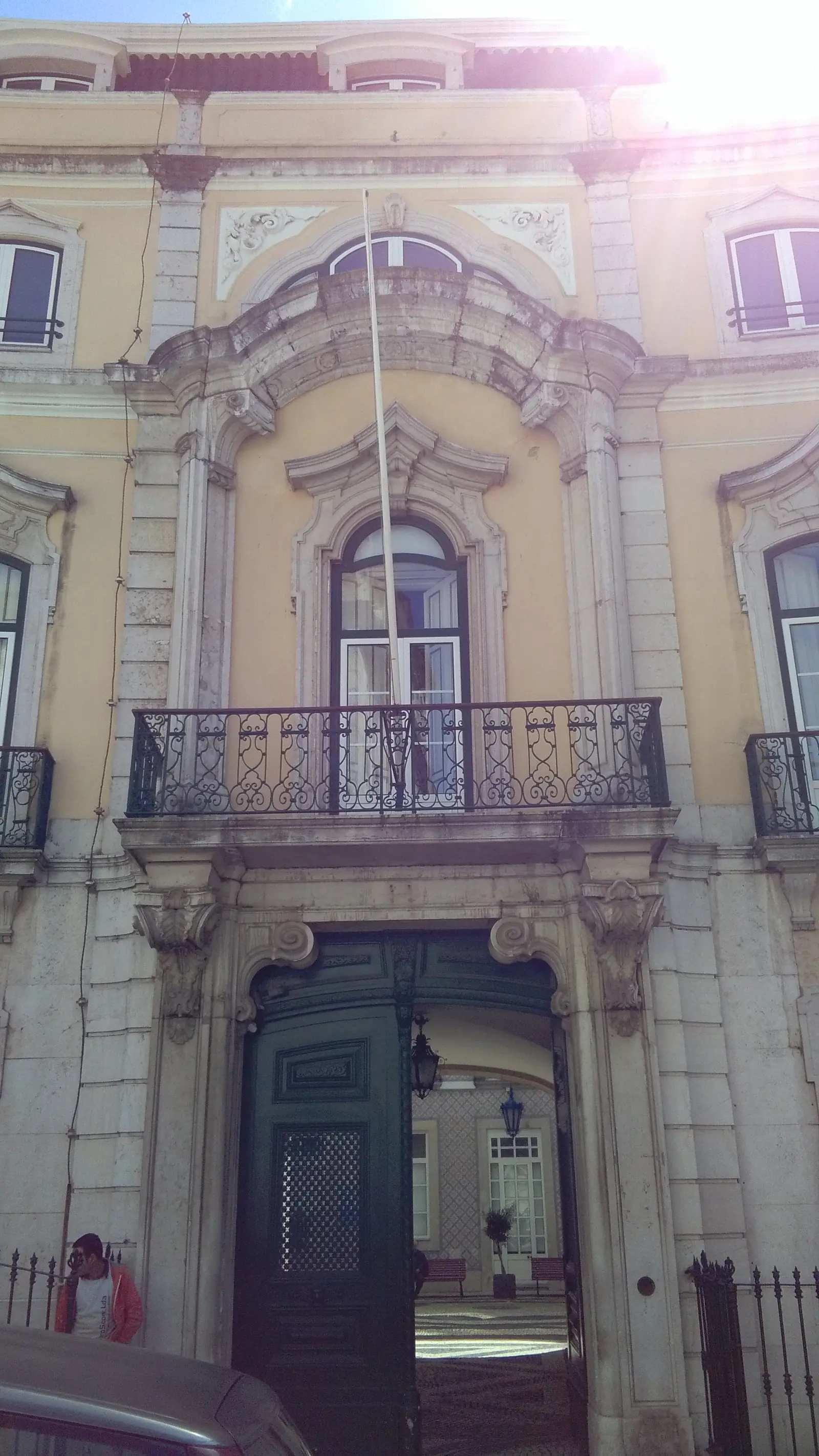
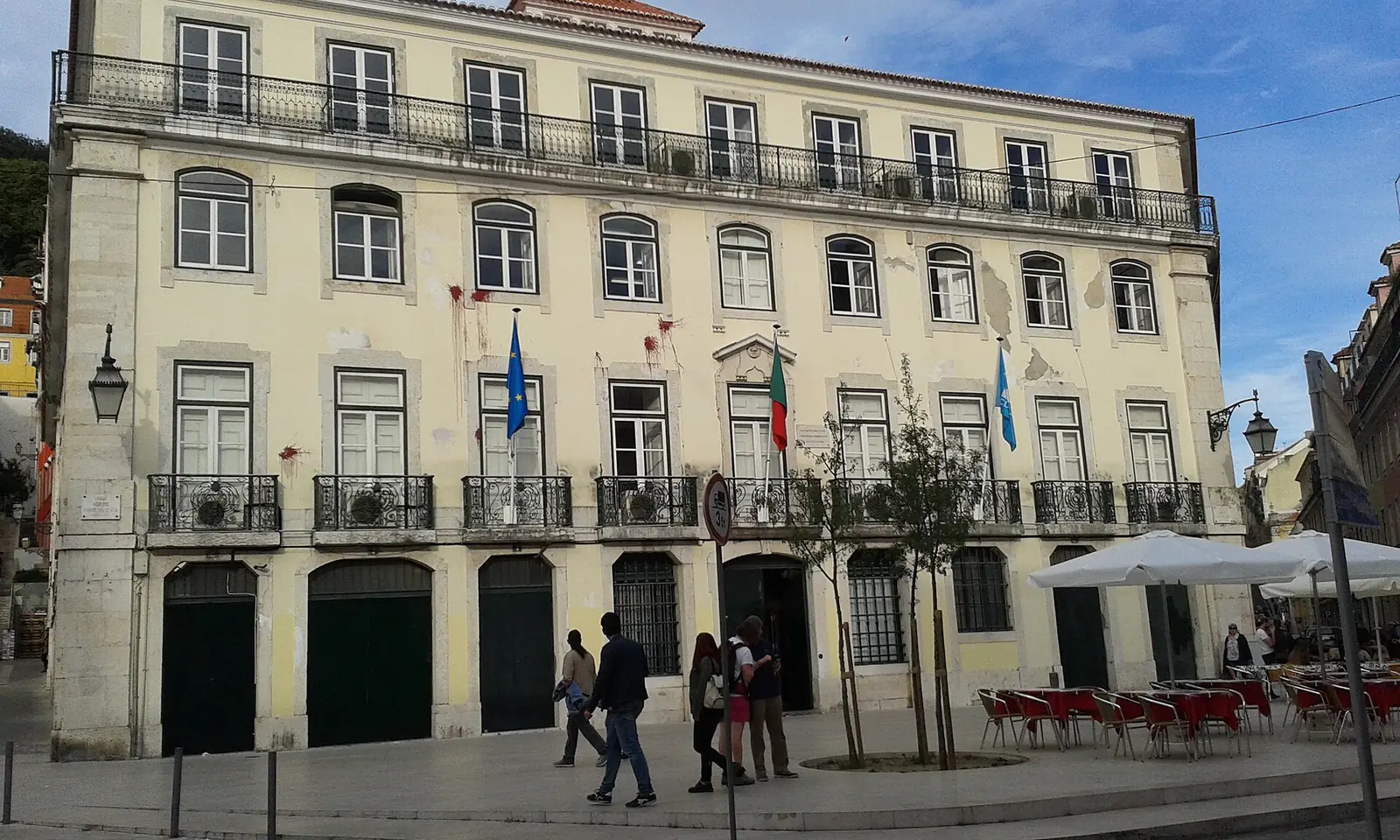
The former Aljube, now the Aljube Museum – Resistance and Freedom, on Rua de Augusto Rosa, in May 2017.Ardfern, CC BY-SA 4.0
Santa Maria Maior
Aljube Prison
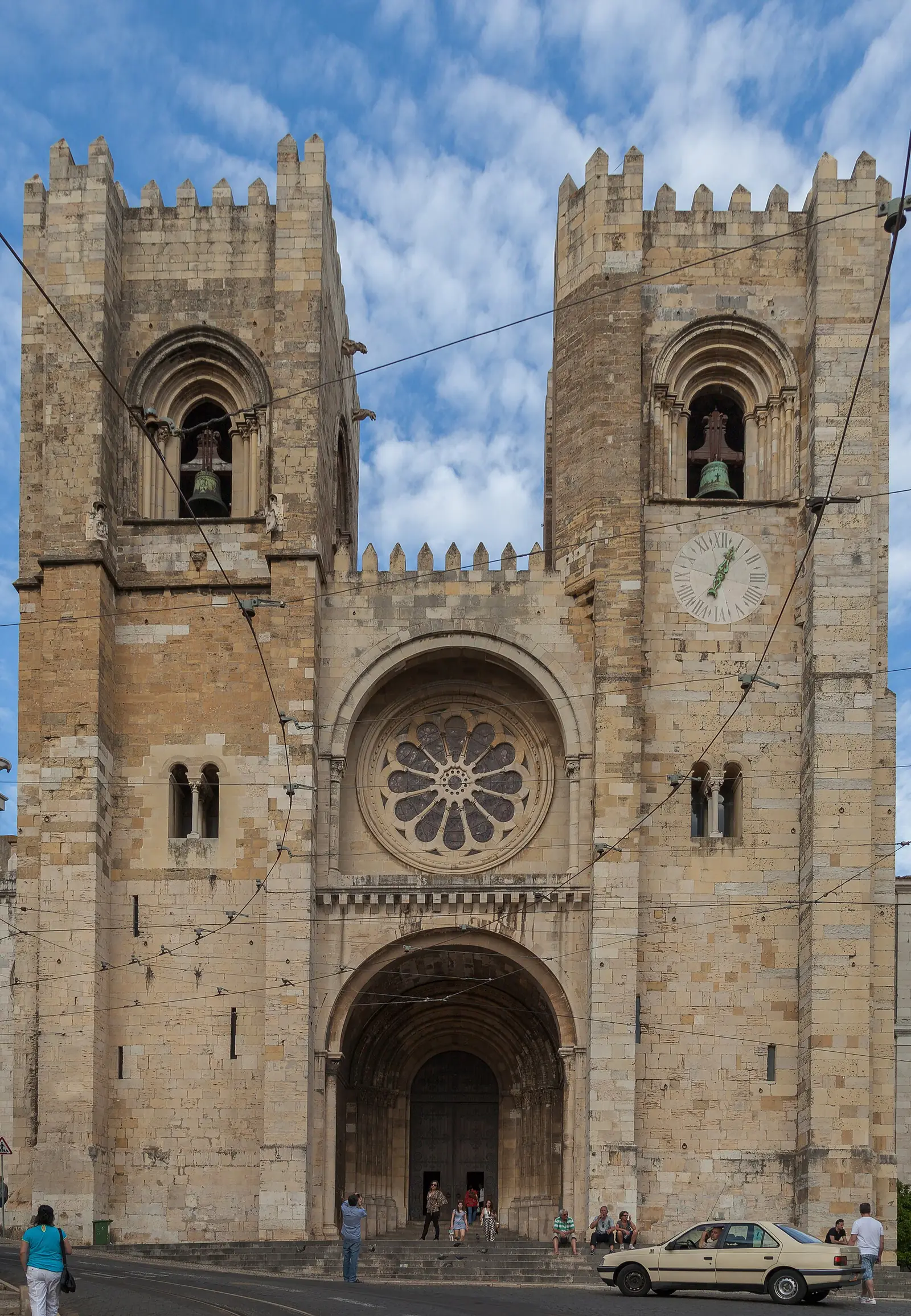
Next to the cathedral, it was a political prison from 1928 to 1965 — the one with the isolation cells the prisoners called “curros” (isolation cells) or “gavetas” (drawers). Since 2015 it has been the Aljube Museum – Resistance and Freedom.
Today: Aljube Museum – Resistance and FreedomThere is a marker at the site
The name comes from the Arabic al-jubb — a dry well, a cistern, a dungeon. According to the museum, the building beside the cathedral dates back to Roman and Islamic times and was nearly always a prison: an ecclesiastical gaol, a women’s prison — between the late 19th and the early 20th century — and, in the end, a political prison.112
In 1928, two years after the coup of 28 May, the Aljube began to take political prisoners — men only. In 1934 it came under the direct administration of the political police (the PVDE) and was used mainly for prisoners on remand, who waited there for the investigation of their case, their trial or their deportation. It was from here that many were taken for interrogation at the police headquarters on Rua António Maria Cardoso.2
From 1943, thirteen isolation cells were built on the second floor, the “curros”: about a metre wide, in permanent half-darkness, with a bunk that, once lowered, left the prisoner no room to move, and two doors — one barred and the other of wood with a spyhole. In the first months of incommunicado detention, which could last up to six, prisoners had no paper, books, newspapers or watch. There was also a punishment cell under the stairs, in the dark, on bread and water.3
Among many others, the painter José Dias Coelho (arrested in 1949, ten days incommunicado), Domingos Abrantes (months in the curros in 1959) and the communist leader Militão Ribeiro (arrested in 1942) passed through here. Several prisoners fell ill and died after going through the Aljube infirmary.4
Women arrested by the political police went mostly to the Mónicas Prison, in Graça, and from 1938 to the North Redoubt of Caxias Fort.
In 1963, an Amnesty International report and the visit of the Briton Lord Russell of Liverpool drew international attention to conditions in the prison. It closed in August 1965, and the prisoners were moved to Caxias.2
The Aljube Museum – Resistance and Freedom opened on 25 April 2015. The second floor recalls isolation in the curros; the third, those who died at the hands of the repressive system. In 2021 the former visiting room hosted the exhibition “Women and Resistance – New Portuguese Letters and other struggles” (Mulheres e Resistência – Novas Cartas Portuguesas e outras lutas), which now travels as a touring exhibition.56
A documentary edited by Sofia Gomes for the exhibition “Women and Resistance – New Portuguese Letters and other struggles” (“Mulheres e Resistência – Novas Cartas Portuguesas e outras lutas”), with excerpts from the testimonies the Aljube Museum has been recording since 2015: sixteen women talk about resistance to the dictatorship and the struggle for women’s rights. This version has Portuguese Sign Language (LGP) interpretation; the version without LGP is on the same channel (XmUbNbnHgKg, 2022).
Original page Licença padrão do YouTube — embed permitido pelo canal oficial do Museu do Aljube
Museu do Aljube Resistência e Liberdade, on YouTube. The player only connects to that site when you press “Watch”.
Conceição Matos and Domingos Abrantes tell together, in a testimony recorded by the museum on 7 October 2015, of life underground, imprisonment and torture. The museum’s keywords include the Aljube prison, Caxias, the PIDE interrogations and the escape from Caxias.
Original page Licença padrão do YouTube — embed permitido pelo canal oficial do Museu do Aljube
Museu do Aljube Resistência e Liberdade, on YouTube. The player only connects to that site when you press “Watch”.
A recording of one of the guided tours of its exhibitions that the Aljube Museum runs every month: the one on 7 July 2018, led by Luís Farinha, with commentary by the former political prisoner Adelino Pereira da Silva.
Original page Licença padrão do YouTube — embed permitido pelo canal oficial do Museu do Aljube
Museu do Aljube Resistência e Liberdade, on YouTube. The player only connects to that site when you press “Watch”.
A report by Lisbon City Council on the opening of the Aljube Museum, on 25 April 2015, in the premises of the former political prison. It includes the words of the mayor, Fernando Medina: “We must be aware of what freedom cost.”
Original page Licença padrão do YouTube — embed permitido pelo canal oficial da Câmara Municipal de Lisboa
Câmara Municipal de Lisboa, on YouTube. The player only connects to that site when you press “Watch”.
José Mário Branco’s testimony, recorded by the Aljube Museum on 16 May 2019, six months before he died. Going by the museum’s keywords, he talks about the Aljube prison, the PIDE and the interrogations, the students, the colonial war, exile and May 1968.
Original page Licença padrão do YouTube — embed permitido pelo canal oficial do Museu do Aljube
Museu do Aljube Resistência e Liberdade, on YouTube. The player only connects to that site when you press “Watch”.
Jorge Querido, from Cape Verde, was a leader of the House of the Students of the Empire in Lisbon from 1959, helped to copy and distribute the 1960 “Mensagem ao Povo Português” (Message to the Portuguese People) and coordinated the section of the African Party for the Independence of Guinea and Cape Verde (PAIGC) in Portugal. In the testimony the Aljube Museum published in 2024, he tells of his arrests in 1961 and 1962, the sleep torture and the “estátua” (statue) torture, and his isolation in the Aljube’s “curros” (isolation cells).
Original page Licença padrão do YouTube — embed permitido pelo canal oficial do Museu do Aljube
Museu do Aljube Resistência e Liberdade, on YouTube. The player only connects to that site when you press “Watch”.
In other archives
These can only be viewed on each archive’s own website.
The ticket price: the museum’s “Prices” page says €4 (with the discounts calculated on that amount: €2, €2.80, €3.20) and its “How to get here” page says €3 (both consulted again on 4 October 2026). That is why the price is not given in the visit details.
Since when, and until when, the building was a women’s prison: Eliana Oliveira’s dissertation (2012) says only “between the late 19th and the early 20th century”.
Whether there were women political prisoners in the Aljube after 1928, and when: the museum’s sources only record women held for common crimes, before that date, but the URAP survey “Elas estiveram nas prisões do fascismo” (They were in the prisons of fascism, 2021) records, according to its public presentation, women tortured and held incommunicado “in the Aljube” (Lisbon’s or Porto’s?). The book and the names still have to be seen; that is why the text says only that women prisoners went “mostly” to the Mónicas and to Caxias.
Do you know more, or do you have a document? Tell us.
Sources13
1Sobre o Museu. Museu do Aljube Resistência e Liberdade (EGEAC) — consulted on 2 October 2026
2Cadeia do Aljube. Comissão Comemorativa 50 Anos 25 de Abril — consulted on 2 October 2026
3Cárceres do império. Memória Comum – Memorial aos Presos e Perseguidos Políticos — consulted on 2 October 2026
12Eliana Catarina Gonçalves de Oliveira, Aljube, uma cadeia política. Universidade Nova de Lisboa, FCSH (dissertação de mestrado, repositório RUN), 2012 — consulted on 4 October 2026O resumo diz que, entre os finais do século XIX e os inícios do século XX, o edifício do Aljube serviu de prisão de mulheres.
13Apresentação do livro «Elas estiveram nas prisões do fascismo». Jornal Rostos (Barreiro), 2021 — consulted on 4 October 2026Na apresentação do livro da URAP, que levanta 1755 mulheres presas em Portugal entre 1934 e 1974, a historiadora Rosalina Carmona disse que nele se registam mulheres que passaram por tortura e incomunicabilidade «em Caxias, no Aljube, em Peniche, em Angra do Heroísmo» e nas delegações da PIDE.
Coordinates: OpenStreetMap (Nominatim), consultado a 2 de outubro de 2026.





.JPG)