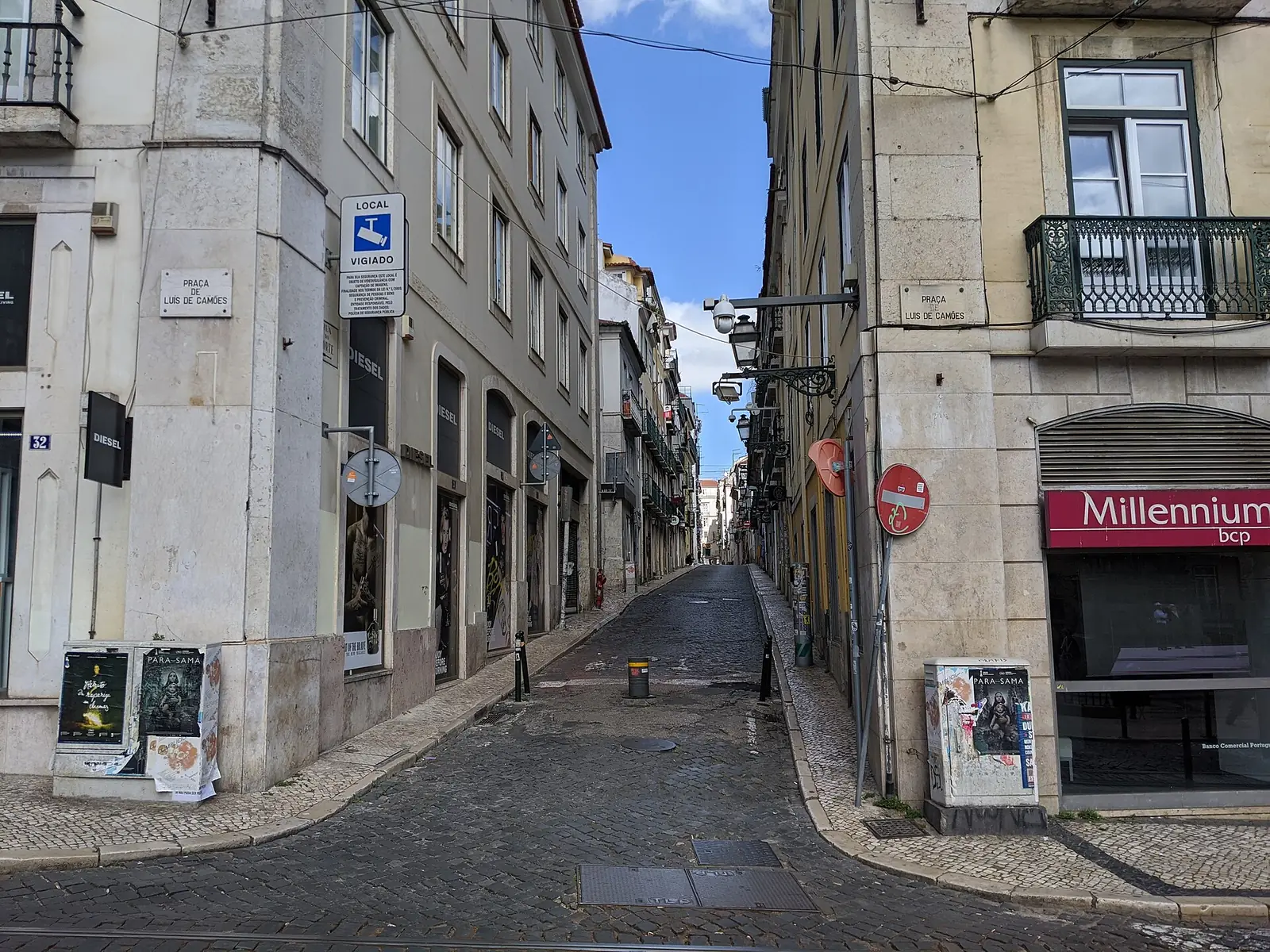
Rua da Misericórdia, between the Chiado and the Bairro Alto, in November 2025.Vitor Oliveira, CC BY-SA 4.0
Misericórdia
Headquarters of the Censorship Services / “Prior Examination” (1969-1974)
The last headquarters of press censorship, from 22 September 1969 to 25 April 1974, opposite the offices of the newspaper “República”. Newspapers delivered their proofs here for the “blue pencil”; on 26 April the building was stormed by the people.
Today: A building on Rua da MisericórdiaApproximate location
Prior censorship of the press lasted throughout the dictatorship and moved house several times, always along the Carmo–Bairro Alto–Restauradores axis, close to the newsrooms. The researcher Joaquim Cardoso Gomes identified its successive headquarters: the GNR’s Carmo Barracks (from 22 June 1926 to 1934); Rua Nova da Trindade, 62, first floor (1934-1943, a building that no longer exists); Largo Trindade Coelho, 9, first floor (1943-1947/48); Calçada da Glória, 9, second floor, in the Palácio Foz building (1947/48-1961); Rua de São Pedro de Alcântara, 45, second floor (11 June 1961-1968, with proofs delivered via Rua do Diário de Notícias, 150; the magazine JJ – Jornalismo & Jornalistas, where the study came out, illustrates it with the Palácio Ludovice, which also housed the National Propaganda Secretariat, SPN); Rua de São Pedro de Alcântara, 81, ground floor (11 December 1968-1969); and, finally, Rua da Misericórdia, 125, first floor, from 22 September 1969.1
Newspapers sent their page proofs by messenger and got them back stamped “Vetted by the Censorship” (Visado pela Censura)3 — the “blue pencil”, as censorship came to be known. The structure was small — some 70 to 90 censors and 30 assistants, a tenth the size of the PIDE/DGS, according to Cardoso Gomes — but it shaped all information. In 1972 the services were renamed “Prior Examination”, with no change in practice.1
Many texts by women fell foul of this sieve: Diana Andringa, when she worked at Vida Mundial, had an article on the colonial war in Angola cut;5 Maria Teresa Horta’s Minha Senhora de Mim (My Lady of Myself, 1971) was seized by the PIDE;6 and the Novas Cartas Portuguesas (New Portuguese Letters, 1972) were withdrawn from circulation shortly after publication and took their authors to court. The silence imposed on the newspapers about that case was such that, at one point, not even the date and time of the hearings could be reported.4
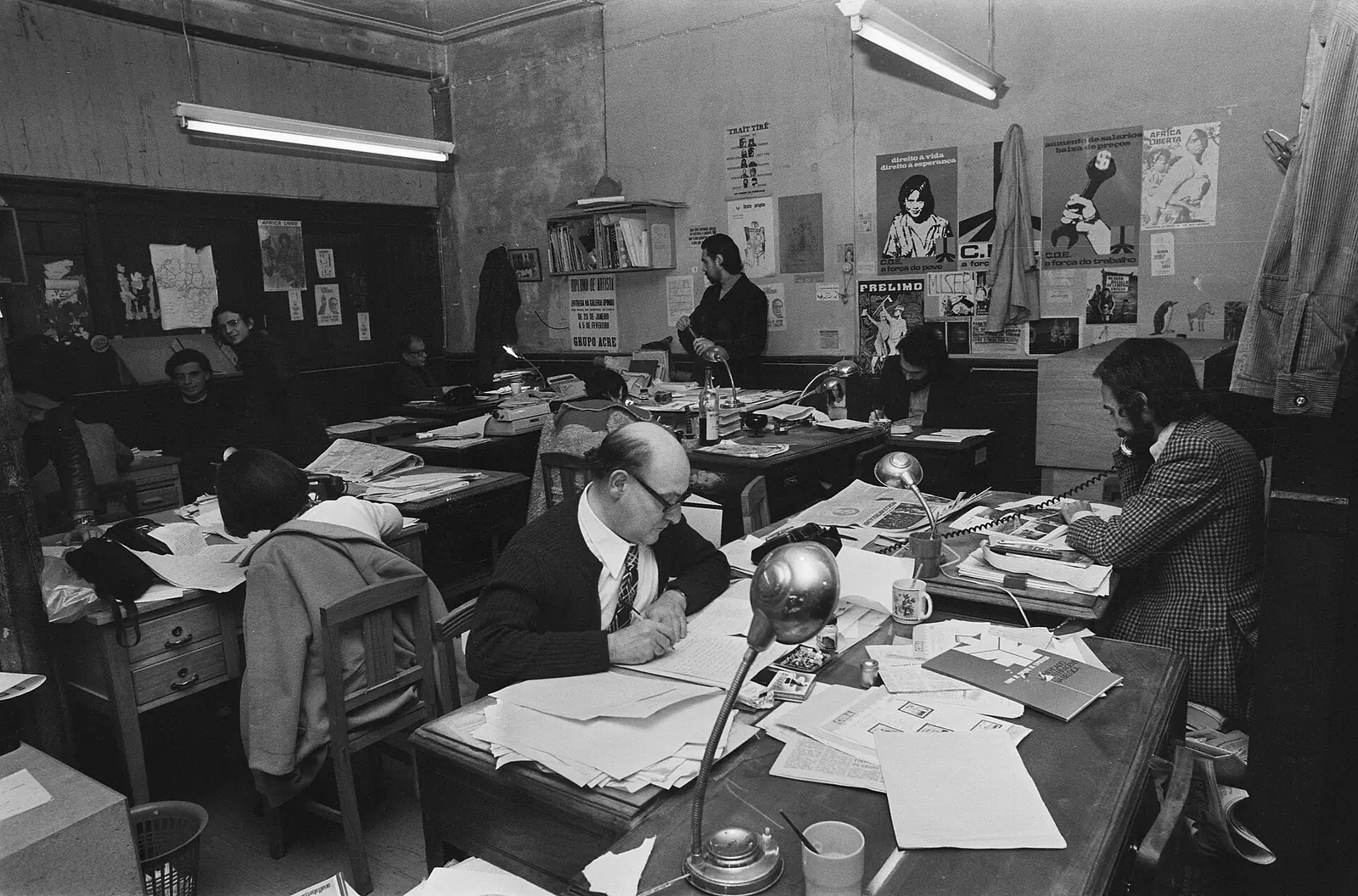
Opposite, across the street, were the offices of República, the daily most closely identified with the opposition. On 25 April 1974, the paper came out with the line “This newspaper has not been vetted by any Censorship Commission” (Este jornal não foi visado por qualquer Comissão de Censura), and the censors abandoned the premises to the crowd. On the morning of the 26th the people stormed the headquarters; shortly before, the last man in charge, Mário Bento, had advised a colonel to “stay put and keep quiet”.1
Headquarters of the Censorship Services / “Prior Examination” (1969-1974)Rua da Misericórdia, 125, 1.º, Lisboa (entrega de provas pelas traseiras: Rua das Gáveas, 90, 3.º)
Coordenadas aproximadas (troço da rua); o n.º 125 não está geocodificado no OpenStreetMap.
Sequência de 25-26 de abril: um texto da revista «JJ – Jornalismo & Jornalistas», no mesmo número do estudo de Cardoso Gomes, diz que os censores fugiram da Rua da Misericórdia uma ou duas horas depois de o República sair, a 25; Cardoso Gomes fala de assalto popular na manhã de 26. Ambas as versões podem ser compatíveis.
O uso atual do edifício e se tem placa evocativa: não verificados.
Do you know more, or do you have a document? Tell us.
8Minha Senhora de Mim, Maria Teresa Horta (1971), Lisboa, Dom Quixote. Arquipélagos (arquivo de imagens em linha) — consulted on 4 October 2026O livro saiu em abril de 1971 na Dom Quixote; a 3 de junho a editora foi alvo de um auto de busca e apreensão da PIDE/DGS, estendido a todas as livrarias do país.
9Maria Teresa Horta: a censura de «Minha Senhora de Mim» (1971). Esquerda.net — consulted on 4 October 2026Transcreve, do processo de Maria Teresa Horta na Torre do Tombo, o auto de apreensão do livro numa livraria de Setúbal, a 14 de junho de 1971, lavrado por um agente da DGS.
Coordinates: OpenStreetMap (Nominatim), consultado a 2 de outubro de 2026.



.jpg)