
Image credit: Hipersyl · CC BY-SA 4.0
Walk · Culture and censorship · on foot
A seagull was flying
From the songs the censors cut to the song the streets sang, from the Chiado to Entrecampos
- Distance
- 5.5 km
- Duration
- 2 h 10 min
- Stops
- 6
- Difficulty:
- Moderate
Stops
Map of the walk “A seagull was flying”, with 6 numbered stops. The list of stops follows the map.
The stops
Stop 1: : 1969 — “Whoever makes a child, makes it for pleasure”Today: São Luiz Municipal Theatre
Rua António Maria Cardoso, 38, 1200-027 Lisboa
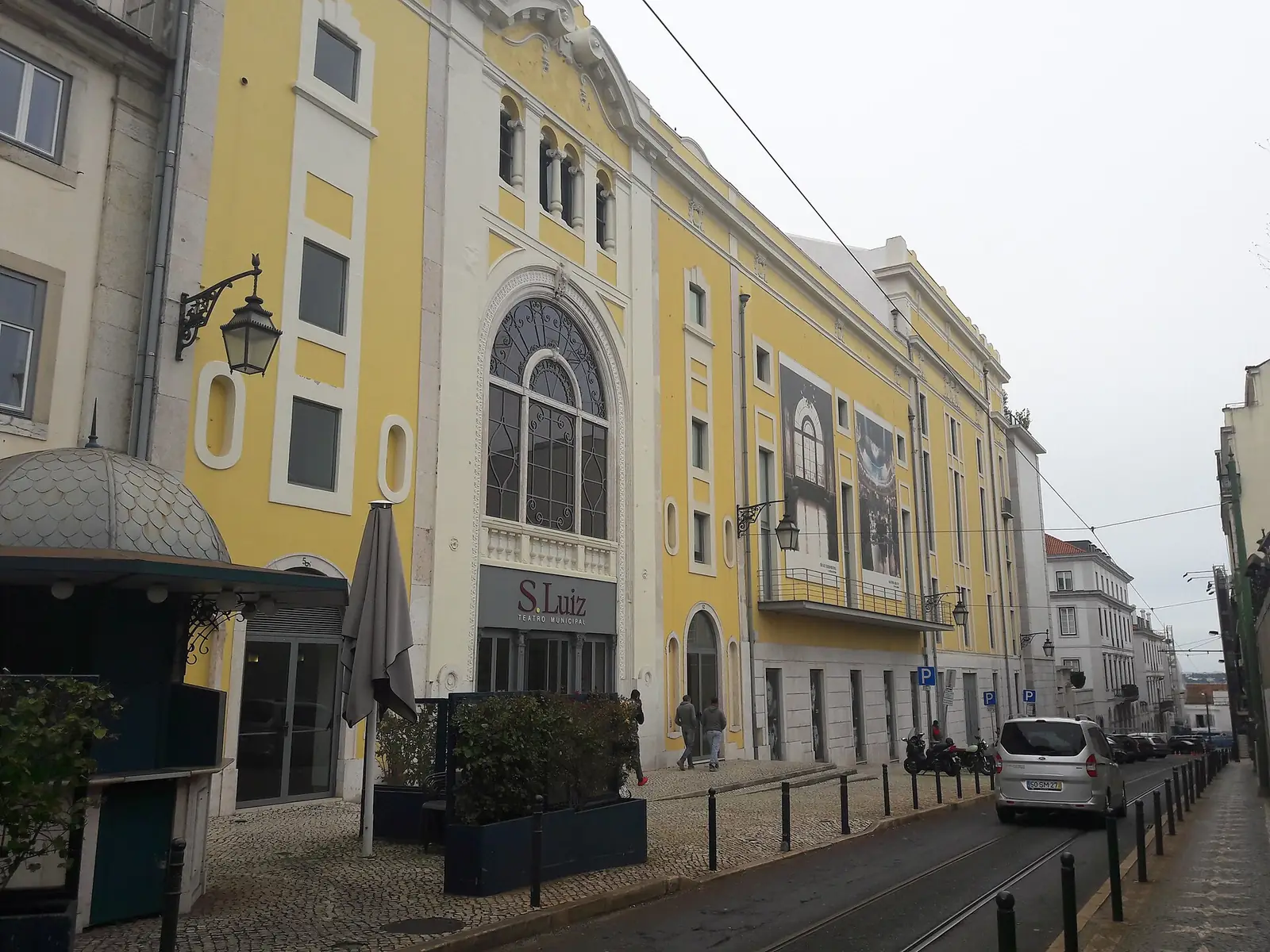
The façade of the São Luiz Theatre, on Rua António Maria Cardoso, in the Chiado, in March 2018. Hipersyl, CC BY-SA 4.0 On 24 February 1969, the Grande Prémio TV da Canção (TV Song Grand Prix) left the studios for the first time and was broadcast live from this stage, presented by the actress Maria de Lourdes Norberto.1011 It was won by “Desfolhada Portuguesa” (Portuguese Husking), a poem by José Carlos Ary dos Santos with music by Nuno Nazareth Fernandes, sung by Simone de Oliveira, who had not been the first choice.1210 The censors let through the line “Whoever makes a child, makes it for pleasure” (Quem faz um filho, fá-lo por gosto), which offended the most conservative morality.10 Fifty years later, the singer told Visão that she was insulted in restaurants and pestered in the street, “above all by men”, and that she came close to being arrested.4 Teresa Paula Brito also competed that night; she turns up again at the Coliseu and at the end of the route.11
The theatre lived through those years, as it says itself, “next door to the headquarters of the political police”: the PIDE headquarters stood on this same street, a few steps away.13 In May 1974, with freedom already won, the Emissora Nacional and RTP organised a “free singing” show here: poems by Sophia de Mello Breyner Andresen, Manuel Alegre and other poets were recited, and “Cantar Não É Talvez Suficiente” (Singing Is Perhaps Not Enough), by Manuel Alegre, with music by Francisco Fanhais, was sung.14
- 24 Feb 1969“Desfolhada Portuguesa” (Portuguese Husking) wins the Grande Prémio TV da Canção (TV Song Grand Prix), at the São Luiz Theatre
- May 1974A “free singing” show at the São Luiz Theatre
Simone de Oliveira sings “Desfolhada Portuguesa” (Portuguese Husking), a poem by Ary dos Santos with music by Nuno Nazareth Fernandes, accompanied by the orchestra, at the 1969 Grande Prémio TV da Canção (TV Song Grand Prix), which RTP broadcast live from the stage of the São Luiz. It is the performance with which the song won the festival.
Original page Licença padrão do YouTube — embed permitido pelo canal oficial da RTP
RTP, on YouTube. The player only connects to that site when you press “Watch”.
To stop 21.1 km · 15 min on foot
Stop 2: : 1974 — The lyrics that came back cutToday: Coliseu dos Recreios
Rua das Portas de Santo Antão, 92-104, 1150-268 Lisboa
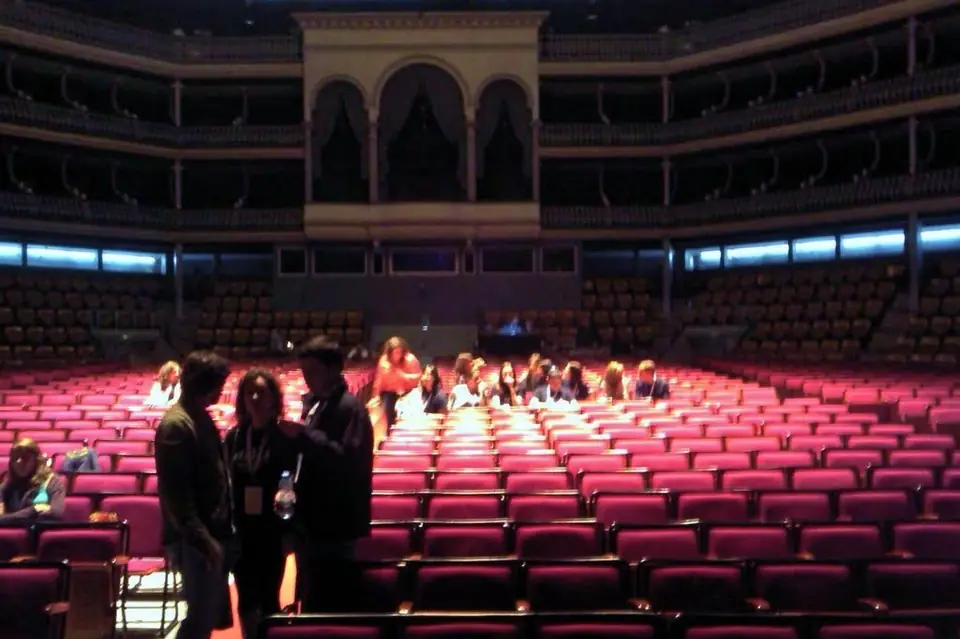
The stalls of the Coliseu dos Recreios, in 2010. Diogomedina, CC0 1.0 For the 1st Portuguese Song Meeting (I Encontro da Canção Portuguesa), which the Casa da Imprensa (Press House) organised here on 29 March 1974, the song lyrics had been sent in advance to the Directorate-General of Public Performances. They came back to the wings at around 20:30, “reasonably truncated, or even cut altogether”, José Jorge Letria later recalled, and the singers learnt of the cuts a few minutes before the start; among the banned songs were “Venham Mais Cinco” (Let five more come) and “A Morte Saiu à Rua” (Death Went Out into the Street), by José Afonso.1 Francisco Fanhais, who was due to perform, was banned and watched from the audience. Manuel Freire said he had left the lyrics behind on the train, and the hall understood, rose to its feet and sang “Pedra Filosofal” (Philosopher’s Stone) with him.1
Maria do Amparo was on the stage: according to the caption in the next day’s Diário de Lisboa, five thousand people rose to their feet to sing “Grândola” with José Afonso, Adriano Correia de Oliveira, José Jorge Letria, Manuel Freire, José Barata Moura, Carlos Moniz, Maria do Amparo and the group Intróito. The newspaper’s report had a text by the journalist Regina Louro, who told how Letria called all the singers onto the stage to sing together. When the Casa da Imprensa prizes were handed out, the hall shouted “Fascists! Fascists!” (Fascistas! Fascistas!) for almost a minute, as the PSP commander keeping watch over the night wrote in his report.1
Other women passed across this stage. Teresa Paula Brito sang here, just once, Maria Teresa Horta’s poems from the record Minha Senhora de Mim (My Lady of Myself), and was booed by an audience that found them too sensual; she left the stage in tears.5 Luísa Basto sang here in 1980, at the 10th anniversary of the CGTP-IN trade union confederation.15 And on 29 January 1983, already ill, José Afonso sang “Grândola” with the hall once more, and at the end shouted what he could not in 1974: “25 April, Always!” (25 de Abril, Sempre!).1 The night of 1974 is also told in the route “Forbidden words”.
- 29 Mar 1974The 1st Portuguese Song Meeting at the Coliseu
- 18 Oct 1980“Os 10 Magníficos” (The Magnificent Ten) at the Coliseu, for the ten years of the CGTP-IN
- 29 Jan 1983José Afonso’s last great concert at the Coliseu
José Afonso sings “Grândola, Vila Morena” (Grândola, swarthy town) at the Coliseu dos Recreios concert of 29 January 1983, in an excerpt published by the José Afonso Association. It was one of the singer’s last great concerts, when he was already ill, and the song that had served as the signal for 25 April was sung together with the audience.
Original page Licença padrão do YouTube — embed permitido pelo canal oficial da Associação José Afonso
Associação José Afonso, on YouTube. The player only connects to that site when you press “Watch”.
To stop 31 km · 15 min on foot
Stop 3: : 1971 — “Queixa das Almas Jovens Censuradas” (Lament of the Censored Young Souls)Rua Rodrigues Sampaio, 52, 5.º andar, Lisboa
Rua Rodrigues Sampaio, 52, 5.º andar, Lisboa
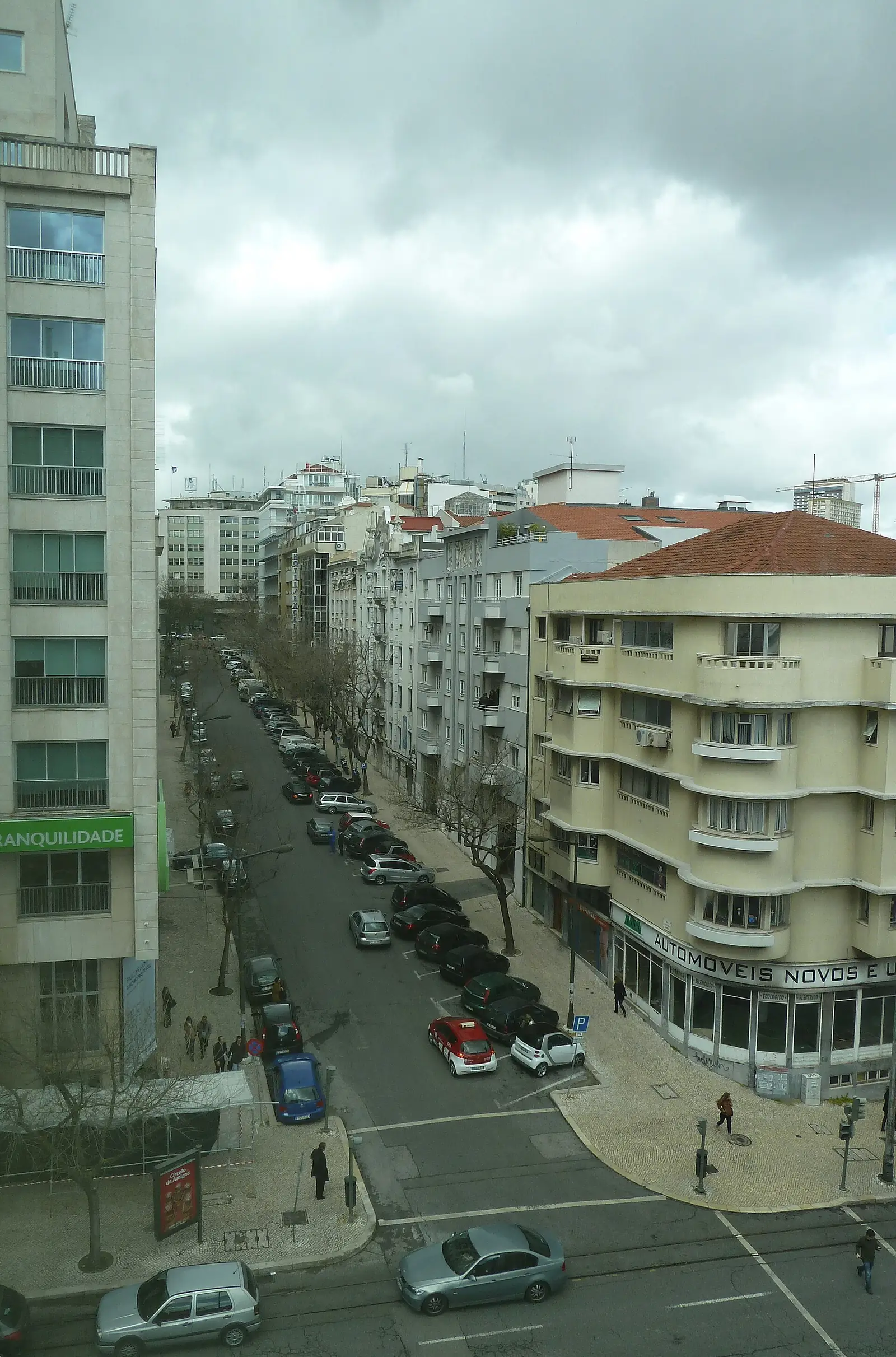
Rua Rodrigues Sampaio, where Natália Correia lived, seen from above, in 2011. deror_avi, CC BY-SA 3.0 Natália Correia lived on the fifth floor of No. 52 on this street from 1953 until her death, in 1993.16 She was living here when the Antologia de Poesia Portuguesa Erótica e Satírica (Anthology of Portuguese Erotic and Satirical Poetry), which she edited and published in 1966, was seized by the censors and took her to trial at the Plenary Court, from 1969 to 1970.16
One of her poems became a song: José Mário Branco, in exile in France since 1963, set “Queixa das Almas Jovens Censuradas” (Lament of the Censored Young Souls) to music and recorded it in 1971 on the LP Mudam-se os Tempos, Mudam-se as Vontades (Times Change, Wills Change), made at the Strawberry Studio, in Hérouville.7181920 He recorded it again in 1982, on the record Ser Solidário (Being in Solidarity).21 Natália wrote the poem in 1957, according to the Museu do Aljube, when she was already living in this house;17 the sources do not say where she wrote it: this is the author’s home, not the place of the song.
The 1971 recording of Natália Correia’s poem set to music by José Mário Branco, from the LP “Mudam-se os Tempos, Mudam-se as Vontades” (Times Change, Wills Change), recorded in France, in exile. The track reaches YouTube through the label’s distributor, on the singer’s automatic channel.
Original page Licença padrão do YouTube — faixa entregue ao YouTube pela Parlophone Spain (℗ 1971 José Mário Branco, em licença exclusiva à Warner Music Portugal); embed permitido (oEmbed)
Warner Music Portugal (canal «José Mário Branco – Topic», do YouTube), on YouTube. The player only connects to that site when you press “Listen”.
To stop 41.1 km · 15 min on foot
Stop 4: : 1969 — “Zip-Zip” and the “obscene” songToday: Villaret Theatre
Avenida Fontes Pereira de Melo, 30-A, 1050-122 Lisboa
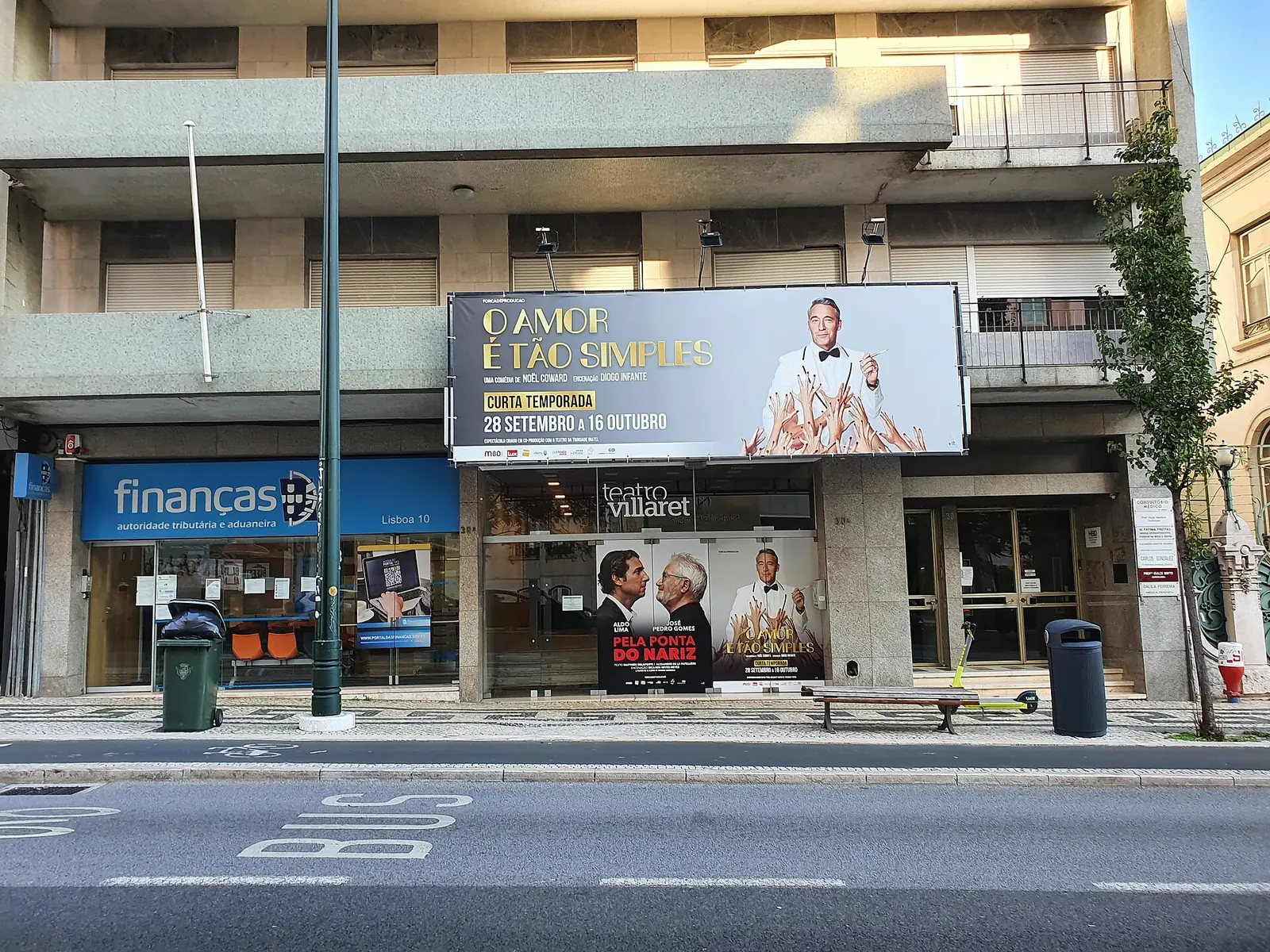
The entrance to the Villaret Theatre, on the ground floor of a building on Avenida Fontes Pereira de Melo, in October 2022. Joehawkins, CC BY-SA 4.0 Raul Solnado opened this theatre on 10 January 1965.22 Four years later, on 26 May 1969, RTP premiered Zip-Zip here, by Solnado, Carlos Cruz and Fialho Gouveia, recorded before a live audience: on the first programme, the actress Laura Soveral recited Almada Negreiros’s poem “Pede-se a uma criança: desenha uma flor!” (A child is asked: draw a flower!), and the guest was Almada himself.23 Until December, on Monday nights, the programme brought into people’s homes a generation of singers with guitars in hand, the “baladeiros” (balladeers).824
It was on this stage that Manuel Freire first sang “Pedra Filosofal” (Philosopher’s Stone) in public, on the poem by António Gedeão; he sang it again on the last programme and, in 1971, came back here to receive the “bronze disc”, for ten thousand records sold.824 Maria do Amparo also appeared on the programme, and the broadcast of Francisco Fanhais’s “Cantilena” required backstage negotiations with the censors.258
Ana Maria Teodósio sang on Zip-Zip alongside Carlos Alberto Moniz.258 The first song she chose, of “delicate feminine sensuality”, in the words of Observador — “my long, smooth legs / are vaults are temples” (minhas pernas longas, lisas, / são abóbadas são templos) — was vetoed by the censors as “obscene”; she sang the second, “Meninos” (Children), and no recording of either survives.8 In 1971, she was the first to record “Manuel”, Ermelinda Duarte’s song about the colonial war — and it is Ermelinda who waits at the end of the route.8
Manuel Freire sings “Pedra Filosofal” (Philosopher’s Stone), a poem by António Gedeão set to his own music, in a digital release by World Music Records published on 1 February 2020. The label does not say what year the recording is from; the song was first heard in public on “Zip-Zip”, at the Villaret Theatre, in 1969.
Original page Licença padrão do YouTube — faixa entregue ao YouTube pela World Music Records; embed permitido (oEmbed)
World Music Records (canal «Manuel Freire – Topic», do YouTube), on YouTube. The player only connects to that site when you press “Listen”.
To stop 51.2 km · 20 min on foot
Stop 5: : 24 April 1974, 22:55 — The first signalAvenida Elias Garcia, 162, 7.º, 1050-102 Lisboa
Avenida Elias Garcia, 162, 7.º, 1050-102 Lisboa
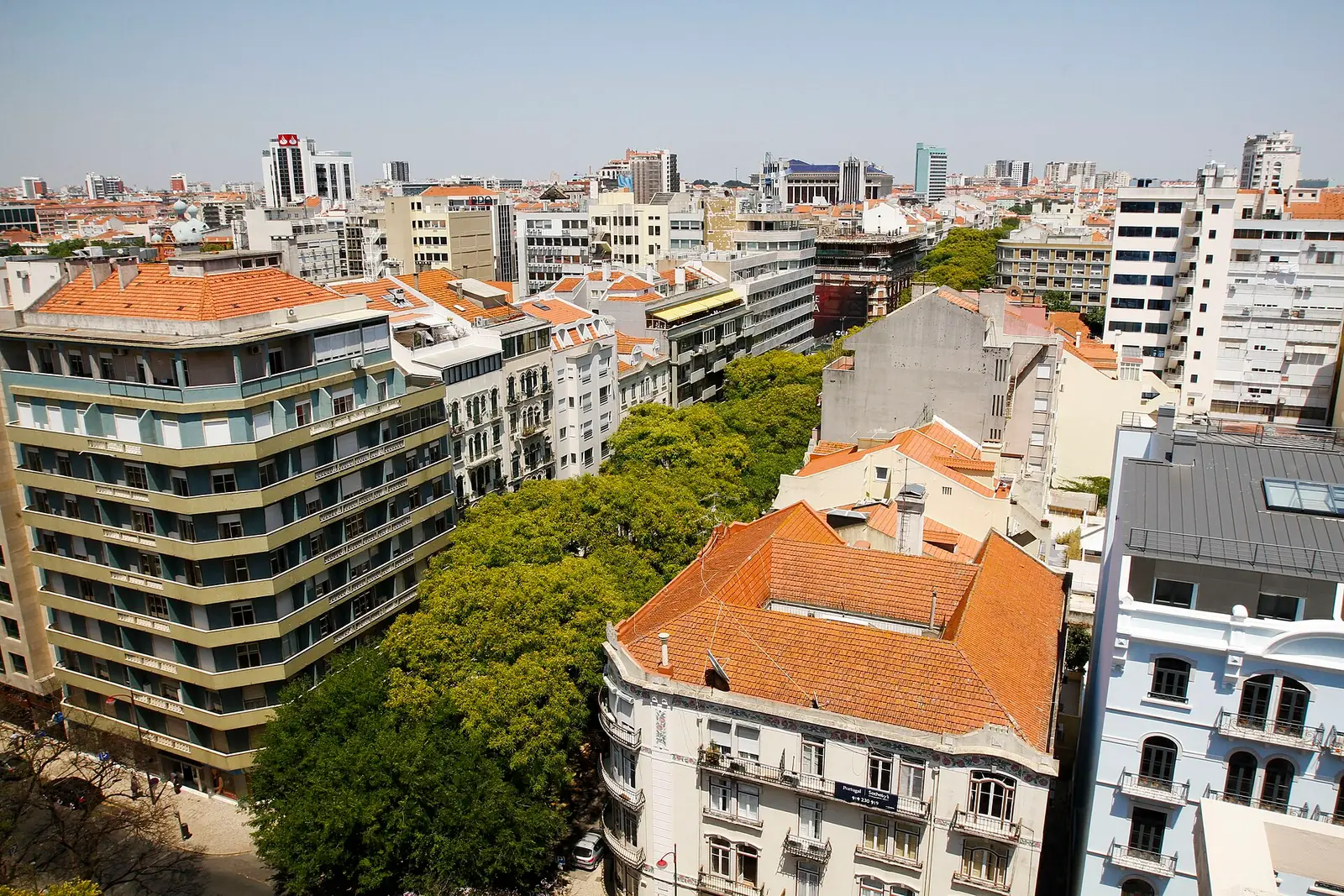
Avenida Elias Garcia, in the Avenidas Novas, seen from above, in June 2013. Cruks, CC BY-SA 3.0 At 22:55 on 24 April 1974, from the studio that the Emissores Associados de Lisboa had on the 7th floor of this building, the announcer João Paulo Diniz put “E Depois do Adeus” (And After the Goodbye), sung by Paulo de Carvalho, on the air: it was the first signal of the Armed Forces Movement.2627 The Movement had chosen it because it would not arouse suspicion: it was a romantic ballad, with no political content.28
The song, with words by José Niza and music by José Calvário, had won the Grande Prémio TV da Canção (TV Song Grand Prix) on 7 March, broadcast live from the Maria Matos Theatre and presented by Glória de Matos and Artur Agostinho.29 It was Glória de Matos who chalked up on the board the results that Artur Agostinho announced, and who handed the prize to Paulo de Carvalho.9 The second signal, “Grândola”, went out at 00:20 on Rádio Renascença; that story is told in the route “The first day”.28
- 7 Mar 1974“E Depois do Adeus” (And After the Goodbye) wins the Grande Prémio TV da Canção (TV Song Grand Prix), at the Maria Matos Theatre
- 24 Apr 1974“E Depois do Adeus” (And After the Goodbye): the first signal of the revolution
Paulo de Carvalho sings “E Depois do Adeus” (And After the Goodbye), by José Niza, the song that won the 1974 Festival da Canção (Song Festival), in an RTP recording from that year. At 22:55 on 24 April, broadcast by the Emissores Associados de Lisboa, it was the first signal of the revolution.
Original page Licença padrão do YouTube — embed permitido pelo canal oficial da RTP
RTP, on YouTube. The player only connects to that site when you press “Watch”.
To stop 61.1 km · 15 min on foot
Stop 6: : 1974 — “We are free, we are free to fly”Today: Building works for the EntreCampos development, on the site of the former Feira Popular
Avenida da República, no recinto da antiga Feira Popular de Lisboa, em Entrecampos
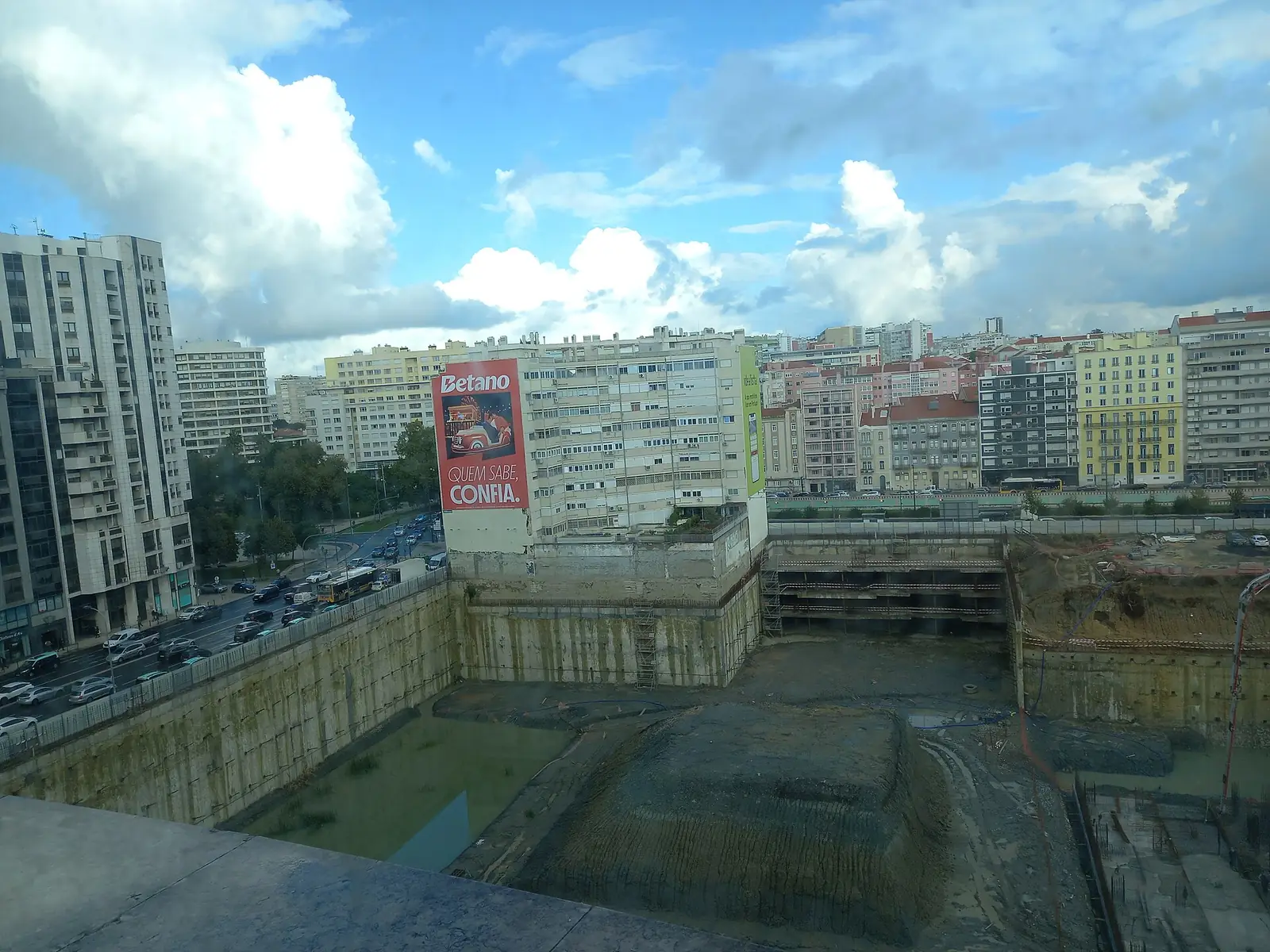
The building site on the grounds of the former Feira Popular funfair, in Entrecampos, seen from above in October 2025. The Vasco Santana Theatre stood on these grounds. Hipersyl, CC BY 4.0 Here, in the grounds of the Feira Popular funfair, Lisbon City Council had a cinema pavilion. It was there that, on 16 December 1964, Luzia Maria Martins and Helena Félix presented Joana de Lorena (Joan of Lorraine), the first production of the Teatro Estúdio de Lisboa (Lisbon Studio Theatre, TEL), the city’s first independent theatre company, which they founded with Valentina Trigo de Sousa.3031 In 1972, the pavilion became the Vasco Santana Theatre, the TEL’s permanent home.30
In 1974, Luzia Maria Martins wrote Lisboa 72-74 for the company, scenes of Lisbon life that opened after 25 April. It was in that play that “Somos Livres” (We Are Free) was heard for the first time, with words and music by the actress Ermelinda Duarte, a member of the TEL since 1969: “A seagull was flying, flying, / wings of wind, heart of sea. / Like her, we are free, / we are free to fly” (Uma gaivota voava, voava, / asas de vento, coração de mar. / Como ela, somos livres, / somos livres de voar).32333 RTP counts it among the most popular songs after the overthrow of the dictatorship.2 The sources do not say in which venue the play opened.
Also in 1974, late in the afternoon and with free admission, the Women’s Liberation Movement launched “Mulheres Guerrilheiras” (Guerrilla Women) here, which O Século announced as the first Portuguese feminist record: a poem by Maria Teresa Horta, music by Pedro Jordão, sung by Teresa Paula Brito, the same singer the Coliseu audience had booed.65 The TEL came to an end in 1991, the year Helena Félix died, and a street near here has borne her name since International Women’s Day 1993.3231 The Feira closed in 2003, and the site is now a building site.3034
- 1974“Somos Livres” (We Are Free): Ermelinda Duarte’s song is born in the theatre
- 1974“Mulheres Guerrilheiras” (Guerrilla Women): the MLM launches a feminist record at the Vasco Santana Theatre
Ermelinda Duarte’s single with “Somos Livres” (We Are Free), published by the Valentim de Carvalho label, which dates it to 1975: two songs of her own, with arrangements by José Cid. The song had been born in 1974 in the chronicle “Lisboa 72-74”, by the Teatro Estúdio de Lisboa.
Original page Licença padrão do YouTube — embed permitido pelo canal oficial da editora Valentim de Carvalho
Edições Valentim de Carvalho, on YouTube. The player only connects to that site when you press “Watch”.


History
In the days of the dictatorship, song lyrics had to go through censorship before they could be sung on a stage; at the Coliseu, in March 1974, they came back cut minutes before the show.1 This route goes from the Chiado to Entrecampos by way of the stages, studios and halls that the songs of those years passed through: the ones the censors cut or let slip through, the one that served as the revolution’s first signal, and the one the streets sang after 25 April — “Somos Livres” (We Are Free), by Ermelinda Duarte: “a seagull was flying, flying” (uma gaivota voava, voava).23
At its centre are the women who wrote them, sang them and staged them: Simone de Oliveira, insulted in the street because of a line of verse;4 Teresa Paula Brito, booed at the Coliseu and the voice of “Mulheres Guerrilheiras” (Guerrilla Women), announced in 1974 as the first Portuguese feminist record;56 Natália Correia, author of the poem “Queixa das Almas Jovens Censuradas” (Lament of the Censored Young Souls);7 Ana Maria Teodósio, who had a song vetoed by the censors as “obscene”;8 Glória de Matos, who chalked up the results of the festival won by “E Depois do Adeus” (And After the Goodbye);9 and Luzia Maria Martins, Helena Félix and Ermelinda Duarte, of the Teatro Estúdio de Lisboa (Lisbon Studio Theatre).
At every stop there are recordings to listen to and watch, on the page and in the archives: the night of the “Desfolhada” (Husking), in 1969, Zip-Zip, “Grândola” sung by the Coliseu audience, José Mário Branco’s song on Natália’s poem, “E Depois do Adeus”, “Somos Livres”. The way is long, nearly 5.5 km on foot, but the metro runs along it.
Before you go
- Start
- São Luiz Theatre, on Rua António Maria Cardoso, in the Chiado — Metro Baixa-Chiado (blue and green lines); trams 24 and 28
- Finish
- Entrecampos, next to the site of the former Feira Popular funfair — Metro Entrecampos (yellow line); trains at Entrecampos
- Accessibility of the route
- From the São Luiz Theatre the way goes down Rua do Carmo to the Rossio, from about 45 to 23 m above sea level; the Rossio and Rua das Portas de Santo Antão, as far as the Coliseu, are flat. From the Coliseu to Picoas it climbs about 65 m, gradually; then it goes slightly downhill to Entrecampos. It is a long route, of nearly 5.5 km on foot, but there are metro stations along the way for anyone who wants to do it in two parts: Restauradores, Avenida, Marquês de Pombal, Picoas and Saldanha.
The walk, the photos and the map stay on the phone, to open anywhere.
Dates
24 Feb 1969
26 May 1969
17 Mar 1970
1974
6 more dates
7 Mar 1974
29 Mar 1974
24 Apr 1974
May 1974
18 Oct 1980
29 Jan 1983
Notes on the sources9
- The point for the Vasco Santana Theatre on the map is approximate: it is that of the former Feira Popular, on the Avenida da República side, where the sources place the pavilion.
- In which venue “Lisboa 72-74”, the play in which “Somos Livres” was first heard, opened: no source says. The Teatro Estúdio de Lisboa had had its permanent home at the Vasco Santana Theatre since 1972, but the list of plays premiered there that Restos de Colecção publishes does not include it.
- The day of the launch show for “Mulheres Guerrilheiras”: the clipping from “O Século” says “yesterday”, and the Casa Comum dates it only to 1974.
- When Teresa Paula Brito was booed at the Coliseu: the musicologist Luís Freitas Branco tells the story without a date.
- The day of the 1st Portuguese Song Meeting: 29 March 1974 (Casa Comum, Mensagem de Lisboa) or 28 March (chronology of the 25 April Association).
- The day of the first “Zip-Zip”: 26 May 1969 in the RTP Arquivos video, 24 May in the photograph of the same broadcast.
- Whether the “Pedra Filosofal” heard at the Villaret stop is the 1969–1970 recording: the digital release is from 2020, by World Music Records, which does not give the year of the recording.
- The year of José Mário Branco’s “Ser Solidário”: 1982 in the José Mário Branco Archive, which gives the dates of the recording (January to March 1982); 1980 at the Aljube Museum.
- The year of Natália Correia’s death: 1993 (Imprensa Nacional, which this route follows); the José Mário Branco Archive writes 16 March 1992.
Do you know more, or do you have a document? Tell us.
Sources36
- 1Pedro Tadeu, «Fascistas! Fascistas!» gritaram cinco mil pessoas no Coliseu, no mês antes de Abril. Mensagem de Lisboa, 2024 — consulted on 3 October 2026
- 2Canção «Somos livres» (Noticiário Nacional, janeiro de 1975). RTP Arquivos — consulted on 3 October 2026
- 3Ermelinda Duarte — «Somos Livres» [1975] (descrição do single, com o texto de Etelvina Lopes de Almeida que acompanhou a edição em vinil). Edições Valentim de Carvalho (canal oficial no YouTube), 2020 — consulted on 4 October 2026
- 4Miguel Carvalho, «A Desfolhada» chegou a Simone em segredo e ela cantou-a entre insultos e GNR a cavalo. Visão (Arquivo Morto), 2019 — consulted on 4 October 2026
- 5Ana Monteiro Fernandes, Entrevista. Luís Freitas Branco: «Acreditava-se que a música teria uma capacidade funcional de derrubar a ditadura». Comunidade Cultura e Arte, 2024 — consulted on 3 October 2026
- 6Movimento de Libertação das Mulheres - O Século (recorte de imprensa, 1974). Casa Comum – Fundação Mário Soares e Maria Barroso (fundo UMAR), 1974 — consulted on 4 October 2026Cota 10092.005.001.001. O recorte não traz data; o arquivo data-o de 1974.
- 7«Queixa das almas jovens censuradas» (canção). Arquivo Musical José Mário Branco (CESEM, NOVA FCSH) — consulted on 4 October 2026
- 8Luís Freitas Branco, 1971. Os baladeiros e o sonho da Pedra Filosofal: «O que nos uniu foi o que nos separou». Observador, 2021 — consulted on 4 October 2026
- 9XI Grande Prémio TV da Canção 1974 (reportagem do «TV 7», 10 de março de 1974). RTP Arquivos — consulted on 4 October 2026
- 10Jorge Mangorrinha, #15 «Desfolhada portuguesa» (José Carlos Ary dos Santos / Nuno Nazareth Fernandes), Simone de Oliveira, 1969 — série «50 canções a chamar Abril». Diário de Notícias, 2024 — consulted on 4 October 2026
- 11Grande Prémio TV da Canção Portuguesa 1969 (emissão em direto do Teatro São Luiz, 24 de fevereiro de 1969). RTP Arquivos — consulted on 4 October 2026
- 12Grande Prémio TV da Canção Portuguesa 1969 (reportagem do Noticiário Nacional, 25 de fevereiro de 1969). RTP Arquivos — consulted on 4 October 2026
- 1348 Memórias (exposição de 18 a 30 de abril de 2022, com curadoria de Tiago Bartolomeu Costa). São Luiz Teatro Municipal (EGEAC), 2022 — consulted on 4 October 2026
- 14Espetáculo de Canto Livre (Emissora Nacional, 24 de maio de 1974). RTP Arquivos — consulted on 3 October 2026
- 15António Adriano (textos), Adriano Correia de Oliveira, músico, 1942-1982. Câmara Municipal de Lisboa — Comissão Municipal de Toponímia, 2016 — consulted on 3 October 2026
- 16O Essencial sobre Natália Correia (Luiz Fagundes Duarte). Imprensa Nacional, 2024 — consulted on 2 October 2026
- 17Natália Correia. Museu do Aljube Resistência e Liberdade (EGEAC) — consulted on 2 October 2026
- 18Natália Correia (ficha de pessoa). Arquivo Musical José Mário Branco (CESEM, NOVA FCSH) — consulted on 4 October 2026
- 19«Mudam-se os tempos, mudam-se as vontades» (LP, 1971). Arquivo Musical José Mário Branco (CESEM, NOVA FCSH) — consulted on 4 October 2026
- 20José Mário Branco — biografia e testemunho (Vidas Prisionáveis, recolhido a 16 de maio de 2019). Museu do Aljube Resistência e Liberdade (EGEAC) — consulted on 3 October 2026
- 21«Ser solidário» (LP, 1982). Arquivo Musical José Mário Branco (CESEM, NOVA FCSH) — consulted on 4 October 2026Álbum duplo de 1982, editado pela Edisom, gravado de 4 de janeiro a 12 de março de 1982.
- 22Eurico de Barros, O Pátio das Antigas: O teatro que Raul Solnado construiu. Time Out Lisboa, 2023 — consulted on 4 October 2026
- 23Entrevista a Almada Negreiros no «Zip-Zip» (primeiro programa, 26 de maio de 1969). RTP Arquivos — consulted on 4 October 2026
- 24Zip Zip – Parte II (último programa da série, 29 de dezembro de 1969). RTP Arquivos — consulted on 4 October 2026
- 25Jorge Mangorrinha, #44 «Trevo de Maio» (Maria do Amparo – Carlos Alberto Moniz), Carlos Alberto Moniz & Maria do Amparo, 1973 — série «50 canções a chamar Abril». Diário de Notícias, 2024 — consulted on 3 October 2026
- 26Emissores Associados de Lisboa (Lugares de Abril). Associação 25 de Abril — consulted on 2 October 2026
- 27Movimentações do dia 25 de Abril. Associação 25 de Abril — consulted on 2 October 2026
- 28Operação Viragem Histórica. Comissão Comemorativa 50 Anos 25 de Abril — consulted on 2 October 2026
- 29XI Grande Prémio da Canção 1974 (emissão em direto do Teatro Maria Matos, 7 de março de 1974). RTP Arquivos — consulted on 4 October 2026
- 30José Leite, Teatro Vasco Santana. Restos de Colecção (blogue), 2014 — consulted on 4 October 2026Com fotografias do Arquivo Municipal de Lisboa e da Hemeroteca Digital e uma lista das peças em cena no teatro, de 1963 a 1989.
- 31A Rua Helena Félix do Teatro Estúdio de Lisboa na Feira Popular. Câmara Municipal de Lisboa — Toponímia de Lisboa, 2018 — consulted on 4 October 2026
- 32Marta Brites Rosa, Luzia Maria Martins (Lisbon, 27/05/1927 – Lisbon, 13/09/2000). DramaOnline — Dramaturgia portuguesa dos séculos XX e XXI (dir. Sebastiana Fadda); versão revista da entrada do Centro Virtual Camões — consulted on 3 October 2026
- 33A mãe do teatro independente num Largo da Quinta dos Barros. Câmara Municipal de Lisboa — Toponímia de Lisboa, 2013 — consulted on 3 October 2026
- 34«Melhor projeto urbanístico da Europa» vai nascer no terreno da antiga Feira Popular. Olhares de Lisboa, 2026 — consulted on 4 October 2026
- 35Lisboa – Lugares de Abril. Associação 25 de Abril — consulted on 3 October 2026
- 36Inauguradas as últimas placas do Projeto «Lugares de Abril». Olhares de Lisboa, 2024 — consulted on 3 October 2026
Other walks
Revolution
The first day
25 April 1974 hour by hour, from the Terreiro do Paço to the Carmo and the door of the political police
- Distance
- 2.3 km
- Duration
- 1 h 30 min
- Stops
- 7 stops
Women
Graça, the women’s hill
Seamstresses on strike, a republican propagandist, a women’s prison, a bar and a poet — Graça as they tell it
- Distance
- 1.7 km
- Duration
- 1 h 15 min
- Stops
- 6 stops
Repression
The Estado Novo, explained
How a dictatorship lasted 48 years: the leader, the façade, the single party, the family, work and propaganda — from São Bento to Restauradores
- Distance
- 4.6 km
- Duration
- 2 h 20 min
- Stops
- 9 stops